

COO at Digital Storm | High-Performance Workstations, AI Compute & PC Hardware Infrastructure
Bay Area, CA
Joined December 2014
- Tweets497
- Following49
- Followers197
- Likes1.3K



I’m starting to see consumer SSD pricing come down a little week over week. That’s welcome relief, although the reason behind it gives me some concern.

2
1
68
NAND, the flash memory inside SSDs, has seen spot prices fall more than 20% recently. TrendForce points to weaker demand and distributors clearing inventory, with higher device prices delaying upgrades and manufacturers trimming storage capacities to control costs.
8


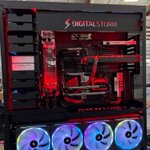
Check out this clean build we did for a customer, featuring an @AMD Ryzen 9 9950X3D, 64 GB of @kingstontech 6400 MT/s, and an @NVIDIAGeForce RTX 5090 water cooled.


One of the biggest winners of the AI boom started out making kitchen drawer slides.
Taiwan's King Slide now reportedly controls 70–80% of the high-end AI server rail market, with an 87.4% gross margin in Q2, which is higher than NVIDIA.
Wild how a <$100 mechanical component can become so critical to AI infrastructure.

4
201
Not every build needs an RTX Pro 6000! This customer chose to go with the RTX Pro 4500 and got three of the same build for their in-house team.


3
22
2,232

Are gaming GPUs becoming an afterthought?
NVIDIA GPU prices are reportedly rising again, while Intel is rumored to be shifting focus from its Arc B580 toward higher-margin AI products.
When AI hardware is far more profitable, how long will gamers remain a priority?
1
3
205
Looking back at my old pics and came across these Titan Z.
I miss when NVIDIA made stuff like this.

1
125
What caught my attention in robotics this week was a company offering the intelligence separately from the robot.
@dreamlabs_ai launched an API that takes camera input and instructions and returns robot actions. It says it already works with more than 20 hardware partners. The current applications are focused on tabletop tasks, so there’s still plenty to prove before treating this as factory-ready automation.
Currnetly, PC manufacturers don’t have to develop their own processors, operating systems, and applications to build a product. We select the components, integrate them, validate the system, and support it for the customer’s workload.
I’m curious whether more of robotics could develop that way. One company builds the arms and grippers. Another supplies the model. An integrator makes the combination useful for a specific operation.
On a production floor, that last part matters. You still need to handle the actual packaging, placement, inspection requirements, and exceptions involved in the job. Access to a capable model could lower one barrier while leaving a substantial integration business around it.
It also creates a purchasing question: how easily can the customer improve the robot’s capabilities without replacing the machine?

92