

PhD Candidate (ABD) in NW Semitics | Aramaic · Akkadian · Arabia | Chess Enthusiast
Baltimore, MD
Joined May 2022
- Tweets58
- Following91
- Followers37
- Likes130




Semitic inscription of the day: the Hadad Statue of Panamuwa I (KAI 214, c. 775 BCE). Language: Śamʾālian. Found in 1890 at Gerçin northeast of Zincirli (ancient Samʾal) and now in Berlin's Vorderasiatisches Museum. King Panamuwa I dedicated this colossal basalt statue of the storm-god Hadad and asks later kings who sacrifice there to remember his nbš ("soul"), that it may eat and drink with the god.
Drawing: Lidzbarski 1898.


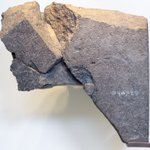
Semitic inscription of the day: the Tel Dan Stele (9th c. BCE). Language: Old Aramaic. Found at Tel Dan in 1993–94 and now in the Israel Museum, it's a victory inscription most likely set up by Hazael of Aram-Damascus. The phrase bytdwd 'House of David' (line 9) is the earliest widely accepted reference to David outside the Bible.
Drawing: Yardeni in Biran and Naveh 1995.


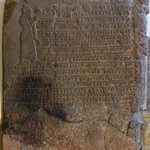
Semitic inscription of the day: the Kulamuwa Stele (KAI 24, c. 825 BCE). Language: Phoenician, carved for a king of Samʾal. Found at Zincirli in the German excavations of 1888–1902 and now in Berlin's Vorderasiatisches Museum. Kulamuwa boasts that he achieved what every king before him had not, and that he hired the king of Assyria against the Danunians.
📷 Drawing: von Luschan et al., Ausgrabungen in Sendschirli IV (1911).


Matt S retweeted

𝑱𝙪𝒔𝙩 𝙥𝒖𝙗𝒍𝙞𝒔𝙝𝒆𝙙! The 1st of 6 volumes:
𝐷𝑖𝑐𝑡𝑖𝑜𝑛𝑎𝑟𝑦 𝑜𝑓 𝑡ℎ𝑒 𝐼𝑛𝑠𝑐𝑟𝑖𝑝𝑡𝑖𝑜𝑛𝑠 𝑜𝑓 𝐴𝑛𝑐𝑖𝑒𝑛𝑡 𝑁𝑜𝑟𝑡ℎ 𝐴𝑟𝑎𝑏𝑖𝑎
Open Access at this link: tinyurl.com/5n7ht4nj.
Nearly 2000 words, with citations and etymological commentary. More soon!

Semitic inscription of the day: the Mesha Stele (c. 840 BCE). Language: Moabite. King Mesha of Moab boasts of throwing off Israel's rule. Found at Dhiban, Jordan, in 1868. Held at the Louvre since 1873. It contains the earliest certain extrabiblical mention of YHWH.
📷 Photo: Mbzt, CC BY 3.0 · Drawing: Lidzbarski 1898

ALT Mesha Stele, reconstructed basalt stele in the Louvre (AO 5066)

ALT Lidzbarski's 1898 line drawing of the Mesha Stele inscription
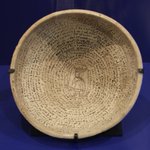
Halloween in the ancient Near East? Meet Lilith 🦉 Akkadian lilû/lilītu were a class of demons. Hebrew lîlît occurs once in the Hebrew Bible (Isa 34:14, translated in the KJV as 'screech owl'). Liliths also appear on Aramaic incantation bowls from late-antique Mesopotamia. Owl, demon, or both?

Matt S retweeted
#HUGE on #OCIANA - 1349 NEW #Safaitic inscriptions from Marabb al-Shurafāt (Jordan) are now on #OCIANA. 1100 inscriptions have been published in a book by Phillip Stokes here: zenodo.org/records/23482253 . Explore the site: ociana.osu.edu/sites/414
And much more to come soon!


Matt S retweeted
#just_published - the long-awaited report on seasons 2024-5 of the Badia Epigraphic Survey! It is filled with inscriptions, archaeology, and heritage management, including the excavation of site MH09, where the "allāh" inscription comes from.
Find more: academia.edu/178903861/Al_Ja…

Matt S retweeted

Absolutní bomba! Nový zlomek egyptsko-chetitské mírové smlouvy! 😍 arkeonews.net/new-fragment-o…

Matt S retweeted

📢Job Announcement📢
@Princeton invites applications for a tenured or tenure-track faculty position in the field of Early Islamic History, with a primary focus on the period ca. 600–1300 CE. apply.interfolio.com/193875

Matt S retweeted
This year's season has just concluded. Keep your eyes on OCIANA as new sites and inscriptions will start to be uploaded soon. In the meantime, we will share some photos from the campaign.
#Photos_from_BES26

Matt S retweeted

In 2025 @bnuyaminim, and me taught a course on Comparative Semitics at the Leiden Summer School. After some cleaning up, we've decided to upload the syllabus and release it under a CC license for you and yours to peruse through.
doi.org/10.17613/b4zna-zcp90

Matt S retweeted
#New_Functionality on #OCIANA! 𝐒𝐈𝐓𝐄𝐒!
Search epigraphic and archaeological sites to give inscriptions a better context. Site cards include photos and descriptions, along with all associated inscriptions.
First published site: MG 1 - ociana.osu.edu/sites/977


Matt S retweeted
#100%-ed on #OCIANA - the complete site of MG1 (Marabb al-Ghuṣayn 1) is now online, thanks in part to the efforts of the students in the Safaitic course of the Epigraphic Institute.
Search: BES25_MG1
In the next weeks, OCIANA will roll out a new feature - 'Epigraphic Sites'.


Matt S retweeted
#New on #OCIANA - more inscriptions from the site MG 1, the memorial of Ẓāʿen son of Karzān. This stone bears the primary funerary inscription, recording the dedication of several ʾnfs 'funerary monuments', pl. of nafs, to the dead man.
Find more: ociana.osu.edu/inscriptions/…

Matt S retweeted
Syriac Inscriptions Discovered in Eshtrako, Tur Abdin syriacpress.com/blog/2026/06…

Matt S retweeted

The #Syriac (#Aramaic) word of the day is ܫܝܘܠ (šīwōl), "Sheol, the place of the dead / underworld." Pronounced "sheewol." Cognate with Hebrew שְׁאוֹל (shəʾōl); the shadowy realm where the departed await resurrection, referenced throughout the Old Testament and rendered as Hades in Greek. #Assyrian #Aramaic #Languages #WOTD

