

labels include husband, dad, vascular surgeon, educator, and electronic music lover. Life is full…
Charlotte, NC
Joined January 2014
- Tweets355
- Following444
- Followers608
- Likes1.3K




Greg Stanley retweeted

piedmonthealthcare.com/the-f…
The Hidden Threat of Cardiovascular Disease in Midlife
In our 40s and 50s, cardiovascular disease emerges as the leading cause of harm and death, surpassing cancer and lung disease.
Yet, when we examine a seemingly healthy population of adults around this age using noninvasive imaging, we often uncover the root cause—atherosclerosis—long before symptoms appear in most people.
Unfortunately, many patients receive a diagnosis and treatment only later in life, often after developing obvious symptoms or even suffering a heart attack or stroke.
A Surprising Pattern in Atherosclerosis Development
Contrary to popular belief, and according to seminal research by Dr. Valentin Fuster and others, atherosclerosis doesn’t first target the heart, as one might assume. In studies such as the Progression of Early Subclinical Atherosclerosis (PESA), which followed aging cohorts with serial noninvasive imaging, plaque buildup tends to appear in the legs (the common and superficial femoral arteries) first, the neck (the carotid arteries) second, and the heart (the coronary arteries) last.
This suggests we are often searching for the causes of cardiovascular events—primarily atherosclerosis—in the wrong parts of the body and at the wrong time of life.
The Era of Rapid Medical Innovation
We are witnessing unprecedented technological acceleration, in which the next decade’s innovations may surpass the gains of the past century. Medical imaging now allows visualization of disease well before symptoms arise. At the same time, pharmacologic advancements target lipids, platelets, coagulation, inflammation, and metabolism more effectively.
In the 1980s, endocrinologist Gerald Reaven described a cluster of high-risk features in Americans—closely linked to obesity—as the enigmatic “Syndrome X.” Decades later, our understanding, recognition, and management of what we now call metabolic syndrome have vastly improved and continue to evolve. This syndrome is strongly tied to excess visceral fat and insulin resistance, as well as increased risks for sleep apnea, heart rhythm disorders, hypertension, hyperlipidemia, atherosclerosis, fluid retention, kidney disease, and overall diminished mobility and wellness.
By 2026, treatments have evolved dramatically and include disease-modifying agents that address metabolic syndrome head-on. These therapies are safer and more effective than ever and often work synergistically to reduce risk and extend both quality of life and lifespan.
What’s Next: Beyond Early Detection of Disease — The Genetic Revolution
Today, we can detect disease far earlier—often between ages 25 and 50—well before symptoms emerge—and treat it more effectively than before. So, what’s on the horizon?
Lipoprotein(a), discovered in 1963, may ignite the genetic revolution in healthcare. This highly atherogenic, disease-causing lipid particle is inherited and present at birth, affecting 20–30% of the population. If ongoing clinical trials demonstrate that therapies lowering lipoprotein(a) are safe and reduce cardiovascular events or mortality, humanity could take a giant leap forward in the prevention of disease.
In the next decade, genome-based risk assessment and targeted therapies will likely become widely available. As this genetic revolution accelerates—synergistically alongside those of imaging and therapeutics—risk stratification, and potentially even therapies, could begin around birth or early in life.
The sum of these technological advancements may lead to remarkable increases in average human lifespan in the coming years.

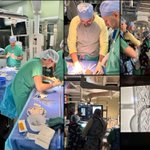
Another great day of hands-on education @IrcadNA alongside a truly masterful teacher Mark @LessneVIR. PAD awareness & education in focus.
Thank you to Bard Peripheral for the opportunity. Much to grow on for the future!
🤍CMCVascularSurgery


Greg Stanley retweeted

I’m a vascular surgeon. AI and robots won’t be replacing what I and my colleagues can do in the foreseeable future. Not just the technical aspects, but the judgment than comes from years of evaluating and treating patients.


First weekend mini-workshop for our fellows on PMEG creation and laser in-situ fenestration was successful. The foundation is set for a larger more comprehensive course in the future.
🤍CMCVascularSurgery
@carsonthoffmann @l_monty1596 @krhebelermd @docsprans2 @farkomd @Zaburahma2019 @fannyaliecMD @Parodifeparodi

Greg Stanley retweeted
I’ll take total BS for the Daily Double, Alex. The idea that doctors want to keep patients sick is simply ludicrous

Most Americans have no clue about the billions of dollars big pharma pumps into the educational process of physicians. They are being indoctrinated from their first day. globalnews.ca/news/5738386/c…

Greg Stanley retweeted

Boardrooms 🤝 Blizzards ❄️
So grateful for an amazing weekend with vascular surgery candidates from all over the US. They braved the snow and brought passion, curiosity, and heart to everything they did. The future of our field is bright. Thank you for choosing vascular surgery.

You can take the Longhorn out of Texas… and then remind them that A&M is better.

Thank you @SamTyagiMD
It was a pleasure to learn about your innovative work and for you to share your knowledge with our fellows. 👏🏻

Incredible Grand Rounds with Dr. Sam Tyagi (@UKentucky)! 🏥
His RCT on using sub-dissociative ketamine to slash opiate use in thoracoabdominal aneurysm recovery is a game-changer for patient outcomes. 🚀
Great insights with our team! Thank you @SamTyagiMD

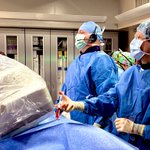
Honored to share our world class vascular care @AtriumSHVI via live broadcast nationwide. A special thanks to @bostonsci and @IrcadNA for executing flawlessly, and to @carsonthoffmann for the great fellow support.
🤍CMCvascularsurgery


Greg Stanley retweeted
As a vascular surgeon taking an aggressive coronary evaluation for patients with CLI I am discovering a huge burden of advanced coronary disease with the use of coronary CTA. I think it’s a huge game changer for potentially improving long term survival for this group
Greg Stanley retweeted
Monday marked a new chapter for IVL therapy for #PAD patients in the Carolinas. With the support of my team at @AtriumHealth and the team at @bostonsci, we performed several of the first batch of cases using SEISMIQ IVL in the U.S. with outstanding results.
A 🧵of the highlights…
Monday marked a new chapter for IVL therapy for #PAD patients in the Carolinas. With the support of my team at @AtriumHealth and the team at @bostonsci, we performed several of the first batch of cases using SEISMIQ IVL in the U.S. with outstanding results.
A 🧵of the highlights…
#4 severe bilateral iliac calcification, 7mm Seismiq bilaterally followed by VBX kissing stents. Repeated energy delivery without wait time between cycles allowed for an extremely efficient procedure.


Final thoughts: Seismiq IVL proved to be effective and efficient with these complex calcified cases. I was impressed with the energy delivery and the ability to achieve lumen gain in the setting of extreme calcium. Device prep is simple and the learning curve is short. Seismiq will undoubtedly be a critical component of my toolbox going forward.
My most sincere thanks again goes to the incredible cath lab team at CMC and the valuable support provided by the Boston Scientific sales, marketing and engineering teams. A truly incredible day for us and our PAD patients.
🤍CMCvascularsurgery


Greg Stanley retweeted
Exciting news from the @AtriumHealth team! Huge congrats to Dr. Greg Stanley & Monty LoSasso 4 being among the first in the nation to utilize the SEISMIO IVL system to treat PAD & heavily calcified lesions.
Leading the way in vascular innovation! 👏 @AdvocateHealth @DoctorGreg13
