

Redeemed by Christ, husband to @curlykjo05, dad, Reformed Catholicity & Scholasticism, Ruling Elder, & Licentiate in the Presbytery of Ohio (@OrthodoxPC)
Joined October 2019
- Tweets7.1K
- Following792
- Followers1.1K
- Likes31.2K




Pinned Tweet
Anthony Tuckney on 2 Peter 1:4
Anthony Tuckney (Westminster divine and chairman of the Assembly’s committee for the Larger Catechism) on 2 Peter 1:4 (and yes, he does affirm that Adam had this grace):
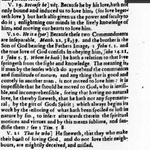
“8. As Nature sometimes anticipates Reason, so this Divine Nature [i.e., as he describes, a created participation of the divine nature/life, primarily consisting of habitual grace in the soul] always exceeds and goeth beyond that which is only humane. Divinity is above Humanity, Grace above Nature. A Christian is not ψιλὸς ἄνθρωπος a bare man, but more than a man. And therefore to have or express no more than what Nature can work, or natural men by other helps can attain to, κατ' ἄνθρωπον περιπατεῖν, to walk as [mere] men with the Apostle, 1 Cor. 3. 3. terminus minuens, or (as Cap. 6. 7. he calls the like) it's ἥττημα a defect, in which we fall much short of, and below that which a man of God that is made partaker of the Divine Nature, should arrive at, and come up to. For as man by nature and kind is and acts above other creatures, so a Christian man should even above himself, as a man, and above other men that want that Divine Principle.
[…]
[A]s long as the sanctifying Spirit acts and abides in us, we are true Nazarites, as by our holy Vows separated to God, so we should be (though not wholly separated, yet) very much distinguished from other ordinary men. Christ expects from us a τι περισσόν, Mat. 5. 47. something singular, eminent, and transcendent.
[…]
[Gasparo] Contarini (de Justificat.) makes the comparison of the manners of a Rustick and of a Citizen or Courtier: and a like difference he saith there is between the carriage of an earth-born sinner and a Saint made partaker of the Divine Nature. The Sons of Princes should not be in the garb of Peasants children; but that comparison is too low. Between Nature and Grace there should be a more vast distance. A Child of God should be as much above a natural man as heaven is above the earth, and as much above a fouler sinner, as heaven is above hell.”
- Anthony Tuckney, Forty Sermons, 246-247 [2nd of 4 sermons on 2 Peter 1:4, in which he discourses at length on this text and on this topic].

J. E. Smith retweeted

A Berith Press customer writes:
"This Voetius work is *exactly* the kind of thing I needed, but I didn’t know it.
It addresses key issues I’ve been trying to address with people in my church, friends, etc. when explaining the relation between philosophy, revealed theology, and when the latter addresses what is properly treated in the former, how to deal with that, etc."


It's here!
Gisbertus Voetius’s Diatribes on Sacred Theology, Philology, History, and Philosophy, first collected in 1668, offer a window into the intellectual world of Reformed orthodoxy.
Bringing together treatments of theology, biblical languages and interpretation, sacred history, and philosophy, Voetius asks how each field of learning should serve the study of Scripture and the formation of the Christian theologian.
Along the way he surveys books, authors, methods, controversies, and questions across a range of disciplines.
The Diatribes present a vision of Christian scholarship in which rigorous learning, careful judgment, and wide reading remain ordered to theology, ministry, and godliness.
They reveal Voetius not merely as a polemicist, but as an architect of an integrated Reformed intellectual culture.
6×9
Hardcover with Dust Jacket
282 pages
Enhanced translation by @postnuance
J. E. Smith retweeted

Tuckney’s 4 sermons on 2 Pet 1:4 are excellent! He masterfully combines exegetical care, theological precision, historical awareness, philosophical rigor, and pastoral warmth.

Anthony Tuckney on 2 Peter 1:4
Anthony Tuckney (Westminster divine and chairman of the Assembly’s committee for the Larger Catechism) on 2 Peter 1:4 (and yes, he does affirm that Adam had this grace):
“8. As Nature sometimes anticipates Reason, so this Divine Nature [i.e., as he describes, a created participation of the divine nature/life, primarily consisting of habitual grace in the soul] always exceeds and goeth beyond that which is only humane. Divinity is above Humanity, Grace above Nature. A Christian is not ψιλὸς ἄνθρωπος a bare man, but more than a man. And therefore to have or express no more than what Nature can work, or natural men by other helps can attain to, κατ' ἄνθρωπον περιπατεῖν, to walk as [mere] men with the Apostle, 1 Cor. 3. 3. terminus minuens, or (as Cap. 6. 7. he calls the like) it's ἥττημα a defect, in which we fall much short of, and below that which a man of God that is made partaker of the Divine Nature, should arrive at, and come up to. For as man by nature and kind is and acts above other creatures, so a Christian man should even above himself, as a man, and above other men that want that Divine Principle.
[…]
[A]s long as the sanctifying Spirit acts and abides in us, we are true Nazarites, as by our holy Vows separated to God, so we should be (though not wholly separated, yet) very much distinguished from other ordinary men. Christ expects from us a τι περισσόν, Mat. 5. 47. something singular, eminent, and transcendent.
[…]
[Gasparo] Contarini (de Justificat.) makes the comparison of the manners of a Rustick and of a Citizen or Courtier: and a like difference he saith there is between the carriage of an earth-born sinner and a Saint made partaker of the Divine Nature. The Sons of Princes should not be in the garb of Peasants children; but that comparison is too low. Between Nature and Grace there should be a more vast distance. A Child of God should be as much above a natural man as heaven is above the earth, and as much above a fouler sinner, as heaven is above hell.”
- Anthony Tuckney, Forty Sermons, 246-247 [2nd of 4 sermons on 2 Peter 1:4, in which he discourses at length on this text and on this topic].
J. E. Smith retweeted
Diodati (Dordt divine, etc.) affirming that there are both medicinal and elevating graces/supernatural gifts:
"If a man say, I love God, and hateth his brother, he is a liar: for he that loveth not his brother whom he hath seen, how can he love God whom he hath not seen?" (1 John 4:20 KJV)
Diodati on the words "whom he hath" in 1 John 4:20:
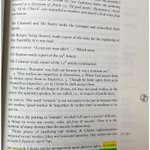
"Whom he hath] he hath a relation to that love [that] springeth from the sight and knowledge. The meaning is, if man by the senses which do apprehend the communion and similitude of nature, and any thing that is good and comely in another man, is not moved to love him: it is impossible that he should be moved to God, who is invisible, and incomprehensible, seeing that having no natural love, he thereby sheweth, that he hath not any supernatural [love], by the gift of Gods Spirit; which [Spirit] always begins its work by [1] the restoring of what hath been spoiled or lost in nature by sin, [2] to insert afterwards therein the spiritual motions and virtues, and by this means sublime, and sanctifie them: see 1 Tim. 5. 8."
- Giovanni Diodati, Pious Annotations Upon the Holy Bible (1664), 1 John 4:20.


J. E. Smith retweeted

“In all its main expressions, Protestant moral philosophy continued to center on the development of the virtues, and Aristotle remained the preeminent philosopher for two centuries, with Protestants publishing dozens of commentaries on his Ethics and Politics.” @SvenssonManfred

Over at @provmagazine, I discuss the supraconfessional nature of Christian social thought throughout its modern history. I hope it prompts some reflection on how much common ground we tend to overlook.
"6. Goodness is either natural, or moral, or supernatural.
Natural goodness belongs to all being. In this respect the devil is also good.
Moral goodness is... ethical virtue such as the gentiles possessed.
Supernatural goodness belongs to Christians in so far as they believe."


J. E. Smith retweeted
The issue is more fundamentally about nature and grace, rather than faith and regeneration (which are downstream). Recognizing that opens the door to the different ways this might be addressed. E.g., the Westminster divine Anthony Burgess gives an alternative to the “regeneration precedes faith” position among several including some Reformed, although he rejects it:
“It’s not in Divinity, as in Morall Philosophy, where [by doing just things, and by acting justly, we become just]… but we have the esse or being first, and then the operari [the acting/operating]. It’s a question worth the disputing, Whether the grace of God works the act of believing and other graces in us first, and then by them we receive the habits [i.e., faith precedes regeneration]. The Papists, and Arminians, and some others go that way; but it is not consonant to Scripture, as may be shewed hereafter.”
The more fundamental question is whether supernatural grace precedes both faith and regeneration.
This is relevant:
Do you believe man has the ability, by his natural human endowments, to exercise repentance onto life and saving faith in response to the gospel?
Let’s even leave sin out of the picture: would it be possible for unfallen human nature to have and exercise the faith, love, etc. that we read about in Scripture (e.g., in 1 Cor 13:13) by its own natural human endowments?
J. E. Smith retweeted

Studying covenant theology and keeping in mind to check my covenant epistemology so I can have a sound covenant ontology in which my covenantal exegesis can operate smoothly so that I can make covenantal application in my covenant renewal service to the Triune covenantal God.
J. E. Smith retweeted
We are delighted to present the English Annotations (3rd Ed., 1657).
Digitized, full, free, online, formatted, & public domain.

J. E. Smith retweeted

Tune into TBN at 9 p.m. ET TONIGHT (Sept 7th) to see Dr. Corey Miller talk to Kirk Cameron about taking back college campuses for Christ.

J. E. Smith retweeted

"The common philosophy of the Reformed schools, accommodated to and serving the Christian faith, is called Peripatetic; not because it adheres to all the particular opinions, but because it adheres to a good, indeed, the better part; that is, as to the method of teaching, and as to the general principles and chief axioms of natural light and right reason, worn down, received, and accommodated to the studies of learners and teachers by the guidance of universal experience, through observations and ventilations of so many centuries. Which, being thus interpolated, could be called Christian philosophy just as much as, or more than, Peripatetic."
Voetius, Gisbertus. Selectarum Disputationum Theologicarum. Amsterdam: Johannem Janssonium à Waesberge, 1667, 4:757


J. E. Smith retweeted
These are now both available as *free* PDFs on our website's Downloads page under Resources.


J. E. Smith retweeted

"The Synod [Dort], however, was split into two parts — that of the Arminians and that of the Gomarists. The former, under the leadership of Jacobus Arminius, not only withdrew entirely from the harshness of Calvin, but plainly inclined toward Pelagianism."
-Pietro Gazzaniga O.P.

J. E. Smith retweeted

"Plain reading of Scripture" bros when the apostle Peter says that "baptism now saves you" and Paul calls it "the washing of regeneration."


Anthony Burgess (Westminster Divine) on the “supernaturality”* of both Adam’s original righteousness and superadded grace contra the Socinians:
——
“WE are discovering the Nature of that Image God created us in at first, that so we may see how great our losse is.
The last particular was, The naturality and supernaturality of it in divers respects…
[T]he Orthodox [i.e. - the Reformed] oppose the Socinians, who affirm, Nothing but a natural and simple innocency in Adam, without any infused or concreated habits of holinesse, or any thing supernatural in him….
[T]he Socinians, who say, Adam had nothing in him, but what was natural, whereas the truth consists… [in this:] original righteousnesse was supernatural to Adam; if you respect the principle from whence it did flow, it was immediately from God, not from principles of nature, and this opposeth the Socinian; yet if you do consider Adam the subject of this righteousnesse, and the end for which he was created, so it was a perfection due to him, and in that respect called natural, otherwise had not God invested mans nature with this and concreated this perfection with him, the noblest of visible creatures had been dealt worst with….
Though this Image of God was natural to Adam, yet we must not say, that he had nothing supernatural, that there was nothing by way of superadded grace to him [i.e. - Socinianism, etc.]….
[A]lthough all that holiness which was necessary to guide him to happiness was natural, yet there were other things that might be of meer grace, and superadded favour to him; And under this we may comprehend the grace of God, which Adam needed, though qualified with original righteousness to do that which is holy; as also the reward which God would give to Adams obedience… to be the Sonne of God in respect of a gracious enjoyment of God [the former], and to have received that life promised to him, if he did obey [the latter]….
They [viz. - "the schoolmen"] have laid down good Rules, by which we may see, that the firmament was not more filled with innumerable starres, than Adam‘s soul with all choise graces….
[T]here is no kinde of grace imaginable, but Adam‘s soul was adorned with it one way or other.”
- Anthony Burgess, A Treatise of Original Sin (1658), 126-129.
* Note: One might call original righteousness preternatural based on Burgess’ definitions/distinctions. Also, Burgess is clear that grace is essentially and absolutely supernatural.
————
Cf. Tilenus (see below):
“The Papists criminally and slanderously assign to us the opinion of the Pelagians, as if we contend that there were no supernatural gifts in the first man, while we attribute theological virtues to him ourselves.”

"[God] is there [viz., in heaven] in most speciall manner.... He doth communicate himselfe in glorious manner to his Saints and Angels.
God is in all creatures as the author of nature, and communicating unto them the gifts of nature: God is in speciall manner in his Church, as the authour of grace, and communicating unto them the gifts of grace: but in most speciall manner he is in heaven, as the authour of glorie; and communicating the riches of his glory unto the Angels and Saints."
- William Twisse, A Briefe Catecheticall Exposition of Christian Doctrine (1637), 13.
For my nature-grace bros

Alsted on the harmony of nature and grace, the perfecting of the former by the latter.
“If nature and grace meet with opposing fronts, then there will be one author of the former and another of the latter, and the latter will destroy the former. But neither is the case. For if you consider the author of both, he is God, who cannot be contrary to himself. But if you consider the relation … and respect of grace to nature, you will see that nature is healed and perfected by grace, not abolished and destroyed. To this belong those theological theorems: Grace does not destroy nature but perfects it; grace is not against nature; whatever is true theologically is not false philosophically; no article of faith is against reason, although many are above reason.”
Natural Theology, I:5

J. E. Smith retweeted
"That God only can forgive sin, I prove thus. No man can take away sin, unless he be able to infuse Grace, (for as Aquinas saith) with Forgiveness is always infusion of Grace; but no man can infuse Grace, therefore no man can forgive sin. He only can forgive sin, who can remit the Penalty, but ‘tis only God’s Prerogative-Royal to forgive sin."
- Thomas Watson, A Body of Practical Divinity Consisting of above One Hundred Seventy Six Sermons on the Lesser Catechism (1692), 805.
J. E. Smith retweeted

"God also never pardons any sin except where He sanctifies the nature of the one pardoned." Anthony Burgess, The True Doctrine of Justification, p.143-144

"[God] is there [viz., in heaven] in most speciall manner.... He doth communicate himselfe in glorious manner to his Saints and Angels.
God is in all creatures as the author of nature, and communicating unto them the gifts of nature: God is in speciall manner in his Church, as the authour of grace, and communicating unto them the gifts of grace: but in most speciall manner he is in heaven, as the authour of glorie; and communicating the riches of his glory unto the Angels and Saints."
- William Twisse, A Briefe Catecheticall Exposition of Christian Doctrine (1637), 13.
“[W]e say there are but three sorts of supernaturall acts, and they are eyther faith d[i]vine, or hope d[i]vine, or charitie divine, all other acts are naturall and performable by a naturall man, whether they be the acts of all morall vertues, or an exterior conformitie to the meanes of grace, wherby it comes to passe that some doe proficere ad exteriorem vitae emendationem [to advance toward the external improvement of life]; but none of these acts are acceptable with God unles they proceede from, and are rightly qualified by those three theologicall vertues, faith, hope, and love, all which are divine and supernaturall; the love of God being such as is joyned with the contempt of our selfes; as for faith and hope it appears how supernaturall they are, by the supernaturall condition of theire objects.
[…]
We speake plainly, in saying that the love of God to the contempt of our selves, is not naturall to any man, unlesse he be indued with the Spirit of God, but Adam was created, (and we in him) in the state of grace, and indued with the Spirit of God; by vertue whereof the soule of man was fixed upon God, as upon his end, to enjoy him, and to use all other things even our selves, and all for him, and in reference to his glory.”
- William Twisse (Prolocutor of the Westminster Assembly), *The Doctrine of the Synod of Dort and Arles* (1631), 48-49.
