Senior lecturer accounting and finance, Bloomsbury Institute, London https://nitter.gq/t.co/zyKZLMXbZE
London, England
Joined September 2011
- Tweets13.6K
- Following108
- Followers279
- Likes8.3K



Prince Harry and six others face privacy case legal bill of up to £34.5m:
The justice system in the UK is completely broken. If this is what wealthy people face, just think how ordinary people are utterly priced out of the legal system.
I’m deleting the twitter app until “X” goes bust or is sold to someone who has some respect for the users
Julian Sims retweeted

There is much, much more to do, but from what I can tell it is not widely understood that US per-capita CO₂ emissions have fallen below WWI levels: ourworldindata.org/grapher/c…

Julian Sims retweeted

Human resource management in the age of generative artificial intelligence: Perspectives and research directions on #ChatGPT is now available (open access) from: onlinelibrary.wiley.com/doi/…

Julian Sims retweeted

Don't miss the first 10 mins of the Nature podcast where the senior author J. T. Lennon beautifully explains the backstory of the paper.
nature.com/articles/d41586-0…

Julian Sims retweeted
A mind-blowing paper has come out today in @Nature
In 2016, JC Venter Institute scientists trimmed a bacterial genome to its barest minimum required for life to synthesize what they called a "minimal genome" (science.org/doi/10.1126/scie…).
Today, a group of scientists from Indiana University reports how that minimal genome evolved over 2000 generations in comparison to the non-minimal genome.
The authors found that even when you reduce a bacterial genome to its absolute minimum where every nucleotide matters, the genome undergoes mutational events generation after generation as much as the non-minimal genome. One simply cannot stop the evolution.
Just over 300 days of evolution (equivalent to 40,000 years in humans) the minimal cell has gained everything it lacked in fitness on day one in comparison to the non-minimal cell.
When comparing the evolved traits between the minimal and non-minimal cells, the scientists found something striking. The evolutionary process increased the cell size of non-minimal cells but not that of the minimal cell. But that is not the striking part.
The scientists were able to identify the key mutation that resulted in cell size evolution. And it turned out that the mutation that helped the non-minimal cells to grow bigger is the same that helped the minimal cells to stay smaller. Growing bigger had a survival advantage for non-minimal cells and not growing bigger had a survival advantage for minimal cells. So, the mutation had a context-dependent effect. This just demonstrates that the evolutionary effects on traits have no absolute direction. All that matter is what is beneficial for the organism's survival.
The conclusion of the paper is metaphorically a quote from the Jurassic Park movie:
“Listen, if there’s one thing the history of evolution has taught us is that life will not be contained. Life breaks free. It expands to new territories, and it crashes through barriers painfully, maybe even dangerously, but . . . life finds a way". (scienmag.com/artificial-cell…)
nature.com/articles/s41586-0…


Julian Sims retweeted

🌍 Take a look at the @WorldBank Group’s new country income classifications.
In 1987, 30% of reporting countries were classified as low income, while in 2022, only 12% fell into this category.
📈 Explore what changes occurred in the past year: wrld.bg/miye50P4HUV
Julian Sims retweeted

For those who like pictures with their words. Big finding.


Mr. Dube and two co-authors found that...in just two years, the economy undid about a quarter of the increase in inequality since 1980. Much of that progress, they found, came from workers’ increased ability — and willingness — to change jobs.
nytimes.com/2023/07/06/busin…

Julian Sims retweeted

Wonderful news, congratulations to my former PhD student Zehra Serman for being the recipient of the Philip Powell Award for Best PhD Thesis at Birkbeck University of London. It was a pleasure to supervise Zehra along with Dr @DrJSims
@BirkbeckUoL #PhD #Awards #digitalmarketing

Unreleased Report Finds Faults in Amnesty International’s Criticism of Ukraine nytimes.com/2023/04/27/us/am…
Julian Sims retweeted

The Internet is such a big part of the lives of many here on Twitter that it is easy to forget how young this technology still is.
Only since 2019 are more than 50% of the world population using the internet.
from: ourworldindata.org/internet

Julian Sims retweeted
In 1987, countries around the world signed the Montreal Protocol to reduce emissions of substances that deplete the ozone layer.
Since then these emissions have fallen by more than 99%.
from our page on the ozone layer, which we just updated & redesigned ourworldindata.org/ozone-lay…

Julian Sims retweeted
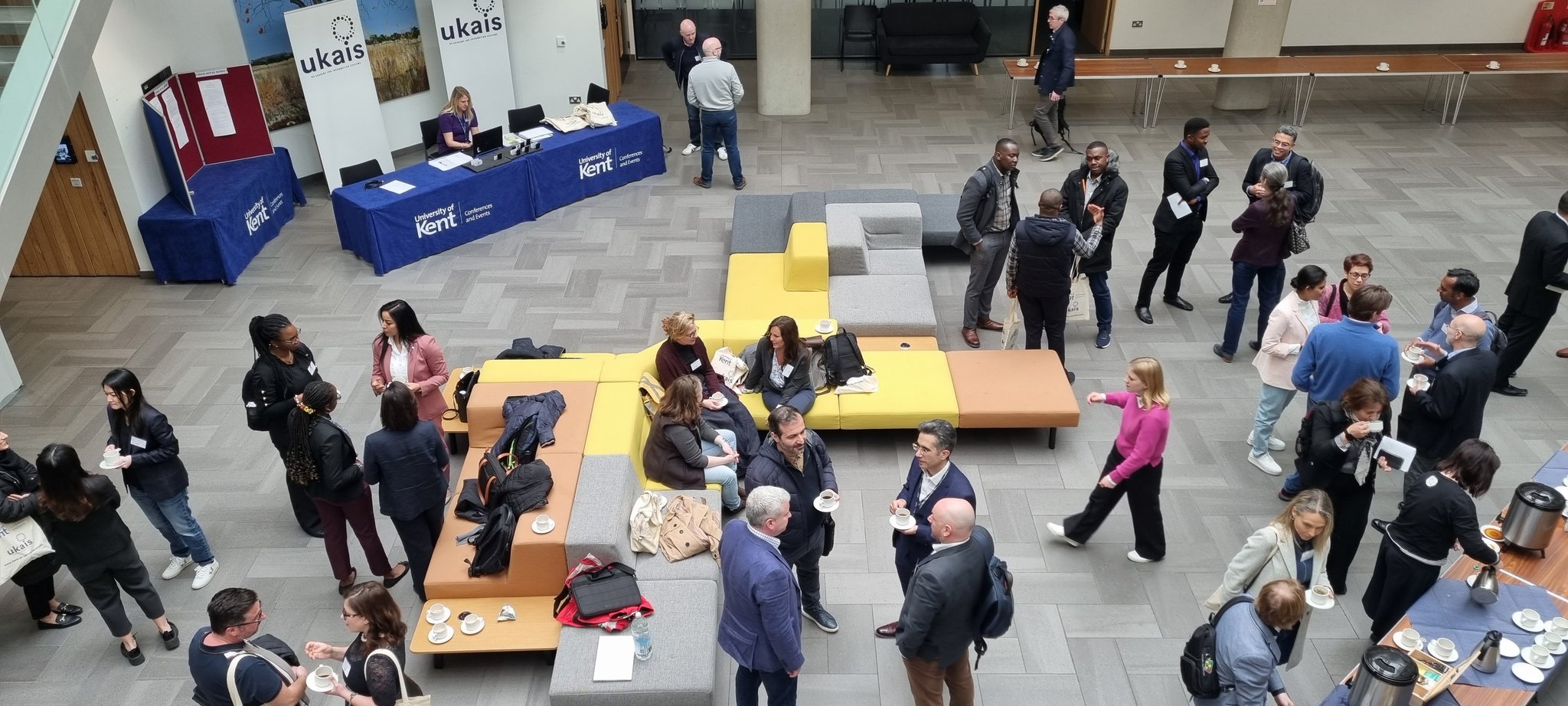
It was great to see everyone at the #ukais2023 #conference last night and congratulations to all the awards winners for their wonderful work


Julian Sims retweeted

This is a vg piece about a hugely important issue - our failure to deploy the UK's domestic capital to productive ends, due to bad rules, cautious culture and risk-averse regulation ft.com/content/03280cd7-8013…