

Chair, Radiation Oncology, University of Vermont Health
Burlington, VT
Joined January 2014
- Tweets7K
- Following1.4K
- Followers4.6K
- Likes42.2K




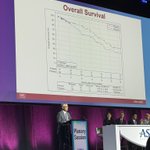
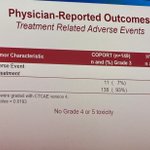


#ESMO26 @niazi_Dr7 DASL-HiCaP (ANZUP1801)
n=1,106 | mFU 3.8 yrs | 85% definitive RT
darolutamide + ADT + RT v placebo + ADT + RT
MFS-CI ➡️ HR 0.42 (0.27–0.66)
4-yr MFS 95% vs 88%

🚨📣📣 #ESMO26 presidential: @niazi_Dr7 Adding darolutamide to ADT + RT dramatically ⬇️ risk of metastasis or death in high-risk localized prostate cancer. Phase 3 DASL-HiCaP = 58% ⬇️ in MFS (HR 0.42) + early OS signal (HR 0.88). #ProstateCancer #RadOnc #pcsm @ChrisSweens1


Nat Lester-Coll, MD retweeted

At #ASTRO26, we are proud to welcome so many Yale attendees, including our current residents and the alumni of our Radiation Oncology Residency Program @YaleRadOnc, all representing @YaleMed @SmilowCancer @YNHH and advancing the field of radiation oncology. @ASTRO_org @OncoAlert

Nat Lester-Coll, MD retweeted

Back in 🇬🇧 but still able to listen to @nickva1 presenting @ASTRO_org #ASTRO26 @royalmarsdenNHS @EmmaHall71 No surprises here, patients have better sexual outcomes after SBRT compared to prostatectomy


Grateful to organizers for PRO 11 @ #ASTRO26:
Trial design keeps getting more complicated. Ph II data, de-escalation/omission studies, new tech routinely reported as practice-changing.
Outstanding talks on how to read that evidence and which results should change practice!

#ASTRO26 climate change, IT risk, and other system shocks make this more relevant every year. The real value here was in the stories: lessons for prevention and prep, and what we can actually do to safeguard RT when the next disruption hits.
Thank you to this panel!


This Sunday!
WHEN DISASTER STRIKES
⛈️ 🌬️ 🌀 🔥
Safeguarding Radiotherapy's Value and Continuity Across Catastrophic Events
#ASTRO26 Annual Meeting
Educational Session 8244
📆 Sunday 9/27/2026
⏰ 2:30 PM - 4:00 PM
📍 Room 257
Excited to see you at this session.

Nat Lester-Coll, MD retweeted

Long-term PACE-A data at #ASTRO26 (van As LBA32, Yasar LBA10): the first randomized comparison of prostatectomy vs SBRT, 36.25 Gy in 5 fractions.
These are contemporary surgical data: all prostatectomies were laparoscopic, 84% robotic.
Using ≥1 pad/day, RP vs SBRT:
• 2 years: 50% vs 7%
• 5 years: 48% vs 8%
Sexual function at 5 years:
• EPIC sexual domain: 62→17 after RP vs 79→58 after SBRT
• Median IIEF-5: 5 vs 19
Important caveats: as-treated analysis, approximately 60% PRO completion at 5 years, baseline sexual function imbalance, and enrollment of 123 of a planned 234 patients.
Biochemical control looks similar through 8 years, but 13 events cannot establish equivalence.
For shared decision-making, these are numbers I’d want patients to see. Every patient considering prostatectomy should have the opportunity to meet with a radiation oncologist before choosing treatment.
#RadOnc #PCSM


#ASTRO26 A071801
1-4 BMs
SRS (12-20Gy by volume) or fSRS (27Gy/3 <30cc or 30Gy/5 >30cc) after resection
fSRS ➡️ superior surgical bed control
no differences in RN or QoL


Nat Lester-Coll, MD retweeted

I’ve been saying this for years…
Now we have randomized data.
GETUG P05: brachytherapy boost vs dose-escalated EBRT in intermediate-risk prostate cancer.
Oncologic outcomes similar but far more toxicity with brachy.
#ASTRO26 #ProstateCancer
@ASTRO_org @NehaVapiwala @AmarUKishan @DrAndrewLoblaw @seanmmcbride @HimanshuNagarMD @TylerSbrt @seanmmcbride @alison_tree @Soum_Roy_RadOnc @NicholasZaorsky @angela_jia_

Nat Lester-Coll, MD retweeted

Boston-bound for #ASTRO26 — “When Disaster Strikes” is feeling particularly timely. Join us Sunday for a conversation on safeguarding radiotherapy continuity through catastrophic events @fumikochino @MDAnderson_ES @DrNogueiraL @AmericanCancer @DartmouthCancer @SpeedofLightFdn

Nat Lester-Coll, MD retweeted

Radiotherapy after surgery halves risk of recurrence in a type of brain tumour that can often grow back, trial shows.
Find out more in The Lancet: spkl.io/60137TUFS #EANO2026

ALT Kaplan\u2013Meier estimates of disease-free survival by treatment group in the intention-to-treat population. Median follow-up was 64 months (IQR 50\u201375). HR=hazard ratio. Copyright: 2026 The Author(s). Published by Elsevier Ltd. CC BY 4.0.
Nat Lester-Coll, MD retweeted

Happening in 2 wks! Join us Sun 9/27, 4:45P #ASTRO26:
Making Sense of Trials in Community Rad Onc: From Headlines to High-Value Care
3 talks on Ph II trials, omission studies & novel RT technologies - practical frameworks for interpreting new data & translating into practice.

Nat Lester-Coll, MD retweeted

Landmark, practice changing study at #WCLC26. The phase III MAVERICK study shows no improvement in OS with PCI for SCLC, across limited and extensive stages, with worse cognitive failure free survival and increased toxicity in PCI arm.
The end of the PCI era.

Nat Lester-Coll, MD retweeted

📊 Research Summary: In localized intermediate-risk #ProstateCancer, stereotactic body #Radiotherapy and moderately hypofractionated intensity-modulated radiation therapy had similar urinary quality-of-life outcomes, while bowel outcomes favored stereotactic body radiotherapy.
ja.ma/4fSjyDM

Nat Lester-Coll, MD retweeted

Continuing on with added context:
The reason this one paper matters so much is its recency. EviCore has, for many years now, deemed LDRT for OA as medically necessary.
To reverse course means new information must have become available between their last version and this one.
This Hammadeh paper was published in September 2025, which means it technically predates the guidelines from February 2026 covering LDRT, but...we'll just say EviCore didn't find it in time for those guidelines.
Unfortunately, it's not "new" data to justify this reversal, it's just a meta-analysis. But it has a convenient conclusion (if you're an insurance company).
Alright, we can skip over the publishing Round Robin AI Ring the authors have going and just head right to the first graphic. Table 1.
So, Table 1, second column. Several of the study design labels are incorrect - RCTs listed as cohort, retrospectives listed as RCTs, etc.
Ultimately, not SUPER problematic.
But uh, the next column is. The number of patients for each study in the third column.
Those are not anywhere close to the patient populations actually used in those studies. The difference is severe (Hermann 2021 is listed as 160, actual is 25; Keller 2013 is actually over a thousand, listed as 120, etc).
Well that's not good.
And then we get to "Duration of Complaints". Somehow, mysteriously, all of these studies enrolled patients with 9.5-11.1 years of symptoms prior to treatment.
Obviously...wildly incorrect as well.
But the best are the final two columns which are outcomes. Second to last is pain, last is function.
It sure is weird that, for a meta-analysis claiming LDRT has no effect, that each and every study allegedly used in their analysis ALL show an improvement in pain and functional status.
Now, normally I would expect a meta-analysis to conclude positive treatment effect if, you know, each and every included study showed a benefit in multiple domains.
Obviously...those results aren't what the original manuscripts themselves concluded (because, for example, they might have measured outcomes completely differently...).
Oh and I totally forgot the column that somehow claims each included study miraculously enrolled 38-44% males. All of them.
Crazy!
The one outlier is the final study, Fazilat-Panah et al, 2025.
If you look at the history of this Hammadeh paper, it was submitted originally in March 2025 and accepted in July 2025.
The Fazilat-Panah paper was published online in March 2025.
Obviously, Hammadeh and friends couldn't have included the Fazilat-Panah paper with their original submission - they wouldn't have known about it.
So one of the reviewers (hard to imagine this paper had reviewers, but whatever) must have asked them to include this newly published paper as a revision.
But that Fazilat-Panah paper is excellent: it's a double-blind sham-controlled RCT showing a tremendous benefit of LDRT.
Thus, when Hammadeh plugged that paper in and re-ran his AI tool...that's what caused the the calculated I² to be a massive 96%.
My assumption is the AI tool hallucinated much of the original data towards "no benefit". But when this Fazilat-Panah paper data was included after the fact with the real results - the heterogeneity went off the rails.
No paper should be published with an I² of 96%.
So, I assume no reviewer actually read this paper after it was re-submitted as a revision. Then the editors rubber-stamped the AI trash, and boom!
@evicorehc and their AI scraping algorithm programmed to find any and every reason for denial uncovered this gem and here we are today.
Who doesn't love science and medicine in 2026?
(probably the suffering patients getting treatments denied don't love it, but EviCore hasn't ever cared about that before, and neither has @SpringerNature)


Some additional context:
In these new guidelines where EviCore abruptly decides to change course, they cite 3 publications (one being DEGRO, which seems contradictory, but whatever).
Hammadeh et al 2025, I know this paper! It's the turbo trash paper I dunked on last year because of basic math errors.
Well, good news: the basic math errors are just the tip of the iceberg. Let's see what the titans over at EviCore are using to make policy.
We can start with...well, we can just start with the authors.
Weird. A lot of them are using Gmail accounts. Also, the format of some of these email addresses - Hammadeh included - seems to follow a "first name-last name-date" format.
When people do this, it's often their birth year.
Which means several of these authors were like...20 years old? In America, a 20-year-old is usually an undergrad, but these authors are predominantly Jordanian.
Let's go to Hammadeh's OCRID profile.
Neat. He's a med student in Jordan. He won't graduate till 2028.
He currently has...81 publications. As a 21 or 22-year old med student.
And many of those papers were published in 2025. And wouldn't you know: many of the co-authors on this paper also have dozens of papers as med students! They're on lots of these papers together!
I wish I could be as productive as Bara Hammadeh...oh wait! He founded a company on how to do this!
clever-academy.com/
Fortunately, we can subscribe to his tool to also churn out systemic reviews/meta-analyses! Score!
There's one drawback, though. If there's a group of students publishing 30+ systemic reviews/meta-analyses together on a wide variety of topics, using an AI tool that will essentially write a paper if you just feed it an Excel sheet....hmmm.
I think there's a term for this kind of behavior.
Does anyone know what this is called?


Nat Lester-Coll, MD retweeted

One of #radonc oldest dogmas:
No full bladder, no treatment.
Countless patients have spent years anxiously drinking water, waiting, and hoping they got it "just right."
We asked a simple question: Do we really need a full bladder for prostate SBRT?
