

TIMMY FABUSORO; ACTOR; Bookings - [email protected] ‘Barrister Ben in Wura’ GIFT CURATION AND FASHION ACCESSORIES - https://nitter.gq/t.co/eoB9Ii12hM
Nigeria
Joined October 2019
- Tweets18.3K
- Following2.1K
- Followers1.5K
- Likes2.3K


Pinned Tweet
Hello Everyone
I’m Timmy, and I’m so excited to share my curated collection of fashion essentials with you. We specialize in high-quality:
-Clothes
-Belts
-Shoes
-Slippers
- Glasses
AND A HOST OF OTHER FINE ITEMS
Upgrade your wardrobe today. Quality meets style right here!


A post of where he's partnering with Lagos food bank? Volunteering and contributing to the help of vulnerable families in Nigeria? Maybe he should be held to the standard of being a good human

The replies to this post is funny, so pastors shouldn't be held to a standard anymore?
Then why do y'all drag pastors here for various reasons, or your amnesia kicks for only him? 😂
34
Surprise Alhaji 👑 retweeted

You dug up a video of his partnership with Lagos Food Bank, where he helped vulnerable families with essential food supplies, just to push your narrative that he isn't Christlike. The irony is clearly lost on you. Go off, idiot.


Surprise Alhaji 👑 retweeted
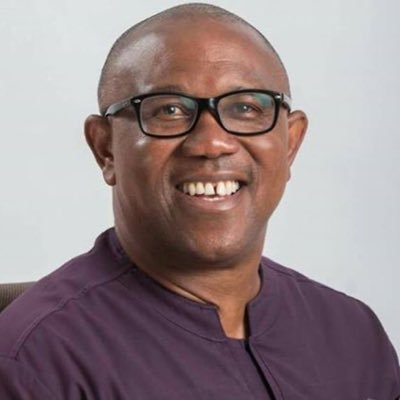
In Awka, our urban renewal programme included the dualisation and lighting of Zik’s Avenue. We understood that modern urban infrastructure required not only good roads but also proper lighting, drainage, and facilities that made movement safer and supported commercial activities. We also improved internal roads and connecting routes to support its development as the State Capital, while in Nnewi we strengthened road connections serving industrial and commercial communities.
These investments formed part of a broader economic strategy. We wanted businesses to find it easier to move raw materials, transport finished products, and distribute goods.
The emergence of major industrial investments, including SABMiller’s brewery in Onitsha, reinforced our belief in the importance of an enabling environment for business. Infrastructure, security, institutional stability, and a predictable business environment must work together to attract investment.
V. Establishing a Road Maintenance Culture
One mistake governments make is to concentrate on constructing new roads while neglecting those already built. We understood that road construction without maintenance eventually becomes wasteful.
That was why, in August 2008, we established the Anambra State Road Maintenance Agency (ARMA) through an enabling law passed by the State House of Assembly. ARMA was created to provide a permanent institutional framework for maintaining State roads, repairing failed pavements, clearing drains, and responding to road deterioration.
We equipped the agency with road maintenance machinery, including graders, rollers, heavy-duty trucks, and other equipment. We also established a dedicated office complex to strengthen its administrative and operational capacity.
Our intention was to replace the practice of waiting until a road had completely failed before awarding another expensive reconstruction contract. We wanted maintenance to become a continuous government responsibility.
VI. Quality Control and the Materials Testing Laboratory
We recognised that constructing roads was not enough; the quality of materials and workmanship also mattered, especially when some contractors are in the habit of doing sub-standard work as a result of poor-quality materials, inadequate compaction, and weak engineering supervision, which often result in premature road failure and the waste of public resources.
Consequently, we initiated the establishment of the Anambra State Materials Testing Laboratory to provide scientific testing of construction materials and improve quality assurance in public infrastructure projects. The laboratory was designed to test soil, aggregates, sand, cement, water, chemical materials, and steel reinforcement, among others.
VII. Taking the Anambra Experience to Nigeria
Our road programme in Anambra State was not a collection of isolated construction projects. It was part of a broader development strategy linking agriculture, industry, education, healthcare, commerce, and rural development. Good roads reduce transportation costs, improve access to markets, encourage investment, increase the value of agricultural produce, and make public services more accessible.
As President, I will bring the same philosophy of deliberate planning, prudent resource management, and accountability to national infrastructure development.
Nigeria requires an integrated transportation network that connects agricultural communities to markets, industrial centres to distribution networks, ports to production areas, and rural populations to essential services. We must prioritise the repair of existing roads and the construction of roads that unlock economic opportunities rather than merely count the kilometres constructed. We must also establish effective maintenance systems so that public investments are not allowed to deteriorate through neglect.


