

Marketing Manager | KOL | Researcher Co-Founder @VertexLabs Markets since 2016. 📬 Collab → DM: https://nitter.gq/t.co/J0SkDbxus9
Joined April 2023
- Tweets30.1K
- Following988
- Followers4.7K
- Likes32.9K






DukeD | Defi retweeted

JUST IN: Solana is the fastest growing network for RWAs, with market caps expanding 233.58% MoM on average 🔥


From our newsletter: @solana is the fastest-growing chain for RWA with 233.58% average MoM market cap expansion 🤯
Subscribe now to get what happens onchain every two weeks 👉 linkedin.com/pulse/growth-am…

DukeD | Defi retweeted

As $CASHCAT kept falling, this guy capitulated after just one day.
He sold all 6.12M $CASHCAT for 383.6 $ETH($735K), taking a loss of 135 $ETH($259K).
nitter.gq/lookonchain/status/207…


DukeD | Defi retweeted

► The State Of Solana Consumer Apps
Not saying @Solana has escaped trading brainrot.
@Pumpfun still sits at the center of gravity:
– $91.4M Q2 revenue
– 11.9M total token launches
– 42k tokens launched in a single day in June
The interesting part is Solana dapps did $263M in revenue in Q2, around 41% of total Web3 dapp revenue.
The chain also averaged around 100M daily txs, 4.3M DAU, and 1,000+ live apps.
I think Solana now has apps people actually spend time in. Q2 finally gave real evidence that the answer is becoming more complicated.
People are opening packs, trading tokenized graded cards, redeeming physical collectibles.
– @Collector_Crypt | $CARDS did $67M cumulative revenue, $1B+ platform volume, $194M 30d pack volume, and hit around 40k DAU.
– @phygitals crossed $250M in platform volume in the same general lane.
That matters because it's one of the few categories where the user loop doesn't start with buying a coin.
I also think Solana is the only chain that can bring GameFi back right now.
– @PlayKintara | $KINS has 20.5k MAU after launch, 1.6k players online at one point, and $450k+ in early marketplace volume.
Wallets are a big part of onboarding users to the chain.
– @phantom has 20M+ users and now wants to be the whole money app: swaps, perps, prediction markets, apps, payments, cash accounts, bank funding, peer transfers...
– @Backpack | $BP is taking the more regulated super-app route: wallet, spot, futures, lending, margin, borrow/lend, plus MiCA, MiFID II, and PSD2 coverage across all 27 EU member states.
– @solflare has 4M MAU referenced through the Collector Crypt integration, plus Packs, @xStocksFi, Google Pay onramps, and credit flows.
Perps are another lane that keeps people coming back daily.
– Solana perps hit $147B in monthly volume in Q2.
– @gmtrade_xyz did $90.9M.
– @pacifica_fi did $35.7M.
– Phantom now puts 200+ perp markets directly inside the wallet with up to 40x leverage.
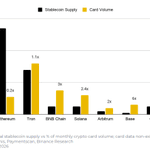
Payments are harder to underwrite because chain-level stablecoin volume can be fake comfort.
– Solana processed $2T+ in quarterly stablecoin transfers.
– Visa showed $1.79T in adjusted stablecoin volume across chains in June, up 63% MoM.
– Phantom Cash has bank funding, card funding, peer transfers, wallet transfers, and debit card spending anywhere Visa, Apple Pay, or Google Pay works.
– @CashApp added Solana USDC.
– Western Union, MoneyGram, Mastercard, Worldpay, and MoonPay Commerce all started touching the stack.
If you look at it from these angles, Solana has clearly become more than a memecoin chain.
Q2 had multiple real consumer pockets I mentioned above.

DukeD | Defi retweeted
gm,enjoy your weekend..
AI adoption keeps accelerating, demand for compute, cloud, GPUs, storage, bandwidth and data infrastructure should keep growing. Crypto infrastructure projects could benefit:
@rendernetwork $RENDER
@ionet $IO
@akashnet $AKT
@AethirCloud $ATH
@grass $GRASS
@Filecoin $FIL
@ArweaveEco $AR
the biggest winners may not be the AI models.,they may be the ones selling the picks and shovels. nfa
DukeD | Defi retweeted
AI adoption is accelerating rapidly, and the real bottleneck right now isn’t models — it’s compute.
Centralized cloud (AWS, Google, Azure) is expensive, censored, and increasingly unreliable.
That’s why DePIN + AI Compute narrative 'll heating up fast.
Here are the Top 5 decentralized GPU/AI infrastructure projects I’m watching closely right now:
1. $RENDER – @rendernetwork
> The original decentralized GPU network. Focused on 3D rendering, video generation, visual effects, and AI inference. Creators and studios can rent GPU power significantly cheaper than traditional cloud. One of the most battle-tested projects in the space with real revenue and usage.
2. $IO – @ionet
> A Solana-based decentralized GPU network specifically built for AI/ML workloads (training + inference). It aggregates hundreds of thousands of GPUs from miners, data centers, and individuals. Very strong positioning in the AI agent era.
3. $AKT – @akashnet
> The “Airbnb of Cloud Computing”. Akash offers CPU + GPU compute at 80-85% cheaper than AWS through a reverse auction model. Extremely flexible for general cloud workloads, containers, and AI. One of the most decentralized and mature in the sector.
4. $ATH – @AethirCloud
> Enterprise-grade decentralized GPU cloud. Specializes in high-performance NVIDIA GPUs (H100, H200, etc.) for AI training, inference, and cloud gaming. Targeting serious enterprise and gaming clients with bare-metal performance.
5. $GRASS – @grass
> Unique angle in the AI data layer. Grass lets users monetize unused internet bandwidth to collect and structure public web data for AI training. Very lightweight (runs in background/extension), low hardware requirement, and highly scalable user growth.
The winner in this sector won’t just be the one with the most GPUs,it will be the one that achieves best product-market fit with AI developers and enterprises while staying truly decentralized.
We’re still early in the AI infrastructure cycle. GPU shortage isn’t going away anytime soon.
Which one are you most bullish on? $RENDER, $IO, $AKT, $ATH, or $GRASS ?
Or do you prefer a different angle in AI Compute? Drop your thoughts below ,I’m reading all replies.
Quick Comparison (2026 Lens). NFA !!!
DukeD | Defi retweeted

📊 Historical data is now available on the Basic API Plan (Free Tier)
🕰️ Pull past market data without a paid subscription to get started
🔗 See what is included: coinmarketcap.com/api/pricin…

DukeD | Defi retweeted
last 30d stables been shrinking, usdc -3.6%, usdt -2%, and tbh this isnt just a short move, trend been going since late 2025 so it’s kinda consistent.
stables up = money coming in, stables down = money leaving, simple af, and rn it’s clearly going down for a reason, not random noise or small fluctuation.
means capital is flowing out faster than new money coming in, liquidity slowly getting tighter, so any bounce rn imo still more like technical move than real recovery.
real signal to watch is when stables start expanding again, that’s when fresh capital actually comes back and market can sustain upside, until then just chill, no need to rush.

DukeD | Defi retweeted
Most crypto revenue charts are misleading,not because the numbers are wrong, but because they don't show the cost behind them.
I've been looking at 30-day revenue across crypto, and honestly, the numbers tell a story most people don't want to talk about.
Top revenue (30d):
- @tether → ~$470M (US Treasury yield)
- @trondao → ~$200M+ (stablecoin transfer fees)
- @circle → ~$180M+ (RWA yield)
- @HyperliquidX → ~$60M+ (perps trading fees)
- @CantonNetwork → ~$50M+ (institutional infrastructure)
- @Polymarket → ~$25M+ (prediction market fees)
- @Pumpfun → ~$25M+ (meme launch + trading)
- @SkyEcosystem → ~$25M+ (stability fees / RWA)
- @ethereum → ~$15M+ (gas fees)
- @PancakeSwap / @aave → ~$10–15M (DEX + lending)
Different products. Different narratives. But if I had to simplify, there are only three real revenue engines in crypto today: Stablecoin/RWA yield, Trading (spot, perps, memes, prediction markets), and Base-layer fees. Everything else is either still early... or simply not making meaningful money.
But revenue isn't the metric that matters most.
Cost is.
Because revenue without context is misleading. I've seen protocols generate tens of millions in fees while spending even more on token emissions, liquidity incentives, airdrops, and user acquisition.
That's why not all revenue is equal.
Tether prints yield with minimal marginal cost. Trading platforms capture fees with relatively clean margins. But much of DeFi is effectively paying to exist-high revenue on paper, yet little or even negative real profit underneath.
I think this is exactly where the market is starting to evolve.
We're moving from "Which protocol generates the most revenue?" to "Which protocol actually keeps the most after paying for growth?"
A strong project doesn't just need to prove its business model works. It also needs to prove it can retain value after accounting for every growth expense. Otherwise, a large part of that "profit" is simply funded by token emissions, unlocks, or value transferred back from users.
So when evaluating a token, revenue and narrative alone aren't enough. I want to know where the cash flow comes from, what it costs to generate it, and how much value the protocol actually retains.
Because in the end, what matters isn't how much you make.
It's how much you keep.
Personally, I think this will become one of the most important filters in the next cycle. And for now, projects with clear revenue, efficient fee capture, and disciplined cost structures—like $HYPE —still stand out.


DukeD | Defi retweeted
I just added another 100 $SOL here..
When $SOL was $250 you wished you bought at $200.
At $200 you wished for $150.
At $150 you waited for $100.
Now it’s $75…and you’re still not buying.
Funny how that works.
If it drops another 20%, I’ll DCA more.
No overthinking,just work, earn, and keep buying.
Running low on cash anyway.... 🥲
DukeD | Defi retweeted
buying $ANSEM at $140M mcap is like buying $SOL at $250.
At least $SOL has a chance to come back.
meme.. once the hype is gone,there’s nothing left.
I just added another 100 $SOL here..
When $SOL was $250 you wished you bought at $200.
At $200 you wished for $150.
At $150 you waited for $100.
Now it’s $75…and you’re still not buying.
Funny how that works.
If it drops another 20%, I’ll DCA more.
No overthinking,just work, earn, and keep buying.
Running low on cash anyway.... 🥲


DukeD | Defi retweeted
Very few ask: who actually gets paid?
> Top Protocol Rankings by Holders Revenue (30D)

DukeD | Defi retweeted
$INJ @injective is one of the few Layer 1s that I think the market is still pricing incorrectly.
Most people still view #Injective as just another DeFi chain from the Cosmos ecosystem. I don't think that's the real story anymore.
Over the past year, Injective has been pushing far beyond traditional DeFi and positioning itself as infrastructure for onchain capital markets: tokenized stocks, commodities, FX, RWAs, and more recently, Pre-IPO markets.
With tokenization becoming one of the strongest institutional narratives in crypto, that positioning matters.
A few things stand out:
> More than 100% of $INJ supply is already circulating, leaving virtually no meaningful unlock overhang.
> Over 56.6M $INJ is currently staked, meaning more than half of the entire supply is effectively locked while still earning yield.
> The protocol's Burn Auction + Community BuyBack mechanisms continuously remove supply using ecosystem-generated fees.
> One area I'm watching closely is Injective's expansion into Pre-IPO and private-market exposure products, an attempt to bring traditionally inaccessible private-company markets onchain.
> The ecosystem now spans hundreds of applications across trading, AI, payments, RWAs, infrastructure, and financial tooling.
> Through the Injective Policy Institute, the team is also building relationships with policymakers and traditional financial institutions rather than operating purely inside crypto.
That said, the current fundamentals are far from perfect.
Stablecoin liquidity remains relatively small at around $18M, while protocol revenue is still modest compared with leading DeFi protocols.
The vision is ambitious, but the underlying economic activity has not fully caught up yet.
If you're looking purely at cash flows, $INJ does not look particularly attractive today.
The reason I continue paying attention is because @injective has carved out a niche that very few Layer 1s are pursuing seriously.
Injective's advantage today isn't scale. It's positioning. The project is one of the few blockchain ecosystems actively building trading infrastructure for tokenized financial assets beyond crypto itself.
If tokenized equities, private-market exposure, and onchain capital markets become meaningful over the next cycle, Injective could be positioned far better than current fundamentals imply.
Of course, there are still significant risks:
> TVL and liquidity remain small.
> Onchain activity has yet to fully justify the valuation.
> Competition from #Ethereum ecosystems, #Solana, and other RWA platforms remains intense.
> The tokenization thesis itself still needs to prove real user demand at scale.
Ultimately, INJ's future won't be determined by its current revenue, but by whether tokenized capital markets emerge as a major category in crypto. If that happens, the upside for $INJ could be very significant.
Framework Rating: 3.6/5 ⭐
Vision (4.5/5) | Product Positioning (4.5/5) | Tokenomics (4.5/5) | Innovation (4/5) | Revenue (2/5) | Network Effects (2.5/5) | Execution (3.5/5)
At current levels, I see $INJ as a high-upside but still unproven bet. The vision is compelling, the tokenomics are solid, and the positioning around tokenization is differentiated. What remains unclear is whether that vision can translate into meaningful liquidity, users, and revenue before competitors catch up.
NFA.

$EDGE is one of those projects that's hard to ignore once you start looking at the numbers.
At roughly $150M market cap, the protocol is generating around $140M annualized fees and roughly $82M annualized revenue, putting it among some of the strongest cash-flow-generating assets in crypto relative to its size.
For a market that spends most of its time chasing narratives, that's not something you see very often.
The problem is that revenue alone doesn't automatically create a great business.
What matters is whether that revenue can actually survive.
That's where I think the investment case becomes much more complicated.
EdgeX has managed to build a profitable onchain perpetual exchange, but the perpetual DEX market is already one of the most competitive sectors in crypto.
Today, traders can choose between #Hyperliquid, #dYdX, #Binance, #Bybit, and dozens of other venues offering similar products.
The real question isn't whether @edgeX_exchange can generate volume during a favorable market environment.
The real question is why traders would continue choosing EdgeX once incentives fade and competition increases.
That's the part I still struggle to answer.
At the same time, tokenomics remain a meaningful concern. Only around 35% of supply is currently circulating, leaving substantial dilution risk ahead if future growth fails to outpace unlocks.
The recent controversy around insider trading allegations and token price volatility also didn't help confidence.
Whether those concerns ultimately prove justified or not, trust is extremely difficult to rebuild once the market starts questioning it.
Personally, I think @edgeX_exchange has already proven it can generate revenue.
What it hasn't proven yet is that it can build durable network effects.
And in crypto, that's usually the difference between a protocol that survives one cycle and a protocol that survives several.
High revenue. Low valuation. Weak moat. Significant dilution risk.
Framework Rating: 3.0/5 ⭐
Revenue (5/5) | Valuation (4.5/5) | PMF (3.5/5) | Network Effects (2/5) | Tokenomics (2/5) | Moat (1.5/5) | Brand (2.5/5)

DukeD | Defi retweeted
A lot of people still think of $SKY as "that old MakerDAO token with a new name."
I think that's exactly why the market is still underestimating what this ecosystem has quietly become.
While everyone is chasing the next shiny narrative, @SkyEcosystem s sitting underneath one of the largest cashflow machines in DeFi, generating $160M+ annual revenue, processing hundreds of millions in fees, and operating one of the biggest decentralized stablecoin systems in crypto.
A few things stand out to me:
> USDS has grown into a multi-billion dollar stablecoin backed by one of the deepest collateral systems in DeFi.
> Annual protocol revenue sits around $160M while the token trades at roughly 8x earnings.
> 98.9% of supply is already circulating, meaning almost no meaningful dilution risk remains.
> Spark continues absorbing liquidity across DeFi and has become a major growth engine for the ecosystem.
> Sky Agent Network introduces a completely new capital allocation layer where independent allocators compete for yield, potentially creating another demand driver for USDS and SKY.
What makes $Sky interesting isn't the stablecoin business itself.
It's the combination of stablecoin issuance, lending infrastructure, treasury management, RWA exposure, and now agent-driven capital allocation all operating inside the same economic system.
The more I dig into it, the less it feels like a lending protocol and the more it resembles a decentralized onchain bank.
Of course there are risks.
Regulation around stablecoins remains the biggest overhang, and USDS still competes against giants like USDT, USDC,..
But unlike most altcoins, $Sky isn't surviving on narrative alone.
The protocol already has users, collateral, cashflow, and one of the strongest network effects anywhere in DeFi.
If $BTC is the asset I'd rather own during uncertain markets, $Sky is probably one of the few altcoins I'd still be comfortable accumulating when sentiment gets ugly.
Massive cashflow. Minimal dilution. Strong stablecoin moat. Growing ecosystem. Real product-market fit.
Framework Rating: 4.6/5 ⭐
Protocol Quality (5/5) | Revenue (5/5) | Network Effects (4.5/5) | Token Capture (4/5) | Competitive Position (4.5/5)
At current levels, I see $SKY as one of the highest-quality DeFi assets available today. Not the fastest horse in a bull market, but probably one of the few altcoins I'd still want to hold if the market stays ugly for another 12-24 months.

$SYRUP is one of the more interesting RWA projects I've looked at recently, but I think many investors are focusing on the wrong metrics.
The bullish case is obvious. TVL continues growing, institutional lending demand exists, and #Maple has built a real business instead of relying on emissions and narrative alone.
Looking at the numbers:
> $2.1B+ TVL across the platform.
> $107M+ annual fees generated from lending activity.
> $12M+ annual protocol revenue.
> 93%+ circulating supply with limited dilution remaining.
> Strong exposure to the long-term growth of RWA and institutional DeFi.
The problem is that only around 12% of fees actually flow back to the protocol, while most of the economics are distributed to lenders, liquidity providers and operators inside the system.
That's why I don't view #Maple as a high-quality compounding network effect asset in the same category as $AAVE, $LINK or $UNI ...
The business appears real, the revenue appears real, and the product clearly has market demand, but the moat remains limited and the token capture remains weaker than many investors assume.
If RWA becomes a trillion-dollar sector, $Maple will likely benefit. The question is how much of that value ultimately accrues to $SYRUP holders.
Personally, I view @maplefinance as a solid niche lending protocol rather than a category-defining infrastructure asset.
Framework Rating: 3.1/5 ⭐
Protocol Quality (4/5) | Revenue (3.5/5) | Network Effects (2.5/5) | Token Capture (2/5) | Competitive Position (3.5/5)

DukeD | Defi retweeted
$SUI - One thing I think market still underestimates about Sui is how much activity has already been built beyond the "fast L1" narrative.
As of June 2026:
- ~719K monthly active addresses.
- 39M+ token holders.
- ~$17.6M cumulative fees generated.
- ~$358M stablecoin supply on-chain.
More importantly, growth is no longer coming from a single sector.
Sui has gradually expanded across:
- DeFi (Cetus, Navi, Scallop, Suilend, DeepBook).
- Stablecoins & payments.
- BTCFi products.
- Gaming & consumer applications.
- RWA initiatives with institutional partners.
Looking at current data, $Sui has clearly made meaningful progress across user growth, ecosystem expansion and institutional partnerships over the past two years.
However, growth alone doesn't automatically translate into long-term value.
Revenue generation remains relatively small, tokenomics still face significant dilution pressure, and sustainable competitive advantages are not yet fully established.
For now, I see #Sui as a promising ecosystem with strong technology and growing adoption, but still a long way from proving that activity can consistently translate into durable economic value.
Framework Rating: 2.7/5 ⭐
Technology (3.5/5) | Ecosystem (3/5) | User Activity (4/5) | Partnerships (3/5) | Revenue (1.5/5) | Token Capture (1.5/5)
A growing ecosystem, strong product, and one of the more interesting L1s to watch this cycle.

$VIRTUAL is one of the best examples of how powerful a narrative can be in crypto.
The thesis is simple: instead of building a single AI product, @virtuals_io aims to become the marketplace where AI agents are created, owned, and monetized. If AI agents become a major category in crypto, #Virtuals could be one of the biggest beneficiaries.
The ecosystem has grown rapidly:
> 46,500+ AI projects launched.
> $481M Agent GDP.
> $13.8B cumulative trading volume.
> 2.38M jobs completed.
These numbers are impressive, but the key question is whether activity is translating into sustainable economic value.
For me, the most important metrics are not the number of agents launched, but:
> Are users returning and actively using these agents?
> Are agents generating recurring revenue?
> Does the value created ultimately flow back to the protocol and token?
This is where I think the market may be getting ahead of reality. Ecosystem activity is growing, but the business fundamentals still look less mature than the current valuation suggests. Much of the thesis depends on AI agents evolving from speculative assets into products people genuinely use.
The bull case is clear:
> AI agents become a major crypto category.
> Virtuals remains the leading launch platform.
> Network effects and economic activity continue to strengthen.
The bear case is equally straightforward:
> Most agents fail to achieve meaningful PMF.
> Revenue growth remains limited.
> Narrative value continues to outpace economic value.
At this stage, I view $VIRTUAL as a promising experiment in AI-native economies rather than a proven business. The opportunity is significant, but there is still a lot that needs to be proven before the fundamentals fully support the story.
My Framework Rating for $VIRTUAL: 2.4/5 ⭐
Narrative (4/5) | Brand (3.5/5) | Ecosystem (2.5/5) | PMF (2/5) | Network Effects (2/5) | Revenue (1.5/5) | Token Capture (1.5/5)
The narrative remains stronger than the economics. Until revenue, retention, and token value capture improve meaningfully, I still see $VIRTUAL as a promising experiment rather than a mature business.

DukeD | Defi retweeted
“Buyback narrative” everywhere now, but let’s be honest ,people aren’t dumb anymore, no one wants to hold a token that gives zero value just for the hope of hype.
Mint billions first, then come back with buyback, burn, “value accrual” like it’s some genius move… nah, that’s just fixing a problem you created.
If holding the token doesn’t plug you into real cash flow, you’re not owning anything ,you’re just renting attention.
Cash Flow > Narratives - gotta say this is still my core rule in crypto, if I had to say nothing really changed… but also everything kinda did lol.
Projects nowadays are trying way harder to force tokens into the economic loop ,buyback, burn, fee sharing, staking yield… not because they want to, but because the market now demands it.
We’re slowly moving from narrative-driven tokens to this equity-lite mindset, and damn the key question is no longer “what’s the hype?” but “if I hold this for 3 years, what do I actually own?”
Revenue means nothing if the token sits outside the money flow, to be honest that’s where most people still get it wrong.
And beyond cash flow, the token should contribute to the protocol itself. If more holders don't make the network stronger, safer, or more decentralized, that's another red flag.
And if removing the token doesn’t break the system,then you’re not owning the business - you’re just renting attention.
If I had to choose what really matters, it’s simple - tokens that sit inside the cash flow loop will survive, everything else… gets diluted to zero over time..

DukeD | Defi retweeted
$VIRTUAL is one of the best examples of how powerful a narrative can be in crypto.
The thesis is simple: instead of building a single AI product, @virtuals_io aims to become the marketplace where AI agents are created, owned, and monetized. If AI agents become a major category in crypto, #Virtuals could be one of the biggest beneficiaries.
The ecosystem has grown rapidly:
> 46,500+ AI projects launched.
> $481M Agent GDP.
> $13.8B cumulative trading volume.
> 2.38M jobs completed.
These numbers are impressive, but the key question is whether activity is translating into sustainable economic value.
For me, the most important metrics are not the number of agents launched, but:
> Are users returning and actively using these agents?
> Are agents generating recurring revenue?
> Does the value created ultimately flow back to the protocol and token?
This is where I think the market may be getting ahead of reality. Ecosystem activity is growing, but the business fundamentals still look less mature than the current valuation suggests. Much of the thesis depends on AI agents evolving from speculative assets into products people genuinely use.
The bull case is clear:
> AI agents become a major crypto category.
> Virtuals remains the leading launch platform.
> Network effects and economic activity continue to strengthen.
The bear case is equally straightforward:
> Most agents fail to achieve meaningful PMF.
> Revenue growth remains limited.
> Narrative value continues to outpace economic value.
At this stage, I view $VIRTUAL as a promising experiment in AI-native economies rather than a proven business. The opportunity is significant, but there is still a lot that needs to be proven before the fundamentals fully support the story.
My Framework Rating for $VIRTUAL: 2.4/5 ⭐
Narrative (4/5) | Brand (3.5/5) | Ecosystem (2.5/5) | PMF (2/5) | Network Effects (2/5) | Revenue (1.5/5) | Token Capture (1.5/5)
The narrative remains stronger than the economics. Until revenue, retention, and token value capture improve meaningfully, I still see $VIRTUAL as a promising experiment rather than a mature business.
$NEAR is one of the more misunderstood assets in crypto today.
Most people still evaluate it as a traditional Layer 1.
When viewed through that lens, the numbers don't look particularly impressive: roughly $140M TVL, less than $1M annualized revenue, and on-chain activity that remains small compared to #Ethereum, #Solana, or even newer ecosystems.
The real thesis around NEAR isn't DeFi -> It's AI infrastructure.
While most chains compete for liquidity, $NEAR is positioning itself around chain abstraction, user-owned AI, and AI-native applications. The goal isn't simply to become another blockchain. It's to become the coordination layer between users, agents, and multiple chains.
The interesting part is that $NEAR has one of the strongest founder narratives in crypto. Co-founder Illia Polosukhin was one of the authors behind the Transformer architecture, the research that ultimately became the foundation of modern AI systems.
That gives NEAR something many AI-related tokens don't have:
Real technical credibility.
The bull case is straightforward:
> AI becomes a major computing and coordination layer for the internet.
> AI agents require open infrastructure, identity, privacy, and cross-chain execution.
> $NEAR captures part of that value through its AI-focused ecosystem and chain abstraction stack.
The bear case is equally obvious:
> Narrative remains significantly larger than current business fundamentals.
> Revenue generation is still extremely small relative to valuation.
> Adoption has yet to fully validate the long-term vision.
Instead of viewing $NEAR as just another Layer 1 investment, I think the more relevant way to frame it is through the broader AI infrastructure thesis.
At its core, the opportunity depends on a single question:
AI will eventually need open infrastructure owned by users rather than corporations.
If that thesis plays out, $NEAR could become far more important than its current financial metrics suggest.
My Framework Rating for $NEAR: 2.8/5 ⭐
AI Narrative (5/5) | Founder Quality (5/5) | Brand (3.5/5) | Ecosystem (2.5/5) | PMF (2/5) | Network Effects (2/5) | Token Capture (2/5) | Revenue (1/5)
One of the strongest AI narratives in crypto today, but still waiting for adoption and revenue to catch up with the vision. NFA.


