

Biologist and PhD in Molecular and Cell Biology👇🏼Aging, mitochondria and muscle diseases.
Oviedo, España
Joined July 2019
- Tweets416
- Following241
- Followers181
- Likes2.1K





Edu Antuña 🔬 retweeted

This week is World Mitochondrial Disease Awareness Week.
A few years ago, work by @AmyV91 in our group showed that skeletal muscle mitochondria in people with mitochondrial diseases tended to be more fragmented, but also had more of those long sub-micron size tubular connections called nanotunnels. doi.org/10.1016/j.celrep.201…
We interpreted this finding as an attempt of defective mitochondria to "reach out for help."
That interpretation aligns with a defining feature of mitochondria: they're social.
Mitochondria don't operate in isolation within our cells. They build networks, form connections, and communicate with one another. In many ways, if we apply traditional features of sociality, mitochondria are a coordinated social collective.
This short video gives us a glimpse of the mitochondrial social network. It features interconnected mitochondrial communities within a cell, and the tiny nanotunnels that help them communicate.
Want to further explore how mitochondria move and connect? Visit MitoLife: martinpicard.energy/mito-lif…
Edu Antuña 🔬 retweeted

🧬 What if mitochondrial ATP does more than power T cells—what if it directly helps determine their identity by controlling chromatin accessibility?
A fascinating new Cell study provides a mechanistic bridge between immunometabolism and epigenetics, showing that mitochondrial ATP production can support the chromatin remodeling required for CD8⁺ T-cell effector differentiation.
The key molecule is D-α-hydroxybutyrate (DAHB).
Rather than functioning primarily as a fuel, DAHB acts as a metabolic signal that reprograms activated CD8⁺ T cells:
DAHB → OXPHOS ↑ → fatty-acid oxidation ↑ → phosphocreatine ↑ → local ATP buffering → BAF-dependent chromatin remodeling → effector genes ↑ → stronger antitumor immunity.
That is a remarkable metabolism-to-chromatin circuit.
🔥 DAHB pushes CD8⁺ T cells toward a cytotoxic phenotype
DAHB strongly increased:
Perforin
IFN-γ
TNF-family members
GZMB
CCL3/CCL4
and DAHB-pretreated OT-I cells showed approximately 3-fold greater tumor-cell cytotoxicity.
But the metabolic mechanism was unexpected.
DAHB increased ATP-coupled mitochondrial respiration while suppressing glycolysis. Estimated ATP production shifted substantially:
OXPHOS-derived ATP ↑ ~82%
glycolytic ATP ↓ ~23%.
Stable-isotope tracing showed that DAHB itself was not meaningfully oxidized through the TCA cycle.
Instead, it doubled fatty-acid oxidation and redirected glucose away from lactate production toward biosynthetic pathways, including the pentose-phosphate and serine/glycine pathways.
So:
DAHB is not primarily the fuel.
It changes which fuels the T cell uses.
⚡ Then comes the central discovery: phosphocreatine
Untargeted metabolomics identified phosphocreatine (PCr) as the most strongly induced metabolite after DAHB treatment.
This is intriguing because the creatine–phosphocreatine system is usually associated with tissues such as skeletal muscle, heart and brain, where it rapidly transports and buffers high-energy phosphate.
Here, activated T cells appear to exploit the same system.
DAHB increased:
OXPHOS → mitochondrial ATP → PCr ↑ → CKB ↑
and blocking phosphocreatine production with cyclocreatine or creatine-kinase inhibition:
⬇️ perforin
⬇️ IFN-γ
⬇️ tumor killing.
Even more interestingly, CKB accumulated near the nuclear envelope, with DAHB producing >6-fold enrichment of CKB–Lamin B1 proximity signals.
This suggests that PCr may function as an intracellular energy shuttle:
mitochondria → PCr → nucleus → ATP
delivering energetic capacity precisely where ATP-consuming nuclear processes occur.
🧬 And one of those processes is chromatin remodeling
ATAC-seq showed that DAHB increased chromatin accessibility at key effector loci:
Prf1
Ifng
Tnf
while inhibition of PCr synthesis largely reversed these changes.
The investigators then targeted the ATP-dependent BAF/mSWI-SNF chromatin remodeling complex.
Both BAF degradation and inhibition of its BRG1/BRM ATPase activity reduced DAHB-induced perforin and IFN-γ and eliminated the increased accessibility of effector loci.
This creates an elegant mechanistic sequence:
FAO
↓
mitochondrial OXPHOS
↓
ATP
↓
phosphocreatine
↓
nuclear ATP buffering
↓
BAF chromatin-remodeling activity
↓
open Prf1 / Ifng / Tnf loci
↓
CYTOTOXIC T-CELL DIFFERENTIATION
The graphical abstract on page 1 captures this beautifully: mitochondrial ATP is converted into a PCr-based energetic shuttle that connects mitochondrial metabolism to nuclear BAF activity and ultimately cytotoxicity.
🎯 The antitumor consequences were substantial
Ex vivo DAHB conditioning of antigen-specific OT-I cells improved control of EL4-OVA tumors after adoptive transfer.
DAHB also enhanced anti-CTLA-4 therapy in immunocompetent MC38 colorectal cancer and B16 melanoma models, whereas this benefit disappeared in lymphocyte-deficient RAG2-KO mice—supporting an adaptive immune mechanism.
Figure 6 on page 11 is especially compelling: DAHB improves tumor control across adoptive-transfer and checkpoint-blockade experiments.
And the TIL phenotype is interesting.
DAHB-treated tumors contained CD8⁺ T cells with:
⬆️ CD44
⬆️ TCF1
⬆️ antigen-specific gp100⁺ cells
⬇️ PD-1⁺CD39⁺ cells
⬆️ polyfunctional IFN-γ⁺TNF-α⁺ responses
⬆️ T-bet.
Importantly, residual PD-1⁺CD39⁺ cells expressed more TCF1, suggesting enrichment toward a precursor-exhausted rather than terminally exhausted state.
👨⚕️ And the biology translated to human T cells
Under chronic stimulation, DAHB-treated human CD8⁺ T cells maintained:
IFN-γ ↑
TNF-α ↑
PCr ↑
ATP/ADP better preserved
and cyclocreatine partially reversed these effects.
Human CD8⁺ T cells engineered with the NY-ESO-1-specific 1G4 TCR also showed greater cytokine production and stronger killing of A375 melanoma cells after DAHB treatment.
Most importantly, in an A375 xenograft model:
DAHB alone → little effect on tumor growth
but
1G4 T-cell ACT + DAHB → significantly improved tumor control.
That distinction argues that DAHB is functioning primarily as a metabolic adjuvant for T cells, rather than simply acting directly on cancer cells.
💡 The conceptual implication is broader than DAHB
We often describe mitochondrial metabolism as providing enough ATP for cells to “function.”
This study suggests something more specific:
Energy availability can regulate cell fate because chromatin remodeling itself has an energetic cost.
ATP is therefore not merely downstream fuel for an already differentiated effector T cell.
Mitochondrial energy production may participate directly in establishing the epigenetic accessibility required to become and remain an effector cell.
That has potentially important implications for:
CAR-T manufacturing
TCR-engineered T cells
tumor-infiltrating lymphocytes
checkpoint blockade
metabolic preconditioning of adoptive cell therapies.
Instead of engineering only receptors and signaling domains, perhaps we should also engineer the bioenergetic infrastructure that maintains their chromatin state.
There are important caveats.
The molecular sensor through which DAHB activates mitochondrial ETC activity remains unknown. The concentrations used experimentally were high, whether microbiota-derived DAHB ever reaches comparable concentrations in vivo is unclear, and the safety/tolerability of therapeutic systemic DAHB in humans remains untested.
Still, the mechanistic concept is striking:
MITOCHONDRIA → ATP → PHOSPHOCREATINE → BAF → CHROMATIN ACCESSIBILITY → T-CELL FATE → ANTITUMOR IMMUNITY
Metabolism and epigenetics are not separate layers of T-cell biology.
They may be connected by something as fundamental as where ATP is produced—and where that energy is delivered.
📄 Ng C, Fung TS, Li D, et al.
Mitochondrial ATP promotes T cell differentiation through chromatin accessibility.
Cell. 2026;189.
DOI: 10.1016/j.cell.2026.08.023
#CancerImmunology #Immunometabolism #TCells #Mitochondria #OXPHOS #Phosphocreatine #Chromatin #Epigenetics #BAF #TCellExhaustion #Immunotherapy #CART #CellTherapy #CancerMetabolism

Edu Antuña 🔬 retweeted

In contrast to the removal of dysfunctional organelles through mitophagy, the generation of MDVs is a direct outcome of the lateral segregation of cargo into budding vesicles that move along the tubules of functional mitochondria. This process differs from the fission and segregation of mitochondrial fragments.
#Aging


Mitochondrial heterogeneity in diseases | Signal Transduction and Targeted Therapy nature.com/articles/s41392-0…

Edu Antuña 🔬 retweeted
Today on The Science and Experience of Energy, we discuss four energetic principles that clarify how energy behaves and transforms to sustain the body-mind unit.
An energetic view of health leads us to recognize that we aren't the molecular machine—we and our experiences arise from the flow and transformation of energy through the metabolic circuitry of the body. We are dynamic energetic systems, transcending specific mechanisms and pathways.
In this article, we share four new principles that have emerged in the last two years. By helping us think and reason more clearly about how energy contributes to healing and diseases, these principles carve a path to incorporate energetic thinking and energy-based therapies into 21st century biomedicine.
Exciting times!
tseenergy.substack.com/p/ene…

Edu Antuña 🔬 retweeted
Mitochondria tethered to the nucleus secure its energy supply nature.com/articles/d41586-0…

Edu Antuña 🔬 retweeted

9/ The proposed model:
mTORC1 acts as a gatekeeper of protein RETENTION
MOV → ↑ synthesis (mTORC1-independent)
+
MOV → mTORC1 → ↓ degradation → net accumulation of proteins for myofibrillogenesis and radial myofibril growth.
No mTORC1, then degradation evens the score.

Edu Antuña 🔬 retweeted
Good illustration of the energy resistance principle. When electrons flow with high resistance, the organism responds by slowing down.
cell.com/cell-metabolism/abs…


Edu Antuña 🔬 retweeted

Excited to share our new paper showing that BCL6, a transcriptional repressor, regulates skeletal muscle mass, mitochondrial bioenergetics & may mediate endurance training adaptations.
Fantastic collaboration with @MinnaWoo, @JeanPhilippeLG2 & many others!
sciencedirect.com/science/ar…
Edu Antuña 🔬 retweeted
Plasma Proteomic Profiling of Young and Older Adults Identifies Candidate Biomarkers of Biological Aging at the Intersection of Age and Disease - Tavenier - 2026 - Aging Cell - Wiley Online Library onlinelibrary.wiley.com/doi/…

Edu Antuña 🔬 retweeted

Mechanosensory channels mediate ER Ca2+ transients to trigger assembly of autophagosome initiation sites for degradation of ER subdomains dlvr.it/TRsDDd

Edu Antuña 🔬 retweeted

A bit late to the party, but delighted to share our mini-review on the mitochondrial (mt)DNA life cycle, highlighting emerging mechanisms of mtDNA degradation!
Always a pleasure to work with the fantastic @Tabara_LC !!
Have a look 👇
nature.com/articles/s41556-0…

Edu Antuña 🔬 retweeted
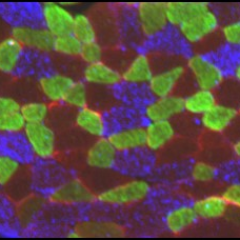
Proteasomal control of transcription factors: mechanisms, regulation and dysregulation
link.springer.com/article/10…
Edu Antuña 🔬 retweeted

Metformin inhibits nuclear egress of chromatin fragments in senescence and aging
nature.com/articles/s43587-0…

Edu Antuña 🔬 retweeted

Mitochondrial DNA release and inflammation in mitochondrial disease pathogenesis
academic.oup.com/brain/advan…

Edu Antuña 🔬 retweeted

Hoy, nuestras chicas, Ana Coto y Cristina Cachán, han sido entrevistadas por @p_carrelo para @radio5_rne con motivo del #DíaInternacionaldelaMujerylaNiñaenlaCiencia.
#Ciencia #Mujer #Niña @FINBAsturias #UniOvi #Radio #RNE


Edu Antuña 🔬 retweeted

Long in the making, but happy to present the Chlamydomonas chlororibosome!
Cryo-ET🔬reveals a new domain on the small subunit, made by multiple extensions in conserved ribosomal proteins. Chlororibosomes might be more diverse than expected!
bioRxiv 📖: shorturl.at/q44tG
Edu Antuña 🔬 retweeted
Reframing fibrosis as a barrier to regeneration and gene delivery in muscular diseases
febs.onlinelibrary.wiley.com…

Edu Antuña 🔬 retweeted

¡Atención, socios! 🎉 Hasta el 31 de enero, ¡vota en las elecciones de la Sección Júnior de la SEBBM! Participa desde el área privada y conoce a los candidatos aquí: f.mtr.cool/wflqcmmbzv

Edu Antuña 🔬 retweeted
Look at those beautiful mitochondria (red) surrounding a lipid droplet in a liver cell!
Edu Antuña 🔬 retweeted
Mitochondrial dysfunction drives cellular senescence: Molecular mechanisms of inter-organelle communication;
sciencedirect.com/science/ar…
