

Economic Policy Research Centre (EPRC) is Uganda's leading think tank in economics and development policy-oriented research and policy analysis.
Kampala, Uganda
Joined November 2012
- Tweets8.5K
- Following4K
- Followers5K
- Likes3.7K






Pinned Tweet
Charcoal Dependence: the dilemma of attaining sustainable production & u... youtu.be/5QHv-SmrSdc?si=wv-m… via @YouTube

EPRC retweeted

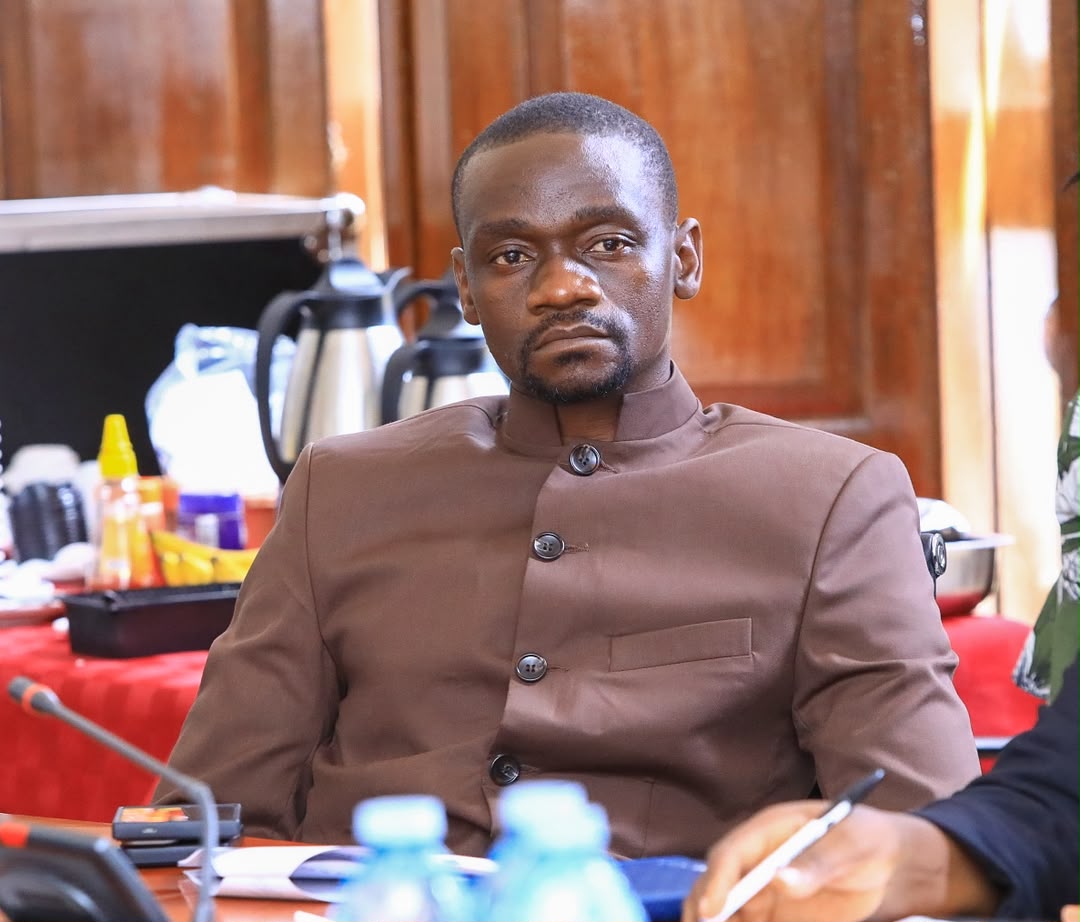
A Senior Researcher at the Economic Policy Research Centre (EPRC), Dr. Isaac Shinyekwa has told the Committee on Tourism, Trade and Industry that Uganda needs targeted policy interventions to revitalise its Cotton, Textile and Apparel (CTA) value chain.
Dr. Shinyekwa told the committee chaired Hon. Okot Boniface that the challenges affecting the sector include high production costs, low cotton yields, declining farmer returns and underutilisation of local ginneries, which are currently operating at just 18 per cent capacity.
EPRC called for targeted interventions, including reducing farmers’ production costs, promoting mechanisation and irrigation and strengthening local textile processing.
The centre’s presentation noted that cotton supports over 250,000 households and nearly three million Ugandans particularly in Northern and Eastern Uganda.



EPRC retweeted

Speaking at the 3rd Doing Business Forum, under the theme “Unlocking Uganda's Tenfold Growth through the Construction Value Chain: Regulatory Reform, Local Capacity and Infrastructure Investment,” I noted that
Government will work with local governments to improve physical planning, simplify building approvals and uphold construction standards.
I outlined Government's priorities for strengthening Uganda's construction value chain, focusing on simplifying building approvals, stronger local contractors, affordable long-term financing and improved accountability in public investment.
Developers should know the requirements, costs and timelines for obtaining approvals to make it easier to build safely and predictably.
Government and the private sector will support Ugandan contractors to develop the skills, equipment and management capacity needed to deliver quality work.
I also called for support towards innovations that make locally produced building materials more competitive to reduce construction costs. The objective is to enable more Ugandan firms and workers participate competitively in the construction value chain and retain more value in the domestic economy.
With Uganda's housing deficit estimated at 2.4 million units, the demand will require private investment and financing that households and developers can afford.
@mofpedU will support the phased capitalisation of the National Housing and Construction Company, alongside private sector innovations aimed at lowering the cost of building.
Government will continue investing in roads, electricity, water and other essential services, including in Greater Kampala, to support construction and create an enabling environment for private investment.
Government will also advance digitisation and procurement reforms to strengthen accountability, curb corruption and protect value for money in public investments.
I challenged the Forum to identify practical changes that will reduce the cost and time of building, help Ugandan firms win and deliver contracts, and attract long-term investment. I called for each proposal to specify the responsible institution and what it can deliver within a clear timeframe.
The recommendations from this Forum are expected to inform the next Budget, the medium term and Government's reform priorities.
#10FoldGrowth


EPRC retweeted

Africa’s Media Crisis: Analogue Mindsets & Strategies In a Digital Landscape Won’t Save Journalism
Checkout perspectives from our president; @Kalinaki during his candid conversation with @StKyamutetera from @CEOMagazineGL about life, journalism and the rapidly changing media industry with
youtu.be/x_ybVRhrksM?si=KIt_…

EPRC retweeted

CLOSING THE HOUSING GAP IN UGANDA
Finance Minister @henrymusasizi1 has said addressing Uganda’s housing deficit estimated at 2.4 million units requires private investment and financing that households and developers can afford. He said Mortgage refinancing can help lenders provide longer-term housing finance.
The Minister said @mofpedU will support the phased capitalisation of the National Housing and Construction Company and private innovations that lower the cost of building.
“We will work with local governments to improve physical planning, simplify building approvals and uphold construction standards,” said the Minister, adding that developers should know what is required, what it costs and how long a decision will take.
The PSST @rggoobi said this conversation is intended to feed into the FY2027/28 Budget, adding that a competitive construction industry supports the entire economy.
“Our objective is to build infrastructure efficiently while expanding opportunities for Ugandan contractors, manufacturers, professionals and workers,” said Dr. Ggoobi.
He called for improvement in project preparation, coordinated utility provision and timely implementation, adding that Ugandan firms need the appropriate finance, equipment, technical capacity and management systems to deliver quality work on time.
#10FoldGrowth


EPRC retweeted

𝗠𝗲𝗻𝘁𝗮𝗹 𝗵𝗲𝗮𝗹𝘁𝗵 𝗶𝘀 𝗮 𝗴𝗼𝗹𝗱𝗺𝗶𝗻𝗲. 𝗣𝗿𝗼𝘁𝗲𝗰𝘁 𝗶𝘁.
In today’s Daily Monitor, page 11, Sharon Aber, a Lawyer at CEHURD, reflects on the mental health challenges facing communities in Uganda, including stigma, violence, discrimination and gaps in access to #MentalHealth services.
She calls for a shift beyond awareness to meaningful action, urging society to listen, institutions to act and the health system to recognise mental well-being as essential to health and dignity.
Read the full article on page 11 of today’s Daily Monitor or online » monitor.co.ug/uganda/oped/co…
#ActionForWomensHealthUg


EPRC retweeted

Join us for the next Global Conversations on Sustainable Health as we explore an important question: Are we prepared for the next outbreak?
Drawing lessons from the #Ebola experience in the Democratic Republic of Congo, this conversation will bring together experts from Africa and beyond to reflect on how we can strengthen pandemic preparedness, improve disease surveillance, coordinate emergency responses and build resilient health systems.
Register here to attend: ki-se.zoom.us/meeting/regist…

EPRC retweeted

GERMANY COMMITS €50M GRANT TO UGANDA FOR DEVELOPMENT PROJECTS
Germany has committed €50 million in grants to Uganda to support development interventions in water, electricity, agribusiness, local economic development and refugee-hosting communities, following the conclusion of two days of Government-to-Government negotiations in Kampala on November 3, 2026.
The commitment comprises €30 million in Financial Cooperation and €20 million in Technical Cooperation, reinforcing a bilateral partnership spanning more than 60 years.
Of the new support, €35 million (70%) will go towards water and electricity, while €10 million (20%) will support agribusiness and local economies. The remaining €5 million will support refugee participation and host communities, among other areas.
The Finance Minister @henrymusasizi1 said the interventions are aligned with Uganda's National Development Plan IV and Tenfold Growth Strategy, which aims to grow the economy to US$500 billion by 2040 through Agro-Industrialisation, Tourism, Minerals, and Science, Technology and Innovation (ATMS).
“We appreciate this support. It comes at a time when resources for overseas development support are under pressure across Europe given the on-going global challenges,” Musasizi said.
He welcomed the €35 million allocation to water and electricity, describing these as important enablers of the ATMS agenda. He also called on German investors to explore opportunities in production, processing, exports and skilled job creation, proposing structured engagements to identify bankable investment opportunities.
The negotiations also earmarked €18 million for the electrification of West Nile, which is expected to serve enterprises and farms in a region that trades with eastern Democratic Republic of the Congo and South Sudan.
Musasizi further asked Germany to support Uganda's efforts to mobilise financing for railway development, irrigation and electricity through the World Bank, African Development Bank and other multilateral institutions.
The Head of the German Delegation, Joachim Schmitt, who also heads the Central and East Africa Division at Germany's Federal Ministry for Economic Cooperation and Development, said the cooperation would support Uganda's ambition to graduate from Least Developed Country (LDC) status.
“Our development cooperation will actively support this strategy, while being fully aligned to the Ugandan Vision 2040, its '10-fold growth strategy', including the ATMS priorities, as well as the 'National Development Plan IV',” Schmitt said.
He emphasised increased participation of Ugandan, German and European enterprises in unlocking economic potential, creating jobs and supporting Uganda's development. He also commended Uganda's refugee-hosting policies, reaffirming Germany's continued focus on West Nile and support for refugees and host communities.
German Ambassador to Uganda, H.E. Sigrid Sommer, said the new commitments build on more than six decades of cooperation that have delivered tangible results. “With these additional bilateral commitments, Germany remains a strong partner of Uganda and its people.”
Sommer said the outcome of the negotiations provides a basis for development cooperation over the next two years, aligned with Uganda's strategies and priorities.
She noted that Germany accounts for nearly 25% of EU funding and reaffirmed her country's commitment to supporting Uganda alongside partners, including GIZ and KfW.
She emphasised that development cooperation,trade and investment are complementary parts of the partnership, adding that Germany remains committed to presenting business opportunities to enhance trade and investment with Uganda.


EPRC retweeted
MICROECONOMIC INDICATORS & DEVELOPMENTS FOR SEPTEMBER 2026:
Formal employment returns,as captured under the PAYE Register, increased by 19% from
805,428 employees in August 2026 to 958,751 in September 2026. There were no officially
registered migrant workers in September 2026, following the Ebola travel bans to Qatar,
UAE and Saudi Arabia.
National Social Security Fund’s registered and active members respectively increased by 6% and 8%
from 3.4 million and 850,000 in 2025 to 3.6 million and 920,000 in 2026.
The
number of Agent Banking agents increased by 10% from 37,585 in June 2026 to 41,498 in
June 2026.
Air quality in Kampala improved, with particulate matter dropping by 29% from 49.4µg/m³
in August 2026 to 34.9µg/m³ in September 2026. The improvement was partly attributed to seasonal rainfall that commenced in September 2026, which helped to reduce airborne particles and suppress road dust. However, this remains above the World Health
Organization’s threshold of 25 µg/m³.
Most parts of the country received near-average
rainfall during the month of September 2026.
Malaria prevalence remained unchanged at 0.8 deaths per 1,000 persons in September 2026.
For more details👇👇👇
development.finance.go.ug/si…

EPRC retweeted

Gudie Leisure Farm hosted associates from AU and AAIN for a familiarisation visit to explore the farm’s capacity and potential for collaboration in aquaculture, particularly catfish farming and management, while sharing opportunities for growth in Uganda’s fish farming sector.#AU


EPRC retweeted

The Engineers Registration Board has Registered the following Fifty-Two (52) applicants as ENGINEERS and One (1) applicant as a TECHNOLOGIST, following approvals made at its 418th meeting held on 28th October 2026.
Congratulations are in order!
#ForEngineeringExellence
#RegisteredEngineers


EPRC retweeted
MARKETING UGANDA IN CHINA
Minister of State for Privatisation & Investment @AminahMukalazi is currently on a working visit in China to explore opportunities for industrial cooperation, investment partnerships, technology exchange and stronger business linkages between Uganda and Chinese industries.
"Together with the delegation, we are engaging prospective investors and exploring opportunities to attract Chinese investments into Uganda's industrial parks, particularly in manufacturing,technology-driven industries and value addition.
@AminahMukalazi has already visited several industrial facilities across Xiamen,Fujian province including robot manufacturing industries,where she gained insights into advanced manufacturing technologies, industrial automation, innovation and modern production processes.
"Our focus is on identifying partnerships that can facilitate technology transfer, create employment for Ugandans, develop local skills and expand Uganda's industrial production capacity," she said.


Today, EPRC met with the AFCON team at the @NCSUganda1 to discuss potential research partnerships under the theme: “Beyond AFCON: Maximising Economic Returns from Uganda’s Sports Infrastructure.”
🤖 Made with AI


EPRC retweeted

"I'll burn their [speculators] fingers." This was Mutebile's often used phrase whenever the shilling received whipping from the $. For most part, he did. It has now fallen past shs 4,200 per dollar. Can the current central bank leaders catch it? @GodwinTOKO

EPRC retweeted

Uganda Government Treasury Bills | Auction Results Released
The Bank of Uganda has published the results of Uganda Government Treasury Bills – Issue No. 1236, covering the 91-, 182-, and 364-day tenors.
The results provide a breakdown of total bids received, amounts accepted, and the resulting yields, offering insight into current investor demand and prevailing money market conditions.
🔎 View the full auction results here: ow.ly/CjGi510036x. Please note that the next Treasury bills auction will be held on November 4, 2026

EPRC retweeted
But we don't hear about plans for Gov't to become frugal in its expenditures these days? #10GS can only become a reality if we reform our public admin., tax system & implement a fair tax exemption scheme @EPRC_official @CSBAGUGANDA @mofpedU

Government will leverage evidence-based research to strengthen industrial policy, improve public investment decisions and accelerate economic transformation under the Tenfold Growth Strategy.
I made the commitment at a public policy dialogue at Uganda Management Institute (UMI), where findings from a PhD study by the Permanent Secretary/Secretary to the Treasury, Dr @rggoobi on the determinants of industrial sector growth in Uganda were discussed.
Industrial policy requires deliberate choices on investments in industrial parks, economic infrastructure, industrial land, subsidised electricity tariffs for investors and fiscal incentives.
Given limited resources, i emphasised the need to identify interventions that deliver the greatest gains in industrial productivity, jobs and exports for every shilling of public money.
Dr Ggoobi’s research identifies corruption control, market expansion, access to credit and the cost of borrowing as important determinants of industrial performance.
The study estimates that a 1% improvement in corruption control is associated with a 9.99% increase in industrial output, while a 1% increase in commercial lending rates is associated with a 3.11% decline in output.
Population growth has a positive estimated relationship with industrial growth of 8.48%, reflecting the potential of expanding markets and labour supply.
The findings also highlight the importance of price stability, particularly controlling inflation and stabilising the exchange rate, alongside reducing the cost of capital and improving access to long-term financing through pension reforms and deeper capital markets.
The study recommends expanding affordable industrial credit, strengthening domestic value chains, aligning technical training with industry needs and improving regulatory efficiency through digitisation. It also advocates carefully calibrated trade and foreign investment policies that strengthen domestic producers and support export competitiveness.
Government is supporting domestic investment and access to affordable credit through initiatives such as the Parish Development Model and capitalisation of the Uganda Development Bank, alongside measures to support industrialists, including lower electricity rates and targeted tax incentives.
Dr Ggoobi’s findings will inform the Ministry’s policy decisions and implementation of the Tenfold Growth Strategy, helping Government assess the benefits and costs of its interventions and strengthen industrialisation, job creation and economic transformation.
I congratulated Dr Ramathan Ggoobi upon the conferment of his Doctor of Philosophy (PhD) degree in Economics from Nelson Mandela University in South Africa, commending him for his rigorous research, prolific writing and continued contribution to Uganda’s economic policy discourse.
I also noted that Dr Ggoobi’s ability to connect economic analysis with public debate and practical policymaking is invaluable to the country’s development agenda.


EPRC retweeted

Happening Now: Webinar on Managing Complexity in Uganda’s First-Referral Hospitals
How can Uganda's first-referral hospitals better manage complex healthcare demands, and what does this mean for primary health care reform?
Join the AFRHiCARE Uganda Webinar Series for a discussion on the challenges facing first-referral hospitals and their implications for strengthening primary health care in Uganda.
Topic: Managing Complexity in Uganda’s First-Referral Hospitals: Implications for Primary Health Care Reform
Presenter: Prof. Freddie Ssengooba, Professor of Health Economics and Health Systems Management, Makerere University School of Public Health, and Principal Investigator, AFRHiCARE Uganda.
Moderator: Dr. Raymond Tweheyo, Co-Principal Investigator and Research Manager, AFRHiCARE Uganda.
📅 Thursday, 22 October 2026
⏰ 1:00–2:00 PM EAT
💻 Online via Zoom
🔗 Join: t.ly/UFalr
Health professionals, hospital managers, policymakers, researchers, students and stakeholders working in health systems strengthening and primary health care are encouraged to participate.
#AFRHiCARE #MakSPH #FirstReferralHospitals #PrimaryHealthCare #HealthSystemsStrengthening #Uganda
