

Ecological Research publishes original papers on all aspects of #ecology, in both aquatic and terrestrial #ecosystems. ©The Ecological Society of Japan
- Tweets3.1K
- Following42
- Followers1.3K
- Likes2K






ALT Graphical abstract: Across tree species, coordinated structural and functional traits link leaves and branch wood. Native species have denser leaf and wood tissues and higher dehydration-resistant branches, whereas invasive species have less dense leaf and wood tissues and lower dehydration resistance. This study provides a trait-based framework to predict shifts in forest composition under climate change in oceanic islands.

ALT Graphical abstract: Populations of closely related Epimedium taxa inhabiting serpentine and limestone soils converged toward resource-conservative leaf trait syndromes despite strong differences in soil chemistry. Structural equation modeling revealed that edaphic variation was associated with leaf trait variation both directly and indirectly through shifts in leaf elemental composition. This study highlights multiple pathways linking edaphic heterogeneity to convergent resource-conservative leaf trait syndromes across serpentine and limestone soils.

ALT Graphical abstract: The botanical gardens of Osaka Metropolitan University (OMU botanical gardens) have a unique study site, which exhibits 11 types of Japanese forests for more than 60 years. Here, we report tree census data measured at this “forest types common-garden-experiment” which consists of five evergreen forests, three deciduous forests, and three coniferous forests.

ALT Graphical abstract: This dataset presents the first centralized compilation of forest restoration and adaptation initiatives in Spain, developed within the REFORADAPT project. It integrates information from European and national funding databases together with expert contributions, enabling the identification of both large-scale and community-led projects. The resulting harmonized dataset includes 382 initiatives and provides standardized metadata to support research, planning, and decision-making.

ALT Graphical abstract: Mangroves are vital coastal ecosystems, yet restoration efforts often overlook genetic diversity, impacting success. We analyzed the genetic structure of 15 natural and two replanted Rhizophora mucronata populations in Peninsular Malaysia, finding overall low genetic diversity (mean HE = 0.085) and evidence of artificial genetic mixing from uninformed replanting. Our study highlights the need for restoration initiatives to consider local genetic structures to preserve mangrove resilience and adaptive potential.

ALT Graphical abstract: We found that fine roots in ultramafic soil exhibited higher exudation rates, a higher exudation-to-respiration ratio, and lower root tissue density than those in the adjacent brown forest soil. These results suggest that trees growing in ultramafic soils develop efficient nutrient acquisition strategies, which may contribute to their growth and survival.

ALT Graphical abstract: We investigated how fruiting body morphology of the ammonia fungus Hebeloma danicum varies between serpentine and non-serpentine soils. By comparing pileus and stipe traits across habitats, we found consistent morphological differentiation associated with serpentine environments.

ALT Graphical abstract: We compared multiple woody and herbaceous plants growing on Japanese serpentine soils to identify common morphological responses. Leaves were generally smaller or thinner, and stomatal traits changed differently between woody and herbaceous species, reflecting low water retention. While most species likely responded via phenotypic plasticity, Aster hispidus var. leptocladus, a serpentine endemic, showed distinct morphological adaptations that may represent genetically fixed evolution.

ALT Graphical abstract: Forest regeneration in mining-degraded areas was strongly influenced by landscape connectivity and local environmental filters. Proximity to forest fragments, canopy cover, and grass biomass shaped the density, diversity, and composition of natural regeneration. Passive restoration showed regeneration patterns closer to reference ecosystems than active restoration.

ALT Graphical abstract: We tested whether the distinctive radical-leaf morphology of the serpentine ecotype of Adenophora triphylla var. japonica is due to phenotypic plasticity or genetic differentiation. The results suggest that lamina thickening is plastic for water storage, while reduced lamina size and modified petiole traits are genetically fixed adaptations to reduce mechanical stress.

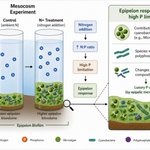
ALT Graphical abstract: We evaluated the responses of epipelic algal and cyanobacterial communities to increasing phosphorus limitation in the water column under eutrophic conditions. Nitrogen enrichment increased the N:P ratio and intensified phosphorus limitation in the water column, promoting changes in community composition. The greater contribution of cyanobacteria (e.g., Microcystis aeruginosa) and species with polyphosphate storage indicates that epipelic algal and cyanobacterial communities respond directly to increased phosphorus limitation in the water column.

ALT Graphical abstract: Cultural evolution in humans and non-human animals enables rapid behavioral change through social learning, with culturally transmitted behaviors reshaping population dynamics, species interactions, and community structure. Integrating cultural processes into ecology reveals fast feedbacks among ecological, biological, and cultural evolutionary dynamics.


ALT Graphical abstract: The manuscript presents the first analysis of soil algae in serpentine soils. This study identifies 19 taxa, including two globally rare species, contributing valuable insights into the biodiversity of ultramafic environments.

ALT Graphical abstract: In a greenhouse experiment using the endemic shrub Metrosideros laurifolia, we compared the functional effects of AMF community extracted from a disturbed soil restored 20 years ago with that extracted from a reference soil corresponding to a bordering dense shrubby maquis.

ALT Graphical abstract: Plant-derived signaling compounds mediate ecological interactions among plants, herbivores, their natural enemies, and neighboring plants. This graphical summary highlights three approaches to leveraging such ecological interactions for environmentally benign pest management: (1) Recruitment of natural enemies: Using herbivory-induced plant volatiles (HIPVs) to attract parasitoids and predators from the surrounding area to target locations such as greenhouses and open fields, to suppress herbivore populations; (2) Plant–plant communication: Using plant–plant communication where intact plants perceive HIPVs or artificially damaged plant volatiles (ADPVs) to prime their defenses, resulting in reduced herbivory and increased crop production; and (3) Exogenous application of signaling compounds: Applying plant hormones and related compounds—such as jasmonic acid (JA), methyl jasmonate (MeJA), methyl linoleate (MeLin), cis-jasmone, prohydrojasmon (PDJ), salicylic acid...