

Publishing consultant and rights manager for publishers, literary estates & nonprofits. Catholic author and speaker. Husband of 1, father of 8. https://nitter.gq/t.co/3aNrUKOHWX
Huntington, IN
Joined July 2007
- Tweets25.7K
- Following2.8K
- Followers3.3K
- Likes1.7K







Scott P. Richert retweeted

“Montag turned and looked at his wife, who sat in the middle of the parlor talking to an announcer, who in turn was talking to her. ‘Mrs. Montag,’ he was saying … The converter attachment, which had cost them one hundred dollars, automatically supplied her name whenever the announcer addressed his anonymous audience, leaving a blank where the proper syllables could be filled in. A special spot-wavex-scrambler also caused his televised image, in the area immediately about his lips, to mouth the vowels and consonants beautifully. He was a friend, no doubt of it, a good friend. ‘Mrs. Montag, now look right here.’” – Ray Bradbury, Fahrenheit 451 (1953)

New: Google plans to make a 24/7 AI TV channel that will use the information it knows about you to create personalized “shows” starring *you* and featuring customized advertisements
404media.co/google-wants-to-…

Scott P. Richert retweeted

I genuinely feel pity for people who see human life as nothing more than functions, creativity as nothing more than the ‘content’ it generates, intelligence as nothing more than the ‘correct answers’ it yields. If that’s your view of humanity, no wonder you think we’re obsolete.
Scott P. Richert retweeted

“He who prays for the coming of God’s kingdom prays rightly to have it within himself, that there it might grow and bear fruit and become perfect. For God reigns in each of his holy ones.” -Origen
Scott P. Richert retweeted

Every day, I am grateful for @BishopBoyea
Today, after reading this, I’m more grateful than ever.
😂


Scott P. Richert retweeted

Translation:
Wine …………………………………………………
………………………………………………… wine.
We're not going home 'till dawn!
Sometimes the missing parts of a papyrus aren't needed.


Scott P. Richert retweeted
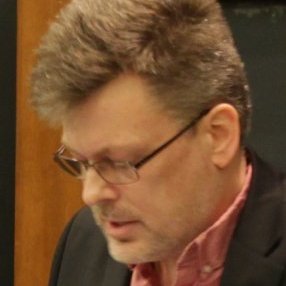
Nagel: “There’s no mental life there in the ordinary sense. It’s not a mind. It’s not somebody that we have to care about. It’s a machine. Here are some of the smartest people on the planet being completely idiotic”

Thomas Nagel has done landmark work on consciousness in nonhumans; this week, he won the million-dollar Berggruen Prize for his contributions to the field. And he has a lot of thoughts on AI. buff.ly/qf8Mls0

Scott P. Richert retweeted

Taps sign


Anthropic Researcher Tao Lin: Pretty much all humans on earth will become permanently unemployable because of AI
"It's very likely that pretty much all humans on earth will become permanently unemployable"
"And will need to strictly rely on government welfare to sustain themselves"
"Human employment will go away."
Scott P. Richert retweeted

We have a building permit for our renovation project at St. Hyacinth convent! Thank you to all who got us to this point! Info: fechicago.org/projects

Scott P. Richert retweeted
For goodness’ sake, Trump has for decades been very frank that he relishes getting revenge on his enemies, over small and large matters alike. For example, he said it in a Charlie Rose interview in 1992, and he devoted a chapter (!) to the pleasures of revenge in his 2007 book Think Big and Kick Ass. The idea that he was simply caught off guard by Douthat’s question, or that he is merely understandably bitter because of the assassination attempts or the Democrats’ lawfare, is pure cope. This is who he is, and who he always has been. Here are the comments from the 1992 interview:
Trump: You know, I love getting even with people, but I will…
Rose: Slow up. You love getting even with people.
Trump: Oh, absolutely. You don’t believe in the eye for the eye? You do. I know you well enough. I think you do.
Rose: But tell me, I mean, you’re going to get even with some people.
Trump: If given the opportunity. If given the opportunity, I will get even with some people that were disloyal to me. I mean, I had a group of people that were disloyal.
Rose: But how do you define disloyal?
Trump: They didn’t come to my aid.
Rose: Well, what did they do? They turned their back on you?
Trump: No, but they didn’t do small things that would’ve helped. They didn’t do large things that would’ve helped.
In the book, Trump writes: “I love getting even… Always get even. Go after people that go after you” (p. 29). “When somebody screws you, screw them back in spades” (p. 183). “If you don’t get even, you are just a schmuck! I really mean it, too” (p. 190). “You need to screw them back fifteen times harder” (p. 194). And so on. He relates the case of a former employee who failed to help him when he needed it, but later faced hard times of her own, losing her business, her home, and her husband. This, he says, made him “really happy,” and “now I go out of my way to make her life miserable” (p. 180). He also tells us about an athlete friend of his who had been betrayed by his manager but declined to take Trump’s advice to get revenge. Trump broke off the friendship over this, refusing to associate any further with a “loser,” “schmuck,” and “jerk” who would refuse to get even (p. 192).
The remarks Trump made at Charlie Kirk’s memorial service and to Douthat about hating his enemies are simply the reiteration of this longstanding attitude. They are not merely about anger over recent injustices, nor an awkward response to an unexpected question.


Scott P. Richert retweeted

A false trichotomy. Another answer includes saying something like " I do hate my enemies, but I know that's wrong and I hope I can overcome it."

I get Christians criticizing Trump for his answer, but we should realize there's value in it being honest.
There's three ways to answer that question:
(1) Say you forgive your enemies and mean it.
(2) Say you forgive your enemies and don't mean it.
(3) Say you don't forgive your enemies.
Of these options, (1) is best, and (2) is worst. At least with (3) there's honesty, and God can work with that.

Scott P. Richert retweeted
“The Lord allowed death to enter this world so that sin might come to an end. But he gave us the resurrection of the dead so that our nature might not end once more in death; death was to bring guilt to an end, and the resurrection was to enable our nature to continue forever.” -St. Ambrose
Scott P. Richert retweeted

Monste Alvarado, new prefect of Vatican's Dicastery for Communication, greets journalists in 4 languages today during a briefing on the papal trip to South America. Starts with Spanish (she was born in Mexico City), says she learns Italian and asks for patience, then moves on to say in English you don't have to be sorry to be an American anymore in the Vatican, and at the end greets French journalists in a language she also speaks fluently.
Scott P. Richert retweeted
Following Trump’s playbook from 2024 and since, a once pro-life Republican senate candidate says that abortion “should be handled with [a woman's] family and her doctor. Period” and pledges that he “will never… overturn” a “woman’s right to choose.” As some of us have warned, the GOP is becoming a second pro-choice party.

I have been clear about this issue time and time again and I will not allow Abdul to lie about my position.
This decision is one of the hardest decisions a woman will make in her entire life and it should be handled with her family and her doctor. Period.
The Michigan voters went to the ballot box and made a woman’s right to choose part our State Constitution and as Michigan’s next Senator I will never go to Washington and overturn the will of the Michigan people.
Scott P. Richert retweeted
Pro-lifers can continue to have political influence at all only if the GOP knows that it will lose elections if it betrays them. THAT is the cold, hard political reality. Anyone who says otherwise either doesn’t understand politics or doesn’t really care about the pro-life cause.


Scott P. Richert retweeted

The future of #ArtificialIntelligence is not pre-determined. As a technology developed by human beings, its future depends on the choices we make. We therefore have the responsibility to guide, change and, when necessary, reject its applications. A reliable system that serves the human person is of greater value than one that is exceptionally powerful but whose consequences cannot be adequately foreseen or controlled.
Scott P. Richert retweeted

This business about kneeling for Holy Communion was settled long ago. In fact, the USCCB was subtly corrected on the matter in the publication of the 2010 American translation of the 2000 edition of the Missale Romanum. Here's what happened...
In 2000, the third edition of the Missale Romanum was promulgated by St. John Paul II, which included a revised General Instruction of the Roman Missal (i.e., the GIRM). Every episcopal conference could then make adaptations proper to their own bishops' dioceses as long as the Holy See approved those modifications.
In 2002, therefore, this revised General Instruction of the Roman Missal was issued for the United States with the approved adaptations for the United States.
Paragraph 160 of that 2002 US GIRM said: "The norm for reception of Holy Communion in the dioceses of the United States is standing. Communicants should not be denied Holy Communion because they kneel. Rather, such instances should be addressed pastorally, by
providing the faithful with proper catechesis on the reasons for this norm."
Communicants couldn't be denied Holy Communion for kneeling, but they should be "addressed pastorally." Keep in mind, we were still using the 1972 translation of Mass found in what was called then the Sacramentary.
In 2004, the then-Congregation for Divine Worship and the Discipline of the Sacraments at the Holy See issued an all-encompassing document addressing deficiencies and abuses regarding the Most Holy Sacrament called Redemptionis Sacramentum.
In paragraph 90 of that document, the Holy See affirmed: "'The faithful should receive Communion kneeling or standing, as the Conference of Bishops will have determined', with its acts having received the recognitio of the Apostolic See. 'However, if they receive Communion standing, it is recommended that they give due reverence before the reception of the Sacrament, as set forth in the same norms.'"
Note the Holy See's insistence here on the norm that any determination by an episcopal conference on these matters must have the approval (the recognitio) of Holy See.
The following paragraph (91) says this: "In distributing Holy Communion it is to be remembered that 'sacred ministers may not deny the sacraments to those who seek them in a reasonable manner, are rightly disposed, and are not prohibited by law from receiving them'. Hence any baptized Catholic who is not prevented by law must be admitted to Holy Communion. Therefore, it is not licit to deny Holy Communion to any of Christ’s faithful solely on the grounds, for example, that the person wishes to receive the Eucharist kneeling or standing."
Fast forward to 2010 after the US Bishops approved an English translation for the 2000 Missale Romanum, it's sent to Rome to be approved, but NOT WITHOUT a change in the US GIRM at paragraph 160--a change that wasn't reported at the time as being requested by the USCCB. In other words, it's a change that the Holy See simply made on its own authority.
Unlike the 2002 US GIRM at 160, the 2010 and CURRENT US GIRM at 160 doesn't mention any pastoral issue needing to be addressed about the faithful kneeling to receive Holy Communion. Presumably, this is because the Holy See doesn't think it is a pastoral issue.
The 2010 US GIRM, approved by the Holy See and changed from the 2002 version by the authority and initiative of the Holy See, now says:
"It is not permitted for the faithful to take the consecrated Bread or the sacred chalice by themselves and, still less, to hand them on from one to another among themselves. The norm established for the Dioceses of the United States of America is that Holy Communion is to be received standing, unless an individual member of the faithful wishes to receive Communion while kneeling" (and cites Redemptionis Sacramentum, paragraph 91).
Thus, in 2010, the Holy See changed the US GIRM specifically to remove any sense of kneeling being a pastoral issue. Yes, standing is the norm in the United States, UNLESS a member of the faithful wishes to receive Holy Communion while kneeling.
Sources in the replies: