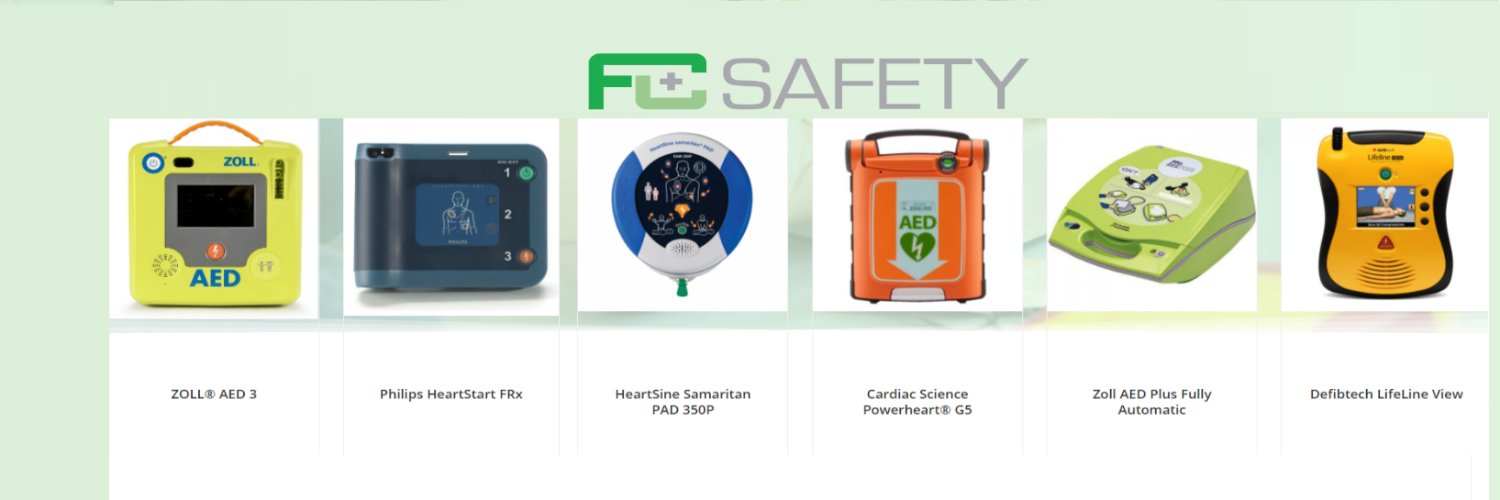

FC Safety is a leading provider of safety products: Our number one priority is to make sure everyone is always well prepared to save a life.
Irvine, CA
Joined September 2022
- Tweets57
- Following11
- Followers4
- Likes51




FC Safety retweeted
Visiting family? Planning parties? Struggling to say no? Taking slow, deep breaths can help you keep your cool when the holidays get to be … a lot.

FC Safety retweeted

🧠 POST-RESUSCITATION CARE
They survived the arrest.
Now it’s time to:
💨 Oxygen right
❤️ Support the heart
🌡️ Control temperature
🧠 Assess the brain
🫂 Guide families
💝 Consider donation
Care continues after ROSC.
And that care matters.
Read here: resuscitationjournal.com/art…
#ERC2025 #PostROSC #ResusCare #CriticalCare #NeuroRecovery #ERC #ESICM

FC Safety retweeted
We all experience stress from time to time. But when that stress is constant, or chronic, that’s another story. If you feel like you’re dealing with chronic stress, ask your doctor or a mental health expert for help.


FC Safety retweeted
All those hours logged in the driveway are about to pay off. Some research suggests that active kids may be at lower risk for heart disease as adults. But it’s still important to know your numbers! If you’re 18 or older, get a blood pressure check every year, even if you’re healthy.

FC Safety retweeted
🚨 They’re Here: The ERC Guidelines 2025! 🚨
A new era in life-saving begins today.
The @ERC_resus has officially released the 2025 Guidelines, the most advanced, evidence-based recommendations ever for resuscitation and emergency care.
From bystander CPR to post-resuscitation care, from paediatrics to advanced life support, every section has been updated with the latest science to help more people survive cardiac arrest and live better afterwards ❤
💡 What’s new?
✅ Updated protocols based on the latest ILCOR evidence
✅ Stronger focus on early recognition, teamwork & education
✅ Improved pathways for pre-hospital and in-hospital care
✅ Renewed commitment to inclusion, ethics, and community response
👉 Explore the full ERC - European Resuscitation Council 2025 now: erc.edu/news/2025-erc-guidel…
Let’s shape the future of resuscitation — together.
#ERCGuidelines2025 #Resuscitation #CPR #SavingLives #EmergencyCare #ILCOR #Resus25

FC Safety retweeted

👏 The Wait is over
🚀 The 'ERC 2025 Cardio Pulmonary Resuscitation Guidelines' is Released.
🫀 Click the link to know more
👉 erc.edu/news/2025-erc-guidel…
#ERC #CPR #Guidelines2025 #ERCGuidelines #savelives #RESUS25

FC Safety retweeted
These kicks aren’t just stylish. They’re lifesaving. ❤️👟 Tonight during the Monday Night Football matchup between the Detroit Lions and Tampa Bay Buccaneers, keep your eyes on @BarrySanders as the legendary Lions running back steps onto the field in custom shoes supporting the American Heart Association.
Barry’s not just a football icon—he’s a survivor. And now, he’s teaming up with the Heart Walk to champion Life’s Essential 8, a powerful roadmap to better heart health:
🥗 Eat Better
🏃 Be More Active
🚭 Quit Tobacco
😴 Get Healthy Sleep
⚖️ Manage Weight
🧬 Control Cholesterol
🩸 Manage Blood Sugar
🫀 Manage Blood Pressure


FC Safety retweeted
“CPR is the reason I’m alive.”
Kayla Messana’s heart stopped while she slept. Her husband, John, woke to her gasping for air. He called 911 and started chest compressions.
EMTs arrived and used an automated external defibrillator, or AED, to restart her heart. They took her to the closest hospital. Over the next 24 hours, she had five more episodes of cardiac arrest.
Doctors placed Kayla in an induced coma to let her body heal. They told John that they didn’t know if the lack of oxygen while her heart had been stopped would result in cognitive or physical deficits.
Four days later, Kayla woke up. John could tell that his wife was still there.
“When her freckles started popping out, that really gave us hope,” he said. “And her sense of humor was back.”
Tests showed Kayla had experienced ventricular fibrillation. V-fib is a life-threatening heart rhythm disorder that can cause cardiac arrest. She got an implantable cardioverter defibrillator (ICD) that monitors her heart and can shock it back into a normal rhythm. She was also put on medication for heart failure.
Once home, Kayla’s heart failure left her feeling sapped of energy and fighting through dizziness, shortness of breath and heart palpitations.
“Every ounce of normalcy was ripped away from me,” she said. “In the beginning, I was so terrified I could hardly sleep.”
But soon she developed a new attitude. Instead of focusing on what she couldn’t do, she embraced what she could.
She switched to a part-time job and pursued a dream of writing children’s books. She’s self-published three, all colorfully illustrated tales aimed at young readers. She also opened a small business with a friend.
And she and John spread the word about the importance of knowing CPR, and that heart disease can happen to younger people, too.
“I’ve been given a chance at a second life, and I’ve got to live it.”
Read Kayla's Story From the Heart: spr.ly/6017AuE1c

FC Safety retweeted
When disaster strikes, losing touch with loved ones can be one of the hardest parts. That’s why planning how you'll reconnect is just as important as having an emergency kit.
- Start a group chat now.
- Pick a common meeting spot.
- Share emergency contacts with each other.
This #NationalPreparednessMonth, take time to talk with your family and friends about your communication plan so you’re all ready when the unexpected happens.

ALT An image that says, "What if you can't contact loved ones during a disaster? Text, don't call. Check social media for updates. Reach out for mutual contacts for help."
FC Safety retweeted
At 56, Michael underwent quadruple bypass surgery to open 5 blocked arteries to his heart.
"I got my plumbing fixed, and I felt more confident in my longevity compared to someone who hasn't had a tune-up," he said. But as a precaution, he bought an AED to keep at the remote tree farm in Vermont where he lived with his wife, Jill.
Less than a year later, it helped save his life.
Jill had been awakened by the sound of Michael gasping for air. She called 911 and yelled for their daughter Sophie, a nurse, who was visiting from Denver.
Sophie started chest compressions while Jill ran to get the AED. They traded off the role of delivering shocks and compressions. Two farmhands also joined in the rescue attempt.
It took the ambulance 35 minutes to arrive. By then, Michael had received three shocks from the AED and continuous CPR, and he had a faint pulse.
At the hospital, doctors stabilized Michael. When he woke up later that day, he couldn't see and had amnesia. But within 24 hours, those issues faded away. He had no detectable physical or cognitive deficits.
Doctors said that ventricular fibrillation brought on Michael's cardiac arrest. The abnormal heart rhythm is due to disorganized electrical activity that prevents the heart from pumping blood effectively. Michael got an implantable cardioverter defibrillator, or ICD. The device records and transmits data for remote monitoring, and if the device detects an abnormal heart rhythm, it can deliver a shock.
Six weeks after the cardiac arrest, Michael was back to work on the farm, but he left cutting down trees to his crew.
"The doctors told me it was a freak electrical issue," Michael said. "Now I've gotten my plumbing and electrical fixed. Plus, I'm being monitored remotely, so if anything goes wrong, they'll know it."
Read his Story From the Heart: spr.ly/60144R5uG
