

Sharing the latest insights and breakthroughs on the intersection of privacy-enhancing technologies (PETs) and Web3.
Joined May 2025
- Tweets21
- Following1
- Followers22
- Likes8

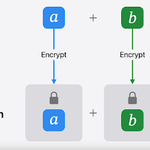




As interest in data privacy grows, @Apple has begun leveraging Fully Homomorphic Encryption (FHE) to secure machine learning (ML) processes without compromising user privacy.
Here’s a breakdown of Apple’s approach and how FHE is applied to sensitive data handling👇

24
8
410
Additionally, Apple has open sourced its Swift Homomorphic Encryption library, potentially encouraging broader development of privacy-preserving applications that leverage server-side data without exposing sensitive information.
3
3
208

In TFHE, encryption can be either private or public—depending on whether the sender knows the secret key.
Let’s walk through how a private setup works, how we convert it to a public one, and how public key encryption works under the hood 👇

1
78
This gives an encryption of the message—without ever needing S. This is the core idea behind TFHE’s public key approach.
It is also possible to perform sample extraction to convert the GLWE ciphertext into its LWE equivalent.
1
64