

Ben sizden değilim...🏴 Asgari değil. Askeri ahlak. Antiterorist https://nitter.gq/t.co/zFubjzzrTu
GAIA 10.köy
Joined June 2010
- Tweets215K
- Following1.3K
- Followers39.1K
- Likes21.3K




Fırat Erez retweeted

Russia’s Shkval torpedo is unlike anything you’d expect underwater. It uses supercavitation to move at incredible speeds, but that comes with some serious limitations. 🚀
Fırat Erez retweeted

Works well with this one as well youtu.be/P-sc0VcQwvQ?si=ObzC…

Fırat Erez retweeted

Bu tüyler ürpertici ses kaydının arkasındaki karanlık detayı biliyor musunuz?
Rudyard Kipling’in 1903 tarihli "Boots" şiirinin 1915'teki bu okunuşu, ABD ordusunun SERE okullarında askerleri esaret ve psikolojik işkenceye hazırlamak için saatlerce kapalı odalarda dinletilmiş.
Şiir, cephede durmadan yürüyen bir askerin önündeki çizmeleri izlerken adım adım aklını kaçırmasını anlatıyor. Sesin ritmi tam olarak yürüyüş temposunda olduğu için dinleyeni hipnotize edip klostrofobik bir panik yaratıyor.
Ne seslendirme ama :)

Fırat Erez retweeted

Dünki @SpaceX operasyonunun başarısı neden önemli?
Çünkü ilk kez bir Starship, mechazilla denen iniş karşılama aracı tarafından yakalandı.
Daha önce yakalanırken gördüklerimizin hepsi, booster denen ve asıl görevi yapacak starship'i yörüngeye taşımakta kullanılan kısımdı.
⬇️

Fırat Erez retweeted
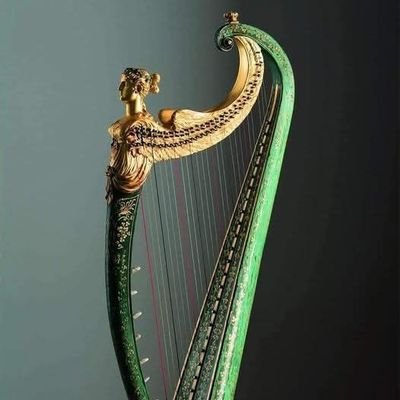
Listening to Art Garfunkel sing Scarborough Fair at 80 years old gave me goosebumps. That golden voice never fades… What a legend! 🫶
Fırat Erez retweeted

Hilafetin lağvı, hem Türkiye hem İslam dünyası için büyük bir hataydı. Osmanlı Hilafeti, dine ve geleneğe saygılı bir modernleşmeyi temsil ediyordu. Sonrası, otoriter seküleristler ile reaksiyoner İslamcılar arasında savrulan bir kısır döngüye kaldı.


Fırat Erez retweeted

-SON DAKİKA-
Türkiye’ye “Kıbrıs’ta müzakerelere karşılık gümrük birliği süreci teklifi”
📍Kıbrıs Rum yönetimi başkanı Nikos Christodulides, Antalya’da Avrupa Komisyonu Başkanı Ursula von der Leyen ile ikinci kez görüştü.
• Von der Leyen, Kıbrıs müzakerelerinin yeniden başlaması halinde AB’nin Türkiye ile gümrük birliği sürecini başlatmaya hazır olduğunu söyledi.
• Avrupa Konseyi Başkanı António Costa’nın bu mesajı Ankara’ya ileteceği belirtildi.
• BM Genel Sekreteri António Guterres de kendi görev süresi içinde Kıbrıs görüşmelerinin yeniden başlatılması yönünde niyetini ifade etti.

Fırat Erez retweeted
İzmir Life Dergisi röportajım;
Havana Elektrikçisi
drive.google.com/file/d/1wQl…
Fırat Erez retweeted

On December 12, 1952, a nuclear reactor in Canada went out of control. Someone had to go inside and take it apart. One of the young men who did it would later become President of the United States.
The reactor was called NRX, at the Chalk River Laboratories in Ontario. It was one of the most important research reactors in the world at the time.
That day, a series of mistakes caused its power to surge. Part of the core overheated and melted, and about a million gallons of radioactive water flooded the basement. It was one of the first serious nuclear accidents in history.
The reactor had to be dismantled before it could be repaired. But the radiation inside was so strong that no one could stay near it for long.
At the time, the United States Navy was working on the first nuclear-powered submarines, and its engineers had a strong interest in learning from the accident. A young Navy lieutenant who was working on the program was sent to Chalk River with a team of American sailors to help.
He was 28 years old. His name was Jimmy Carter.
The plan was carefully worked out. Each man could only be exposed to the radiation for about 90 seconds. So the team built a full-size copy of the damaged part of the reactor on a nearby tennis court.
Over and over, they practiced every movement until they could do their part perfectly and fast.
Then, one at a time, they went in.
Carter later described being lowered into the damaged reactor in a protective suit, working as fast as he could on his task, and then being pulled out. In those 90 seconds, he said, he absorbed the maximum amount of radiation considered safe for a whole year. For months afterward, his urine was tested for radioactivity.
Years later, he would joke that he and his men were "hot" for a while afterward. But at the time, nobody knew exactly what the long-term effects of that much radiation would be. The young sailors volunteered anyway. They knew the reactor had to be fixed, and they knew someone had to do it.
The work took weeks. Team after team went in, each man doing one small job in his 90 seconds before the next man took his place. Slowly, piece by piece, the damaged parts were removed. The reactor at Chalk River was eventually rebuilt and ran for decades afterward.
He later said the experience changed the way he thought about nuclear power and nuclear weapons for the rest of his life. He had seen with his own eyes what happens when something that powerful goes wrong.
Carter rarely made a big deal of it. In his memoir, he described it in a few plain sentences, the way a man describes a job that simply had to get done. Many Americans who voted for him never knew it had happened.
The following year, his father died, and Carter left the Navy to go home to Plains, Georgia, and run the family peanut farm. He went into local politics, then became governor of Georgia, and in 1977 he became the 39th President of the United States.
After the White House, he spent decades building homes with Habitat for Humanity, monitoring elections, and fighting diseases in some of the poorest countries on earth. In 2002 he was awarded the Nobel Peace Prize.
Jimmy Carter died on December 29, 2024. He was 100 years old, the longest-lived president in American history.
Few people knew that before any of it, as a young officer, he had once been lowered into a broken nuclear reactor with 90 seconds to get the job done.
Did you know this part of Jimmy Carter's life?

Fırat Erez retweeted

Michael "Rod" Rodriguez grew up surrounded by men who had served. His father was a Vietnam veteran and both of his grandfathers served in World War II, so by the time he graduated high school at 16, he already knew he wanted to be a Green Beret. He enlisted at 17 and was sent to the 10th Mountain Division, deploying to Somalia in 1993 and later to Haiti before earning his place at the Special Forces Qualification Course in 1997.
He went on to serve as an 18D Special Forces Medic and sniper, deploying with 7th Special Forces Group to Colombia, Panama, Peru, Bolivia, and twice to Afghanistan. His final assignment was as a sniper instructor at Fort Bragg. Over 21 years and 10 deployments, he suffered multiple traumatic brain injuries that he never reported because he wanted to stay in the fight. In 2013, he was medically retired with severe PTS and TBI.
His recovery took him in a direction few would expect. Through art therapy, he found blacksmithing, and his story led President George W. Bush to paint him for "Portraits of Courage," where his portrait appears on the book's cover. Today, he serves as CEO of the Global War on Terrorism Memorial Foundation, working to build a national memorial honoring an entire generation of warfighters.
From Mogadishu to the National Mall, Rod is still serving.


Fırat Erez retweeted

Ukraine sent at least 28 ground robots into a single assault on the Lyman axis on October 28.
No Ukrainian soldier took direct part. It is the largest robot-only assault to date. 1/

Fırat Erez retweeted

In 1948, Arab forces starved the Jewish Quarter of the Old City into surrender. They cut the roads, attacked food convoys, and left the Jews with almost nothing.
Yitzhak Rabin later described the conditions in Jerusalem: thirsty, starving, shelled, and sniped at. They fought for survival.
The Old City’s Jewish Quarter fell after months of siege. New (western) Jerusalem held. The Arabs had rejected partition, invaded, and used starvation as a weapon against Jewish civilians.
Today, the same actors and their heirs accuse Israel of the tactics they actually used in 1948. Tell me what you accuse the Jews of, and I’ll show you what the Arab side did when they had the chance.
Fırat Erez retweeted

Bir tasma takıyorsun boyunlarına. Sormuyorlar. Nereye gittiklerini, kimin elinde olduklarını, bu yolun nereye çıktığını....Sadece yürüyorlar. Tasmanın ucundaki ele bakıyorlar sadece yürüyorlar. Çünkü o tasmayı yön değil, güven sanıyorlar. Biz öğrettik bunu onlara. Binlerce yıldır. İnsanın elini, kokusunu.... "Güven" diye öğrendiler. Ve şimdi, o öğrenilmiş güvenle geliyorlar peşimizden. Nereye götürüyorsak oraya. Neyi reva görürsek onu yaşıyorlar. Hangi eve koyarsak orada uyuyorlar. Hangi kapıdan atılsalar o kapıda bekliyorlar.🤍🐾😔
Fırat Erez retweeted

İsveç ordusunun paylaştığı bir eğitim videosunda askerlerin çoğu 'etnik İsveçli' görünüyor. Bu aslında yeni bir şey değil; askeri birimler yıllardır kendi gerçek personelini paylaşıyordu.
Ancak reklam ve tanıtım filmlerinde yakın zamana dek toplumsal ve etnik çeşitlilik daha öne çıkarılıyordu.
Şimdi ise Avrupa'daki güvenlik ortamı değişirken iletişim dili de değişiyor.
Kariyer, çeşitlilik ve kapsayıcılık vurgusunun yanına ülkeyi savunma, askerî hazırlık ve gerçek askeri birliklerin görüntüleri daha fazla ekleniyor.
Belki de değişen yalnızca reklam dili değil, Avrupa'nın kendisini ve geleceğini algılama biçimi değişiyor.
Ne kadar refah içinde yaşarsanız yaşayın, ülkenizi eninde sonunda kendiniz savunmak zorundasınız!
#Sweden #MilitaryRecruitment
Fırat Erez retweeted
In 1942, a drunk German officer sat at dinner and bragged about the Jewish woman he had selected from the brothel the Nazis had forced open in town. He said her name out loud. The Tunisian Arab sitting across from him stayed calm, smiled, poured more wine, and finished the meal. Then he drove the officer home, sped through the dark streets, and knocked on a door close to midnight. That night, he hid 25 people for four months. He never spoke about it again.
His name was Khaled Abdul-Wahab. He was 31 years old, a wealthy Muslim Tunisian who had studied art and architecture in New York and spoke fluent German. Nazi officers trusted him. They invited him to their dinners.
Tunisia was the only Arab country directly occupied by Nazi Germany during the war. Jewish families were pushed from their homes. More than 5,000 Jewish men were sent to forced labor camps. Yellow stars marked every chest.
That December night in the coastal town of Mahdia, Khaled listened as the officer boasted. The woman he named belonged to a family Khaled had known all his life.
He left immediately. He drove through the night. He knocked on their door at midnight.
Pack nothing. Come now.
He gathered 25 people — mothers, fathers, cousins, and children — and drove them nearly 20 miles to his family farm, hiding them inside the olive press, stables, and storage buildings.
This was not one brave act. It was four straight months of courage.
He fed them while supplies grew scarce. He kept babies quiet. He trusted his servants to stay silent. When German soldiers arrived to count Jewish families, the hidden people pinned yellow stars onto their clothes and stood motionless. When the soldiers left, the stars came off again.
One night, a drunken soldier wandered onto the farm and discovered them. An eleven-year-old girl hiding under a bed watched him laugh and threaten to kill everyone there. Then Khaled appeared. She remembered him her entire life as a guardian angel. He calmly walked the soldier outside, took away his weapon, and sent him off the property.
Nobody on that farm died.
In May 1943, British forces liberated Tunisia. All 25 people returned home alive.
Khaled went back to a quiet life. He married, raised daughters, painted, and worked in government service.
He never told anyone what he had done. Not his wife. Not his children. No one.
He died on September 4, 1997, at the age of 86. His story was buried with him.
Ten years later, his daughter Faiza was sitting in a café in Paris reading a Sunday newspaper when she came across an interview with an American historian describing a Tunisian Arab who had hidden 25 Jews in 1942.
The historian mentioned her father by name.
She was 45 years old and had never heard the story before.
She contacted the historian. One of the children saved on the farm had left behind 83 pages of testimony before her death. Every detail matched.
“I rediscovered my father,” Faiza later said.
Khaled was nominated for Israel’s highest honor given to non-Jews who saved Jewish lives. He would have been the first Arab to receive it.
The committee declined, saying he had not risked his own life enough.
Faiza answered with a line history should never forget:
“My father opened his home to Jews. They did not open theirs to us.”
Today, the 25 people Khaled saved have hundreds of descendants living across Israel, France, America, and Tunisia. The little girl hidden beneath the bed grew up, moved to Paris, and built a family of her own. None of them would exist if Khaled had stayed silent that night.
He had everything to lose. He acted anyway. Then he spent the rest of his life saying nothing about it.
The world nearly forgot him twice. Now you know his name.

Fırat Erez retweeted

Look at this famous photograph from the mountains of Afghanistan, and your brain will tell you that an eleven-ton helicopter cannot possibly balance like that.
A fifty-foot-long United States Army Boeing CH-47D Chinook is resting only its two rear wheels on the crumbling edge of a narrow mountain roof, while the entire front half of the helicopter hangs suspended over a two-thousand-foot drop.
Army Sergeant Greg Heath snapped that photograph in November 2003 in Kunar Province while soldiers from the 10th Mountain Division were scrambling up the open rear ramp.
In the mountains of Afghanistan, jagged ridges rise above ten thousand feet, and there is almost never a flat patch of ground big enough to set a twin-rotor helicopter down.
When American infantrymen are wounded or trapped on a razor-thin ridge, the Chinook crew executes a maneuver called a Pinnacle Landing.
The pilot backs the tail of the thundering helicopter straight up to the cliff face in thin mountain air and sets just the two rear tires onto the rock while keeping the front rotors pulling upward at full power.
Why does the helicopter not slide backward off the cliff or flip forward into the canyon?
Because the pilot in the cockpit is holding twenty-four thousand pounds of vibrating steel in a dead-even balance with micro-inch movements of his hands and feet on the flight controls.
Here is the craziest part of that photograph: a Chinook pilot sitting in the front cockpit cannot see his own rear wheels at all.
There are no cameras and no mirrors showing the cliff edge fifty feet behind him.
Instead, the flight engineer lies flat on his stomach on the open metal cargo ramp at the back of the helicopter, staring straight down into the abyss as the tires inch toward the stone ledge.
Keying his intercom mic over the roar of two turbine engines, the crew chief guides the pilot like a human remote control: left two feet, back three, down five, down one, hold it right there.
While the pilot freezes the giant machine against the mountain wind, soldiers haul their wounded brothers up the ramp in seconds.
When asked twenty years later about that world-famous photograph, pilot Chief Warrant Officer Paul Barnes shrugged and said that the day before, he had balanced on just one wheel to pick up a soldier with a broken ankle.
🤖 Made with AI
