


Pinned Tweet
My beginner's guide to Berwick Saga is finally complete! Check it out on YouTube!
ベルサガの初心者ガイドをついに完成しました!ぜひ見てください!
youtu.be/AEPUN2LeaYY?si=4hRs…


FNM|Roldy retweeted
I see.
I can understand how you feel.
From this point on, I’m not going to give you my personal opinion. Instead, I’ll talk about this from a general perspective, based on my experience working at a major game company.
If the company that owns the rights to that IP analyzes the business potential and concludes that it could generate profits commensurate with the company’s size, then a remake, sequel, or reboot is certainly possible. The phrase “commensurate with the company’s size” is actually a pretty important keyword here, so I can’t leave that part out.
Timing is another factor, of course.
For example, as Producer Ono has mentioned in interviews in the past, there was a 10-year gap between SF3 and SF4.
During that period, people were saying things like “the fighting game boom is over.” But in reality, namco had been consistently releasing fighting games for both arcades and home consoles throughout that entire period, and was essentially enjoying a complete monopoly on the market.
The scale of that market was actually quite substantial, averaging around 5 to 6 million units in home console sales. And in the arcade business, the revenue generated in the year a game was released was equivalent to the revenue generated during the first two years of its home console release.
Ono-san thoroughly researched those figures and apparently used that data as one of his convincing arguments to get the SF4 project approved.
In other words, finding the right moment when you can identify both a business opportunity and a realistic chance of success in a particular genre is extremely important. So it’s possible that the rights holder is simply waiting for that moment.
What’s interesting about timing is that it’s not just about the competitive landscape or the overall state of the genre. Sometimes, the longer an IP has been dormant, the more excitement its eventual revival can generate. (Although I have no idea whether Bloody Roar would fall into that category.)
Another factor is whether someone will emerge within the organization that owns the IP who has the confidence to BET on that IP, the authority to make it happen, and the willingness to take that risk.
The reality is that even when market conditions and business circumstances are favorable, an organization ultimately needs someone to take the lead.
And unless that leader has genuine passion or affection for the IP, the project isn’t going to get off the ground in the first place. (Or, in the worst case, even if they have absolutely no passion or affection for it, there at least needs to be a very strong business case with a high probability of success.)
When you look at it this way, getting all of these circumstances and conditions to align might sound relatively simple, but in reality, it’s quite difficult, especially when you factor in timing.
On the other hand, there have also been cases in the past where things were actually moving behind the scenes while everyone had pretty much given up hope.
A recent example would be DOA.
After DOA6 was released in 2019, there was a long period during which DOA fans were lamenting the fact that there had been no announcements of new games or even updates.
But behind the scenes, Producer Hayashi was actually carefully watching for the right timing and developing his strategy.
How can I say that with such confidence?
Well, that’s because Hayashi himself was regularly coming to me directly for advice, so I knew what was going on.
He would ask me about the market conditions for 3D fighting games, the state of the community (I was still on the front lines at the time, attending FGC events and observing the community firsthand), and what factors he should be taking into account if he were to start planning something new.
He was surprisingly passionate and thorough in the way he sought advice, and he was genuinely serious about bringing DOA back.
And as a result, we saw the announcement this year, didn’t we?
The same thing happened with VF, didn’t it?
Everyone had pretty much lost hope, but that despair eventually turned into hope.
As for Bloody Roar, I genuinely don’t know anything about it.
That’s why all I can offer is this kind of general perspective. But if you’re going to make your voice heard, I’d recommend making sure that your message reaches the company that actually owns the rights to the IP.
I’ve personally witnessed several cases where feedback like that became the catalyst for a producer to start seriously considering an idea, which eventually led to an actual game being made.
Or maybe one of the fans could even get a job at that company!
In any case, telling me what you want from Bloody Roar isn’t going to change anything.
So if you want to create even the slightest opportunity for something to happen, you need to communicate your wishes directly to the company that owns the IP, and do so
“in a positive and friendly manner.”
(This is really important, by the way. If you start your request with something like “I know you guys probably won’t listen to anything we say anyway, but…” remember that the people receiving those messages are human beings too. A lot of people would simply get irritated by that kind of opening and end up disregarding the request entirely.)
I also wouldn’t recommend online petitions.
(Of course, it depends on the scale of what you’re asking for, but even if you manage to collect tens of thousands of signatures, they generally don’t carry much weight. Anonymous online petitions are so easy to participate in that they tend to lack not only credibility but also any real sense of significance or commitment.)
Instead, figuring out how to communicate your genuine passion and enthusiasm directly to the people who can actually make decisions would be far more effective.
Well, that’s about all I can tell you.
I realize this is all pretty general advice, and you might be thinking, “Yeah, I already know all that.”


FNM|Roldy retweeted

You can’t even comprehend how important Eien ni Hen’s work is to the fan translation community.
Romancing SaGa, Fire Emblem, Sakura Wars, Tear Ring Saga, Glory of Heracles, Dragon Force II, Dark Half, Beyond Oasis, Psi-O-Blade, Arabian Nights, and so much more.
What a loss. RIP


I've released a translation for My Eyes! on the X68000, PC-98 and FM-Towns. I didn't bother with any patching stuff, so download away. The translation was done by Eien ni Hen, who is no longer with us. May she rest in peace.
archive.org/details/my-eyes-…




FNM|Roldy retweeted
Hmm, I’m not sure how you perceive my relationship with Mr. Itagaki, but I can tell you it’s likely different from what you imagine.
Let me provide a general overview and some key topics regarding my history with Mr. Itagaki.
However, consider this a warning.
What follows is content that would normally be covered in media interview articles, and I’d strongly advise any impatient fighting game fans out there to stop reading now. No, scratch that—this is a serious warning.
If you have a typical level of patience and common sense, you’re better off not reading further.
If you do, there’s a high chance you’ll either give up midway, fall asleep, or subject yourself to the pain of endless scrolling—even on a 100-inch tall vertical smartphone screen.
Even then, I’ve omitted most of the events and focused only on the major incidents.
Let me make this clear: I’ve warned you ahead of time.
If anyone dares to respond with “too long” after this, they’ll be sent straight to their ancestors’ graves and permanently muted. Why? Because I specifically said, “Don’t read this.”
Now, what I’m about to discuss happened during the old Namco era and has almost nothing to do with the post-merger Bandai Namco era.
So, younger generations and employees who joined after the Bandai Namco merger, consider yourselves exempt from this context.
Also, please forgive any translation errors or nuances that I might have misinterpreted—I’m still stuck at the English level of my university days.
Yes, I’ve warned you about everything.
You should not read further. You’ll regret it if you do.
[[ 1. First Contact ]]--
It was during the 1990s when the first Dead or Alive (DOA) was announced. On the way back from a game show, I happened to run into SEGA’s Virtua Fighter (VF) team (who would later become the heads of SEGA-AM2) at a station. Coincidentally, Mr. Itagaki also appeared.
The key people behind VF, Tekken, and DOA were all there by chance, so we decided to take advantage of the opportunity and went out for drinks at an izakaya in Shinjuku.
At the izakaya, I and two members of SEGA-AM2 got into an animated discussion about shared technical topics. At the time, Namco shared some animation control techniques with SEGA through engineers we had headhunted from SEGA. Of course, just a few years later, the Tekkenproject independently developed its own animation control technology from scratch.
(The knowledge and foundational technologies developed by the Tekkenproject at that time would become the very origins of Bandai Namco’s human action development technologies today.
Surprisingly, many Bandai Namco employees are unaware of this fact: Tekken is the ancestor of Bandai Namco’s polygon-era animation and action control technologies. Without this foundation, it’s self-evident we wouldn’t have been able to co-develop Super Smash Bros.with Mr. Sakurai).
Mr. Itagaki listened with great interest as I and the SEGA executives discussed these topics. Later, we all bonded over casual, non-work-related chatter about games.
One moment stands out even after nearly 30 years: Mr. Itagaki said to me, “Mr. Harada, you’re a really approachable and funny person.”
At that time, Mr. Itagaki still addressed me using polite language (and of course, I did the same for him).
In other words, we didn’t know much about each other yet, and our relationship was very professional and gentlemanly at the time.
[[ 2. What Itagaki Discovered ]]--
A few months after the VF, Tekken, and DOA drinking session, I happened to run into Mr. Itagaki again at another gaming event.
He approached me and said, “Harada, you’re from Waseda University, aren’t you? I also went to Waseda, and our time there overlapped. That makes you my junior.”
I responded, “I might be your junior, but I don’t think we were there at the same time.” However, he said, “No, I was so busy with mahjong every day that it took me seven years to graduate. I’m sure we were there at the same time. In fact, I remember seeing you during our university days. You were the captain of the yacht racing team, weren’t you?”
Yes, Mr. Itagaki had thoroughly researched my background and discovered that I was his junior. From then on, he started referring to me as his junior and speaking to me in the casual tone of a senior addressing a junior, dropping the polite language entirely.
[[ 3. The Beginning of Itagaki’s Media Strategy ]]-
Mr. Itagaki wasn’t just a game designer or director; more than anything, he was starting to show his prowess as a producer.
This became clear to me after he left Tecmo when he explicitly told me as much. Back then, he began seriously thinking about how to elevate DOA to surpass Tekken in terms of marketing and branding.
Let’s rewind a bit to the past.
During that time, the arcade gaming market was still thriving. SEGA and Namco were the two giants dominating the Japanese arcade market. Not only did they develop games, but they also operated their own arcade chains domestically and internationally, managing a significant share of game distribution and publishing as well.
Mr. Itagaki recognized that Tecmo couldn’t compete against this level of marketing and publishing power. As a result, he explored media strategies using not only print magazines but also the emerging internet media of the time.
Despite his outwardly emotional demeanor, Mr. Itagaki had a very cool and calculated eye for analyzing resources and strategy.
Among his various strategies, one was to deliberately “bite” at Tekken to draw media attention. In doing so, he even called me out by name and criticized Tekken’s game design and other aspects.
Let me emphasize: this was just one of the many strategies he employed, not his only approach.
[[ 4. An Uneven Relationship ]]--
Due to the media strategy I just described, the Tekken project team was initially baffled.
In one magazine, for instance, Mr. Itagaki used a two-page spread to openly criticize Tekken and my name, delivering a highly aggressive interview.
In overseas magazines and internet media, especially in Western gaming outlets, the attacks escalated further, with harsher criticism of both Tekken and myself.
Meanwhile, I was ordered by my superiors at Namco to remain completely silent. In other words, I was strictly forbidden to respond in any way to Mr. Itagaki’s attacks.
This dynamic of “Harada remains silent while Itagaki attacks” lasted for about ten years, roughly from the late 1990s until around 2007, after the release of DOA4at the end of 2005.
Looking back, it’s clear that under these circumstances, there was absolutely no chance for Mr. Itagaki and me to develop a friendly relationship. In fact, during those ten years, I spent much of my time wondering, “Why is Mr. Itagaki so fixated on targeting and attacking me?”
[[ 5. The Sudden Summons Incident ]]--
Let’s rewind to 1998.
Out of the blue, Mr. Itagaki called Namco directly and asked for me by name.
As I mentioned earlier, Mr. Itagaki had already started his media strategy of targeting Tekken and had learned that I was his junior from university. Given the strained relationship I had with him at the time, his call left me deeply confused.
Cautiously, I picked up the phone. He said, “Could you come to Tecmo’s headquarters? Just you, alone.”
It reminded me of getting summoned by a delinquent upperclassman behind the school building back in middle school. For a moment, I considered declining, but in the end, my curiosity got the better of me.
I agreed to his request and headed to Tecmo’s headquarters the following day, alone.
When I arrived, Mr. Itagaki himself greeted me and led me into a small room. There, I saw something covered with a cloth that looked like an arcade cabinet.
Like a magician performing a stage act, he dramatically removed the cover with a flourish.
Underneath was an arcade cabinet and CRT monitor, revealing something for the first time: the development build of DOA2,which had not yet been announced (it would debut in arcades a year later in the fall of 1999).
“You’re the first outsider to see this screen,” he said.
More than the game itself, I was bewildered by his magician-like presentation.
That aside, he had two main purposes for summoning me.
First, he wanted to sell more DOA2boards to the arcade market.
At the time, SEGA and Namco were the two largest buyers of arcade boards due to their extensive arcade chains. Normally, he would have approached Namco’s sales team, but he felt that wasn’t enough.
Instead, he sought validation from a developer like me, hoping my endorsement would lead to Namco purchasing more DOA2 boards.
Second, he wanted to gauge DOA2’sperformance and see how the Tekken project would react.
If I so much as scoffed at DOA2, he would take it as evidence that Tekkenhad superior technology and confidence.
On the other hand, if I showed any signs of being impressed or unsettled, he would use that as a benchmark to compare Team Ninja’s position to the Tekkenproject.
After presenting the concept briefly, he said, “Alright, give it a try!”
When I pressed the start button, he sat down right next to me, as if we were about to face off.
I chose Kasumi under his unspoken pressure and began playing. Just seconds into the match, after pressing the punch button three times, he asked, “Well? What do you think?”
I was completely thrown off. What could I possibly judge after only a few seconds? I instinctively replied, “It feels good to play.”
I expected him to retort with, “How could you know after just a few seconds?” Instead, he responded with:
“See? I told you, Harada.”
At that moment, I was genuinely confused. Was he serious? Was this some kind of hidden-camera prank?
To be fair, DOA2 was already demonstrating impressive technical achievements for its time, even in its unfinished state.
However, his insistence on immediate feedback and constant explanations while I played left me overwhelmed with information.
Later, I learned from a former Team Ninja member that after my visit, Itagaki returned to the development floor and declared, “Today, we beat Tekken.”
While I was merely startled by his approach, he took it as proof that I was overwhelmed by DOA2’sperformance.
[[ 6. Itagaki’s Analysis and Strategy ]]--
Later, Mr. Itagaki explained to me that he had felt a significant sense of accomplishment from his media strategy at the time.
His aggressive stance against rival titles clearly led to a significant increase in readership, especially in Western gaming media. He told me that this approach, while unpopular in Japan—where comparative advertising was frowned upon—was highly effective overseas.
Additionally, Itagaki was known by some for his vast knowledge of global history and military affairs, particularly World War II. He likened the relationship between DOA and Tekken to warfare.
He believed that winning a war required thorough reconnaissance of the enemy’s resources, so he conducted a detailed analysis of the Tekken project’s capabilities. In his personal office, he even displayed a chart analyzing Namco’s Tekken project team’s strength.
He began with the game staff credits, meticulously investigating the educational background, career history, skills, and achievements of the individuals listed. (This was how he discovered, as mentioned earlier, that I was his junior at Waseda University.)
He also analyzed the order in which names appeared in the credits, finding patterns like this: those listed at the top of each unit were not necessarily core technical contributors. Instead, they were likely managers skilled in people management or senior staff moving away from hands-on work.
According to Itagaki, my presence as a young team leader at the time didn’t align with these patterns, which made me stand out as an unusual figure to keep tabs on.
He was correct in his assessment.
At the time, I was privileged to work with brilliant individuals, some 10 years my senior, including directors and programmers regarded as geniuses. These senior colleagues provided me with exceptional support, allowing me to lead game design in an environment where I was, in a sense, “spoiled.” They often asked, “Harada, what do you want to do? What do you need? We’ll provide anything.” It was an extraordinary setup that made me something of an anomaly in the industry.
When our rivalry ended, Mr. Itagaki showed me his analysis chart during a later conversation, and I was astonished by its accuracy. It identified key figures in the Tekken project who were instrumental at the time. Seeing it left me with an eerie feeling.
During the late 1990s and early 2000s, when the gaming industry had yet to establish sophisticated marketing analyses, Itagaki had a detailed understanding of Tekken’s sales figures and customer demographics.
Using this data, he developed strategies to elevate DOA’s brand recognition by directly opposing Tekken in the media. At the same time, his product development strategy avoided head-on collisions with Tekken.Instead, he identified “needs that Tekken didn’t fulfill” and areas where DOA could excel technically, crafting a distinct direction for his game.
This is why DOA ultimately offered gameplay and targeted a market audience different from Tekken’s.
[[ 7. After the War ]]--
After Mr. Itagaki left Tecmo in 2008, he called me again.
At the time, our dynamic hadn’t changed much from the previous ten years—I still perceived our relationship as adversarial. Yet, there he was, calling me once again.
He invited me to dinner, where he shared that he had left Tecmo. During the meal, he said something surprising:
“Harada, you were my comrade-in-arms.”
I realized then that this was how he saw our relationship.
He explained his strategies and thoughts from that time in detail, stating explicitly:
“I never had any grudge against you, Namco, or Tekken. On the contrary, I respected you all.
When I compared the power dynamics in development, sales, and publishing, it was clear that a straightforward approach wouldn’t work. I had to employ every strategy I could. I’m sorry for everything.”
Then, he turned the tables and asked about Tekken’sstrategies, particularly in terms of production, branding, and marketing.
I explained many things but emphasized this:
Since the 1990s, I’ve been visiting arcade venues worldwide to see how players were engaging with my games. I also met with numerous arcade operators and distributors.
Around the late ’90s, I quickly noticed the rapid decline of the arcade market in the West (arcades were shutting down at an alarming rate). This signaled that the battleground for fighting games was shifting from arcades to home consoles. More importantly, the value of “one play for 100 yen” (or 25 cents in the US) was disappearing. The incentive for the winning player to keep playing on a single coin was fading, as was the risk of losing coins for the losing player. This fundamentally changed the value perception of fighting games as a form of entertainment.
Realizing this, we shifted Tekken’sstrategy toward establishing fighting games as a viable product for home consoles (As you may know, TEKKEN was ahead of its time in the genre, having developed and released modes like Tekken Ball (which came before DOA Beach Volleyball), belt-action modes such as TEKKEN FORCE, and pre-rendered movies and story campaign modes that went beyond the typical scope of fighting games).
In addition to this, I explained to him how I became aware of the emergence of "community events," especially in North America, as arcades began to decline.
At that time, these events were at a grassroots level. They ranged from small gatherings at someone’s house to tournaments held in university halls or community centers. Over time, they grew into larger tournaments hosted in hotel ballrooms and gymnasiums.
I recognized the potential of these events early on and began providing behind-the-scenes support to those communities. Specifically, we offered free rentals of arcade cabinets and game boards, took care of transport and setup, and occasionally provided small prizes like posters for tournament winners.
In fact, many veteran players in their 40s and 50s today may not have known my name or who I was back then, but some might remember seeing me quietly setting up arcade machines at venues (without even wearing sunglasses back then).
During this time, Street Fighter had gone into a decade-long hibernation following Street Fighter III, and the decline of arcades accelerated as gaming markets shifted.
Even as other fighting game series disappeared, I focused on maintaining both an active home console market and a foothold in the Asian arcade market.
In fact, the method of constantly releasing new games in the series without a break, and using the huge profits made from arcade boards and in-game purchases to fund the development of console versions, was surprisingly able to continue all the way up to Tekken 7.
This included supporting the grassroots tournament community (the FGC, or Fighting Game Community) to keep our business and development ongoing.
At the time, I can confidently say that very few developers were paying attention to the growing tournament scene in the West. How do I know this? Because during those years, I was often the only Japanese developer on-site, personally delivering cabinets and boards or observing events. While marketing representatives from various companies were present, I rarely saw other developers engaging directly with these communities.
This approach allowed Tekken to continue its numbered releases steadily, even through the "winter" of the arcade market. While the Virtua Fighter series fell silent, we expanded into the Western market and secured a significant share.
I believed that when I faced my own hardships, no one would come to my aid, but the support from an external entity—namely, the core fighting game community in the market—would be the only thing I could rely on.
I told Mr. Itagaki that I had kept this strategy under wraps—neither sharing it with other teams in the company nor discussing it with developers from other companies. I simply worked on it quietly.
Upon hearing this, he was surprised and said,
“What? That’s not what a developer is supposed to do! Really? You’re more action-oriented than I expected.”
It seemed that he had a stereotypical image of game developers born in the 1970s as people who stayed in their offices, glued to monitors, endlessly coding.
To be fair, that was also part of my work, but by the late 1990s, I was using the development downtime between projects to travel around the world.
[[[ Putting an End to the Conflict ]]--
Through this exchange of past strategies, I finally resolved my long-standing feud with Mr. Itagaki. This happened in late 2008.
After that, every year-end, I’d receive a drunken phone call from him, which became something of a tradition.
(That said, I haven’t received one in the last few years, come to think of it.)


FNM|Roldy retweeted

Adnausium, every single retro video game appreciation post on this website is: "it's a shame (x) isn't available on modern consoles."
99% of retro games are available to you right now. Not having them on your $500+ console isn't what's preventing you from playing them.


FNM|Roldy retweeted

Some important historical context for Zeta Gundam: In 1979 Japan introduced a new entrance exam system. Schools were ranked nationally and there was pressure to attend a highly rated school. At the same time schools became stricter and physical punishments were normalized.

FNM|Roldy retweeted

【閉店のお知らせ】
平素はneoアミューズメントスペースa-choをご利用いただき誠にありがとうございます。
当店は
令和7年1月31日(金)
をもちまして
閉店させていただくこととなりました。
長年のご愛顧、誠にありがとうございました。
neo amusement space a-cho

FNM|Roldy retweeted

a-cho arcade in Kyoto will permanently close on Jan 31, 2025.
Pour one out for another legendary FGC spot.
This quoted post is unavailable.


FNM|Roldy retweeted

⚠︎cosplay
【FE聖戦の系譜/パティ】
Fire Emblem/Genealogy of the Holy War
💰Patty
📷@cn_marujp2 いしまるさん
#fireemblemcosplay
#城山スタジオ


FNM|Roldy retweeted

Here is the link to the download of the Berwick Saga Kingfisher Pavilion Menu I created.
archive.org/details/kingfish…

FNM|Roldy retweeted
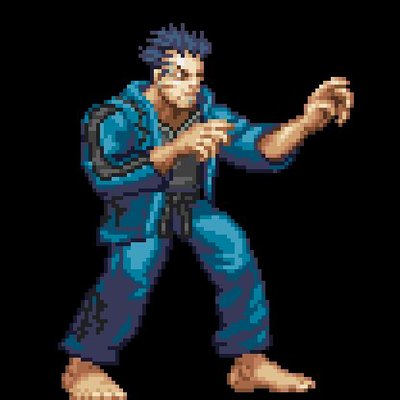
So I made this Birthday greeting card featuring the famous Ryu and Cyclops handshake. As you open the card they slide into place to grasp hands. The inside reads: "As a great man once said, "dreams don't die!", but eventually you will. Have a happy birthday!"
FNM|Roldy retweeted

コナミ様から「Castlevania Dominus Collection」をご提供頂きました。ありがとうございます。早速、ブラウン管テレビにSwitchを繋いで、私が楽曲提供させて頂いた「ギャラリーオブラビリンス」を楽しんでいます♪
FNM|Roldy retweeted

35年前の今日(1989年8月30日)MSX用の野球ゲーム【激突ペナントレース2】が発売されました。
自分が作った楽曲が初めてゲームに入り世に出たタイトルです。
あれから35年。今も現役でゲームサウンドを作り続けていられることに感謝!
#KONAMI #コナミ矩形波倶楽部

33年前の今日は(1989年8月30日)MSX用の野球ゲーム【激突ペナントレース2】が発売された日です。入社してすぐの研修期間に作って採用された【試合結果表示BGM】をセルフ耳コピ&アレンジしました。期待と不安と共に踏み出した運命の第一歩、デビュー曲です。
#コナミ矩形波倶楽部 #KONAMI #MSX


