

Driving research on fluoroquinolone's mechanism of damage to develop diagnostic and therapeutic solutions to create change for the affected global community.
Chicago, IL
Joined February 2018
- Tweets867
- Following81
- Followers807
- Likes434








Pinned Tweet
Serious systemic adverse effects (beyond package side effects) from #fluoroquinolone (#Cipro/#ciprofloxacin, Levaquin (off market)/#levofloxacin, Avelox/#moxifloxacin etc) antibiotics may persist for extended periods, potentially lasting for years or indefinitely for some.
In 2016 and 2018, the FDA advised that fluoroquinolones should only be used in cases where no other options are available for sinusitis, bronchitis, or uncomplicated UTIs. They contain multiple Black Box warnings,* the most serious warnings a medication can have.
If you are experiencing any or all of these symptoms below and are stunned by the ongoing emergence of new and troublesome issues following the antibiotic treatment you underwent, you have been what is deemed 'floxed':
✅ Extreme weakness, inability to stand or walk as before prescription
✅ Nerve problems — weakness, numbness, pain, muscle jerking and twitching, crawling bug feeling
✅ Tendon tears and muscle weakness
✅ Collagen destruction, hanging skin, wounds slow to heal
✅ Acute sensitivity to sunlight, sudden hormone & thyroid issues
✅ Ringing in the ears, vision disturbances
✅ Anxiety, panic attacks, disorientation, impaired concentration or memory, confusion, depersonalization, hallucinations, psychoses
Due to the potential of mitochondria** dysfunction, the actual list of adverse effects can be quite lengthy. Every prescription drug has side effects, some worse than others. Please do your research before you take that next pill, ear drop or eye drop, ask for a substitute if needed - don't let yourself become a statistic.
🟠 🟡 🟢 🔵 🟣 ⚫ 🟤
*Black Box warnings: fq100.org/fda-warnings
**Mitochondria are the powerhouse of your cells
➥Listen to our 3 part series with Dr. Stefan Pieper: YouTube channel: youtube.com/@FqAntibioticDam…
💊Medications in the fluoroquinolone class (incl: Cipro/ciprofloxacin, Levaquin (off market)/levofloxacin, Avelox/moxifloxacin etc) in all forms for humans and pets: fq100.org/drug-list
Find support and resources on our sites:
🌐 Medical resources: fq100.org/find-medical
🧭 Help & Misc resources: fq100.org/find-help
▶️ YouTube: youtube.com/@FqAntibioticDam…
🐦 X/Twitter: nitter.gq/FQ_100
#FQAwareness #Fluoroquinolones #MitochondrialHealth #AntibioticSideEffects #Floxed #Cipro #Levaquin #FQAD
⚠️Disclaimer: Fluoroquinolone Toxicity Study does not provide medical advice, and all articles and written content are intended for informational purposes only. We do our best to provide accurate information. Such information is not a substitute for professional medical advice, diagnosis or treatment. For multiple reasons, supplements, treatments, and pharmaceutical effects and outcomes can possibly vary significantly among those affected by fluoroquinolone drugs.

🌱 Understanding the Challenges and Possibilities of Healing After Fluoroquinolone Injury — Part 1
Connective Tissue, Collagen, Nutrition, and Physical Rehabilitation
For people living with persistent adverse effects from fluoroquinolone antibiotics, the subject of recovery is deeply personal. Some individuals experience gradual improvements, while others continue to struggle with severe physical limitations for many years. Understanding what may support the body's biological repair processes, and what might interfere with them following a toxic injury, is an important question for the FQAD community.
In Part 1, we explore what researchers have discovered about connective tissue injury, the biological requirements for collagen production and organization, and practical considerations involving nutrition and rehabilitation.
🌱 Connective Tissue: Rebuilding More Than Collagen
Collagen provides essential structural support to tendons, ligaments, skin, and many other tissues, but collagen alone does not determine their strength or flexibility. It forms part of the extracellular matrix (ECM), an intricate network of proteins and other molecules that surrounds cells, supports tissue structure, and regulates communication between cells and their environment. A comprehensive 2024 review by Alexandra Naba, published in Nature Reviews Molecular Cell Biology, describes how the ECM is continually maintained through the production, assembly, modification, and controlled removal of its components. Restoring tissue integrity therefore involves more than producing new collagen. Fibers must also be organized and interconnected in ways that provide appropriate mechanical strength and flexibility. [1]
This distinction is particularly important in fluoroquinolone toxicity. A 2026 laboratory study published in Scientific Reports examined the effects of fluoroquinolones on extracellular matrix production in cultured mouse tendon cells. Researchers identified reduced type I collagen production and assembly, reduced hydroxyproline content, decreased fibronectin production, and reduced activity of lysyl oxidase, an enzyme involved in collagen crosslinking. Collagen fibrils formed under ciprofloxacin exposure were thinner and less stiff. The investigators also identified reduced expression of active β1-integrin, a protein involved in communication between cells and their surrounding matrix. [2]
Interestingly, the researchers found that tendon cells remained largely viable under the experimental conditions despite significant disturbances in collagen production and organization. They also observed increased type V collagen, which participates in regulating collagen fibril formation. These findings suggest that fluoroquinolones may disrupt the balance and organization of collagen-related proteins without necessarily causing immediate cell death. The study did not establish whether the observed abnormalities resolve after exposure, but it identified specific cellular processes that could be investigated in research on connective tissue recovery. [2]
The findings are particularly meaningful because increasing collagen quantity is not necessarily equivalent to restoring healthy connective tissue. Collagen assembly, crosslinking, and communication between tendon cells and the extracellular matrix all contribute to tissue integrity. Understanding these processes may help scientists identify more specific biological targets for investigating repair following fluoroquinolone exposure. [1, 2]
🌱 Nutrition and the Complexity of Connective Tissue Repair
Maintaining connective tissue requires an adequate supply of amino acids, vitamins, minerals, and energy. However, providing these materials is only part of the process. Cells must also have functioning machinery to manufacture, assemble, and organize collagen fibers into a structurally sound extracellular matrix. A 2026 review of rehabilitation nutrition identified adequate calorie and protein intake as important foundations for tendon and ligament repair, while recognizing that nutrition operates alongside cellular activity and appropriate tissue loading. [3]
According to the European Society for Clinical Nutrition and Metabolism (ESPEN), generally healthy older adults are advised to consume approximately 1.0–1.2 grams of protein per kilogram of body weight daily, while recommendations for older adults with illness or malnutrition risk may increase to 1.2–1.5 grams per kilogram. For a person weighing 125 pounds, these ranges correspond to approximately 57–68 grams and 68–85 grams daily, respectively. These are general nutritional recommendations rather than those established for people living with FQAD - individual needs may differ, particularly when kidney disease or other medical conditions are present. The ESPEN recommendations concern protein intake in older adults.[4]
Protein can be obtained from eggs, fish, poultry, meat, dairy products, beans, lentils, nuts, and seeds. When consuming enough protein through food is difficult, protein powders may provide a convenient additional source. Whey protein is extensively studied because it contains all nine essential amino acids and is naturally rich in leucine, which helps stimulate muscle protein synthesis. Plant-based alternatives, including pea protein and pea-and-rice blends, can also provide essential amino acids.
Vitamin C participates directly in collagen biosynthesis. The National Institutes of Health recommends 75 mg daily for most adult women and 90 mg for most adult men. Excellent dietary sources include bell peppers, kiwi, citrus fruits, strawberries, broccoli, and Brussels sprouts. Zinc contributes to protein synthesis, cell division, and wound healing, while copper participates in connective tissue formation through enzymes involved in collagen and elastin crosslinking. Zinc can be obtained from oysters, beef, poultry, seafood, pumpkin seeds, and beans. Copper-rich foods include shellfish, nuts, seeds, whole grains, potatoes, and cocoa. [5]
Zinc and copper also need to remain in appropriate balance. The NIH explains that prolonged excessive zinc intake can interfere with copper absorption, potentially resulting in copper deficiency and associated neurological or connective tissue problems. This concern is more commonly associated with high-dose zinc supplements than ordinary dietary intake. [5]
🌱 What About Collagen Supplements and Peptides?
Interest in oral collagen and collagen-derived peptides has increased as researchers investigate their possible effects on connective tissue. A 2026 systematic review examined eight randomized controlled trials involving 257 participants and tendon-related outcomes. Some studies reported improvements in tendon size or stiffness when collagen supplementation was combined with resistance or plyometric training. However, participants were predominantly younger adults, the studies were relatively short, and the exercise programs differed considerably from what many people with FQAD could tolerate. [6]
Collagen contains substantial amounts of glycine, proline, and hydroxyproline, amino acids associated with its distinctive structure. During digestion, collagen is broken down into amino acids and smaller peptides, some of which can enter the bloodstream. However, their absorption does not necessarily establish that damaged connective tissue will be rebuilt or correctly organized. Nutritional collagen peptides should also be distinguished from regenerative peptides (many considered still experimental), which are being investigated for different biological effects, safety and effectiveness and often discussed on the support groups.
The 2026 fluoroquinolone tendon-cell study provides an important perspective on this issue. Researchers identified disturbances not only in collagen production but also in the machinery responsible for assembling and organizing the extracellular matrix. Providing additional collagen-building materials cannot automatically be assumed to correct altered fibronectin production, lysyl oxidase activity, or collagen fibril structure. The broader scientific objective is therefore to understand how the cellular systems responsible for constructing healthy connective tissue may be maintained or restored. [2]
🌱 Physical Rehabilitation After Fluoroquinolone Injury
Physical activity influences connective tissue maintenance because tendon cells respond to mechanical stress. Under ordinary circumstances, appropriately controlled loading can stimulate biological processes involved in tendon adaptation. However, fluoroquinolone-associated tendinopathy may require a different approach from conventional sports-related tendon injuries because the structural integrity of the tissue may already be compromised. Two scientific publications may be particularly helpful for physical therapists treating individuals with fluoroquinolone-associated tendon injuries. The first, the 2026 laboratory study published in Scientific Reports, identified abnormalities involving type I collagen production and assembly, fibronectin, lysyl oxidase activity, and collagen fibril structure. Although the researchers did not examine rehabilitation in patients, their findings provide important biological information about how fluoroquinolones may affect tendon tissue. [2]
The second publication, a 2014 systematic review published in the Journal of Athletic Training, is more directly applicable to rehabilitation. Titled "Fluoroquinolones and Tendinopathy: A Guide for Athletes and Sports Clinicians," it discusses why conventional eccentric strengthening programs may be poorly suited to fluoroquinolone-associated tendon injuries and why a more protective, staged rehabilitation approach may be appropriate. These considerations are particularly important for patients who have experienced worsening symptoms following conventional exercise programs. Lewis and Cook discussed a staged approach to rehabilitation in published cases of fluoroquinolone-associated tendon injury. Their review does not establish which exercises are safe or when to increase activity for an individual with persistent FQAD. [7]
Patients with longstanding FQAD may also experience exercise intolerance, delayed symptom worsening, neuropathy, autonomic disturbances, and other limitations that complicate rehabilitation. Treatment should reflect the individual's current physical condition and previous responses to therapy rather than assuming the patient will respond like someone recovering from ordinary tendinopathy.
🌀🌀 Research resources for patients and physical therapists
These two scientific publications and the FDA safety information available through our Foundation may be useful:
1. Effects of Fluoroquinolone Antibiotics on Extracellular Matrix-Related Phenotypes in Tendon Cells (2026)
Scientific Reports. Explains how fluoroquinolones may affect collagen production, assembly, crosslinking, and the structural properties of tendon tissue. [2]
Full article: pmc.ncbi.nlm.nih.gov/article…
2. Fluoroquinolones and Tendinopathy: A Guide for Athletes and Sports Clinicians and a Systematic Review of the Literature (2014)
Journal of Athletic Training. Discusses clinical rehabilitation considerations, including concerns about conventional eccentric strengthening programs. [7]
Full printable article:
pmc.ncbi.nlm.nih.gov/article…
3. FDA Warnings Concerning Fluoroquinolone-Associated Tendon Injuries
The U.S. Food and Drug Administration (FDA) has issued warnings about the increased risk of tendinitis and tendon rupture associated with systemic fluoroquinolone antibiotics. Additional risk factors include corticosteroid use, older age, and certain organ transplants.
Importantly, tendon injuries may develop several months after antibiotic treatment has ended. The FDA has also recognized disabling and potentially permanent adverse effects involving tendons, muscles, joints, nerves, and the central nervous system. In its 2016 safety review, adverse effects were reported to persist for an average of 14 months and, in some cases, as long as nine years after treatment was discontinued.
The European Medicines Agency (EMA) has similarly recognized serious musculoskeletal adverse reactions that may persist for months or years and may be irreversible. For physical therapists, the passage of time alone should not be grounds for dismissing a patient's history of fluoroquinolone-associated tendon injury or persistent symptoms.
Our Foundation provides a downloadable document containing FDA warnings and fluoroquinolone-specific ICD-10-CM diagnosis codes on our Find Help page and additional links at the end of this article.
➥Downloadable FDA Warnings: fq100.org/find-help
Together, these resources can help physical therapists understand the biological mechanisms of injury, relevant rehabilitation considerations, and official regulatory recognition of tendon-related adverse effects. The 2026 laboratory findings are not a rehabilitation protocol, and the 2014 review does not establish specific exercise limits for every patient with longstanding FQAD. However, both can contribute to more informed, individualized treatment decisions.
💚 Looking Ahead
Connective tissue repair involves much more than producing additional collagen. Successful restoration of tissue integrity requires appropriately functioning cells, sufficient nutritional resources, coordinated protein assembly, and the maintenance of a healthy extracellular matrix.
Studies of connective tissue biology have helped scientists better understand the processes involved in collagen production, assembly, and extracellular matrix maintenance. Separate laboratory investigations have identified several of these processes as potentially vulnerable to fluoroquinolone exposure, providing important clues about how these antibiotics may interfere with normal tissue structure and function.
➥➥In Part 2, we'll look into peripheral nerves, mitochondrial dysfunction and maintenance, physiological stress, and findings from broader areas of medical research that may be relevant to understanding certain biological processes affected by fluoroquinolone exposure.
If you found this post useful, please share elsewhere!
Additional resources on our website:
fq100.org/find-help
fq100.org/fda-warnings
fq100.org/ema-warnings
🟥 Disclaimer: Fluoroquinolone Toxicity Study does not provide medical advice. All videos, articles, posts, and written materials are intended for educational and informational purposes only. We make every reasonable effort to provide accurate information, but this material is not a substitute for professional medical advice, diagnosis, or treatment. Symptoms, underlying medical conditions, treatment responses, and the effects of medications or supplements may vary significantly among individuals.
🟥 AI Disclosure: ChatGPT was used to assist with research and editing.
Find support and resources on our sites:
🌐 Website & Resources: fq100.org/
▶️ YouTube: youtube.com/@FqAntibioticDam…
🔵 Facebook: facebook.com/fqtoxicitystudy…
🐦 X: nitter.gq/FQ_100
📚 Scientific References — Part 1
1. Naba A. (2024). Mechanisms of Assembly and Remodelling of the Extracellular Matrix
Nature Reviews Molecular Cell Biology
pubmed.ncbi.nlm.nih.gov/3922…
2. Anand A. et al. (2026). Effects of Fluoroquinolone Antibiotics on Extracellular Matrix-Related Phenotypes in Tendon Cells
Scientific Reports
pubmed.ncbi.nlm.nih.gov/4221…
3. Lee E-J, Kim J. (2026). Rehabilitation Nutrition for Tendon and Ligament Injuries: From Collagen Remodeling to Return-to-Activity and Sport
Healthcare
pubmed.ncbi.nlm.nih.gov/4251…
4. Protein Intake and Exercise for Optimal Muscle Function With Aging: Recommendations From the ESPEN Expert Group (2014)
pubmed.ncbi.nlm.nih.gov/2481…
5. NIH Office of Dietary Supplements. Vitamin C, Zinc, and Copper Fact Sheets
ods.od.nih.gov/facts.../Vita…
ods.od.nih.gov/factsheets/Zi…
ods.od.nih.gov/factsheets/Co…
6. Buchalski A. et al. (2026). Collagen Supplementation on Tendon-Related Structural and Performance Outcomes: A Systematic Review
Journal of Functional Morphology and Kinesiology
pubmed.ncbi.nlm.nih.gov/4190…
7. Lewis T, Cook J. (2014). Fluoroquinolones and Tendinopathy: A Guide for Athletes and Sports Clinicians and a Systematic Review of the Literature
Journal of Athletic Training
pmc.ncbi.nlm.nih.gov/article…
#FluoroquinoloneToxicity #FQAD #Floxed #FluoroquinoloneInjury #ConnectiveTissue #TendonInjury #CollagenResearch #PhysicalTherapy #TendonRehabilitation #PatientSafety See less
🤖 Made with AI

Johanna Ihli’s presentation at BMJ Future Health Europe 2026 highlights the devastating and potentially long-lasting adverse effects of fluoroquinolone antibiotics. The calculated number of individuals living with this disability worldwide could be staggering.
druginducedmito.org/bmj-2026

BMJ webinar - Excerpt from the documentary It was the quinolones - Quant... youtu.be/w8uOxAR_vfk?si=_J7B… via @YouTube
NEWS! Update on FQAD in the EU Parliament:
The recording of the EU Parliament hearing held on November 5, 2026, regarding Petition 1043/2026 on fluoroquinolones and FQAD will remain available through November 6, 2026.
Those that made it happen: FQAD Arbeitsgruppe (FQAD Working Group) and Dr. Pieper.
As well as others, the Foundation sent letters to 60 PETI Committee members on behalf of this undertaking. What happens in the EU can affect policy here in the USA so we are wishing for a good outcome.
🌀The petition remains open as everyone awaits the European Commission written response🌀
➦ You can select the translation language by clicking the highlighted headphone icon on the video.
➦ Link (starting at about 9:28:28 and ends at (9:45:37): multimedia.europarl.europa.e…

A closer look at hard-to-see cells could answer new questions about nerve damage and recovery phys.org/news/2026-10-closer… via @physorg_com

3
77
It's a step in the right direction, but we need so much more, on a global level.
UAE bans popular antibiotic starting November 1 gulfnews.com/uae/uae-bans-us…


Mitochondria are tiny structures inside our cells that produce much of the energy needed to function and repair damage. They matter to our community because laboratory studies using cultured cells, rather than studies in people, have shown that fluoroquinolone antibiotics can damage mitochondria. This new nerve-repair study was conducted in mice. It examines mitochondria inside cells that support nerve-to-muscle connections, providing a tool that could help researchers investigate whether mitochondrial damage interferes with nerve repair.
Each new tool that helps scientists understand nerve repair offers hope that research can move closer to finding ways to support recovery.
1
2
48
💊The main systemic fluoroquinolones used in the United States today include levofloxacin, ciprofloxacin, moxifloxacin, ofloxacin, and delafloxacin. Most brand names are now discontinued except Cipro and Baxdela. See complete list in all forms for humans and pets:
fq100.org/drug-list
Find support and resources on our sites:
🌐Website & Resources: fq100.org/
▶️YouTube: youtube.com/@FqAntibioticDam…
🔵 Facebook: facebook.com/fqtoxicitystudy…
🐦 X: nitter.gq/FQ_100
26
Fluoroquinolone Toxicity Study retweeted

In honor of Fluoroquinolone Toxicity Awareness Day, here is a combined message from some of my favorite experts. Thank you all for everything you have done and continue to do for us floxies. Thank you to my friend Katherine for the editing. Love, Talia ❤️🩹💜🖤
#fqtawarenessday #ExpertAdvice #askforanalternative #recoveryispossible #HopeAndHealing #thankyouforyoursupport #floxed #Cipro @drhughwegwerth @FQ_100
Awareness Day Oct 22:
NEWS! FQAD – EU Parliament hearing to take place in November!
Our floxed friends in Germany, FQAD Working Group, recently shared news of a promising development in their efforts to have FQAD* recognized through a dedicated ICD diagnosis code for the entire EU. They are asking for support from the global community. Please see below on how to help.
Their November 5th hearing at the European Parliament could help build momentum for recognition elsewhere, including here in the United States. Although the United States now has codes for adverse effects of fluoroquinolone antibiotics, FQAD was not a condition the CDC would recognize.
We wish the FQAD Working Group a victory and encourage support of their efforts.
🌍Petition Summary:
The petitioner wishes to raise awareness of the severe, multisystemic condition known as Fluoroquinolone Associated Disability (FQAD), caused by the use of fluoroquinolone antibiotics. The petitioner argues that the disease is far from “rare” and that thousands of patients across Europe suffer irreversible damage, some even resorting to suicide. A public hearing on quinolones was held by the EMA on 13 June 2018, after which the agency issued warnings about long-term, potentially permanent side effects. Since then, further studies have confirmed the toxicity, yet the EU still lacks a dedicated primary ICD code for FQAD, preventing proper medical treatment and social security recognition. In Germany, Dr Stefan Pieper’s 2020 book and his unsuccessful proposal for an ICD code, the petitioner argues, illustrate the systemic neglect; only a secondary “callout” code (Y57.90!) was introduced in 2026, which does not enable targeted care. The petitioner cites divergent estimates of affected individuals: the German health insurance institute AOK’s WIdO counted at least 40 000 harmed patients in 2018, while the EMA’s PRAC estimated only 3 000 EU cases per year. Independent analyses suggest up to 400 000 Europeans could be impacted annually. The petitioner requests answers from the EMA and the European Parliament on whether recent data are being monitored, what research has been commissioned, and whether the 20202024 study on label changes constitutes a final solution. The petitioner demands a reevaluation of fluoroquinolone safety, the creation of a specific primary ICD code for FQAD, and concrete measures to protect patients and prevent further harm.
How you can support this opportunity!
➥ Visit & learn more on their website and select English translation
fqad-deutschland.de/eu-petit…
then choose:
🌍EU Petitions Portal – register for a user account, fill in your info and follow the steps to comment in support
Or
🌍Declaration of Solidarity – Print and fill in your contact info and support comment; scan and email back to: fqad.ag[email protected]
* FQAD – Fluoroquinolone Associated Disability. See FDA definition at the bottom of our Foundation’s website page: fq100.org/fda-warnings
Fluoroquinolone Adverse Effects diagnostic code info for the USA: fq100.org/find-help
🤖 Made with AI

ALT Nov 5 European Parliament hearing - FQAD
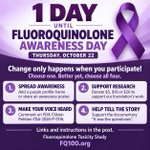
Tomorrow - Thursday Oct 22, Fluoroquinolone Awareness Day
Change only happens when you participate! Choose one, or better, choose all:
1. Post an FQ poster on social media. Visit Talia Smith’s drive -: drive.google.com/.../1qOxot8…...
2. Support our work with a donation to Fluoroquinolone Toxicity Study. Our team works without pay while facing substantial barriers in advocating for our community and raising FQAD awareness. We share and discuss research with medical professionals and laboratories worldwide, seeking partners to help uncover fluoroquinolone damage and explore potential paths toward recovery. These efforts take time, money, and persistence. A donation of $5, $10, or $20+ can help cover essential costs and support research so we can continue to work for you.
Donate via this page: fq100.org/contact-us
3. Quickly sign and leave comment for the FDA on Johanna Ihli’s - FDA Citizen Petition FDA-2026-P-5116, calling for stronger informed consent, clinician education, improved recognition and documentation of fluoroquinolone-associated disability, and long-term patient surveillance. ➥Click link ➥Make your comment
➥Comment Category - 'Individual Consumer"
regulations.gov/commenton/FD…
4. Documentary crowdfunding campaign - "It was the quinolones" Go here for more info: whydonate.com/fundraising/do… It was the quinolones
Wondering if your health has been greatly altered by one of these antibiotics in the fluoroquinolone class? See the medication list here: fq100.org/drug-list
Find support and resources on our sites:
🌐Website & Resources: fq100.org/
▶️YouTube: youtube.com/@FqAntibioticDam…
🔵 Facebook: facebook.com/fqtoxicitystudy…
🐦 X: nitter.gq/FQ_100
#Fluoroquinolones #FQAD #FQToxicity #Mitochondria #Neuropathy #AntibioticSideEffects #Cipro #Levofloxacin #FluoroquinoloneToxicity #PatientSafety #DrugSafety #MedicationSafety #FQ100
🤖 Made with AI

ALT Fluoroquinolone Antibiotic Awareness Day
Dizziness, heart palpitations, digestive problems, heat intolerance.
Could dysautonomia help explain some of the symptoms experienced by patients harmed by fluoroquinolone antibiotics?
Why discuss nerve function after fluoroquinolone injury?
The FDA warns that fluoroquinolone antibiotics taken by mouth or injection can cause peripheral neuropathy, or damage to peripheral nerves. This damage can begin soon after treatment starts and may be permanent. [1]
The peripheral nervous system includes autonomic nerves. While some peripheral nerves carry signals for sensation and movement, autonomic nerves help regulate automatic functions such as heart rate, blood pressure, digestion, and sweating. Damage to autonomic nerves can cause a form of dysautonomia called autonomic neuropathy. However, dysautonomia can also occur without demonstrated nerve damage. [2]
Although the FDA warns about peripheral nerve damage from fluoroquinolones, its peripheral neuropathy communication focuses on sensory and movement symptoms. It does not specifically address autonomic nerve dysfunction or establish that fluoroquinolones cause dysautonomia. Symptoms affecting these automatic functions nevertheless deserve attention during a medical evaluation.
What is dysautonomia?
Dysautonomia is an umbrella term for disorders involving the autonomic nervous system. Symptoms can affect multiple body systems and interfere significantly with daily life. [2]
Symptoms can include:
🌀 Standing difficulties: dizziness, lightheadedness, feeling faint, fainting, pallor, or symptoms that worsen when upright.
🌀 Heart and circulation changes: palpitations, chest discomfort, fast or slow heart rate, high or low blood pressure, and blood pooling.
🌀 Digestive problems: nausea, vomiting, diarrhea, constipation, abdominal pain, reflux, heartburn, or altered movement through the digestive tract.
🌀 Temperature and sweating changes: difficulty regulating body temperature or sweating normally.
🌀 Fatigue and cognitive problems: exhaustion, brain fog, mental clouding, and difficulty thinking clearly.
🌀 Headaches and vision problems: migraines, altered pupil responses, sensitivity to bright light, or impaired vision.
🌀 Breathing difficulties: shortness of breath or becoming easily winded.
🌀 Bladder problems: difficulty storing urine or emptying the bladder.
🌀 Dryness and swallowing difficulties: dry eyes, mouth, or skin, and trouble swallowing.
🌀 Neck and shoulder pain when upright: sometimes called “coat hanger” pain. [2]
Symptoms vary, and this list is not exhaustive. Some of these symptoms can also be related to other conditions or processes occurring in the body, and more than one issue may be contributing at the same time. Having these symptoms does not necessarily mean someone has dysautonomia, but recognizing a pattern may help guide a discussion with a healthcare professional. [2]
The Dysautonomia Project explains these symptoms and autonomic disorders in more detail. Its article is an educational resource, rather than research specifically about fluoroquinolone injury: thedysautonomiaproject.org/d…
* 💊The main systemic fluoroquinolones used in the United States today include levofloxacin, ciprofloxacin (Cipro), moxifloxacin, ofloxacin, gemifloxacin, and delafloxacin (Baxdela). Most brand names are now discontinued except the above. See complete list in all forms for humans and pets: fq100.org/drug-list
Find support and resources on our sites:
🌐 Website & Resources: fq100.org/
▶️ YouTube: youtube.com/@FqAntibioticDam…
🔵 Facebook: facebook.com/fqtoxicitystudy…
🐦 X: nitter.gq/FQ_100
**References**
[1] U.S. Food and Drug Administration. *FDA requires label changes to warn of risk for possibly permanent nerve damage from antibacterial fluoroquinolone drugs taken by mouth or by injection.* August 15, 2013.
fda.gov/media/86575/download
[2] The Dysautonomia Project. *Dysautonomia: Causes, Symptoms and Treatments.*
thedysautonomiaproject.org/d…
Disclaimer: Fluoroquinolone Toxicity Study does not provide medical advice. All videos, articles, posts, and written materials are intended for educational and informational purposes only. We make every reasonable effort to provide accurate information, but this material is not a substitute for professional medical advice, diagnosis, or treatment. Symptoms, underlying medical conditions, treatment responses, and the effects of medications or supplements may vary significantly among individuals.
#Fluoroquinolones #FQAD #FQToxicity #Mitochondria #Neuropathy #AntibioticSideEffects #Cipro #Levofloxacin #FluoroquinoloneToxicity #FQ100 #DysautonomiaAwarenessMonth #DysautonomiaAwareness #dysautonomia
🤖 Made with AI

🎥 It was the quinolones – new documentary in the works, check it out/become a participant!
Hélène Mastrodicasa, fellow floxie, and Producer, Benjamin Wautier from Silver Ray Production, have asked the Foundation to share their documentary project regarding fluoroquinolone antibiotics adverse effects and which “explores paths of resilience, potential solutions and possible institutional levers.”
They are seeking additional international participants to share a brief testimony of their experience (contact below) and any size donation you can spare to get this movie up onto screens (link below).
🎥From the team: “This documentary was born out of a deep conviction: the importance of informing the general public, with honesty, kindness, and scientific rigor, about the often unknown risks associated with certain treatments, particularly fluoroquinolones.”
To help fund this project and learn more about this:
whydonate.com/.../documentar…
➥ If you would like to participate - contact Helene via direct message on Facebook: facebook.com/profile.php?id=…
or
[email protected]
1
1
43