Hospitalist via @gtown_medres & @PCOMGeorgia - #MedEd ; clinical/diagnostic reasoning, patient communication/education & transitions of care. Tweets/RT my own.
Nashville, TN
Joined May 2012
- Tweets2.5K
- Following564
- Followers1.2K
- Likes4K




Kevin Hageman retweeted

💡 One of the most important findings in delirium research in recent years, and I think it's still not widely enough known.
The DECIDE study (Richardson et al, Age and Ageing 2021) followed 305 older adults from the population-based CFAS II-Newcastle cohort.
They compared cognitive trajectories in three groups: hospitalised with delirium, hospitalised without delirium, and a matched group who weren't admitted to hospital at all.
The hospitalised patients who didn't develop delirium had essentially the same cognitive trajectory as those who were never admitted. No significant difference.
But those who developed delirium during their admission showed a 2.2-point MMSE decline at one year compared to the no-delirium group (P<0.001). Neither the number of admissions nor total length of stay were significant predictors.
For years we've assumed that hospital admission itself is bad for the brain. This study suggests the real culprit is delirium. And delirium is something we can detect and, at least partly, prevent.
That makes it potentially a modifiable risk factor for dementia - at least it means that we need to look into this more and explore the potential benefits of early detection and aggressive treatment aimed at protecting the brain.
#medtwitter #dementia


Kevin Hageman retweeted
ARISE-FLUIDS has arrived and it's awesome 🥳
For over a decade, the Surviving Sepsis Guidelines recommended that septic patients get at least 30 cc/kg fluid. In the United States, these guidelines were weaponized into performance metrics, pressuring clinicians to prescribe arbitrary volumes to every patient.
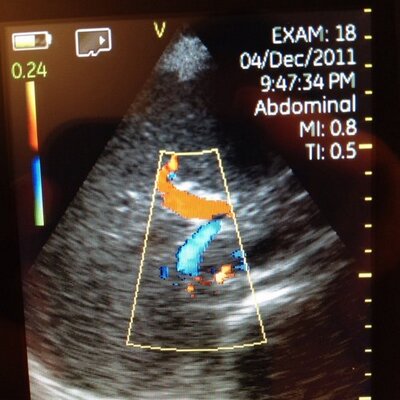
Evidence-based clinicians have LONG known that this guideline lacked evidentiary support. For example, I've attached a picture of a blog I wrote about this back in 2017. Despite the lack of evidentiary support and some evidence of harm, the Surviving Sepsis Guidelines INSISTED on perpetually recommending 30 cc/kg fluid resuscitation.
We finally have a prospective RCT demonstrating that mandating early administration of 30 cc/kg fluid (as compared to early vasopressors) doesn't help and may actually cause harm.
It's important to note that all of the hard endpoints in this trial were neutral (e.g., mortality, days free of organ support).
I still think that 30 cc/kg fluid is a pretty reasonable volume of fluid for *most* patients. But the study does suggest that giving too much fluid may promote edema - so we should be *thoughtful* about this intervention rather than mandating it for every septic patient.
Based on the subgroup analysis, the fluid-conservative strategy may have helped the subgroup of pneumonia patients the most. This is statistically nonsignificant but aligns with my expectation. ARDSy patients often don't respond well to fluid. (In contrast, I really doubt that a liter of fluids in either direction matters for most urosepsis patients.)
This is a great example of the over-reach of guidelines and protocoled medicine. People get all upset about practice variation, so sometimes they try to stomp it out using guidelines and protocols. But these guidelines are highly fallible, so what may occur is that you standardize care in a way that harms everyone equally. 🤦♂️


Kevin Hageman retweeted

Ok, looks like some non doctors got triggered. Let’s try this another way?
Neurosurgeon: $251 an hour
Master Electrician: $170-300 an hour
Senior software: $150-300 an hour
Consultants: $200-2000 an hour
Attorney: $400-2000 an hour
Master plumber: $250-300 an hour
Better?

Kevin Hageman retweeted

Who decided that the highest-trained person in the room—the physician—should be doing data entry, order entry, and administrative work?
That wasn’t about efficiency. That was about cost.
Hospital systems realized it’s cheaper to shift that work onto physicians than to pay additional staff to do it.
So now you have doctors spending more time on administrative tasks than actual patient care—and patients feel that.

“The system is broken”
…because patients do not see doctors!
Why?
1. They can’t communicate effectively with an officer member
2. They can’t get an appointment
3. They see the doctor but are not allotted enough time to get their questions answered ad concerns alleviated
4. They cannot afford the visit
5. They fear the cost of the visit
5. They seek answers elsewhere: the Internet, social media, friends
6. Government supported insurance industry has eliminated effective healthcare by physicians to increase profit: less care=less payouts with fixed premiums
7. Doctors know it and can’t fix it = burnout
8. Everyone loses except insurance industry
Kevin Hageman retweeted
⭐ META-ANALYSIS: Hospital delirium --> devastating long-term outcomes
253 studies, 137,000+ pts:
• 5.4x dementia risk
• 2.8x institutionalisation
• 2.5x mortality
• 1.7x readmission
⚠️ Delirium = a serious acute problem AND a risk warning.
➡️ All pts deserve robust delirium assessment

Kevin Hageman retweeted

Stop sending pizza to doctors in the name of wellness.
Stop making wellness modules for physicians
Stop MOC or repeat exams
Change value assessment to quality of care over RVUs
Ensure everyone gets 6 weeks of vacation and days off for weekend call
Kevin Hageman retweeted

“What do you understand by an inappropriate procedure?”
Mary (patient): “My perception is that every procedure that is done is appropriate, otherwise they would not be offered.”
Patients place an extraordinary degree of trust in us, and we should never lose sight of the responsibility that comes with it.

Kevin Hageman retweeted

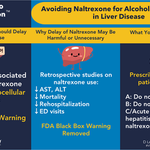
“Against Medical Advice” offers no proven benefit and may increase stigma. Time to rethink AMA.
🔗: doi.org/10.12788/jhm.2796
✍️: David Alfandre, Jay Brenner, Eberechukwu Onukwugha
🖼️: #VisualAbstract by @ShaheenFatimaa
#PatientCenteredCare #JHospMedicine #HealthEquity #TWDFNR

Kevin Hageman retweeted
💡 One of the most important findings in delirium research in recent years, and I think it's still not widely enough known.
The DECIDE study (Richardson et al, Age and Ageing 2021) followed 305 older adults from the population-based CFAS II-Newcastle cohort.
They compared cognitive trajectories in three groups: hospitalised with delirium, hospitalised without delirium, and a matched group who weren't admitted to hospital at all.
The hospitalised patients who didn't develop delirium had essentially the same cognitive trajectory as those who were never admitted. No significant difference.
But those who developed delirium during their admission showed a 2.2-point MMSE decline at one year compared to the no-delirium group (P<0.001). Neither the number of admissions nor total length of stay were significant predictors.
For years we've assumed that hospital admission itself is bad for the brain. This study suggests the real culprit is delirium. And delirium is something we can detect and, at least partly, prevent.
That makes it potentially a modifiable risk factor for dementia - at least it means that we need to look into this more and explore the potential benefits of early detection and aggressive treatment aimed at protecting the brain.
#medtwitter #dementia

Kevin Hageman retweeted

10/11
No test is neutral.
Every test carries three payloads:
• chance of finding real disease
• chance of finding incidental disease
• chance of triggering downstream consequences
Novices focus on the first.
Experts anticipate the third.
Kevin Hageman retweeted

ICYMI: A new ethics policy paper from ACP published in @AnnalsofIM says the term ‘provider’ should not be used to describe physicians, and using the blanket term undermines physicians’ ethical responsibility, clinical integrity, and professionalism: f.mtr.cool/rxkzricyef

Kevin Hageman retweeted

Real doctors are very comfortable saying “I don’t know” ..!
Because in reality there is actually a lot that we don’t know.
Kevin Hageman retweeted

literally ever paper on this theme seems to be like this lmfao (satire) xx


Some new research which may interest those who were kind enough to take an interest in my 'the NHS is over reliant on resident doctors' editorial.
"Nurse‐physician substitution may result in better outcomes in certain cases." cochranelibrary.com/cdsr/doi…
Kevin Hageman retweeted
❓ "But they're too drowsy to assess."
I hear this regularly. A patient is lying quietly, eyes closed, not responding to questions. How can we screen for delirium if they won't engage?
✅ 𝐇𝐞𝐫𝐞'𝐬 𝐭𝐡𝐞 𝐜𝐥𝐢𝐧𝐢𝐜𝐚𝐥 𝐩𝐞𝐚𝐫𝐥: 𝐝𝐫𝐨𝐰𝐬𝐢𝐧𝐞𝐬𝐬 𝐈𝐒 𝐭𝐡𝐞 𝐚𝐬𝐬𝐞𝐬𝐬𝐦𝐞𝐧𝐭.
A patient who is drowsy or unrousable has altered consciousness - which is itself a key feature of delirium. You don't need them to answer orientation questions to recognise something is wrong.
The 4AT was designed with this in mind. Item 1 assesses alertness first. A patient who is clearly abnormally sleepy, or agitated, scores 4 points immediately - meeting the threshold for possible delirium before you even ask about the year or the months backwards.
𝑾𝒉𝒂𝒕 𝒕𝒐 𝒅𝒐 𝒘𝒊𝒕𝒉 𝒕𝒉𝒆 𝒅𝒓𝒐𝒘𝒔𝒚 𝒑𝒂𝒕𝒊𝒆𝒏𝒕:
Check their level of arousal. Are they sleepy but rousable? Only rousable to physical stimulus? Unrousable?
Consider this altered consciousness as clinical information. In most cases, the patient will fulfil criteria for delirium when assessed.
➡️ The sleepy patient isn't unsuitable for assessment. The sleepiness is a critical clinical sign.
What's your approach when the patient is too drowsy to complete cognitive testing?
Kevin Hageman retweeted

surely we can make an ad about needing better food quality in america without mike tyson saying he wanted to kill himself bc he was fat for a little bit lmao
Kevin Hageman retweeted
. @NESpower thinking of gathering together all of the patients that survive their hospitalization due to the power outage (you know, because ventilators, home oxygen, home nebulizers don’t work) and bringing them to your next board meeting!
Kevin Hageman retweeted

The longer I practice medicine, the more I realize:
certainty is easy.
curiosity takes work.
The best clinicians I know stay relentlessly curious —
about data, about patients, and about when they might be wrong.