

Founder @TXer_net. we help Web3 teams from the first smart contract to the promotional trailer. building @Eldorim_xyz on-chain.
Germany
Joined June 2021
- Tweets44.7K
- Following2.6K
- Followers5.1K
- Likes108K





Pinned Tweet
Building a fully on-chain world taught us something we didn't expect.
When we started @Eldorim_xyz , we thought the hard part would be the technical complexity: 23 smart contracts, 380K+ lines of code, zero server dependencies, no IPFS.
It wasn't.The harder problem was figuring out what should actually live on-chain.
We eventually realized that putting everything on-chain isn't the point. The point is to put the things that define the experience on-chain, so they become part of the world itself.
That's why characters in Eldorim have 20 stats, unique genetic traits, and persistent identities across five realms.
Building Eldorim changed the way we think about decentralization:
Don't decentralize the infrastructure just because you can. Decentralize the parts that make the product what it is.
If Jupiter routes, Birdeye prices and Helius keeps the history, what does the app team still own? My answer: the first five minutes of a new user.

Who builds a trading app?
On Solana, the whole ecosystem does. @JupiterExchange routes the trades, @tokens brings asset data and news, @birdeye_data the prices and @Helius the balances and history.
Building something traders need? Our DMs are open.
People ask why we didn't run ELDORIM's game logic on a server. It would have been easier.
But a strategy game is a set of promises. Your Auren are where you left them. A battle resolves the same way for everyone. The rules don't change overnight because someone edited a database.
So we put the game onchain. 23 smart contracts, more than 380K lines of code, zero server dependencies. It runs on Shape and it's live on mainnet with real players. The trade-off is real. Every rule costs gas, and mistakes are hard to undo. You design slower and test harder.
What you get back is a game where players can check the rules themselves.
If you build onchain games, what did you decide to keep offchain, and why?
@Eldorim_xyz

AI made rendering cheap. Story is still the expensive part
15 seconds. One warrior, one deck, one army.
We started from a ready made template, so the camera work was there. What we added was her: the look, the armor, the details that make you believe she'd step onto that deck alone.
Same shots, a different character, and it becomes a different film. That's the lesson templates keep teaching me: the frame is shared, the story is yours.
Made with @ImagineArt
Artist & Character : Raha
🤖 Made with AI
The hardest privacy bugs we've seen weren't in the cryptography. They were one line in the wrong place. This is the tool we wanted for ourselves while building on Midnight.
@MidnightNtwrk

Question for Solidity developers: what's the first thing that stopped you from shipping on Solana?
The language, the account model, the wallets, or just not having a reason yet? I'm curious which one it really is.
Devcon opens in Mumbai today, and Breakpoint is 12 days out.
Different chains, same hardest problem: making a wallet feel like nothing. Good UX travels between ecosystems faster than any bridge.
Markets close on Friday. Prices onchain don't.
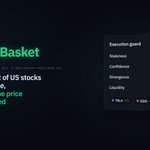
When we started bozBasket, I assumed a scheduled buy is just a scheduled buy. Then we measured it. Over 8 real weekends, blind weekend buys of tokenized US stocks on Solana landed 3 to 4 times further from the next reliable price than weekday buys.
So we built a guard that checks the price onchain with @PythNetwork before every scheduled buy. Measurement is live on mainnet, and every weekend teaches us something.
Last week the question got bigger. Chainlink launched 24/7 pricing for tokenized assets, using perpetual futures quotes when traditional exchanges are closed. And Ondo brought seven tokenized portfolios to Solana.
More tokenized assets means more hours where nobody is quoting the underlying.
How are you handling prices when the real market is asleep?

A fake "claim" app made it into the Seeker dApp Store spotlight yesterday and asked people for their seed phrase.
What I keep noticing as a builder still learning security: it came in through the publishing side, where an app borrows the store's trust.
Good to see it pulled and patched. And the oldest rule still wins: no real app ever needs your seed phrase 🔐
Privacy isn't binary, and privacy UX isn't either
The best private app is one where users never need to understand a proof to feel safe. They choose what to share and can see that choice hold.
Same with agents. A limit the user can set and read is worth more than any promise in the docs.

Watching the open vs closed contracts debate on Solana this week.
What I keep coming back to: users shouldn't have to blindly trust what an app tells them. Readable code is one of the few ways they can check.
I also get why teams want to protect their work. Still learning where that line sits


Agave 4.4 is rolling out, and it carries the last steps of Solana's rent cut.
For a lot of apps, the cost of a new user isn't the transaction. It's the deposit for the small accounts you open for them.
Once that deposit shrinks, onboarding stops being a budget question
When we started @Eldorim_xyz we set one rule: fully on-chain, no shortcuts. It made everything harder, and it's the reason the game can't be switched off by anyone, us included.
A game that can't be switched off. Not even by us
@Eldorim_xyz runs fully on-chain: no IPFS, no game server. 23 smart contracts, 380K+ lines of code, live on mainnet with real players on Shape.
One team at TXer, from the first smart contract to the launch trailer.
Most payment products don't lose people at the payment. They lose them one step earlier.
Which wallet. Which token. Do I have enough. Why is there a fee.
On Solana the payment itself is the fast part now. The few seconds before it are where the real product work is.

Build new primitives is the interesting part of this.
Holding a stock onchain is just the start. Builders, what's the first thing you'd make with it that a normal broker app can't do? 👇

More tokenized stocks are live and liquid
base:0xb20000000000000000000078ee7ce2fe4908108c, $AAPLc, base:0xb2000000000000000000001e800a7f5189430cd0 and more
Trade them, pair them and build new primitives

Putting financial instruments onchain is the headline. Getting asset managers to actually use them is the product.
Nobody switches because a chain is fast. They switch when it feels boring in the best way: clear balances, clear settlement, no one asking what a signature is.

Honest question
Would you actually show up every day if missing it cost you something?
The part of Akash's move I keep rereading isn't the vote. It's the plan for people already using it.
A 1:1 portal that stays open for two years. Balances that move on their own. Live leases that keep running.
A migration is really a launch for people who already trust you. Which one have you seen that users barely noticed?

Akash was built on one belief: the cloud should belong to everyone.
The Akash core team believes our next chapter is on Solana, where the DePIN movement thrives.
This is your network, so you decide. Vote on Prop 346: mintscan.io/akash/proposals/…
Why Solana: akash.network/blog/why-we-se…