

FarmSense provides actionable information to growers to enable healthier, sustainable and efficient farms.
Joined June 2018
- Tweets478
- Following5
- Followers78
- Likes1




Healthy mason bee populations depend on suitable nesting habitat and stable conditions. When reproduction or emergence is disrupted, pollination can be affected 🌱.
Discover more about smarter agricultural monitoring with FarmSense.
#FarmSense #AgriFuture #Agriculture

Integrated Pest Management uses monitoring, thresholds, and targeted controls to manage pest damage while reducing unnecessary risk 🌱.
#FarmSense #PestManagement #FutureOfFarming
IPM is not about one treatment. It is about combining accurate identification, monitoring, prevention, and informed control decisions for better pest management 🌾.
#FarmSense #SustainableAgriculture #Agriculture

Calendar sprays may simplify scheduling, but repeated exposure can increase insecticide resistance risk. Better monitoring supports more informed pest decisions 🐛.
#FarmSense #PestManagement #FutureOfFarming
Field monitoring asks when to spray. Resistance monitoring asks whether the product still works. Aligning both helps strengthen pest management strategies 🌾.
#FarmSense #CropMonitoring #AgriFuture

Snails and slugs may not be insects, but they are part of the broader pest management conversation for specialty crops and commercial agriculture 🐌.
#FarmSense #PestManagement #CropMonitoring
Silvery mucus trails can help confirm snail and slug damage. Understanding species and crop risk helps growers make more informed pest decisions 🌱.
#FarmSense #Agriculture #FutureOfFarming

Mason bees are managed differently than wild pollinator populations. In orchards, timing, handling, and recapture all play a role in pollination success 🐝.
#FarmSense #SustainableAgriculture #Agriculture
Diversified pollination strategies can help reduce dependence on a single pollinator species, especially when honey bee availability is limited or unpredictable 🌾.
#FarmSense #AgriFuture #FutureOfFarming

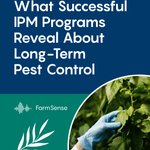
Successful IPM programs show that difficult pest problems can be managed through monitoring, biological control, targeted treatments, and coordinated action 🌾.
#FarmSense #PestManagement #Agriculture
Long-term pest management is not built around one perfect product. It depends on clear strategy, committed participation, and the right monitoring tools 📱.
#FarmSense #CropMonitoring #AgriFuture

When thresholds are unclear and monitoring data is inconsistent, calendar-based sprays can become the default. Better data helps strengthen confidence in pest decisions 🌾.
#FarmSense #CropMonitoring #PestManagement
Pest decisions need more than trap counts. Stronger feedback loops help connect monitoring data with damage, yield outcomes, and changing field realities 📱.
#FarmSense #AgriFuture #Agriculture

Snails and slugs are mollusks, not insects, but their feeding damage can resemble injury from other chewing pests. Monitoring helps growers identify the source sooner 🐌.
#FarmSense #CropMonitoring #PestManagement
Moisture, shelter, and cool conditions can increase snail and slug activity. Look for mucus trails, hiding places, and fresh feeding damage during scouting 🌱.
#FarmSense #SustainableAgriculture #Agriculture

Mason bees can support commercial pollination strategies, but timing matters. Controlled cocoon management helps align emergence with crop bloom 🐝.
#FarmSense #SustainableAgriculture #Agriculture
Supplemental pollination is not just about adding bees. For mason bees, storage, bloom timing, recapture, and preparation all matter 🌾.
#FarmSense #AgriFuture #FutureOfFarming

Threshold-based IPM can fall short when monitoring is delayed, labor is limited, or pest thresholds are unclear. Better data helps growers make faster decisions 📱.
#FarmSense #CropMonitoring #PestManagement
Sticky trap counts recorded by hand can delay real-time pest decisions. Modern monitoring helps close the gap between field activity and timely action 🌾.
#FarmSense #AgriFuture #FutureOfFarming

Snails and slugs are slow, quiet, and often active when growers are not in the field. Their crop impact can be much larger than their pace suggests 🐌.
#FarmSense #CropMonitoring #PestManagement