

💻Prototype Architect @awscloud 🌥Cloud, GenAI/AIML enthusiast 🎚Stage lighting passionate 📌Opinions here my own ☄ he / him Follow me to grow together!
Toulouse, France
Joined April 2013
- Tweets6.6K
- Following4.1K
- Followers2.5K
- Likes25.7K






Pinned Tweet
Hey, nice to meet you, I’m Florian !
Coding enthusiast and building cool things in the Cloud⛅️
Curiosity is my main sin and I’m trying to share it with you !
I also talk about cybersecurity, lighting design and try to find out the purpose of life 🧙♂️
📖
medium.com/@florianclanet

Florian Clanet 👨🏻💻 🌤 retweeted

‼️ Anthropic and Google researchers found a flaw that lets one crafted packet hijack a server during network boot, before Secure Boot checks the OS.
Almost all servers on earth are affected.
CVE-2026-97631 sits in TianoCore EDK II, code in the UEFI firmware of most servers.


Readers added context they thought people might want to know
The vulnerability is limited to servers actively PXE network-booting with vulnerable EDK II firmware; most servers boot from local disks and are unaffected in normal use, with Intel noting limited impact on supported products.
github.com/tianocore/edk2…
arstechnica.com/security/2026/…
Florian Clanet 👨🏻💻 🌤 retweeted

We've revamped Hermes Agent subscriptions.
Every new plan now includes a cloud agent out of the box, and usage has daily and weekly limits instead of one monthly block of credits.
Subscribers can switch to the new plans any time at portal.nousresearch.com/bill…
Florian Clanet 👨🏻💻 🌤 retweeted

an update on the openai/codex ban:
i was curious about my tv, found a vuln (not with codex), popped a shell, and started poking around. the intrigue of my hobby project while i had the flu wasn't something i could've predicted.
to be clear: the ban almost certainly had nothing to do with using openai -specifically- for my samsung reverse engineering work. i have no reason to believe it did.
the real issue seems deeper. i talked to friends using astra/6.1 sol for both cyber work and normal software tasks. the ones who never hit daybreak (and weren't in the blue program) said they spend a while "warming it up", getting the agent into a flowstate with substitute words and roundabout explanations that jailbreak the context. once that's done, the agent starts talking the same way and skipping tokens.
if you do serious reverse engineering without those jailbreaks, daybreak's content-hidden tripwire looks at the prompt or output in isolation and sees something indistinguishable from malware development.
i think the better fix is making the system track intent across the whole context (and through compressions) instead of punishing blunt technical language.
i believe i got banned because i just used normal terms. talking about memory, trampoline hooks, encrypted/read-protected pages, even entirely locally, looks sinister out of context. once daybreak trips, it poisons the context cache. new conversations start failing too. eventually even normal tooling work and /goals would randomly trip it. arguing your case makes it worse.
the incentives here seem strange to me. people who obfuscate from the start never seem to have problems. people who just use the actual terminology get more and more refusals.
account's still closed. pretty sure it's just from tripping daybreak too many times (even on non-cyber work).
for now i'm moving to open weight models and locking down my own compute. if these tools are part of how you work now, it's worth thinking about how to keep reliable access.
please don't harass tibo, roon or other oai people. from their public comments it sounds like they already know and agree the current setup is too strict.
sorry for the interlude, brb, back to getting the report and a repo out to fix TVs.
Florian Clanet 👨🏻💻 🌤 retweeted

Microsoft propose un départ volontaire à environ 60 000 salariés
Le programme concerne certaines équipes aux États-Unis, au Canada, en Inde et au Royaume-Uni, jusqu’au niveau hiérarchique 70. Les intéressés auront jusqu’au début décembre pour choisir une sortie en fin d’année.
businessinsider.com/microsof…

Florian Clanet 👨🏻💻 🌤 retweeted

Information exclusive Blast : le Premier ministre a préparé la coupure des réseaux sociaux pour le 24 octobre
Deux jours avant la manifestation du 24 octobre, le Premier ministre Sébastien Lecornu a demandé à Orange, SFR, Free et Bouygues Telecom de se tenir prêts à couper l’accès à TikTok, Instagram ,Snapchat et X. Blast révèle la lettre et le compte rendu de la réunion qui a suivi, où les opérateurs ont exprimé leurs doutes. Le gouvernement avait déjà utilisée cette mesure liberticide en Nouvelle-Calédonie en 2024, avant d’être désavoué par le Conseil d’État.
Par @yanmdi.
blast-info.fr/articles/2026/…

Florian Clanet 👨🏻💻 🌤 retweeted

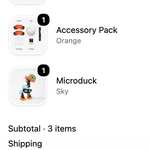
This live demo of four Microducks with Jensen Huang went completely viral, and we're ecstatic about it. But there's also a lot of confusion, so I want to clarify what Microduck can and cannot do, and what it will realistically be able to do in the future.
I count 60M+ views on this demo alone, based on the few big posts I see on social media, and everything has been buzzing. Even my own simple emotional design post on a newly created Instagram account got 1M+ views. We are selling Microducks at an incredible rate, even faster than during its historic launch. I've been trying to answer all the questions I see on our socials: people are asking if X or Y is possible on the robots, and this post aims to answer most of them.
First of all, the demo you've seen was not fully autonomous. We had one engineer piloting each Microduck. The motions on the robots were trained with reinforcement learning, using a sim-to-real pipeline: walking, standing up after a fall, sitting, doing a somersault, roller skating. All of those are policies trained this way. What the pilots did during the live event was send commands: directions (move forward, rotate), head orientation (look here), quacks, and special actions (do the somersault, sit down).
If you buy a Microduck, will you get an autonomous companion right out of the box? The current answer is no. But there is no impossible technical barrier to get there. I'm not sure how much time we'll have to work on this before shipping, but since everything is open source, I fully expect the community to build it, and to build it fast.
Now let's understand what's already done, what will be easy to add, and what's an open problem. What you'll be able to do out of the box, and you can already do it in simulation right now, is train new policies with reinforcement learning. You could teach your duck to walk differently from the default gait we provide, to do a weird dance, or to walk on stilts. The community has been crazy creative with this, even though they only have the simulator.
Note that you don't need reinforcement learning when the movements are simple. For example, the early emotional design I did is mostly coded movements plus pre-generated sounds. A simple mental model: use reinforcement learning when balance is part of the movement. If you try to code a cinematic walk by naively putting one foot in front of the other, your robot will realistically never walk, because you need to account for the dynamics of the movement, the inaccuracies of the sensors, the friction with the ground, and potential perturbations from the outside, like being pushed.
So training new policies is definitely doable, but you can't train a policy to get a genuine long-term companion in your home (well, technically you could, but that's a whole other range of policy: a research-grade problem, and the resulting neural network would probably be huge and never able to run on such a small compute). Instead, you need a few more building blocks: voice recognition, facial detection/recognition, localization, some simple navigation, and a behavior layer, which is less technical and harder to describe.
As a rule of thumb, a prototype of any of these is within reach of anyone if they have a modern coding agent and if the computation doesn't run on the robot (meaning the robot can reach the internet or an external computer and use external APIs). A rough prototype for each of the above can be a chill weekend project. As always, going from the prototype to a high-quality implementation is another story, but still doable for most if you put in the time and test a lot.
However, having all of this run locally, on the onboard chip, I would call a very hard task. You'd need some very clever engineering to get a good enough version of everything working together. But I can't say it's impossible, because I've seen some crazy efficient implementations of all of the above. And here we don't need a super high success rate: it's okay if the duck sometimes does something a bit random. So I wouldn't be surprised if folks managed a fully local, cool, simple version of this autonomous companion. For example, you don't need Whisper-grade open-vocabulary transcription: being able to recognize a few keywords would already be great for interaction.
One of the fastest ways to turn this robot into an autonomous companion would be to stream Microduck's sensors (the camera, the depth sensor, the IMU and the joint positions) to a computer, and use a software stack like the one we use for the conversation app on Reachy Mini: a local VAD, then a cloud speech-to-text model, then a call to a frontier LLM that decides on actions. Actions could be quacking, looking at things/faces/a direction, walking to a given position, sitting down, playing an emotion, kicking or doing a somersault. A SLAM algorithm would run in parallel so the robot can localize itself in your home, and you would prompt the LLM for a lifelike behavior: moving to random places, sometimes following people, and having emotional responses that fit what you're saying and the duck's environment. Of course someone is going to build a Tamagotchi-like layer on top of this, and it will be insane.
How much demand is there for a software suite that would do all of this? I for one think it would be super cool.
A word about the humans. We had five engineers backstage, and they are pretty much the core team behind Microduck. Their impact per head is absolutely off the charts. Antoine Pirrone piloted Graphite, Augustin Crampette Lavender (the rebel one), Matthieu Lapeyre Sky, Coralie Deplane Cream, and Pierre Rouanet was stressing over the Wi-Fi. Give them a follow! (Antoine @antoinepirrone, Augustin on LinkedIn, Matthieu @matth_lapeyre, Coralie @Drenaya_, Pierre on LinkedIn).
I get visibility because I communicate a lot, but I mainly work on Reachy Mini (you might want to check it out: it's a very cool robot, and it ships much faster than Microduck :) ). My contribution to Microduck has been minimal: I'm mostly a first power user. My main added value at GTC was having hands big enough to carry four Microducks below the stage.
Where I take pride is that Antoine and Coralie are former students and former interns of mine. I'm therefore entitled to 3% credit on anything (good) they do, for life. If they do something bad, however, it was clearly the fault of their parents.
About the super smart engineering that can be done on board: Antoine just released two very cool blog posts (links below). The first is on odometry, the robot estimating its own movement from its own internal sensors. The second is about SLAM, which allows long-term localization: it adds the depth sensor to the odometry to get a stable position over time. Think of it as recognizing known landmarks in your home to know where the robot is. The crazy part is that all of this runs on the robot. So this gives me hope that we'll be able to do a lot of cool stuff on board.
Florian Clanet 👨🏻💻 🌤 retweeted

With the explosion of Microduck and Reachy Mini, we'll need more people to join the @pollenrobotics @huggingface teams in all functions.
If you're excited about democratizing robotics AI with open-source, my DMs are open!

Interesting and dangerous developments in the world of autonomous AI Agents...
The [US] Army Wants to Sic AI Agents on Its Enemies. What Could Go Wrong?
theintercept.com/2026/10/19/…


Curious of the backstage of Deepseek ban in the US.
Lot of people are linking this CrowdStrike warning from last year but what else happened since...
Or is this just protectionism?


Florian Clanet 👨🏻💻 🌤 retweeted

L'énormité cyber du jour... en marge des pillages du 17 octobre🍿🤬
Accrochez-vous, vous n'allez pas être déçus 👇🏾
Frédéric Péchenard -ancien directeur général de la police nationale, aujourd'hui vice-président de la région Île-de-France chargé de la sécurité- était sur franceinfo ce matin pour débriefer la manif du 17 octobre.
Sa solution au « fiasco sécuritaire » : de l'IA dans les caméras et un accès des services de renseignement aux messageries chiffrées...
Les faits 👉🏾
Selon les chiffres, les autorités attendaient environ 200 000 manifestants.
Il y en a eu 550 000 selon le ministère de l'Intérieur.
Donc le problème, c'est l'anticipation.
Il répond en disant qu'une IA détecte « des gens qui courent », « des gens qui tombent », « un colis abandonné » et ce en temps réel.
Le journaliste lui fait remarquer que ça n'aurait rien anticipé du tout. Ce qu'il concède.
Là où ça devient totalement WTF et très dangereux 👉🏾
Cette IA, on l'a déjà testée pendant les JO de Paris.
Le rapport officiel d'évaluation remis au ministère de l'Intérieur en janvier 2025 est cruel :
- 62% de fausses alertes sur les colis abandonnés
- 21 alertes pertinentes sur 270
- des SDF assis pris pour des colis suspects,
- ...
Et au passage l'expérimentation continue... la loi JO2030, validée par le Conseil constitutionnel en mars 2026, la prolonge jusqu'en 2027.
⚠️ « Notre service de renseignement territorial n'a pas possibilité d'avoir un accès aux messageries cryptées. Ce qui est un sujet. »
Pour rappel, le chiffrement de bout en bout c'est lorsque seuls vous et votre interlocuteur pouvez lire le message.
Donner un « accès » à un service de renseignement, ça veut dire créer une porte dérobée -une backdoor, une clé cachée dans le système-... et cette backdoor ne trie pas ses utilisateurs.
Elle s'ouvre pour la police... mais aussi pour des services étrangers, des cybercriminels, des personnes non autorisées !
Tenez-vous bien 👉🏾
On a déjà essayé... En 2025, l'article 8 ter de la loi narcotrafic, poussé par Bruno Retailleau, voulait ajouter un « participant fantôme » invisible dans vos conversations chiffrées. LOL
L'ANSSI l'a jugé « dangereux » et l'Assemblée Nationale l'a massivement rejeté en mars 2025
Et aux États-Unis, fin 2024, après le piratage des opérateurs télécoms américains par des hackers liés à la Chine -le groupe Salt Typhoon-, le FBI et la CISA -l'ANSSI américaine- ont recommandé à la population... d'utiliser des messageries chiffrées de bout en bout.
*En Afrique du côté de l'Ouganda, une enquête publiée en 2019 affirmait que les renseignements avaient réussi à espionner les communications chiffrées de l'opposant Bobi Wine, avec l'aide de techniciens de Huawei. Huawei a démenti.
Bref, chaque fois qu'un politique ou ancien du rens réclame une backdoor à la télé/radio, il offre un argument en or à tous les régimes qui rêvent de lire les messages de leurs opposants.
C'est ça, la fenêtre d'Overton -l'éventail des idées jugées « acceptables » dans le débat public-.
On ne vote pas la surveillance de masse du jour au lendemain.
On la distille phrase par phrase, sur un plateau télé, un lendemain de manif ou sous-couvert de protéger les mineurs !
Ça donne un sentiment de sécurité... mais ça grignote nos libertés numériques.
La sécurité de tous repose sur un chiffrement que personne ne peut casser.
[...]
On va aussi se manger les interdictions temporaires des rézos sociaux... -le maire de Salon-de-Provence a déjà proposé début octobre de couper TikTok, Snapchat et Instagram aux mineurs pendant les émeutes-
[...]
Cybèrement vôtre,
SaxX ¯\_(ツ)_/¯

Florian Clanet 👨🏻💻 🌤 retweeted

🇫🇷 Des chats privés scannés dans le cadre de la #ChatControle 1.0 se retrouvent dans des systèmes Palantir.
Notamment les messages directs sur Instagram, TikTok, Discord, Snapchat, Skype et Xbox, ainsi que les e-mails via Gmail.
Détails :
arvidgrange.substack.com/p/i…
#StopScanningMe
Florian Clanet 👨🏻💻 🌤 retweeted

OpenAI pushing for just do this philosophy.
Innovation comes from everywhere

This is something...

Today marks a new chapter for Windows, as we bring unmetered intelligence to every desk and every home, and make every PC a place where agents can work securely on your behalf.
Some highlights of what we announced:
• MAI-Code-1.1 Flash: 137B parameter coding model w/ 256K context window, which is now optimized to run on your PC!
• GitHub Copilot now hands off work to local models like MAI-Code-1.1 Flash, helping projects cost a lot less without sacrificing quality.
• With Hybrid Intelligence, Copilot can now take action directly on the PC and keep sensitive work on your device.
• And with Code in Copilot, you can essentially build any software you need on your desktop, without any cloud token spend, and it’s just super at it. You’re no longer limited to what’s in an app store! Your PC becomes an infinite software factory.
• Security is foundational to all this, which is why we are also bringing together Windows and Agent 365 so agents can work within secure boundaries on-device, including MXC a local sandbox for agent execution. Windows becomes your secure agent box!
• All this comes to life on a new generation of devices, like Surface Laptop Ultra, powered by NVIDIA RTX Spark.
Can’t wait to see what you build with all this.

New Haiku is here, fresh and ready 😄

Le Chonk is here 😂

Meet Mistral Large 4, aka Le Chonk.
• 1T parameters, natively multimodal. 49B active.
It is the best open weights model from US or Europe on aggregated benchmarks.
• State-of-the-art on critical workloads, including cyber defense, manufacturing and finance and it surpasses closed frontier models on visual grounding.
• Forged in Europe end-to-end and is deployable from Europe via our own Mistral Cloud infrastructure.
• Available to all via API today. Working with cybersecurity partners privately.
Open weights release end of October.