

Taking forward the South Asian legacy of independent political publishing
Lahore, Pakistan
Joined June 2020
- Tweets1.4K
- Following192
- Followers2.4K
- Likes409



Pinned Tweet
Beyond excited. Took 9 years to bring this out. Pre-order at tinyurl.com/r8um4zyc. Edited by @NidaKirmani, @BilalZahuur, & Sheema Khawar, this locally-contextualised collection, the first of its kind, brings together theoretical concepts and empirically grounded analyses. 1/1

The Time of Building: Kamil Khan Mumtaz and Architecture in Pakistan by Chris Moffat
foliobooks.pk/books/the-time…
Available as a free download online, and a complimentary hardcopy to all libraries!


Buildings by the contemporary Pakistani architect Kamil Khan Mumtaz. When my colleague Ben first sent me some grainy pictures of Mumutaz’s work five years ago, I wondered if he might be the best architect in the world. But I couldn’t find any other images of his work.
worksinprogress.co/issue/the…
Then last year, I met Mumtaz’s assistant Sohaib Ahmed at a conference. I implored Sohaib to send us more pictures, and with Mutmaz’s support, he prepared a portfolio. Very few of these images have ever been seen before outside Pakistan.
Mumtaz was educated at the Architectural Association in London in the 1960s. After returning to Pakistan, he initially worked as a modernist, though one with a special interest in local context. But he was haunted by a ‘growing, nagging fear that I wasn’t communicating with my audience’. In 1980, he adopted a radically different approach, working to revive Pakistan’s own architectural traditions. He has continued ever since, and in Pakistan his work has been received with warmth and admiration.
Traditional architecture often suffers from shortages of skilled craftspeople. This is also a problem in Pakistan, but less so, because later industrialisation meant that the last premodern traditions were still persisting when Mumtaz started work. ‘Immediately, [I came] into contact with very small remnants of these families, hereditary craftsmen’, Mumtaz remembered in an interview with the historian Chris Moffat.
Mumtaz’s practice has both drawn on these traditions and supported their development, so that it now features a standard of craftsmanship that virtually no Western work today can match.
We are proud that Mumtaz has allowed Works in Progress to showcase his work.


Folio Books retweeted

Here are my two cents on the ongoing hoopla over new provinces in Pakistan.
First, this is not a legitimate government. This is not a democracy, or even a hybrid one. The present regime rests on the most rigged elections in Pakistan’s history and, therefore, lacks the mandate to make such drastic changes to Pakistan’s federal structure. The demands for new provinces are legitimate, of course, but that is a separate discussion.
Second, reorganizing provinces has long been part of the military establishment’s agenda, especially in ways that erase the historical foundations of those units. In other words, it is a continuation of the deadly triumvirate of Urdu, Islam, and Muslim identity overriding every other marker of identity or sense of belonging. The invocation of administrative efficiency or good governance as the main justification is hogwash.
In that sense, the push for new provinces or smaller units continues the same oft-trumpeted argument about greater efficiency that was once used to justify creating a larger entity - One Unit. Imagine: there was once an argument for making all of West Pakistan a single province in the name of efficiency!
The reason is that, whether it is One Unit or ten units, such arrangements can suppress the political expression of historically constituted identities without fundamentally altering power structures. They help mask the dominance of Punjabi political, bureaucratic, military, and economic elites while safeguarding their interests. So, if anyone thinks dividing Punjab weakens the hold of the Punjabi establishment, they are mistaken. It only helps render that dominance invisible.
Punjab’s national question is different from that of any other region. Punjabi interests do not necessarily depend on articulating a distinct Punjabi national identity. Punjabi identity - or at least its iterations among the urban and professional classes - is subsumed within a larger Muslim identity, with Urdu as the medium of its expression - the ideal Pakistani Muslim citizen, in other words.
Thus, Punjabi interests can dominate even when there is no single Punjab - or, in fact, no Punjab at all.
It is remarkable how Mumtaz Daultana, a former chief minister of Punjab, offered an argument for One Unit that can be turned on its head to make precisely the opposite point. To assuage smaller provinces' fears of Punjabi domination, he argued that Punjab was merely a term of convenience, a geographical expression, and that Punjabis would cease to exist the moment Punjab was dissolved as a provincial unit. That would not be the case, he said, for Pathans, Baluch, and Sindhis, who would continue to exist even without the NWFP, Baluchistan, or Sindh.
“On the other hand, if you take away the boundaries of the Punjab, the concept of the Punjab will disappear,” said Daultana.
Well, Punjab disappeared as a provincial unit between 1955 and 1970, but neither Punjabi identity nor Punjabi elite dominance disappeared with it. Nor did the other national identities that One Unit sought to suppress. And we know where that experiment led.
Folio Books retweeted

The 2nd edition of my book- Views and Reviews- is available across all major bookstores in Pakistan. Internationally, the book- both paperback and kindle editions- can be ordered on Amazon from the following link:
lnkd.in/d-d9Fs-V
In Pakistan-
lnkd.in/dApkEMTz


Folio Books retweeted

The details of Hina Javed’s murder are horrifying.
In Noor Mukadam’s case, one SC judge appallingly said the crime was a consequence of “living relationships”. Hina was brutally killed in her own marital home, less than a year after getting married. No adherence to traditional norms, marriage, or supposed “moral codes" protects women from violence.
The problem is not women’s choices, but a society that keeps justifying violence rather than confronting it.
We must stop asking what the victim could have done differently. This is a time to demand accountability.
#JusticeForHina
Folio Books retweeted

Over the years I have posted about countless crimes against women, the hashtags, the horrors - today I’m posting because my cousin Hina Javed was murdered in her in-laws home yesterday. She’d been married less than 10 months. Pray for her, pray for justice. Demand justice.


Folio Books retweeted

Publication announcement: my third monograph "Shah Waliyullah Dihlavi: Aspirations and Tensions of Islamic Cosmopolitanism" out today. Though slightly shorter than my first two books, this is perhaps the best and was certainly the most meaningful to write.
oneworld-publications.com/wo…

Folio Books retweeted

Pak Studies 2026; the state no longer identifies as hard or soft. It's non-binary.


Folio Books condemns the political retribution being faced by its author, Dr. Tehseen Thaver
academeblog.org/2026/07/14/a…


Folio Books retweeted

Lahore Dolmen Mall: 2 women going from shop to shop trailed by a little boy, no more than 7-8 years old, holding their bags. He was ‘trained’ to keep a certain distance as he flwd them & to stand at the door at each shop as madams went through clothes. Fuck you Lahore’s wealthy
Folio Books retweeted

Finally our edited volume on Gender Studies in Pakistan is coming out! The collection brings together some of the most amazing scholars of gender studies in our region & is co-edited by yours truly, @BilalZahuur & Sheema Khawar. You can pre-order it here: tinyurl.com/r8um4zyc.

Amina Jamal, Shanel Khaliq, Sadaf Aziz, Abira Ashfaq, @saramalkani, Hiba Thobani, @Ifra_J, @nudratkamal , Shirin Zubair, @apniISPdot. Pre-order at tinyurl.com/r8um4zyc

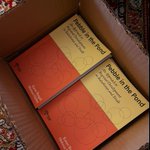
What can sustainable development in Pakistan look like?
@kaiserbengali and Mehnaz Hafeez identify urban and rural growth centres in Balochistan and Sindh to boost regional economies
Order now on foliobooks.pk

Glad to announce the Urdu translation of @bjorkman_d’s Bombay Brokers, a grounded and theoretically rich study of who makes Bombay the city it is. Congrats to Ammar Yasir for the great translation. Available at tinyurl.com/322927zh

Folio Books retweeted
The govt's decision to ban the Jammu & Kashmir Joint Awami Action Committee (JKJAAC) is highly condemnable, but sadly, comes as no surprise. Questioning the state's authoritarian policies & particularly its hold on resources is the new definition of 'terrorism' is Pakistan.
Were the names of those who were killed by the Bengal famine called out at Normandy today?
The grain to feed the troops who landed at D-Day was taken from Bengal, triggering a famine which killed 3.8 million people – at Karachi, Pakistan
What could sustainable development in Pakistan look like?
Join us at Karachi Press Club on Monday, 8 June, 4 p.m. for @kaiserbengali and @asad_sayeed discussing Pebble in the Pond: An Approach to Regional Development in Balochistan and Sindh – at Karachi, Pakistan
