Michael W. Dean retweeted
RCW 131 The War and Peace Nebula or the Lobster Nebula
RCW 131 (also known as NGC 6357) is known by the two nicknames mentioned above. This diffuse nebula is located in the southern constellation of Scorpius, approximately 5,500 light-years from Earth.
Data: Telescope Live
Processing: Beatrice Heinze
I stacked the SHO data in Astro Pixel Processor and performed the processing in PixInsight.
Total integration time: 5 hours and 50 minutes.
Telescope: Planewave CDK24, a 24 inch (61cm) telescope with Corrected Dall Kirkham optical design
Camera: QHY 600M (with Astrodon filters)
Location: Rio Hurtado valley, Chile (Southern Hemisphere) => Bortle scale 1.
This is my third attempt at processing this nebula, as there were errors in the data that needed to be corrected. That’s what astrophotography is all about: fixing errors, which then results in a beautiful astrophotograph!
I’m still not entirely satisfied with the result, but we’re not giving up ;-). On to the fourth attempt!
Clear Skies!
Michael W. Dean retweeted
AstroBin's Image of the Day: "ISS Through the Haze — MolotilkaFFT's First Light on the Space Station" by Khisamutdinov Maksim
astrobin.com/psw5fg/
#astrophotography
The Sun brings life.
My shot of solar prominences in Hydrogen-alpha.
astrobin.com/k25g01/
Michael W. Dean retweeted
NGC 6337: The Ghostly Cheerio Nebula
It's a planetary nebula located in the southern constellation of Scorpius.
The Ghostly Cheerio Nebula (also known as the Cheerio Nebula) gets its nickname from the fact that it resembles the well-known breakfast cereal brand.
Yesterday, I mentioned that I recently started Adam Block’s “Deepsky Academy” course. => nitter.gq/BeatriceHeinze/status/…
I processed this planetary nebula, NGC 6337, in PixInsight following the instructions in this course, and I’m now working on the “Workflow for Nebulae” chapter. The SHO data for this image was provided by Adam Block.
For a first attempt, I’m already fairly satisfied with the result, but I’m not quite there yet. But that’s what astrophotography is all about, among other things: constantly improving yourself in the pursuit of perfection!
Clear Skies!
See also ALT text below👇
M22: The Great Sagittarius Globular Cluster
Messier 22 (M22) is a globular cluster in the constellation Sagittarius, located about 10,000 light-years from Earth.
I recently started taking Adam Block’s DeepSky Academy course. I highly recommend it.
This astrophotograph is the result of the “Stars and Star Clusters” workflow from that course.
I stacked the RGB data provided by Adam Block and processed it in PixInsight.
Lifelong learning is very important to me, and I enjoy staying up to date on the latest astrophotography processing techniques and in all sorts of other areas.
The desire to keep learning is like fuel for my brain.
How about you? Do you enjoy taking courses (whether related to astrophotography or not)? Maybe you’re taking one right now?
Clear Skies!
I don't usually love bands with costumes but I love HENGE. New song from them, "BRAINS." It's about BRAINS.
And it look like lyrics are correct if you hit CC on the video.
youtube.com/watch?v=Vs9pvPSo…
My shot of NGC1444 star cluster, for 125 minutes.
Tech specs: astrobin.com/joqrln/
Michael W. Dean retweeted
Moon scene from Aalen 🇩🇪 #moonlight
Michael W. Dean retweeted
AstroBin's Image of the Day: "vdB 152 - Wolf's Cave Nebula" by Sebastien Kuenlin
astrobin.com/qhe4d3/
#astrophotography
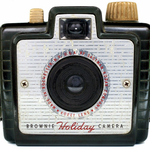
First camera I used as a kid in the 70s: We had an old (even for then) Kodak Brownie Holiday box camera when I was a kid. Had to hand wind film between each shot.
Took 127 film rolls, not a cartridge. I used it a few times, got film developed at the drug store. Took a week.
Camera was square, brown Bakelite plastic, about 5x5x5 inches. (big for a camera now)
Michael W. Dean retweeted
I got another 90 minutes of data gathering time this past weekend on the Fish Head Nebula (NGC896, on the left) and the Heart Nebula (IC1895, on the right).
They are both located between 6,000 and 7,000 light years away. They look right next to each other but the Fish Head Nebula is 1,000 light years closer to us than the Heart Nebula.
This puts the total exposure time of this area of the Cosmos at close to 3 hours using my 85mm refractor telescope and Canon DSLR camera in a severely light polluted Bortle 7 sky.
Michael W. Dean retweeted
Midday in late October, and the sun barely clears 29°.
That low light turns Solitude Palace to gold against a deep blue sky. Duke Carl Eugen built it in the 1760s as his retreat above Stuttgart.
Which season gives you your best light? đź“·
#SolitudePalace #Stuttgart #LeicaM8 schloss-solitude.de/en/
Michael W. Dean retweeted
Happy #MonochromeMonday, everyone!
This is the stunning emission nebula RCW 32, also known as GUM 15, a lesser-known object in the southern constellation Vela, located about 3,000 light-years away.
The nickname for RCW 32 is "The Southern Trifid Nebula".
Data: Telescope Live
Processing: Beatrice Heinze
I created this black-and-white image from RGB data after first stacking the RGB frames in Astro Pixel Processor and processing them in PixInsight.
Total integration time: 19 hours 20 minutes.
Clear Skies!
ICYMI: the International Space Station was seen crossing in front of the Moon earlier this morning from Florida’s Space Coast (left image, taken by me).
@astro_anil was also looking down from the station around the same time and caught the Florida peninsula lit by the near-full moon (right image).
Rupes Recta wall on Moon, (in bottom middle crater). In infrared.
Tech specs: astrobin.com/orwtvc/