

ゴルゴ13の要素をハンドルネームに(0.13%)。SLG『ビビアミ』一時休止(2021,06,21~、22,04,07~)の後再開。テーマは『きまぐれオレンジ☆ロード』、天体、宇宙科学、風光明媚な場所、写真、宮澤賢治作品、アニメ(ジブリなど)。背景は科博地球館展示の小惑星探査機『はやぶさ』1/1模型。※DMは非対応。
Joined February 2020
- Tweets46.8K
- Following940
- Followers449
- Likes499K






Pinned Tweet
『チ。-地球の運動について-』
残念ながら、NHKを含むTVのコンテンツを視聴できる環境にないため、原作のコミックスについての言及です。
bigcomicbros.net/work/35171/


久々に名前を聞いたかと思ったらお悔やみのニュースか…。『木綿のハンカチーフ』は間違いなく太田裕美さんの代表的歌唱曲だ。ブラウン管越しに見た彼女は実に可愛らしかったな~。71歳はまだ若い…。
安らかに。合掌。

「木綿のハンカチーフ」大ヒットの歌手、太田裕美さん死去 71歳 乳がん手術公表
sankei.com/article/20261118-…
「木綿のハンカチーフ」や「九月の雨」などのヒット曲がある歌手、太田裕美さんが死去したことが18日、分かった。71歳だった。

56
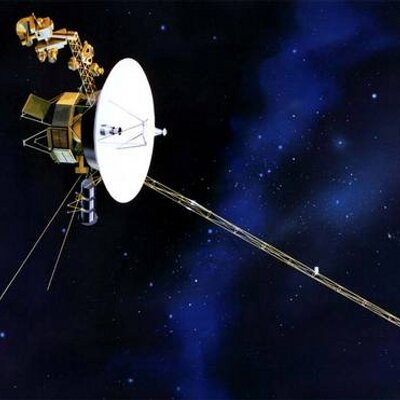
1977年9月5日12:56:00(UTC)に打上げられたVoyager 1は、2026.11.18 02:16:07PST(10:16:17UTCまたは19:16:07JST)にて、地球より1光日の距離に到達します。
※通信に片道1日を要する距離。
science.nasa.gov/mission/voy…

ALT ハセガワ模型のサイエンスワールドシリーズVoyager探査機(1/48スケール)。以下同じ。


21
静岡県下にあるプラモデルメーカー・ハセガワのサイエンスシリーズ「ボイジャー」1/48スケールモデル。
持ち帰っても他の人達に見てもらえず、結果的に持て余すと判断して前職の職場に置いてきた。活用してくれているかなあ…。2026年11月18日、打上げより49年目にして地球から1光日の彼方に。


38
今日はVoyager 1の1光日到達ということもあり、TLにもその話題が流れてくる。
Voyagerの打上げは1977年、軌道と探査機トラブルシュートの関係で2号が先で8月20日、1号が9月5日となった。惑星と地球の位置関係もあって、後から打上げとなったVoyager 1の方が先に木星・土星に到達。
1
1
48
Voyager 計画は、土星探査終了後に管制室も閉じて、運用終了になるかも知れなかったところ、ブッシュ副大統領とベーカー上院院内総務(いずれも当時)の議会への口添えがあって計画延長が決まり、当初のGrand Tour構想にかなり近い内容となった。
1
13
辺境を往く一兵卒 retweeted
What about Voyager 2? V2 is traveling about 10% more slowly, and so is currently just over the 20 light-hour mark. This graph is more complicated than the last, but I thought this might interest those of you following our progress in detail. Here is a summary of all the One-Way Light Travel Times of the Voyager spacecraft over 2026. The first thing to note is that the plot lines have different vertical axes! While the times are _offset_ by 03H:50M, the intervals are the same. If you plot both these times on a _single_ vertical scale, you can barely see the sinusoidal shape. Remember: blue with blue (Voyager 1), and green with green (Voyager 2). OK, why is there this shape?
Because the distance measurements are being made from a moving platform: Earth. The sinusoidal variance is because of Earth's orbit around the Sun. At certain times of year, the Earth is moving towards the Voyagers faster than they are leaving, so the distance _decreases_. Why are they offset from each other? The Voyagers took very different paths out of the Solar System. V1 left after its Saturn encounter, while V2 chased down Uranus and Neptune, traveling farther around the ~plane of the planets' orbits, and that's why V2's interesting points are 'farther along in time.' We can also see that V1 is traveling faster than V2: it makes much more progress each year. Why? Because V2's last encounter (with Neptune), slowed it down significantly. The different angles involved between the spacecraft, the Earth, and the Sun are responsible for the precise shapes we see. Voyager 2 will reach the one light-day milestone just under nine years from now in 2035! #Voyager #OneLightYear

ALT Graph of one-way light-travel times over the year 2026, showing two sinusoidal lines and two dotted straight lines sloping upwards to the right. The blue sinusoid and line (Voyager 1) are somewhat steeper than the green (Voyager 2). The sinusoids are the distances from Earth, and the dotted straight lines are the distances from the Sun. Voyager 1 starts at 23 hours 34 minutes, and ends at 24 hours 3 minutes. Voyager 2 starts at 19 hours and 45 minutes, and ends at 20 hours 11 minutes.

