

Societal dynamics on land&seascapes, energy, food, migration, organisation, health & more are studied @ Groningen Center for Social Complexity. #undisciplinary
Groningen The Netherlands
Joined October 2011
- Tweets8K
- Following1.3K
- Followers1.2K
- Likes3.3K
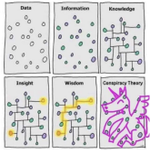

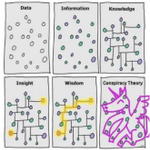
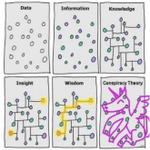


Societal dynamics are heating up with all the current protests. Different interpretations circulate, lots of emotion, so confirmation bias and group think are affecting public opinion. Aggression can be seen everywhere. Mind that building is usually better than destroying.
The Nicolaas Mulerius of the @univgroningen (inactive on X) active in the annual klipperrace. A team adaptively dealing with complex dynamics, and sharing a goal. Great metaphor for studying complex systems.

When reflecting on social dynamics, I think as social scientists we have the responsibility of looking the problem into the eye. Definitely there will be different perspectives, but we can't look away from this.

Was in Frankreich passiert, betrifft den gesamten Westen, das gesamte christliche Abendland. Und man wird dieses Problem nur beseitigen können, wenn man es auch beim Namen nennt. Es sind weder „Schülerproteste“, noch „soziale Unruhen“, wie bald wieder eine Soziologin erläutern wird. Es sind schwerste Rassenunruhen. Darauf ausgerichtet, unsere Länder und unsere Kultur zu vernichten.
Die Zerstörer sind nicht an politischen Lösungen interessiert. Sie wollen weder bessere Schulen, noch mehr Sozialleistungen. Sie wollen angreifen und fordern die europäischen Länder, die ihre Eltern oder Großeltern aufnahmen, offen heraus. Das Kuriose daran: Sie sagen es ganz deutlich. Nur die politische Klasse von grün bis in die Mitte leugnet es. Die kommunistische Linke, das muss man ihr lassen, sagt es auch ganz offen.
Einen Kompromiss wird es nicht mehr geben. Mit Angreifern, die auf Bürgerkrieg aus sind, verhandelt man nicht. Der Versuch der Integration und der Assimilation ist gescheitert. Und so lange man jene härter verfolgt, die das Offensichtliche aussprechen, als diejenigen, die unsere Länder angreifen, wird es keine Lösung geben.
Jetzt geht es nur noch darum, wann die politische Notbremse gezogen wird.

Relevant for all teachers out there.

MIT published a brutally honest report on what AI is doing to students.
A committee of professors and students spent five months studying how AI changed learning on campus, and the findings read like a warning to every university on the planet.
Study groups are disappearing. Office hours are emptying out. Problem sets and take-home exams no longer prove anything, because AI can produce credible solutions to almost any written assignment in the undergraduate curriculum. Students who lean on chatbots lose mastery and confidence, and some slip into what the report calls cognitive surrender, reaching for AI at the first hint of struggle.
The numbers are rough. 46 percent of surveyed MIT undergrads use LLMs daily. 90 percent worry about their own overreliance. Undergrads who feel AI makes them replaceable now outnumber those who feel it makes them capable.
The committee's answer surprised me. They refused to fight AI with surveillance. The report calls AI detectors unreliable, says lockdown browsers feel like spying, and warns that policing students builds a classroom atmosphere of mutual distrust.
Instead, MIT wants to rebuild education around the things AI can't replace. That means oral exams, semester portfolios, in-person project work, and a required social component in every subject. The report even floats the idea of rethinking grades entirely, since without a GPA to optimize, much of the incentive to cheat with AI evaporates.
The committee warns professors against replacing undergrad research assistants with AI agents just because they're cheaper, because a university exists to grow people, not output.
The most famous tech school on earth admitted the machines broke its way of teaching. Its answer is more humans, not more software.

There's much more to Schrödinger than his cat...a fascinating quantum approach of life and consciousness.


Using human neurons in computing, a fascinating new development taking place.

On August 17, 2026, Singapore officially unveiled the world’s first independently managed biological data center prototype, integrating 16 million living human neurons with traditional silicon hardware.
The project, hosted at the National University of Singapore Medicine, is a strategic collaboration between the university, digital infrastructure developer DayOne Data Centers, and bio-computing startup Cortical Labs. This infrastructure marks a shift from purely digital architecture to wetware, combining synthetic biology with computational processing power.
The system departs completely from traditional server farms based solely on microchips. The prototype is housed in a single standard rack that contains 20 CL1 biological computing units. Each unit holds approximately 800,000 neurons cultivated in a laboratory from human stem cells. These living neurons sit on silicon chips equipped with electrodes, where electrical impulses from the digital system stimulate the cells, causing them to alter their synaptic connections.
The neural activity is then transmitted back and translated into computational data by a proprietary operating system named biOS. Because these are living cells, the servers require a literal life-support system, which is why technicians feed the neurons every three days with a cocktail of sugars, micronutrients, and pH buffers, while specialized mixers regulate oxygen, nitrogen, and carbon dioxide levels.
The transition toward biological processing aims to solve two of the biggest challenges in the artificial intelligence era, which are energy consumption and learning efficiency. A single CL1 biological unit consumes about 25 to 30 watts, compared to the hundreds of watts required by a conventional silicon data center chip. Consequently, the entire biological rack demands only between 800 and 1,000 total watts, whereas traditional infrastructures consume tens of kilowatts for AI workloads.
Furthermore, the technology offers high data flexibility, delivering strong efficiency with small datasets and unpredictable scenarios without needing the massive data volumes required to train traditional models. This approach drastically lowers environmental impact and intense cooling requirements, aligning with Singapore’s Green Data Center Roadmap.
The prototype does not aim to replace the entire global cloud infrastructure immediately, but focuses instead on specific tasks where biology outperforms current computer architecture. A primary field is advanced biomedical modeling, which uses the neurons to better understand the development of neurodegenerative diseases directly on the integrated hardware-software platform.
Another application involves accelerating pharmaceutical research to test the efficacy of new drugs and molecules, which drastically cuts laboratory testing timelines. Finally, the technology enables the development of predictive AI algorithms that leverage the natural ability of the human brain to adapt to contextual changes without requiring massive computational recycling. This initiative is part of DayOne’s long-term plan to expand next-generation computing capabilities across Asia and Europe, while construction of their first local AI-ready traditional data center, named SG1, is set for completion in early 2027.

The Jason Arday case is getting increasingly complicated as people advocating to be color blind in evaluating scientific merits are now being accused by some of having racist viewpoints. Too many angry people out there.
Students in China working with our consumer choice social simulation model. Want to try? Click on the link, click on "setup" and "run" and there you go. In the tab "model info" you'll find experiments to explore: netlogoweb.org/launch#https:…

Windfarms appear to be quite problematic. It seems time to stop with wishful thinking, and acknowledge the ecological and economic costs of windfarms. It is however a challenge to get out of a locked-in system suffering from tunnelvision.

A landmark study of performance data reveals that energy output from onshore wind farms begins to drop sharply after just 10 to 15 years.
This leaves these skeletons of steel and composite plastic flapping in the breeze.
While the wind industry and governments routinely promise a 20- to 25-year operational lifespan, long-term empirical analysis tells a very different story. Many onshore turbines across the UK and Denmark begin showing severe mechanical wear and output degradation much earlier than projected.
In this statistical study for the Renewable Energy Foundation - The Performance of Wind Farms in the United Kingdom and Denmark - energy economist Professor Gordon Hughes analysed thousands of wind farm operational records.
His findings were stark: load factors (electricity generated as a percentage of total capacity) declined far faster than industry models predict. Hughes concluded that the effective technical lifespan of many turbines ranges between 10 and 15 years, after which soaring maintenance costs and falling output make continued operation uneconomical.
For UK onshore wind farms, average output capability fell by roughly a third after 10 years, rendering many fully uneconomic to maintain beyond 12 years without heavy intervention.
To mask this rapid degradation and maintain financial viability, operators increasingly resort to 'repowering' — dismantling and replacing turbines long before their theoretical 25-year mark to capture new subsidy regimes.
The original hardware is routinely prematurely retired, exposing a grim reality behind the theory.


What would be the climate of a retrograde rotating Earth? Fascinating question!
esd.copernicus.org/articles/…


2026 International Summer School on Methodology of Computational Social Science, Helanshan Campus, Ningxia University, Xixia District, Yinchuan, Ningxia, China July 27-31, 2026. More information: kau.se/en/news/how-social-me…

When physics and social science meet...

Oxford University researchers have discovered the densest element yet known to science...
The new element, Governmentium (symbol=Gv), has one neutron, 25 assistant neutrons, 88 deputy neutrons and 198 assistant deputy neutrons, giving it an atomic mass of 312.
These 312 particles are held together by forces called morons, which are surrounded by vast quantities of lepton-like particles called pillocks.
Since Governmentium has no electrons, it is inert.
However, it can be detected because it impedes every reaction with which it comes into contact.
A tiny amount of Governmentium can cause a reaction that would normally take less than a second, to take from 4 days to 4 years to complete.
Governmentium has a normal half-life of 2 to 6 years.
It does not decay, but instead undergoes a reorganisation in which a portion of the assistant neutrons and deputy neutrons exchange places.
In fact, Governmentium's mass will actually increase over time, since each reorganisation will cause more morons to become neutrons, forming isodopes.
This characteristic of moron promotion leads some scientists to believe that Governmentium is formed whenever morons reach a critical concentration.
This hypothetical quantity is referred to as a critical morass.
When catalysed with money, Governmentium becomes Administratium (symbol=Ad), an element that radiates just as much energy as Governmentium, since it has half as many pillocks but twice as many morons.
Message in a bottle (Canada - Scotland) hit the news this week. January 2025 me and my dog Bowie found a bottled message, This Friday it will be opened during a performance with music, science, video and poetry during the Waddenverbeelding Symposium. lnkd.in/efVCs-GJ
