

Institut De Neurosciences Des Systèmes - Postdoc
Marseille, France
Joined November 2014
- Tweets221
- Following495
- Followers403
- Likes1.1K






Giovanni Rabuffo retweeted

A brain under general anesthesia still registers sound, but anything as elaborate as the meaning or grammar of words was thought to shut down with consciousness. Katlowitz and colleagues had a rare chance to test that. Seven patients undergoing surgery for drug-resistant epilepsy already had hippocampal tissue scheduled for removal, so the team placed high-density probes in it and recorded hundreds of individual neurons while the patients lay fully anesthetized, playing them sequences of tones and, for some, podcast stories.
Neurons responded to the tones, and the response to rare, unexpected tones grew over the following minutes, a simple form of learning in a patient with no awareness of it. During the stories, neural activity tracked how frequent each word was and carried information about its meaning and grammatical class. It also held signals that helped predict the upcoming word. The authors conclude that complex sensory processing in the hippocampus can occur without consciousness.
The study rests on seven patients, on epileptic tissue already slated for resection, and on one anesthetic, propofol, so sleep, coma and other drugs remain open. Nothing here shows that patients remember any of it after waking, since recall was never tested. The result argues against the stronger version of the assumption, that nothing beyond elementary hearing survives the anesthetic.
Fig. 1 from Katlowitz et al. (2026), Nature. CC BY-NC-ND 4.0. Unmodified.

New preprint: "A personalized map of where, when, and how to stimulate the brain to elicit controlled responses."
biorxiv.org/content/10.64898…
We use personalized AI surrogate brains to predict where, when & how to stimulate for reliable effects.
Thread 👇
linkedin.com/posts/grabuffo_…

Work done with @ireneaceropousa, Tomas Berjaga-Buisan, and @GustavoDeco at the Center for Brain and Cognition (CBC) @UPFBarcelona, as part of my Marie Skłodowska-Curie project CAERUS (grant agreement No. 101199894).
1
172
New preprint out!
How does criticality propagate from local neuronal circuits to whole-brain dynamics?
We tackle this with a multiscale, connectome-based mouse model. 🧵/n
👉 biorxiv.org/content/10.64898…

Also, check out our companion preprint where we test criticality empirically across local and global scales in simultaneous bilateral prefrontal cortex spiking recordings in freely behaving rats biorxiv.org/content/10.64898…

Big thanks to the solid team @ldallap1, @PierpaSorre, @FukaiTomoki, @MNPompili, Pietro Bozzo, Bach Nguyen, Damien Depannemaecker, Leonardo Gollo
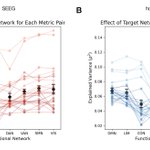
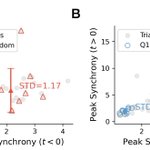
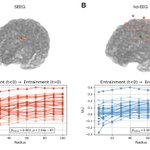
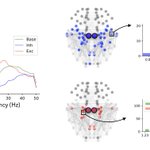
🧠⚡️Brain stimulation is powerful, yet its effects are notoriously variable: identical parameters can produce very different outcomes. In our new preprint, we show how the brain’s state before stimulation helps explain and reduce this variability. 1/n
doi.org/10.1101/2025.09.18.6…
Key message: variability is not just noise—it reflects structured brain dynamics that can be harnessed for more reliable, state-aware stimulation protocols.
Preprint: doi.org/10.1101/2025.09.18.6…
Code: github.com/grabuffo/State_De…
7/n
1
4
220
With deep gratitude to my extraordinary co-authors @MariannaAngiol1, @FukaiTomoki, @GustavoDeco, @PierpaSorre , and @DaveMomi — this work would not have been possible without them.
Supported by @MSCActions and @UPFBarcelona as the first step of the "CAERUS" project—more to come!