

GSX is building the banking ecosystem for tokenized RWAs 🌍 Users can stake Bitcoin, Ethereum, and other stablecoins into GSX’s asset management protocol.
Joined October 2023
- Tweets660
- Following111
- Followers1.9K
- Likes1.3K






Pinned Tweet
Global Settlement Network joins @CantonNetwork as a Validator and Featured Application.
GSX ID is now live within the Canton ecosystem, enabling reusable onchain compliance for tokenized markets.
With @texture_capital, @BlackMantaCap, @particula_io, @ArchaxEx, @lattice_finance, and @ISinfra, GSN is helping unify identity, distribution, and risk.
Verify once. Reuse across counterparties.
Read more: news.bitcoin.com/global-sett…

Digital assets can move around the clock.
The infrastructure around them increasingly needs to do the same.
Recent G20 discussions have put both clearer digital asset pathways and longer operating hours for large-value payment systems on the agenda.
Those conversations are closely connected.
Via The Block: theblock.co/news/regulation/…

Digital-asset companies rarely build for one jurisdiction anymore.
@KyleSonlin spoke with @cryptodotnews about how unresolved US market-structure questions can affect where firms establish teams, pursue licences and plan institutional products.
crypto.news/clarity-act-fail…

“Settled” should not be a black box.
For every corridor, an operations team needs to see:
✅ Status
✅ Counterparty
✅ Fees
✅ Liquidity
✅ Exceptions
✅ Final confirmation
Infrastructure gets useful when the people running it can see what is happening.
globalsettlement.com/banks

Institutional liquidity can exist and still be difficult to move.
@RyanKirkley spoke with Traders Magazine about the infrastructure behind digital-asset markets: custody, counterparties, fragmented liquidity and settlement.
tradersmagazine.com/featured…

Three networks can each have liquidity.
That does not mean the market has one pool of liquidity.
Fragmentation leaves capital split across chains, venues and settlement environments.
GSN Interchain Liquidity Pools are designed to aggregate access to liquidity across chain types.
globalsettlement.com/liquidi…
A token can be issued in minutes.
The asset may need to be operated for years.
Distributions. Servicing. Corporate actions. Reporting. Redemptions. Ownership changes.
Tokenisation needs infrastructure for the life of the asset, not only day one.
globalsettlement.com/solutio…

Tomorrow at #BAC2026 🇿🇦
@RyanKirkley will deliver his keynote:
The End of SWIFT? How Africa Could Leapfrog Into a New Financial System
🕘 09:50–10:10 GMT+2
📍 Waterfall City, Gauteng
Hosted by @BitcoinEventsCo.
blockchainafrica.co/
#BlockchainAfricaConference2026

We're heading to Nairobi for Africa Blockchain Festival 2026!
Our CEO and Co-Founder, Ryan Kirkley, will be speaking on the panel “DeFi and Consumer Finance for African Markets” on Friday, October 16, at 3:30 PM EAT.
As stablecoins and decentralised finance gain traction across African markets, the conversation around accessible financial services, cross-border payments and the infrastructure needed to support wider adoption has never been more relevant.
Ryan will share his perspective on how DeFi and institutional-grade settlement infrastructure can help address longstanding barriers to financial access and support the next phase of digital finance across the continent.
📍 Africa Blockchain Festival | Nairobi, Kenya
📅 October 16, 2026 | 3:30 PM EAT
We're looking forward to connecting with fellow industry leaders in Nairobi!

A central bank can issue a digital currency.
That does not automatically give people a reason to use it.
In his conversation with Benzinga, Ryan Kirkley looks at the experience of Nigeria’s eNaira and the wider lesson for digital currencies.
Technical issuance is only the starting point. Distribution, merchant acceptance and a clear reason to change existing payment behaviour all influence adoption.
benzinga.com/Opinion/26/09/6…

Trading hours are getting longer. Assets are becoming tokenised.
Post-trade infrastructure has to move with both.
LSEG’s plans around tokenised UK equities are another example of markets moving toward more continuous access.
Settlement cannot remain the part that waits.
Via @Reuters: reuters.com/world/uk/lseg-pl…

Private wealth already moves across markets, borders and time zones around the clock.
So why does settlement still work to a different schedule?
@RyanKirkley explores the gap in his latest piece for Private Banker International.
privatebankerinternational.c…

Oil is only one part of the Canadian dollar story.
@KyleSonlin spoke with @Investingcom about the mix currently pulling on CAD: crude prices, growth expectations and the interest-rate gap with the US.
ca.investing.com/news/forex-…

Africa does not necessarily have to recreate every layer of the financial system built elsewhere.
New settlement rails create another option.
One week from today, @RyanKirkley will explore that idea at @BitcoinEventsCo’s #BAC2026:
The End of SWIFT? How Africa Could Leapfrog Into a New Financial System
blockchainafrica.co/
#BlockchainAfricaConference2026

Global Settlement retweeted

For the last four years, I put every dollar and ounce of time into @GSXnetwork to build the first quantum rooof network, it’s not just upgrading signatures but moving off of elliptic curves as means of security. Every node must be known and built with security in mind, consensus needs upgrade, and the storage and signature must also have it. It’s great the industry is waking up now let’s upgrade the ecosystem.

Today I call upon the blockchain industry to calmly begin planning for "bunker mode". My personal recommendation is to set in motion a controlled mass migration of assets to fresh addresses, i.e. addresses whose pubkeys remain hidden behind a hash.
Holders, starting with large and sophisticated ones, should consider moving the bulk of their funds to addresses that have never signed a transaction. And when they do sign one, they should also move remaining funds to a new address (possibly generated from the same seed phrase).
Don't rush. While I believe there is cause for action a rushed migration would do more harm than good. Don't panic either. Moving assets to protected addresses is a simple, preventative step which does not require new cryptography or new wallets.
IMO it is now reasonable to brace for the possibility that ECDSA breaks before qday, in the worst case in months not years. By "break" I mean fast private key recovery (e.g. in one week) on available hardware (e.g. a large GPU cluster).
Recent days have been humbling for human mathematical intuition. Long-held, unquestioned hypotheses have fallen. This includes the n log(n) bound for integer multiplication and the 3SUM conjecture. In hindsight, May's unexpected disproof of the Erdős unit distance conjecture was our warning shot.
Yesterday's OpenAI drop made it clear that mathematical superintelligence is upon us. They say there are weeks where decades happen. We are about to live through weeks where centuries of mathematical progress happen. Could our magic 64-byte ECDSA signatures be too good to be true? Was it just security through obscurity all this time?
Elliptic curves feel especially vulnerable to superintelligence. Curves carry rich structure, with room for fancy tricks like Schoof, Frobenius, pairings. (By contrast, hashes are designed to minimise algebraic structure.)
Separately, as Ewin Tang can attest, an efficient quantum algorithm sometimes foreshadows an efficient classical one. We should be open to the possibility of a classical counterpart to Shor that breaks elliptic curves and RSA at once.
Also noteworthy is the striking under-representation of cryptographic breakthroughs among the 722 mathematical results OpenAI published. I've witnessed first-hand the US government censoring academic quantum cryptanalysis results. Backroom interventionism is my base case.
I urge large, sophisticated actors to lead by example. Project11's "risq list" (bitcoin-risq-list.projecteleven[.]com) is a great tracker of exposed BTC pubkeys. Binance, Bitbank, Robinhood, Bitfinex, and Tether have an opportunity to harden their cold storage. Next month I'll address institutions in London in a live Q&A (forum.ethereuminstitutional[.]org/london-2026).
Again, please do not rush. Wallets holding under 50 BTC enjoy partial cover from "Satoshi's shield", i.e. his 20K exposed addresses that hold 50 BTC each. Load-bearing signers like oracles and L2 security councils should consider rotating ECDSA pubkeys with every signed message and/or multi-signing with a hash-based schemes like SPHINCS.
Exiting bunker mode safely will require post-AI cryptography. My inclination is to go all-in on hash-based cryptography and avoid structured mathematical assumptions entirely, whether from curves, lattices, or isogenies. A single battle-tested hash (e.g. from the SHA or BLAKE families) yields plausible post-AI security.
The Ethereum roadmap on strawmap[.]org fully embraces hash-based cryptography with end-to-end formal verification as a response to the quantum threat. Those timelines must now be revisited and accelerated in light of mathematical superintelligence. I'll be pushing for maximum defensive acceleration.
A payment rail can run 24/7.
Liquidity doesn’t automatically do the same.
@RyanKirkley spoke with @cryptodotnews about the funding problem underneath always-on markets and what happens when payment infrastructure stays open while other parts of settlement do not.
crypto.news/tokenized-market…

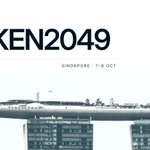
First stop in Singapore: @token2049. 🇸🇬
@KyleSonlin will be at Marina Bay Sands tomorrow for two days across digital assets, markets and infrastructure.
If you’re there and want to talk settlement, stablecoins, tokenization or interoperability, come find Kyle.
📅 7–8 October
#TOKEN2049

Stablecoins. Tokenized deposits. Tokenized securities. Bank money.
All can work independently.
@RyanKirkley spoke with @crowdfundinside about the next problem: making sure institutions can move between those systems without creating another set of liquidity silos.
crowdfundinsider.com/2026/09…

Nigeria’s fintech market increasingly sits across payments, banking, digital assets and cross-border settlement at the same time.
@RyanKirkley spoke with @ITWebAfrica about what happens when the boundaries between those systems start to blur.
itweb.africa/article/nigeria…
“Regulatory clarity arrives piece by piece while the rest of the world legislates and builds.”
@RyanKirkley spoke with @armchairtweets about custody, settlement and what institutions need as digital-asset infrastructure keeps developing.
thearmchairtrader.com/crypto…

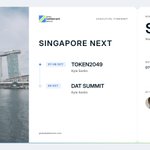
Singapore next week. 🇸🇬
@KyleSonlin will be in Singapore for @token2049 on October 7–8, followed by DAT Summit on October 9.
A full week around digital assets, tokenization, institutional finance and the infrastructure connecting them.
If you’ll be in Singapore too, get in touch.
#TOKEN2049
