

The Geopolitics (TGP) is a uniquely global source of analysis and commentary on #geopolitics, #politics and international relations. Join us for latest updates.
Global
Joined April 2017
- Tweets4.5K
- Following767
- Followers18.7K
- Likes2K







Can the Armenia–Azerbaijan connectivity initiative bring lasting peace to the South Caucasus, or will TRIPP deepen geopolitical rivalries and create a new form of regional fragmentation? thegeopolitics.com/a-new-bal…

202
Sixteen Arab and Muslim countries back sanctions on Israeli settlements. Will this growing international pressure translate into meaningful accountability and halt settlement expansion? thegeopolitics.com/middle-ea…

233
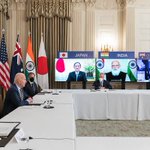
The Quad is expanding beyond traditional security to AI, critical minerals and resilient supply chains. Can India turn strategic cooperation into tangible economic gains while preserving its strategic autonomy? thegeopolitics.com/indo-paci…

3
320
Power of Siberia 2 exposes the imbalance in Russia-China energy ties. Moscow needs a new market; Beijing can afford to wait, negotiate hard, and dictate terms. Who needs whom more? thegeopolitics.com/who-needs…

287
Argentina’s renewed Falklands claim reflects more than historical grievances. Milei is invoking nationalism amid domestic economic pressures, while Trump’s shifting stance could complicate Britain’s position. thegeopolitics.com/the-falkl…

288
Tehran views confrontation not as a crisis to resolve but a struggle to outlast Washington until 2028. Its strategy rests on deterrence, internal unity, regional leverage, and survival. thegeopolitics.com/the-2028-…

292
Bangladesh secured a vast maritime zone in the Bay of Bengal, but underused ports, depleted fisheries, unexplored offshore energy, and weak coordination threaten its potential. Will policy finally turn this strategic asset into economic opportunity?
thegeopolitics.com/banglades…
2
395
China’s revised National Defense Mobilization Law has sparked debate over Taiwan and wartime readiness. Beyond invasion fears, what does it reveal about Beijing’s concerns over military reliability, industrial endurance and national resilience? thegeopolitics.com/the-newly…

Ghana’s bid to join BRICS+ reflects a growing push to diversify economic partnerships without abandoning traditional allies. Could its entry strengthen BRICS’ role in a multipolar world? @tridiveshsingh thegeopolitics.com/ghanas-in…

India-China ties are improving, but border tensions, strategic rivalry, and Indo-Pacific competition require realistic expectations. Cooperation can grow, yet enduring differences will continue shaping the relationship. @tridiveshsingh thegeopolitics.com/india-chi…

QUAD Plus can reinforce a Free and Open Indo-Pacific by expanding intelligence, technology, and maritime cooperation, reducing dependence on China and strengthening regional resilience against coercion.
thegeopolitics.com/why-is-qu…
Canada's submarine choice highlights a key lesson: modern arms sales depend not only on capability and price, but also on alliances, strategic trust, and long-term security partnerships. South Korea must sell relationships, not just weapons. thegeopolitics.com/what-cana…

660
Abiy Ahmed's political capital is shrinking as insecurity, inflation, elite fragmentation, and dependence on external patrons drive up the cost of power. Can Ethiopia's political marketplace sustain his rule much longer? thegeopolitics.com/can-abiy-…

BRICS+ offers vast potential in trade, technology and local currency cooperation, but geopolitical rivalries and divergent strategic priorities will shape whether it emerges as a cohesive force or remains a loose coalition. @tridiveshsingh thegeopolitics.com/brics-coo…
BRICS may not end dollar dominance, but it is accelerating a shift toward a more multipolar financial order where currencies, influence, and economic power are becoming increasingly contested. thegeopolitics.com/brics-and…

4
865
Japan and South Korea can no longer afford fragmented security policies. In a Taiwan-Korea dual contingency, coordination is no longer strategic preference, but the foundation of deterrence and regional stability. thegeopolitics.com/between-t…

As Gulf tensions rise, Pakistan has quietly become the channel neither Washington nor Tehran can afford to lose. Islamabad’s diplomacy is no longer reactive; it is positioning itself at the center of crisis management. thegeopolitics.com/islamabad…

1
562
The Epstein case is no longer just about one predator. It’s about whether Western institutions can investigate power honestly — or whether wealth, influence, and secrecy will always outrun accountability. thegeopolitics.com/epstein-c…

The U.S.-China rivalry is no longer defined by tariffs alone. AI chips, export controls, rare earths, and strategic supply chains have become the real battlegrounds of global power in the emerging economic order. thegeopolitics.com/the-new-p…

1
350