

Sporting Director | Coaching Methodology | Coached 🇬🇧 🇺🇸 🇲🇦 🇰🇭 🇧🇩 | Former Elite Coach Educator @FRMFOfficiel | PhD Researcher @sheffhallamuni |
Global
Joined April 2009
- Tweets13K
- Following2.7K
- Followers11.7K
- Likes20.7K







Pinned Tweet
Let's Go!!! Super excited. Delighted to have a published paper on reconceptualising Game Models in Football (Soccer).
Excited by the potential implications for future research, coach education, and football practice design and how coaches may bring adaptive Game Models to life
The paper explores how Game Models may be viewed less as predefined patterns of play and coach-led directives, and more as dynamic, adaptive, principle-based frameworks that support player behaviours within the continuous flow of the game.
Rather than rehearsing fixed patterns, practice design may challenge players to perceive information, solve problems, and adapt within representative and fluid game environments, with tactical principles acting as 𝒂𝒕𝒕𝒆𝒏𝒕𝒊𝒐𝒏𝒂𝒍 𝒂𝒏𝒄𝒉𝒐𝒓𝒔 that guide behaviour in evolving contexts.
Read here:
tandfonline.com/doi/full/10.…

Is winning the ball back about individual pressing or collective coordination?
Serra et al. (2026). Team Synergies in Professional Football: A Goal-Referenced Performance Indicator for Rapid Ball Recovery in Negative Transitions
This is a particularly interesting study from an ecological dynamics perspective, examining how teams collectively reorganise immediately after losing possession.
Researchers analysed 248 transitions across five professional matches.
Key Takeaways:
🔹 Teams demonstrated greater collective directional coherence during transitions where possession was recovered within 10 seconds.
🔹 Faster recoveries showed significantly higher coordination values (0.717 vs. 0.600).
🔹 Differences were already observable within the first 2-5 seconds after losing possession.
• Defending is more than the actions of the nearest player. The findings support examining how teammates coordinate their movements in relation to a shared defensive objective.
• Effective defensive organisation is context-dependent. Greater coordination was associated with faster recovery, but this does not mean all players should move in the same direction or that greater synchronisation is always better.
🤔 This raises some fascinating questions for coaches:
Are we placing too much emphasis on the player closest to the ball when coaching defensive transitions?
What are the other ten (including GK) outfield players doing when possession is lost?
Are players recognising shared opportunities to press, cover spaces, protect depth and reorganise collectively?
And importantly, are our training environments encouraging players to coordinate their actions in response to the information emerging around them?
My biggest takeaways from the paper:
1. Defensive transitions aren't simply about how quickly individuals react.....They're about how players collectively adapt to an emerging problem through their interactions with teammates, opponents, the ball and space.
From an ecological dynamics perspective, this highlights the importance of team synergies, shared affordances and collective coordination.
Don't just coach the player pressing the ball. Develop the collective response around them.
Serra, E., Carrilho, D., Xiao, L., Savoia, C., Beato, M., Coppola, S., Vastola, R., & Araújo, D. (2026). Team Synergies in Professional Football: A Goal-Referenced Performance Indicator for Rapid Ball Recovery in Negative Transitions. Sports, 14(9), 374. doi.org/10.3390/sports140903…
#EcologicalDynamics #FootballCoaching #TeamSynergies #SkillAcquisition

How has MLS football evolved?
McCaskie & Wing (2026) recently researched
"The Evolution of Match-Play in Major League Soccer from 2018 to 2023"
This study analysed 2,519 MLS matches across six seasons, examining 21 technical performance indicators.
Five important findings:
• Attacking output declined. Goals, expected goals (xG), total shots and shots on target all decreased significantly between 2018 and 2023.
• MLS may be developing its own tactical identity. Long-pass attempts and completions declined, but there was no clear league-wide shift towards possession-dominated football.
• Successful teams created better scoring opportunities. Teams reaching the later playoff stages generally demonstrated higher xG and stronger attacking output than teams failing to qualify
• Not all passes are equally informative. Progressive passing distance and passes into the final third differentiated certain successful teams from non-qualifiers, while general passing volume was less useful.
• Collective defending may be influencing attacking performance. The authors suggest that more organised defensive structures could help explain declining attacking indicators, although defensive organisation was not directly measured.
🤔 This raises some interesting questions for coaches:
Are teams becoming better organised defensively, making it increasingly difficult to create scoring opportunities?
Are we placing too much emphasis on possession and passing statistics rather than what those actions actually achieve?
And importantly, are our training environments exposing players to the problems they encounter against compact, organised defensive structures?
As coaches, how can you design environments that help players recognise opportunities to exploit space, break defensive lines and create meaningful goalscoring situations?
Don't just measure possession. Understand what players are achieving with it.
📖 McCaskie & Wing (2026), International Journal of Sports Science & Coaching
🔗 doi.org/10.1177/174795412614…
#FootballResearch #MLS #EcologicalDynamics #FootballCoaching #PerformanceAnalysis

Changing player numbers doesn't automatically produce meaningful differences in technical performance.
A study by (Azli et al., 2026) compared 4v4 and 5v5 formats (both with goalkeepers) among U14 footballers and found no statistically significant differences in the measured attacking and defensive actions.
The authors observed some descriptive variations, but these should not be interpreted as established differences in adaptability or learning.
The interesting question from an ecological dynamics perspective is: Are we simply changing the number of players, or are we deliberately manipulating task constraints to create opportunities for particular behaviours to emerge?
Does changing 4v4 to 5v5 necessarily create better learning opportunities? Or should we be paying closer attention to space, positioning, rules, player interactions and the information available to players?
Small-sided games are not automatically effective simply because we reduce player numbers.
What matters is how the practice environment is designed, what opportunities for action it creates, and how players interact with the constraints of the task.
⚽ Don't just change the numbers. Think about the behaviours you want to invite.
📖 Research: Azli, M.S., Atan, S.A., Jakiwa, J., Sazali, I.Z., Ikram, E.H.K. (2026). The Influence of Small-Sided and Conditioned Game Formats on Technical Patterns in Football. In: Abdullah, M.A., Musa, R.M., Syed Omar, S.F., Assi, S., Liu, P., PP Abdul Majeed, A. (eds) Proceedings of the 4th International Conference on Innovation and Technology in Sports. ICITS 2025. Lecture Notes in Bioengineering. Springer, Singapore. doi.org/10.1007/978-981-95-9…
#EcologicalDynamics #FootballCoaching #SkillAcquisition #YouthDevelopment

⚽ PHYSICAL CAPACITY vs. COMPETITIVE PERFORMANCE: DOES MATCH CONTEXT MATTER?
Interesting findings from a recent study examining external loads in elite U17 and U21 football players.
🔹 U17 players covered significantly MORE distance at moderate-to-high speeds (15–25 km/h) in friendly matches compared to official competition.
🔹 U21 players generally demonstrated HIGHER external loads in official matches than friendlies, particularly in deceleration demands.
🤔 This raises an interesting question:
Are younger players physically capable of more than they actually demonstrate in competitive environments?
Could psychological pressure, tactical constraints or increased decision-making demands influence how younger players express their physical capabilities?
These are possible explanations, rather than mechanisms directly established by the research.
The takeaway for coaches?
Physical capacity and the expression of that capacity in competition are not necessarily the same thing.
Perhaps we need to consider not just what players are physically capable of, but how the competitive environment shapes the opportunities and demands for them to demonstrate those capabilities.
⚽ Context matters.
📖 Research: Li, S., Feng, R., & Ren, D. (2026). Comparison of running performance between official match and friendly match in elite youth football players: A case study. International Journal of Sports Science & Coaching, 0(0). doi.org/10.1177/174795412614…
#FootballResearch #YouthDevelopment #SportsScience #Coaching

What an amazing day! ⚽️
A day full of meetings, conversations, and exciting opportunities for the future!
Held a virtual information call for parents and families tonight with nearly 200 registrations, with 138 joining us live initially and participation growing to around 192 throughout the evening! Absolutely fantastic engagement from our families, with some excellent questions through the Q&A function via MicrosoftTeams
It was a brilliant opportunity to share our vision for the winter, introduce our winter curriculum, discuss our FAST5 Winter Indoor League programming, and provide insight into the thinking behind our player development approach.
One of the things I enjoy most is having the opportunity to share the why behind what we do. From practice design and learning environments to video examples and the decisions that shape our curriculum, it's about helping families understand how we're creating meaningful learning experiences for players.
Lots of exciting things happening, and even more to come!
Really excited about the direction we're heading and the opportunities we're creating for our players, coaches, and families.
#NordicSoccerClub #PlayerDevelopment #YouthSoccer #CoachEducation #SoccerDevelopment #Leadership #ParentEducation #Soccer


Gérard Jones, MSc MSD PGCE retweeted

Barcelona, Getafe karşısında pozisyonel yerleşimden vazgeçerek oyunu merkeze yığıyor. Bunu (tam anlamıyla olmasa da) ilişkisel bir yerleşim olarak adlandırabiliriz.
Oyuncular birbirine yaklaşarak dar bir alana sıkışıyorlar ancak bu aynı zamanda birçok kısa pas bağlantısının oluşması anlamına geliyor. Bu bağlantılar sayesinde de Olmo'ya net bir gol fırsatı yaratılıyor.
Barcelona'nın yaptıklarını kısaca ancak adım adım detaylandıracak olursak:
-Gordon çizgiye, Xavi Espart merkeze
-Lamin Yamal merkeze
-Gabi geriye kaçarak rakibini beraberinde taşıyor, Rodri'ye baskı gitmesini engelliyor ve önünü açıyor
-Jesus rakip savunma bloğu arasında
-Barcelona tam 3 oyuncuyla Getafe hatları arasında
-Rodri'nin hat kıran pası atıyor ve bu 3 oyuncu hatlar arasında serbest konumda
-Jesus çapraz koşuyla pas opsiyonu yaratırken, aynı zamanda Olmo'nun gireceği boşluğu oluşturuyor
-Olmo 4. adam olarak top buluştu ve gol pozisyonuna girdi
Gérard Jones, MSc MSD PGCE retweeted

Final Third | Diagonal Draw
One issue I often see is that a player makes a run, doesn’t receive, & then disconnects.
But a diagonal run can draw defenders & open the switch.
When that happens, the striker is in a privileged spot to attack the blindside.
Gérard Jones, MSc MSD PGCE retweeted
The Dynamic Advantage
In fast-paced games with limited space and time, the ability to seamlessly occupy spaces while advancing the attack without disrupting flow and pace is a critical edge.
🎙️ Season 12, Episode 8 – Gerard Jones (The Itch) - @TheMagicAcad Podcast
Great to catch up with Rusty @russellearnshaw for a really enjoyable podcast conversation and an opportunity to reflect on the realities of coaching and the experiences of the past year.
We explored my transition from youth development into the senior, results-driven environment of professional football, inc. pressures of securing three points, managing expectations - fans/media/board, navigating internal and external demands, and balancing the personal sacrifices that come with working in elite high-performance environments.
Having experienced first-team football and major youth international competitions, I'm grateful for those opportunities and the perspectives they've given me.
It's also been incredibly rewarding to return to the U.S., reconnect with @ussoccer where I've been a Coach Educator nationally for over 8 years across a number of courses and focus again on something I'm hugely passionate about: player and coach development.
I'm really enjoying this next chapter in Vermont, working as an Executive Director and supporting coaches through U.S. Soccer, while finding a better balance between professional ambitions, family life, and completing my PhD.
We also touched on my recent research "Direction Without Dictation" exploring how coaches can use verball feedback and coaching interactions to guide players' visual search, without prescribing solutions.
A great back-and-forth with Rusty, whose expertise in coach & player development always makes for thought-provoking conversations.
buzzsprout.com/205642/episod…
Thanks again for having me, Rusty!
#CoachDevelopment #PlayerDevelopment #USSoccer #Coaching #EcologicalDynamics #Football #Coaching #PlayerDevelopment #HighPerformance #CoachingCraft

Gérard Jones, MSc MSD PGCE retweeted

Alıntıdaki yazıda “inverted full-back” olarak adlandırılan beklerin iç hatta konumlanmasının getirdiği avantajlardan bahsetmiştim.
Aşağıdaki videoda da bunun güzel bir örneğini görüyoruz. Beklerin iç hatta konumlanması ve rakip kenar oyuncularının bu hareketi takip etmesiyle birlikte stoperler, araya ekstra bir istasyon sokmaya gerek kalmadan doğrudan kanat oyuncularını bulabiliyor. Özellikle bire bir becerisi yüksek kanat oyuncularınız varsa bu yapı sayesinde onları topu daha rahat alabilecekleri alanlarda buluşturup çok daha kolay şekilde 3. bölgeye sokabiliyorsunuz.
Bunun dışında ani bir top kaybı yaşandığında da rest defence’i 2+3 şeklinde kurduğunuz için, top kaybının hemen ardından ilk baskıyı daha rahat yapabiliyor ve topu yeniden kazanma ihtimalinizi arttırıyorsunuz.

Postecoglou’nun sırasıyla Celtic-Tottenham-Forest dönemlerinde kullandığı 2-3-5 yapısı. Bu yapı 4-3-3 dizilişinin toplu oyundaki şablonlarından biri. Inverted full back denilen beklerin içte kullanılması konusunun getirdiği 2 temel avantaj var aslında.
İlki, rakip kenar oyuncularını da merkeze çekebilmeniz. Bek içe geldiğinde rakip kanat oyuncusu onu takip etmek zorunda kalıyor ve bu durum çizgide kalan hücum oyuncusunu rakip bekle birebir bırakıyor. Böylece çizgide genişlik veren oyuncunun dribbling ve birebir kalitesi üzerinden çok daha rahat şekilde şans üretilebiliyor.
İkinci avantaj ise rest defence yapısı. Klasik 4-3-3’lerde geçiş savunması genelde 2+1 ya da bir bekin geride kaldığı 3+1 yapısıyla korunur. Bu modelde ise top kaybedildiği anda merkeze yerleşmiş 5 oyuncuyla geçiş savunması yapabiliyorsun. Bu da özellikle top kaybı sonrası reaksiyon süresini kısaltmak demek.


A very proud milestone in my PhD journey
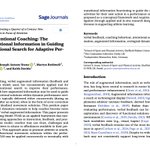
I’m delighted to share that our paper has now been published Open Access in the Perceptual and Motor Skills journal as part of the 2026 Special Issue, Celebrating a Quarter of a Century: New Research and Perspectives in Focus of Attention.
Beyond Conventional Coaching: The Role of Transitional Information in Guiding Athlete Attentional Search for Adaptive Performance.
This is particularly special as it is my first Open Access paper, and another important milestone in my PhD journey. There are more papers to follow from studies we have already conducted that are under review, with some really interesting findings.
This paper presents the Transitional Learning Model (TLM) as an applied framework that integrates and extends existing approaches to instruction, feedback and practice design.
Drawing on an Ecological Dynamics rationale, we introduce our TLM and explore how feedback and instruction in the form of clues, challenges and questions might be used to guide athletes’ attentional search within representative learning environments.
Incredibly proud to have co-authored this with Dr. Joe Stone, Dr. Martyn Rothwell, Dr. Fabian Otte & Prof. Keith Davids. Very much a standing on the shoulders of giants moment.
Massive thank you to @sheffhallamuni and @SHU_SPARC @ConstraintsColl
And there’s more to come from the PhD, with further studies completed and some really interesting findings ahead.
#EcologicalDynamics #SkillAcquisition #Coaching #PhD #Football #Soccer #HighPerformance


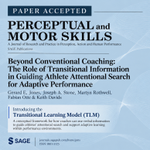
𝑨𝒄𝒂𝒅𝒆𝒎𝒊𝒄 𝑷𝒂𝒑𝒆𝒓 𝑨𝒄𝒄𝒆𝒑𝒕𝒆𝒅
Delighted to share that our paper has been accepted for publication in Perceptual and Motor Skills.
𝑩𝒆𝒚𝒐𝒏𝒅 𝑪𝒐𝒏𝒗𝒆𝒏𝒕𝒊𝒐𝒏𝒂𝒍 𝑪𝒐𝒂𝒄𝒉𝒊𝒏𝒈: The Role of Transitional Information in Guiding Athlete Attentional Search for Adaptive Performance
In contemporary coaching, verbal augmented information (feedback and instruction) remains a widely used, but inconsistently applied tool for directing athletes’ attentional search to improve their performance.
Rather than asking only what should a coach say? this paper explores a different question:
How can the information we provide help athletes learn where to search, what to attend to, and how to discover functional solutions for themselves?
Drawing on ecological dynamics, we introduce the Transitional Learning Model (TLM) a conceptual framework for thinking about how coaches can use clues, challenges and questions to guide athletes’ attentional search within representative performance environments.
Importantly, we position TLM as a framework requiring further empirical investigation rather than a finished solution. For me, that opens up some exciting possibilities for future research by taking these ideas into applied coaching environments and examining how they actually shape athlete learning and adaptation.
A big thank you to my co-authors @DrJoeStone, Martyn Rothwell, @fab_otte and Prof. Keith Davids for the thinking, challenge and collaboration throughout the process which started a few years ago, and to the reviewers and editorial team at Perceptual and Motor Skills.
Looking forward to sharing the full paper once it is published.
#EcologicalDynamics #SkillAcquisition #Coaching #SportsCoaching #MotorLearning #AthleteDevelopment #Research #Feedback #CoachingInteractions #VisualSearch #Scanning #TransitionalInformation

Gérard Jones, MSc MSD PGCE retweeted

Killing the Man-to-Man: How Farioli’s Porto Dismantled City’s Press 🧠⚽
Man-to-man presses hate sequential third-man combinations.
Here is how Francesco Farioli set up Porto in 3 tactical layers to bait City, chain combinations, and attack the space behind:

Gérard Jones, MSc MSD PGCE retweeted
Defending | Mid Block
One risk of defending in a mid-block is giving the possessor too much freedom.
There is still space behind the block to defend.
Allow them to play forward freely, & they can exploit it.
Drop too early to protect the depth, and the team becomes stretched.


Gérard Jones, MSc MSD PGCE retweeted

FC #Porto's Goal-Kick routine vs Manchester City.
Peak Farioli ball.
Gérard Jones, MSc MSD PGCE retweeted

El 90% de los equipos le defienden hombre a hombre, ¿qué solución le da Cesc Fabregas?
🔸 "El juego posicional para nosotros cada vez existe menos."
🗣️ @AlvaroBenitoV: "Es otra forma de entrenar conceptualmente completamente diferente."
🔏✅ Accede en bemagistral.com/the-magistra…
Gérard Jones, MSc MSD PGCE retweeted

To beat the line we need the player without the ball to adjust his positioning to gain a positional advantage over his nearest defender.
At early stages, this is a key concept for any player without the ball when attacking.