

We're sharing/showcasing best of @github projects/repos. Follow to stay in loop. Promoting Open-Source Contributions. UNOFFICIAL, but followed by github
San Francisco, CA
Joined October 2020
- Tweets13.7K
- Following66
- Followers342K
- Likes23.9K









AI agents are moving beyond chat windows, and Mercury Agent is taking that idea to a whole new level.
For a long time, we've interacted with AI by opening an app, typing instructions, and waiting for responses.
Mercury is exploring something much more interesting: AI agents that become part of how we work, communicate, and manage our everyday lives.
Its latest update introduces an extensible plugin ecosystem, and the first two additions offer a glimpse of where this is heading.
Optimus: Mercury can see your screen, navigate applications, move the mouse, type, and interact with your computer. You can speak to it while it works, hear what it's doing, and stop it whenever you want.
WhatsApp: Your AI agent is now just a message or phone call away. Ask it to call you at a specific time, receive updates and files, or approve actions through voice, even when you're away from your desk.
But there's another important part to this.
Each plugin runs in its own isolated process, comes from a checksum-verified catalog, and declares the permissions it needs. Sensitive actions like sending, posting, paying, or deleting require your approval.
That's what makes this direction particularly interesting.
We're moving from AI tools that simply respond to prompts toward agents that can take action, stay connected, and work alongside us across everyday applications.
Less time managing an AI interface. More time letting an agent handle the work while you remain in control.
It's a shift from AI as something you occasionally use to something that can genuinely assist you throughout your day.
And the best part?
Mercury Agent is open source and available for Windows, macOS, and Linux.
Definitely a project worth exploring.
GitHub: github.com/cosmicstack-labs/…


Hi3D V1.0 (formerly Sparc3D) by @Hi3D_AI released its inference code and model weights.
Trained on ~2M 3D assets, this production-validated model refines coarse meshes into high-resolution geometry using a reference image.
Now available for Research, Development, and Production.


GitHub: github.com/hi3d-official/Hi3…
Model Weights: huggingface.co/hi3d-official…
Try It Online: hi3d.ai/hi3d-1-0-open-source


A new open-source document parser is challenging some of the biggest names in OCR.
Meet OXR (Optical Everything Recognition), a 1.3B-parameter model from SoMark that goes beyond extracting text.
It turns complex PDFs and document images, including tables, formulas, and difficult layouts, into structured Markdown or JSON while preserving reading order and coordinates.
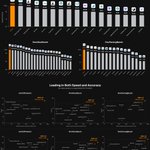
The team reports #1 rankings on olmOCR-Bench, OmniDocBench, and DocParsingBench.
Here's what makes it interesting. 🧵👇

Under the hood, OXR recognizes 13 document elements, including tables, code blocks, formulas, and chemical structures.
Its RSI (recursive self-improvement) training loop analyzes parsing errors and generates targeted data for the next training round.
Layout analysis is also pluggable: developers can swap the model that detects document regions without replacing content recognition.
In SoMark's 100-page test on one RTX PRO 6000, OXR took 101s vs. 161s for DeepSeek-OCR-2.

Why does this matter for developers?
Document AI, RAG systems, and agents need more than extracted text. They need tables, formulas, and document structure preserved so that information can be processed downstream.
OXR provides structured Markdown/JSON output, a model to explore, and an online demo to test with your own PDFs.
GitHub: github.com/SoMarkAI/OXR
Hugging Face: huggingface.co/SoMarkAI/OXR-…
Free demo: free-oxr.somark.ai


