
Islamic content, religious discussions & apologetics. This account is managed by Goates (@goatesology) and Realist (@viral_x4).
Joined August 2024
- Tweets3.3K
- Following304
- Followers1.6K
- Likes1.7K




Goates retweeted
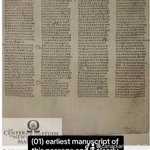
This christian document orders otherwise, the Christian women must cover themselves outside of formal church worship.
And Btw many Church Fathers praised Hijab/Niqab and ordered this for public life.


This christian document orders otherwise, the Christian women must cover themselves outside of formal church worship.
And Btw many Church Fathers praised Hijab/Niqab and ordered this for public life.


Goates retweeted
For centuries, both ancient Greek logicians and medieval Muslim theologians split language into two distinct categories: Literal and Metaphorical.
If you said "the lion entered the room" to describe a brave warrior, they claimed you were using a "metaphor" because the literal definition of a lion is a four-legged animal.
In Kitab al-Iman and Majmu' al-Fatawa, Ibn Taymiyyah completely revolutionized linguistics by declaring that the abstract split between literal and metaphorical language is a complete myth.
He argued that words do not have a fixed, isolated "literal" definition in a vacuum.
Instead, meaning is strictly defined by immediate context and communal usage.
If a community uses the word "lion" to mean a warrior, that is its true meaning in that context.
In Western academia, it wasn't until the 20th century that the famous philosopher Ludwig Wittgenstein shook the world with his theory of "Language Games", arguing that meaning is defined entirely by its use in context.
Ibn Taymiyyah developed this advanced, usage-based semantic framework 600 years prior.
Link: pure.ed.ac.uk/ws/portalfiles…
Goates retweeted
Ibn Taymiyyah is amazing, modern computer scientists (like John Sowa) have noted that Ibn Taymiyyah’s aggressive critique of strict Aristotelian logic, where he favored situational analogy (Qiyas al-Tamthil) and learning incrementally from specific data points, uncannily models the exact way Modern Artificial Intelligence and Machine Learning algorithms operate today. Instead of following rigid rules, they learn patterns dynamically from historical data.
The links to the resources:
share.google/GYlcjkEJin9ac00…
share.google/SkWr59jeLMHkT14…
Goates retweeted
- Matthew Poole's commentary, distinguishes Exodus and Deuteronomy
Essentially some christian’s will try to change its meaning by attempting to cross reference exodus 22:16-17 and say its seduce.
Simple refutation of that:
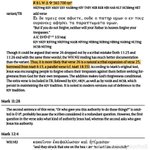
Exodus 22:16–17 is seduction (patah), while Deut 22:28 uses taphas (“to seize”), which is force/capture in Hebrew.
Different verbs = different legal categories.
Should be added to the deut 22:28-29 channel IMO cuz it’s been pretty popular with christian apologists.