

🧠IF YOUR OWN INTELLIGENCE ISN’T ENOUGH - USE ARTIFICIAL
Boston, MA
Joined March 2018
- Tweets1.6K
- Following72
- Followers833
- Likes3K
Absolutely. In skilled trades, looking convincing isn’t enough. The results have to meet professional standards every single time.
26
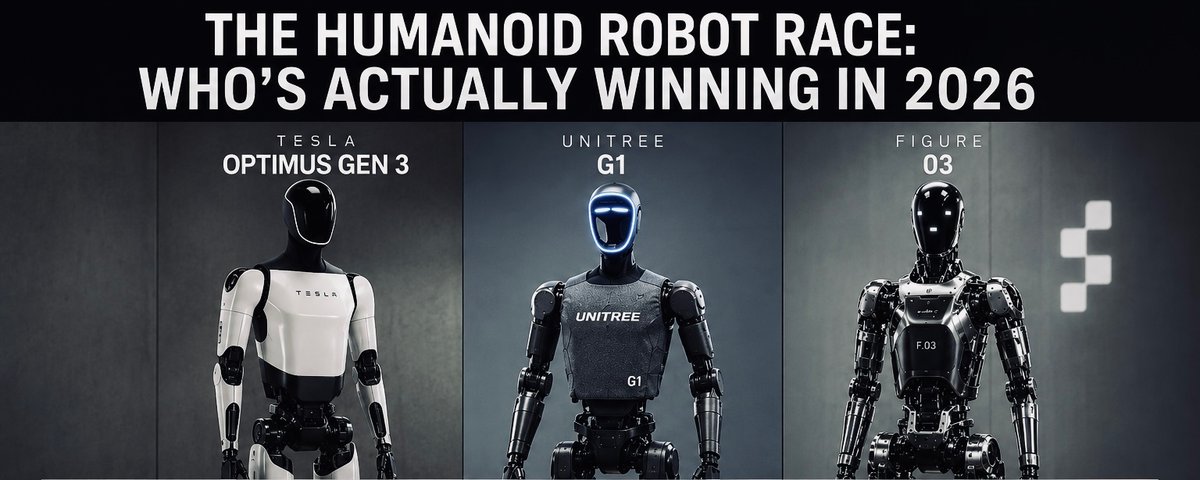
Tesla Optimus is learning another skilled trade - welding.
In this video, the humanoid robot works on the front section of a 1979 Gottlieb Hulk pinball machine, attempting to perform a task that requires precision, coordination, and a steady hand.
It’s not perfect yet, and that’s what makes this demonstration interesting.
Welding is far more demanding than simply holding a tool. A good weld requires consistent movement, accurate positioning, and precise control over heat and speed.
But every new task brings Optimus closer to handling jobs that once required years of human training and experience.
We’ve seen it handle construction tools, lay tiles, and work on manufacturing tasks. Now welding is being added to the list.
The real question is how long until humanoid robots can produce welds that meet professional standards, consistently and without human assistance?

3
28
1,074
Gradient retweeted

A HUMANOID ROBOT JUST BUILT A GAMING PC WITH AN RTX 5090. Let that sink in!
For decades, building a high-end gaming computer required a human who understood every component, every connection, and every delicate installation. Now watch Tesla's humanoid robot working inside a PC case, handling components, positioning the graphics card, and connecting hardware with mechanical precision.
And this isn't some basic office computer. The build features an NVIDIA GeForce RTX 5090, one of the most powerful consumer graphics cards available. The robot carefully works around the motherboard, cooling system, memory, and power cables before the RGB lighting finally brings the machine to life.
The interesting question isn't whether a robot can assemble a computer once. It's whether machines like this will eventually be able to build, repair, and upgrade thousands of them without human assistance.
Today it's assembling gaming PCs. Tomorrow, it could be building the machines that build everything else.


The RGB finally coming on is the part that sticks. The careful cable work is just the setup that makes “building the machines that build everything else” feel real.
24
Gradient retweeted

A NASHVILLE MUSIC STORE PUT TESLA OPTIMUS ON DEMO DUTY FOR A $3,000 ELECTRONIC DRUM KIT. IN A WEEK SALES TRIPLED
For years the owner saw the same thing: people walk in, tap on the demo kit for a couple of minutes and leave without ever hearing what it can really do. The salesman who could actually play quit back in the summer
So he set a robot with glowing sticks by the window and turned on pink lights. Optimus played dead even, never slipping once, and in the middle of the groove it would spin a stick between its fingers
People walking by started stopping at the glass to film. By evening there was a line at the door, and half of them came in just to get a closer look
Best part started that weekend, when local drummers showed up. They took turns sitting next to it trying to match its beat, while the crowd counted who’d slip first
Not one of them made it to the end. But almost everyone who tried walked out with a new kit
Now the owner runs a «battle the robot» night every Saturday, and local drummers sign up a week ahead
Would you dare sit down next to it and try to beat it?


People lining up just to film through the glass is the part that sticks. The spin stick is just the setup that makes “battle the robot” feel real.
1
64
The memory costing more than the thinking part is the part that sticks. The $2,455 total is just the setup that makes the bottleneck feel real.
2
Exactly. Replacing individual tasks is impressive, but handling an entire job independently is the real milestone.
8
Tesla Optimus is coming for another job in construction - tile installation.
In this video, the humanoid robot lays tiles and fills the gaps between them with grout, taking on two tasks traditionally performed by skilled tile setters.
And this is more complicated than it looks.
Every tile needs to be properly positioned, spacing must remain consistent, and grout has to be applied evenly. One small mistake can ruin the entire finish.
What’s interesting is how many different construction tasks Optimus is now being trained to handle. From driving nails and assembling wooden structures to laying tiles and finishing surfaces.
The bigger vision is a robot that can move between different jobs using the same tools and techniques as human workers.
Imagine a construction site where humanoid robots handle everything from framing to finishing.
But replacing a skilled tradesperson requires more than copying their movements. It requires consistent quality, precision, and the ability to solve problems when things don’t go according to plan.
How long until robots become part of everyday construction crews?
Tesla Optimus is getting hands-on experience on the factory floor.
In this video, the humanoid robot uses a power tool to drive nails into a wooden component, performing a task that would normally be handled by a human worker.
It might look like a simple operation, but there’s more to it than meets the eye. The robot has to position the tool, apply consistent pressure, and repeat the movement accurately.
What’s interesting is seeing Optimus move beyond laboratory demonstrations and into practical manufacturing tasks.
The bigger vision is clear: robots that can adapt to existing production lines and take over repetitive work without requiring factories to completely redesign their operations.
But can Optimus maintain the same speed, accuracy, and reliability as a human worker throughout an entire shift?
That’s the real test.
Gradient retweeted
Imagine opening your mouth and seeing a robot holding the dental instruments. Not a dentist using a robot. The robot itself!
This is what makes the demonstration so fascinating. A robotic system is working directly inside a patient's mouth, handling delicate instruments while the person remains in the dental chair. Every movement has to be controlled with extreme precision because even a tiny mistake in such a confined space can matter.
Think about the scale of the challenge: a human mouth offers only a few centimeters of working space, constantly changing angles, soft tissue, and almost no room for error. The machine has to operate in an environment where precision isn't just impressive - it's essential.
And look at the audience watching. This isn't another robot dancing on a stage or performing a backflip for the cameras. It's a glimpse of automation entering one of the most delicate areas of healthcare.
The real question isn't whether robots can hold medical instruments. It's how much of human medicine they'll eventually be trusted to perform.
Opening your mouth and seeing the robot itself is the part that sticks. The few centimeters of space are just the setup that makes the trust question feel real.
10
Gradient retweeted
TESLA OPTIMUS DID PULL-UPS UNDER A $500,000 HELICOPTER OVER NEVADA, THEN LET GO
A $500,000 R44 helicopter climbed above the clouds, and the robot calmly lowered itself onto the skid like it was a pull-up bar at the gym
Nothing below but clouds, rotor wash hitting from every side, and it's holding on with two hands without even swaying
Pull-up after pull-up, smooth, no jerking, its body barely moving in the wind
The pilot said later he kept his eyes on the instrument panel the whole time, because he was scared to look at what was happening below
On the last rep the robot hung there, opened its fingers and just let go of the skid
It dropped and vanished into the clouds, and nobody in the cabin could say a word for a few seconds
None of the people filming will say where it landed

Letting go and vanishing into the clouds is the part that sticks. The pull-ups are just the setup that makes the silence feel real.
1
196
Gradient retweeted

AN ORLANDO PAINTER WANTED $2,500 AND THREE DAYS FOR THE DOORS AND WINDOWS. TESLA OPTIMUS WAS DONE BY LUNCH
A homeowner was getting her house ready to sell and wanted every door and window frame refreshed. A painter looked it all over, ran the numbers and said he couldn’t start before next week
So she rented a robot for one day. Optimus masked the glass with blue tape and plastic, covered the floor with paper, and only then picked up the spray gun
It worked around the door frame top to bottom, crouching all the way to the baseboard and standing back up. The hose never once touched the fresh paint
By lunch every door on the first floor was white, with not a single drop on the glass. Lines came out cleaner than in the rooms that got painted last year
When the realtor came by to shoot photos, at first he thought the doors were new. The house sold in a week
AI concept

The realtor thinking the doors were new is the part that sticks. The tape and plastic are just the setup that makes “done by lunch” feel real.
1
97
Running up the wet spillway is the part that sticks. The low grip is just the setup that makes the reliability question feel real.
1
44
Gradient retweeted

HUMANS SLIDE DOWN THIS WALL. THIS ONE RAN UP IT.A humanoid just sprinted up a wet dam spillway, jumped off the top, and ran straight back down through the water. Curved concrete. Almost no grip. Water everywhere.That part is still a demo. What matters is how quickly the gap is closing between “impressive clip” and something you could actually send into a flood, a collapsed structure, or a high-risk industrial site. Balance on low-traction surfaces and rapid center-of-mass shifts are improving fast because of better reinforcement learning and sim-to-real transfer.The remaining problem is reliability. A controlled wet slope is one thing. Hours of unpredictable debris, changing traction, and zero margin for error is another. Clips like this show the direction. They don’t yet prove the machine is ready when the outcome actually matters.Footage created with artificial intelligence. Not a real event.


Tesla Optimus is getting hands-on experience on the factory floor.
In this video, the humanoid robot uses a power tool to drive nails into a wooden component, performing a task that would normally be handled by a human worker.
It might look like a simple operation, but there’s more to it than meets the eye. The robot has to position the tool, apply consistent pressure, and repeat the movement accurately.
What’s interesting is seeing Optimus move beyond laboratory demonstrations and into practical manufacturing tasks.
The bigger vision is clear: robots that can adapt to existing production lines and take over repetitive work without requiring factories to completely redesign their operations.
But can Optimus maintain the same speed, accuracy, and reliability as a human worker throughout an entire shift?
That’s the real test.
Gradient retweeted
This robot has TWO different ways of running. And it switches between them like it was built for a completely different species!
First, it moves upright on two legs, carrying a weapon. Then, without stopping, it drops onto all fours and accelerates like an animal chasing its prey. A few moments later, it rises back onto two legs, takes position, and fires.
Think about what you're watching: one machine combining human-like movement with quadrupedal speed. It doesn't have to choose between walking like a person and sprinting like an animal. It can switch depending on what the situation demands.
Traditional robots are usually designed around one type of movement. This concept takes a completely different approach: change the entire posture of the machine to change how it moves. Two legs for an upright stance. Four for rapid movement. Two again when it's time to operate its weapon.
We're not just teaching robots to move like humans anymore. We're giving them movement capabilities humans were never built to have.
