

Baseball Coach | Building SUFS Baseball Helping players get better, understand recruiting & find the right opportunities to keep playing.
Cedarburg, WI
Joined January 2012
- Tweets7.5K
- Following2.9K
- Followers1.6K
- Likes5.4K





Pinned Tweet
I wrote a book…or a guide…whatever you want to call it.
It’s everything I know and believe about putting yourself in the best position to get recruited to play college baseball.
Building your school list. Creating your video. Reaching out to coaches. Following up. Having an actual plan.
Here it is: it's FREE
coachgn14.gumroad.com/l/http…
Just remember: no tool, guide, or advisor will ever replace getting really damn good at baseball.

Your target school list should reflect two things:
The player you are today.
The player you’re working to become.
Have some schools you need to grow into.
But if EVERY school on your list needs you to throw 5 mph harder, get significantly stronger, or become a completely different player…
Then its time to get back to work on the list
Put together two free resources for players and families navigating baseball recruiting:
⚾ Recruiting Film Guide
What to include and where to put the camera.
coachgn14.gumroad.com/l/kzdl…
📘 Take control of your recruiting
My ebook on taking ownership of the process and building a plan.
coachgn14.gumroad.com/l/http…
Both are free. Go download them.
Hopefully they help.

Graham Nelson retweeted
8 Spots Left
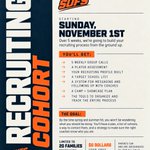
If your goal is to play college baseball, January through October of 2027 is your time to shine.
During that time, you need to get in front of the RIGHT college coaches, to ensure they can evaluate you IN PERSON.
But that doesn’t happen by accident.
You need a plan. You need a process. And you need to start building both NOW.
That’s EXACTLY what this FREE 5-week recruiting cohort is designed to teach you.
The goal is simple: By the time 2027 rolls around, you’ll know exactly how to get yourself (or your son) in front of college coaches and create legitimate opportunities to be evaluated and eventually recruited.
If you (or your son) is in the class of 2028 this is for you.
100% FREE
20 families max
DM me if you’re interested.
🤖 Made with AI

Graham Nelson retweeted

Uncommitted 2027 grad that can flat out play. 6.4 runner. Great IQ. Goes and get it in the OF. Hits any velo. Consistent path that produces gap to gap pop. Best of all he's a winner. Willing to do whatever it takes.

“I’m not really interested in JUCO.”
Hate to tell you, but everything is a JUCO now.
A powerhouse D3 program wanted one of my guys. I told the coach the kid would probably take a JUCO opportunity.
His response?
“What if we told him to just use us like a JUCO?”
A P4 head coach told me:
“I’m probably done recruiting high schoolers…they just use us like a JUCO.”
I don’t like it.
I think it’s bad for kids.
I think it’s bad for coaches.
I think it’s bad for college baseball.
But whether I like it doesn’t change the reality.
If you’re dismissing JUCO because you don’t want to go somewhere for a year or two and transfer…
That’s happening at every level now.
8 Spots Left
If your goal is to play college baseball, January through October of 2027 is your time to shine.
During that time, you need to get in front of the RIGHT college coaches, to ensure they can evaluate you IN PERSON.
But that doesn’t happen by accident.
You need a plan. You need a process. And you need to start building both NOW.
That’s EXACTLY what this FREE 5-week recruiting cohort is designed to teach you.
The goal is simple: By the time 2027 rolls around, you’ll know exactly how to get yourself (or your son) in front of college coaches and create legitimate opportunities to be evaluated and eventually recruited.
If you (or your son) is in the class of 2028 this is for you.
100% FREE
20 families max
DM me if you’re interested.
🤖 Made with AI
I despise when a player responds to coaching feedback with “I can’t.”
If you ask a coach what you need to do to play baseball at the next level, and they tell you, your response to ANYTHING they say cannot be “I can’t.”
That mindset will kill your chances of playing college baseball.
Your response should be “How do I do that?” or “Can you help me figure out how?”
Coach: “You need to add weight and muscle.”
Player: “I’ve been trying, but I’m struggling to put on weight. Can you help me build a plan?”
THAT is the response I want to hear.
Nobody expects you to have all the answers. Nobody expects you to know exactly how to accomplish everything.
But you better be willing to figure it out.
Replace “I can’t” with “How can I?”
That simple change in mindset will take you a long way.
Graham Nelson retweeted

Ask a former baseball player what he misses.
You’ll hear about the dugout. Batting practice. The bus rides. The guys.
Very few mention their batting average.
Funny how the numbers feel like everything when you’re playing, and the people become everything when you’re done.
💯
If you wan to get better at literally anything, just have a plan and execute it with urgency.
Even if the plan sucks you’ll still get better.
One of the biggest mistakes players make in recruiting is thinking that reaching out to a college coach is a one-time event.
You send an email.
You don’t hear back.
You assume they’re not interested.
That’s not how this works.
College coaches are busy. They’re evaluating hundreds of players, managing their current roster, traveling, and coaching games.
Your job is to make it easy for them to evaluate you.
Send the first email. Include your metrics, video, academics, and why you’re interested in their program.
Then follow up.
When you have new video, send it.
When your metrics improve, let them know.
When your schedule comes out, share it.
You’re not bothering a coach by providing meaningful updates.
Recruiting isn’t about sending emails. It’s about making it really easy for coaches to evaluate you.
And remember, none of this matters if you’re not continuing to develop as a player.
I hate to say this, but your GameChanger videos on your X profile don't really help.
They're really impossible to evaluate. That doesn't mean they have no value, but you want something that shows your tools and how you move.
GameChanger video isn't good for that.
I put together a quick guide on building a recruiting film for each position.
You can get it for free here:
coachgn14.gumroad.com/l/kzdl…


Coaching

.@RaysBaseball pitching coach Kyle Snyder tells @MelanieLynneN about his pitching philosophy and the unique ways he builds a relationship with his pitching staff.
We’re rolling now—10 spots left!!
You’ll walk away with everything you need to ensure you’re getting in front of the right coaches next spring and summer.
Plan + action = outcomes
🤖 Made with AI


13 Cohort openings left
If you want to play baseball in college and you’re graduating in the class of 2028 or if you’re a parent of a player graduating high school in the class of ‘28
This is for you.
🤖 Made with AI

It’s time to share my baseball story.
First, I want to give a shoutout to @AndersonLMiller for giving me the courage to share this.
It’s something I’ve thought about writing for a long time, but I’ve never really been comfortable telling the whole story.
Here goes.
I was a really good high school athlete.
Three-sport kid. Football, basketball, baseball. All-conference and all-star honors in all three.
I had opportunities to play Division I football, but ultimately decided to pursue baseball.
And if I’m being truthful, I probably felt some pressure to go that route.
My grandpa played professionally. My dad played. My older cousin, who I idolized, played Division I baseball.
It was just always the path I thought I was supposed to take.
But here’s the thing.
I was a VERY average high school baseball player wrapped in a Division I athlete’s body.
And I didn’t work nearly as hard as I should have.
At the time, I THOUGHT I worked hard. Looking back, I didn’t even know what working hard actually meant.
If you’ve followed me for a while or read my recruiting book, you know my recruiting process was a mess.
I’d finally done it.
I was going to play Division I baseball.
And then everything fell apart.
Day one of fall workouts. We’re running sprints.
My knee explodes.
Surgery. Season over.
But what happened over the next year is the part of this story I’ve never really told.
I became depressed. Anxious. Completely lost.
I didn’t recognize it at the time, but my mental health was in a really bad place.
And instead of dealing with it, I started drinking.
A lot.
Partying all the time. Going out instead of taking care of myself.
Hell, I was injured. Couldn’t play anyway. Who cares, right?
That’s what I told myself.
Eventually, about a year later, the doctor cleared me to play.
I worked my way back into practice.
And guess what?
I SUCKED at baseball.
Remember the kid who showed up at Western Illinois?
6’2”, 205 pounds.
6.6 sixty.
94 mph from the outfield.
Here’s what I had become:
6’2”, 184 pounds.
7.3 sixty.
81 mph from the outfield.
I was a shell of the player I’d been.
I hung around practice that fall, telling myself I was going to work my way back and play in the spring.
But I wasn’t doing the work.
I wasn’t taking extra swings. I wasn’t attacking my rehab. I wasn’t doing what I needed to do to get myself back.
I was depressed.
I had zero confidence.
And more than anything, I was scared.
Scared I wasn’t good enough anymore. Scared I’d never get back to where I was. Scared of what everyone would think if I failed.
And I never asked anyone for help.
Eventually, my shoulder started giving me problems, too.
I went in to meet with the coaches to talk about what we should do.
But we all knew.
I was done.
My baseball career was over.
I never took a single at-bat in a Division I baseball game.
For years, the story I told people was pretty simple.
I hurt my knee. Then I hurt my shoulder. Couldn’t play anymore.
And technically, that’s true.
But it wasn’t the whole truth.
The truth is that I stopped working.
I lost my confidence.
I wasn’t taking care of myself physically or mentally.
I was terrified of failing, and even more terrified of what other people would think of me.
So instead of confronting those things, I avoided them.
I half-assed my rehab.
I went to the bar instead of the batting cage.
I convinced myself that I was trying when I knew damn well I wasn’t.
And eventually, the opportunity I’d spent my entire life chasing was gone.
For a long time, I blamed my injuries.
But looking back, I know my mental health played a much bigger role in how my career ended than I was ever willing to admit.
My knee injury took away a season. My inability to deal with what happened afterward helped take away my career.
I share this because I spend a lot of time talking to young baseball players about working hard, getting stronger, developing their skills, and doing everything they can to earn an opportunity.
And I believe in every word of it.
But there’s another side to this that I don’t talk about nearly enough.
The mental side.
The pressure. The expectations. The fear of failure. The feeling that your entire identity is wrapped up in how good you are at a game.
I know what that feels like.
I also know what happens when you don’t deal with it.
I wish 20-year-old me had understood that struggling mentally wasn’t something to be embarrassed about.
I wish I’d asked for help.
I wish I’d understood that being a baseball player was something I did, not everything I was.
And I wish I’d realized that I didn’t have to figure everything out on my own.
I can’t go back and change any of it.
But maybe sharing my story will help one kid who’s going through something similar.
Maybe it’ll help a parent recognize that their kid is struggling.
Maybe it’ll encourage a player to ask for help instead of pretending everything is fine.
And maybe it’ll remind somebody that there’s a hell of a lot more to life than baseball.
I love this game. It’s given me more than I could ever repay.