

I help ambitious leaders escape burnout. Systematic frameworks: Analytical delegation, Team scale & performance, Crisis-responsive solutions for high-achievers.
DM for Leadership Assessment
Joined October 2023
- Tweets4.2K
- Following316
- Followers2.2K
- Likes1.4K






Just published: "Good at it. Paid for it. Done with it.". Check it out and subscribe to get everything I'm making.
pages.gplead.com/posts/good-…

Just published: “The AI Crucible: More Value, Less Grief.” Check it out and subscribe to get everything I’m making.
pages.gplead.com/posts/the-a…

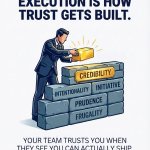
You delegate Execution and wonder why nothing ships.
You treat Execution as beneath you. Strategy is leadership work. Execution is what your staff handles. Your credibility quietly disappears because nothing actually delivers.
Execution has four moving parts.
Initiative is the muscle for moving work forward without waiting for permission or perfect clarity.
Prudence is the discipline of making sure things are done completely and correctly, with no details falling through the cracks.
Intentionality is making deliberate choices about where effort goes, refusing to let urgency decide for you.
Frugality is getting results without wasting resources or creating unnecessary complexity.
When you reliably deliver, you build credibility others cannot fake. Your team trusts you because they have seen you ship. Stakeholders give you bigger opportunities because you have a track record of delivery.
Execution at scale means getting things done right, on time, and on budget. You ensure quality standards are met. You deliver when you said you would. You do it without burning resources you cannot replace.
Execution is how trust gets built in organizations.
Execution is the Executive Superpower for the "How" of leadership in my Leadership Superpowers framework, built from Initiative, Prudence, Intentionality, and Frugality. Without it, the Why and the What stay theoretical.
Get the full framework in Leadership Superpowers: gplead.com/book

Scattered attention is the most respectable way to stay the same.
You spread attention across everything. Communication. Strategy. Delegation. Technical depth. Stakeholder management. You make minimal progress on anything because improvement requires sustained focus.
Chasing with Intent is focused development on one or two high-leverage capabilities maximum. Identify what is Required for your role. Find where you have the biggest gap. Then find the strength adjacent to it.
Knowing your gaps matters. Knowing your strengths matters more. Together they reveal the fastest path forward. Lean into what you are good at to fill what is missing. Strength in systems thinking closes a gap in Delegation. Strength in relationship building closes a gap in stakeholder management.
Work on one area consistently for 90 days before reassessing. Long enough to see real change. Short enough to maintain focus.
Attempting to change too much simultaneously creates awareness without impact. You know what you should improve. You never actually improve it because your attention is scattered.
Focused attention translates awareness into measurable capability growth. You practice deliberately. You get feedback. You adjust your approach. You integrate the improvement into how you operate by default.
Pick one thing. Master it. Then pick the next.
Chasing with Intent is the 90-day discipline at the core of the Leadership Superpowers framework. The assessment names which one or two of the thirteen Superpowers belong in your next ninety days.
Find the one to chase first: gplead.com/wki

You read the books. You take the courses. Your behavior stays exactly where it was.
Knowledge stays theoretical because you never move past the first step. Understanding a concept is the cheapest part of changing how you operate.
The Cycle of Mastery has five stages that move knowledge into capability: Learn, Practice, Reflect, Adjust, Integrate.
Real development happens in Practice and Reflection, where you test the concept against reality and notice what actually shifted. You Adjust based on what worked. You refine the approach across repeated cycles.
Commit to working through all five stages with one focus area. The trap is stopping at Learn. Collecting insights without application is the most common failure mode. Some get to Practice but never Reflect or Adjust. Few reach Integration.
Integration means the capability becomes your default behavior. You don't think about it anymore. It's how you naturally operate. The improvement is permanent because it's internalized.
Run the full cycle. One capability at a time.
The Cycle of Mastery is how every Superpower in the Leadership Superpowers framework actually develops. Capabilities become yours by running the full cycle until they are how you operate.
Get the full framework in Leadership Superpowers: gplead.com/book

The thicker your strategic plan, the less certain you should be that you have a strategy. The document is not the proof of thinking. It is sometimes the substitute for it.
A long deliverable feels like rigor. Six weeks of work signals seriousness and can produce almost no clarity about what to actually do on Tuesday. The risk is false certainty. The more polished the artifact, the easier it is to believe the world will cooperate with what is on the page.
It will not. The world is messy and changing. Your strategy is built on a model, and that model is built on a snapshot. The map is not the territory. A strategy that cannot survive contact with next quarter's reality was not grounded in this quarter's.
Strategy is a decision filter. Its job is to make obvious which opportunities to say no to. If you cannot name what you are not doing, you do not have a strategy. You have ambitions and a calendar.
The form your strategy takes depends on who needs to use it. A board needs depth and evidence. A leadership team needs a durable thesis they can apply to weekly decisions. The whole company needs something they can remember and repeat.
Different audiences, different artifacts, different levels of detail. But the core thesis underneath should be the same at every level. If it is not, that variance is the variance your organization runs on every day.
Your strategy should be durable. Your plans should be flexible. Test this by asking three senior people to describe the strategy in their own words. The gap between their answers tells you whether the thinking has landed or only the document has.
In the Leadership Superpowers framework, Judgment is the Executive Superpower for having the right goals and taking the best paths. The plan is the artifact. The thinking is the asset. Confuse the two and you end up with polished documents and thin decisions.
The assessment shows you whether the thinking underneath is there: gplead.com/wki

The question you are asking yourself after every interview is the wrong question. It is the reason your team looks like a slightly larger version of itself every year.
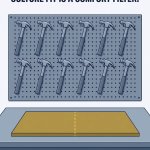
The wrong question is "would I want to work with this person?" Usually this question is disguised as "culture fit" to make it sound serious. It is not. It is a comfort filter. You are screening for people who will not disrupt the room you already have. The answer is almost always yes for candidates who remind you of yourself, and almost always no for the ones who would change the team.
The replacement question is sharper. What does this candidate bring that others on the team could learn from? Same interview. Different filter. You are now screening for what enters the team, not for whether the team will tolerate it.
The first question optimizes for fit. The second optimizes for contribution. Fit produces a team that gets along. Contribution produces a team that gets better. Over a year, the gap between those two outcomes is the gap between maintaining and compounding. Replace "Culture Fit" with "Culture Contribution."
Every hire either improves your culture or degrades it. There is no maintenance. The team you have a year from now is built one interview at a time, and the question you ask after each one decides which direction the culture is moving.
Rewrite the question you ask yourself after the next interview. What does this candidate bring that others could learn from?
In the Leadership Superpowers framework, Recruiting is the Team Superpower for making sure the best people want to join, and that the people who join make the team stronger than they found it. The right interview question is not a technique. It is the discipline of Recruiting in one sentence.
The full system for raising the bar one hire at a time is in the book: gplead.com/book

You have a problem on your desk right now you have not named out loud. The clock on it is already running.
The best time to deal with the problem was days ago. The second best time is now, while something can still be done about it. Effective leadership means having the Bravery to get into it promptly.
A problem named in week one is a conversation. The same problem named in week six is a crisis. The cost curve is exponential, not linear. The difference between courage and avoidance is usually measured in how many weeks have already passed.
The avoidance feels rational in the moment. The team is fragile. The timing is bad. The data is incomplete. The relationship is delicate. Each reason is reasonable on its own. Stack even a few avoidances and your challenges grow up into real problems.
Silence has a price. You pay it eventually, with interest. Your team pays it sooner, every day they work around the thing nobody is willing to name. The organization pays it last, when the problem finally surfaces in a place no one can ignore.
Bravery sounds like a personality trait. It is a practice. Catch yourself when you are about to avoid or delay an uncomfortable moment. Do not be deterred. Raise your concern immediately in the appropriate venue. Create the opportunity if you have to.
Name the one thing you have been avoiding. Say it this week, to the person who needs to hear it.
In the Leadership Superpowers framework, Bravery is one of four Powers inside Tenacity, the Character Superpower for letting nothing stop the team from reaching the goal. Tenacity does not mean grinding. It means refusing to let avoidance, drift, or fear take what the team is building.
Building Tenacity as a system, not a personality trait, is what the book is for: gplead.com/book

The hardest limit on your team is not their talent, your strategy, or your headcount. It is the version of you that walks into the room each morning.
Your team reads your state before they read your words. The pace, the patience, the focus, the friction. Whatever you bring sets the upper bound for what they can produce that day. They cannot operate above the energy their leader is running on.
Energy management is not motivation. It is when you are sharp, when you are not, what depletes you, what restores you, and how predictably you show up at the level the work requires. You manage your calendar carefully and your energy by accident.
This is why it sits underneath everything else. Before you can lead a team, manage up, or work across an organization, you have to lead yourself. A foundation built by accident cracks under load.
When you treat yourself as the constant, you push harder when results slip. That depletes the resource the team is drawing from. Standards quietly fall. You assume the team got weaker. You got more depleted.
Look at your last two weeks. The day you operated at your sharpest, what was true? Schedule that input the way you schedule your most important meetings.
In my Leadership Superpowers framework, Managing Yourself is the First Sphere of Influence, the foundation underneath every other capability. Every Superpower you build sits on top of how well you manage this one.
The foundation holds or it cracks under the team you are trying to grow. Find out which: gplead.com/wki

Authority from title fades quickly. Credibility from track record compounds.
Prestige is the stature earned through demonstrated expertise and consistent success. Being known for delivering results. Your track record gives weight to your views.
People listen because you've proven you know what you're talking about. Your Judgment has been tested in real situations. Your recommendations come with evidence of past success.
Use Prestige to serve solutions, build common ground, and enable partnerships. Your credibility opens doors. It creates opportunities for collaboration. It helps you advocate for your team and secure resources.
The misuse is relying on Prestige as blunt authority. Using it to force compliance instead of earning agreement. Expecting people to defer because of your stature. This is bluster, not leadership.
Real Prestige makes others more likely to give your ideas serious consideration. They engage because they respect your Judgment. They listen because your track record warrants attention.
Earn Prestige through results. Use it to serve, not dominate.
Prestige is one of four Powers inside Suasion in the Leadership Superpowers framework, the Multiplier that creates real understanding and buy-in. It is the Power earned the most slowly and weighted the most heavily.
Get the full Leadership Superpowers framework at gplead.com/book

Leadership transformation doesn't take years. It takes focused 90-day cycles.
Generic advice tells you to "be better" at everything. Communication, strategy, delegation, coaching, execution. No systematic framework. No focus. No way to measure progress. You work on all of it and master none of it.
The 90-Day plan is a practical structure for developing 1-2 highest-leverage Superpowers. You identify Required capabilities where you have gaps. You commit 90 days to deliberate improvement. You measure actual progress.
Chasing with Intent means picking one or two capabilities and committing fully. Not spreading attention across ten skills. You practice deliberately in real situations. You reflect on what works. You adjust your approach. You integrate improvements into how you operate by default.
Small, consistent actions over 90 days create significant capability improvement. You see measurable change because focus compounds. Then you reassess context and pick the next priority for another 90-day cycle.
Trying to master every leadership skill simultaneously scatters effort and produces minimal growth. You have awareness without capability. You know what good looks like but never get there.
90 days of focus beats years of directionless effort.
Find your highest-leverage Superpower: gplead.com/wki

Smooth meetings should worry you.
Three weeks after the decision, nothing has changed in how the team works. The problem was not execution. It was upstream, in the silence you mistook for buy-in.
What you got was agreement. What you needed was alignment. Agreement is what people give you to end a meeting. Alignment is what they carry into the work afterward.
When the decision unraveled, did anyone push back in the room? If no one did, that is your warning. People who decided privately not to argue saved their disagreement for the implementation. It lives as drift, foot-dragging, and rework.
Decisions stick when the people responsible for them have their fingerprints on them. Not consulted out of courtesy. Shaped the thing.
Pick a decision you made last week. Ask each person what they will personally do differently because of it. The specificity of their answer tells you what you actually got.
In my Leadership Superpowers framework, Suasion is the Multiplier, the capability that turns decisions into delivered work. A leader with strong Judgment and weak Suasion makes correct calls that nobody implements.
Decisions that do not stick are not random. They are diagnosable. Find the leak: gplead.com/wki

A detailed plan always leads somewhere. The question is whether it leads somewhere worth going.
When the work is ambiguous, your reflex is to produce timelines, milestones, and dependencies. The plan looks complete. It feels like progress. It avoids the question your team actually needs you to answer: are we going the right way at all?
Think of it this way. On a highway with a known destination, planning is the right tool. The work is sequencing. On unfamiliar terrain, the same tool stops working. You need scouts, not schedules. Small moves that tell you what the next piece of ground actually holds.
When you say you have three strategic options, you usually have one option and two fallbacks that assume the first one works. If the three fail together or succeed together, you had one.
A cheap test run against reality, run first, tells you more in two weeks than a three-month planning cycle does. You are finding out where reality is going to argue with you, before you have paved the road.
Pick the initiative on your desk right now. Name the cheapest test that would tell you whether your chosen route actually works. Run that first.
In my Leadership Superpowers framework, Vision is the Capability Superpower for pursuing something big, inspiring, and worthy. It sets the destination. Pathfinding is the Capability Superpower for finding workable solutions to the challenging problems between here and there. It figures out the route.
The capability you are under-investing in is the one your strategy is quietly failing on. Find it in 5 minutes: gplead.com/wki

The loudest voice in the room has the least influence.
The instinct says otherwise. Volume signals conviction, conviction moves people, so the leader who speaks first and loudest must be the one shaping the room. The logic breaks at every step.
Volume without substance is noise with confidence. The leaders who actually shape outcomes listen before they speak, frame before they argue, and speak last, so what they say settles the conversation instead of starting a new fight inside it.
What makes them land is not the volume. It is what sits underneath. Clear thinking about what matters. The right goals. The honest read of the situation. And the right delivery makes all the difference. The right mindset going in, the right attention to what is really happening in the room, the right moment, the right person to address, and the right tone. Without both the substance and the delivery, the most persuasive voice in the room is still talking past everyone in it.
Judgment is the water. Suasion is the rising tide. No boats float without Judgment.
That is why the two sit where they do in my Leadership Superpowers framework. Judgment is the Executive Superpower for having the right goals and taking the best paths. Suasion is the Multiplier that creates real alignment and commitment. The tide amplifies. The water makes the journey possible at all.
Try this tomorrow. Let someone else open the conversation. Speak last.
The capability you are not developing is the one holding the rest back. Find it in 5 minutes: gplead.com/wki

Ninety days of focused practice on one thing will change how you lead more than five years of scattered improvement. The math is uncomfortable, and it is the right math.
Here is the entire 90-Day Plan in one sentence. Pick one Superpower, one of the thirteen core leadership capabilities that shape how you lead. Practice it in real situations for ninety days.
Measure success by whether you can do it without thinking about it. That is integration.
The hard part is the word "one." The trap is trying to develop three or four at once because each feels important. Spreading your attention that thin produces four half-built capabilities and no real change. Constraints are not a burden. Constraints are The Way. One Superpower is not a limitation of the plan. It is the mechanism that makes the plan work.
Real situations matter as much as the number. The Superpower shows up inside the work you are already doing. A leader developing Candor, the ability to give direct feedback, practices it in the conversation that was already on the calendar.
The test is not whether you remember to do it. It is whether you do it under pressure, without thinking, in the moment it matters.
Name your one Superpower for this quarter. Not two. One.
This is the 90-Day Plan at the heart of the Leadership Superpowers framework. Thirteen Superpowers, each built from four constituent Powers. The work is picking the one that matters most and living inside it until it becomes automatic.
Get the full system in the book: gplead.com/book

Your team can list every commitment you have not closed out. You cannot.
This does not show up as dramatic failure. It is the small stuff. The follow-up email that never got sent. The meeting notes half-written. The decision communicated verbally and never documented. The review skipped because the work seemed fine. The scheduled 1-1 moved at the last minute. AGAIN. Each one feels minor in isolation.
Your team is already keeping score, whether or not you realize it. They notice the commitments that did not get closed out. They notice the details that slipped. They learn the pattern faster than you think, and they start to match it.
Unfinished work creates debt. Loose ends collect. Eventually you spend more time rediscovering what the last version of a thing said than you would have spent finishing it properly the first time. The organization slows down around the leader's incomplete loops.
The real cost is not the specific dropped ball. It is that your standard becomes their standard. If your team's work is consistently 90 percent done, they learned it from watching you. Thoroughness is not a personality trait you hire for. It is a behavior people copy from whoever is leading them.
Pick one deliverable this week and finish every detail. Not the visible ones. The small ones you would normally let slide.
Thoroughness sits inside Integrity in the Leadership Superpowers framework, the Character Superpower for doing what is right when no one is watching. The small, unfinished details are where that Superpower quietly lives or quietly dies.
See where your Thoroughness actually stands. Take the free assessment: gplead.com/wki

A-players do not want what you think they want.
They are not looking for comfort, praise, or a frictionless experience. They are looking for a leader who will build them.
The common misread is to retain top talent by shielding them. Keeping the messy problems away, softening the hard conversations, smoothing the path. The logic feels generous. The result is that A-players quietly check out, because nothing is stretching them. Recognition and autonomy matter, but they do not replace growth.
What they actually want comes in three parts.
High-quality problems worth solving. Not constant firefighting, but the kind of challenge where solving it makes an entire class of pain disappear for the whole team. The work where they get to learn something real, build something useful, and see the impact spread beyond their own desk. That combination of personal growth and visible team benefit is what keeps top performers locked in.
Support beyond their current capability. Not hand-holding. Access. To you, to your network, to the context and rooms they have not earned on their own yet.
Visibility that builds their reputation. Work that compounds their standing beyond your team. A-players are building a career, not just doing a job. A good leader makes sure the work shows.
The instinct to shield your best people from messiness feels like looking after them. To them, it reads as being underestimated. They want you to raise the bar, not lower the friction.
Ask your best person what challenge they want that you have not given them yet. Their answer tells you whether they feel invested in or managed around.
This lives at the intersection of two Team Superpowers in my Leadership Superpowers framework. Recruiting is the Superpower for making sure the best people want to join. Charisma is the Superpower for making sure they want to stay. Both are built on the same foundation, which is leaders who visibly grow the people around them.
The full system for building A-players is in the book: gplead.com/book

What actually happens to your team when you disappear for two weeks?
The honest answer is the diagnostic. There are three versions of what you come back to. Nothing moved, because the team waited. Things moved, but in the wrong directions, and you spend the first week correcting. Or decisions got made, work progressed, and the team handled what came up.
Only the third outcome indicates leadership. The first two are dependency dressed up as indispensability.
Many leaders quietly enjoy being the bottleneck. It feels like being important. It is actually being the ceiling. Your team cannot grow past what you personally touch, and every decision that routes through you is a decision they are not learning to make.
The job is not to be in every meeting. It is to build a system where the team knows what matters, how decisions get made, and what good looks like, so they can operate at your standard when you are not in the room.
Judgment transferred, not Judgment performed. When your team makes the decision you would have made, using criteria you have taught them, that is leadership showing up in your absence. That is the goal.
Before your next time off, write down the three decisions most likely to come up and the criteria for each. Share it. See what happens.
That architecture is what Direction is about in my Leadership Superpowers framework. It is the Executive Superpower for bringing everything together so the team reaches its objectives, the "what" of leadership that lets the work move without you.
Find out where your Direction stands: gplead.com/wki

When someone pushes back, most leaders respond by sharpening their own argument. That is why they lose the room.
Defending your position harder just confirms to the other person that you are not actually listening. The exchange turns into a contest. Contests produce winners and losers. They do not produce alignment.
What looks like resistance to your argument is usually protection of something underneath. Hidden values, unspoken concerns, real constraints you have not surfaced yet. The direct strike bounces off. Only the deliberate, oblique question slips through.
Try one of these instead of restating your case. "What's most important to you here?" "What's your biggest concern?" "How can we shape this to work better for your team?"
These questions do something a sharper argument never will. They signal that you are trying to understand, not win. They surface the values and concerns driving the resistance. And they shift the conversation from competing positions to shared ground, where both sides can shape the outcome.
The hard part is not asking the question. It is resisting the urge to answer their response with a counter-argument. Silence. Note-taking. Clarifying questions only.
Try this in one disagreement this week. Notice how the room changes.
Influence is what you build with someone, not something you do to them. That is Suasion in my Leadership Superpowers framework, the Multiplier that amplifies every other leadership capability by creating real alignment and commitment.
Get the full Leadership Superpowers framework at gplead.com/book

By the time a top performer resigns, the decision is already six months old. You are learning about an event that happened long before this meeting.
The story they tell you is clean. A better offer. More money. A new opportunity they could not pass up. It is an easy narrative to accept. It also lets you skip past the question you should be asking.
Walk the timeline back. The last stretch assignment was a year ago. The last real conversation about where they are going was longer than that. The recruiter's call did not create the decision. It confirmed one they had already made quietly, months earlier.
High performers need to see themselves becoming something. When the trajectory goes flat, they start looking. Money becomes the acceptable reason to give in the exit interview. Stalled growth was the reason they answered the recruiter.
There is one test you can run right now. Walk through your team and ask yourself, for each person, what skill they have built in the last quarter. If you cannot answer for someone, that is where the clock is running.
Start with the person you would least want to lose.
Keeping people is what Charisma is about in the Leadership Superpowers framework. It is the Team Superpower for making sure a team works well and stays together, built on whether your people can see themselves growing under your leadership.
Take the free assessment: gplead.com/wki
