

Ecological entomology research at Faculty of Science @science_charles and @BiologyCentre, Czech Republic. Led by @RobertTropek #ICEG
Czech Republic
Joined October 2018
- Tweets392
- Following528
- Followers843
- Likes987


Insect Community Ecology Group retweeted

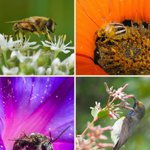
Want to conserve #birds, #mammals and other vertebrates? Then don’t forget their #insects. Our new Nature Reviews Biodiversity paper explores the many ways vertebrates depend on insects, for food, shelter, protection and much more - read about it here: jeffollerton.co.uk/2026/09/3…

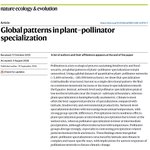
New study published in @NatureEcoEvo!
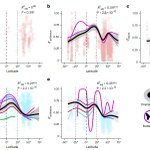
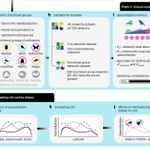
We assembled the largest global dataset of plant–pollinator networks to ask a simple question: do interactions become more specialised towards the tropics? doi.org/10.1038/s41559-026-0…
Study led by @SaileeSakhalkar @RobertTropek 1/8

Why does this matter? Climate change can alter where species occur and when plants flower or pollinators are active. We did not test future changes directly, but our results suggest that pollination networks will not all respond in the same way. 8/8

An English press release is available here: natur.cuni.cz/en/news/12134
Tiskovou zprávu v češtině najdete zde: natur.cuni.cz/aktuality/1213…
We (@RobertTropek @MichalBartak2 ) have participated in this huge international study on butterfly range shifts on the global scale. Just published in @NatureEcoEvo, led by @shawan_c
#climatechange #biodiversity #butterflies
xitter.cf/shawan_c/status/208530…

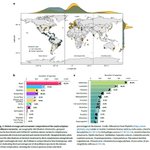
Our new @NatureEcoEvo paper documents range shifts in 1,758 butterfly species across 105 countries, primarily due to climate change.
🦋80% expanded
🦋27% contracted
🦋22% shifted elevation
🦋342 showed multiple shift types.
doi.org/10.1038/s41559-026-0…
@MonashBiol @Monash_Science

Insect Community Ecology Group retweeted

I am very proud and honoured that one more moth species, Sineviella tropeki, was dedicated to me! Together with Sineviella maicheri, dedicated to my former student Dr. Vincent Maicher.


Insect Community Ecology Group retweeted
🏠🐝Hmyzí hotely: pomoc opylovačům, nebo jen dobře vypadající dekorace?🐝
Sepsali jsme o tom delší text na @Ekolist_cz, včetně rad, kde ho (ne)koupit, jak ho nejlíp udělat a umístit.
🧵Odkaz a shrnutí ve vlákně níže⬇️

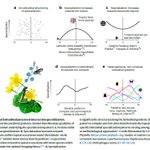
New preprint on interaction networks!
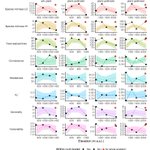
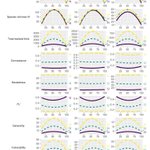
Do network characteristics peak mid-gradient, similar to species richness, due to simple geometry: the mid-domain effect (MDE).
We test this using simulations and real plant–pollinator and ant–plant networks.
doi.org/10.64898/2026.01.28.…

Our null-model simulations show that MDE alone can generate strong structure:
- unimodal peaks in realised links, generality and vulnerability
- U-shaped patterns in connectance and often nestedness
All emerging from geometry, not biology...


Insect Community Ecology Group retweeted
Podcast @Akademie_ved_CR o opylování, hmyzu, výzkumu, i mužích na rodičovské dovolené...
avcr.cz/cs/pro-verejnost/akt…
(samozřejmě k nalezení i v podcastových aplikacích)
New prepring out!🌸🐝
How does plant reproduction change near the upper limits of vegetation in the tropics? We studied #pollination, pollen limitation, and selfing in Afromontane grasslands on Mount Cameroon.
biorxiv.org/content/10.64898…


Pollinators were part of the story: visitation frequency and diversity declined upslope and were linked to seed production. But pollen limitation and reproductive failure weren’t explained by pollinators alone – abiotic constraints kick in hard at the top.