

Helping clients resolve their unexplained symptoms and coaches establish clinical practice. Healed my own fibromyalgia, MCAS, and trigeminal neuropathy.
Joined September 2015
- Tweets9.4K
- Following857
- Followers21.3K
- Likes14K




This is exactly the best way to treat gut/digestive issues lasting over 5/10 years.
Supplementing direct weaknesses, an elimination diet, and progressive overload/re-introduction of particular fibers.
Sometimes also need antimcrobial phase, but not always.

After improving my near decade long constipation issues through working on the cholinergic system (high dose thiamine, choline) and a well adopted elimination diet
Fiber has improved my baseline motility to the next level. Specifically I am talking to soluble, low to medium fermentable ones which do not cause proximal bloating
Titrating up on PHGG, Chia, Flax and Psyllium the last weeks really made a difference
After that I will trial combinations of those fibers with resistant starches to get the butyrate production on point, while trying more bifidogenic fibers in low controlled dosages like inulin

Ross 🧬🔬 retweeted

The lore surrounding hydroxyapatite is rife with rumors, myths and falsehoods (from both sides!)
It's gotten so bad, that I don't blame people for opting out completely because of how confusing it is. My hope is that I can simplify it for you here, with some history of the politics.
Disclaimer: I am biased towards hydroxyapatite as I am an owner of a brand that uses it, @nobsroutines
Myth 1: It's dangerous
Hydroxyapatite is the mineral your teeth are made of. Enamel is about 96% minerals and nearly all of it is hydroxyapatite. Your bones are built on it too.
The fear comes from the word “nano.” The EU’s SCCS first reviewed nano-hydroxyapatite (nHA) about a decade ago, their answer was basically “we don’t have enough data yet.” Somewhere that became labeled "it's not safe"
The follow-up reviews got a lot less attention. The committee drew the line at particle shape. Rod-shaped particles cleared, needle-shaped particles were out. In 2025 they concluded rod-shaped (this one is important, we'll come back to it), uncoated nHA is safe in toothpaste at up to 29.5%.
You’ll also hear “the EU banned nano ingredients.” The 2024 regulation people point to did ban 12 nanomaterials. Hydroxyapatite wasn’t one of them. It was approved with conditions. That's the main takeaway; Nano is a size, not a specific thing. There are good nano particles, and bad ones.
And if you swallow meets stomach acid, which breaks it down into calcium and phosphate. The same minerals already in your food. Basically a harmless and under-dosed supplement.
Myth 2: It heals cavities
This one mostly comes from overzealous influencers trying to get engagement, equally as harmful to the mission as the people who lie against it.
A cavity starts as a weak, chalky spot where acid has pulled minerals out of the enamel. At that stage the surface is still intact and the tooth can take minerals back in. That’s the type of remineralization where nHA does its best work at reversing.
Once decay breaks through the enamel and becomes an actual diagnosable cavity, no toothpaste/gum/mouthwash/powder is fixing it.
nHA can help an early weak spot get stronger, a true cavity still needs a dentist.
Myth 3: It doesn't work
Japan has been putting hydroxyapatite in toothpaste since for almost 50 years and officially approved it as an anti-cavity ingredient in 1993. That’s over 30 years on shelves.
Since then, over 13,000 randomized controlled trials and systematic reviews have shown it remineralizes early enamel lesions and reduces tooth sensitivity.
Sensitivity is usually what people notice first. The particles plug the tiny open channels in exposed dentin, the ones that carry cold and sweet straight to the nerve. This is my magic trick for patients in the dental chair, it works almost immediately.
When someone says “it doesn’t work,” they’re usually reacting to one of two things. The wild claims from Myth 2, or the fact that it isn’t FDA approved for cavities. That second one is a regulatory story, and I’ll get to it more later.
Finally, if I may brag a little bit, we've been at this for 4 years, with millions of people that have used it and if it didn't work, we'd probably know by now.
Myth 4: More is better (arguably the most important one)
Spend a few minutes googling hydroxyapatite and you'll see two wildly different opinions, either:
ITS DANGEROUS or YOU NEED TWICE AS MUCH
The percentage number tells you how much is in the tube. It doesn’t tell you:
- how small the particles are
- what shape they are
- what else in the formula is working with or against it
- whether the finished product was ever tested on actual teeth
Those are the things that decide what ends up on your enamel. A formula with published data behind it tells you more than the biggest number on the shelf.
Same goes for how you use it. A pea-sized amount (or one tablet) is plenty, brushing harder doesn’t push more mineral in, and you want to spit, not rinse, so it has time to sit on your teeth.
10% gets thrown around as the "minimum for efficacy" This is a lie peddled by a few brands that picked concentration as their marketing angle. The myth has become immortalized and will live on long beyond those lying brand owners.
It's simply not true, while NOBS uses 5%... 2-3% is shown to be sufficient at preventing cavities in certain studies. Not only that, some studies even show that LESS concentration has more protection (this is explained by the fact that shape/size etc are equally important).
Most times brands that use 10% are buying second rate raw materials, so it's basically bunk.
Myth 5: Everyone is lying
It's a seven front war out here, and candidly, I'm one of the fighters.
Fluoride people scream that it doesn't work.
Certain brands scream that you need more.
Other people yell that it's dangerous
At this point, no one can stop talking about nano hydroxyapatite for better or for worse. This may come as a shock, but I'm tired of the ingredient even though I love it and will always use it... leading me to my next point....
Myth 6: Nothing Else Matters
Somewhere along the way people get so emotional about hydroxyapatite that there is no mention of other ingredients. Kind of like how everyone forgot about other viruses during covid. Remineralizing agents are super important, but they aren't the only thing that matters.
In fact, the peer-reviewed study we conducted on NOBS ended with the following conclusion: cavities are a bacterial disease, and while mineral loss is part of that disease... there are many ingredients that control the pathogenicity and colonization of the cavity causing bacteria.
I hope this cleared some things up, and that you take my opinion with a grain of biased salt.


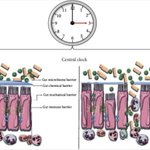
Leaky gut is as broad as the term IBS.
You can have damage to brush boarders, intracellular and paracellular permeability.
You can have damage to the mucus layer, the cells producing the mucus, and the immune cells regulating the mucus (secretory IgA).
You can have improper signalling to the stem cells that produce the intestinal cells due to changes in the microbiome.
Inflammation, oxidative stress and immune signalling all play a role in chronic and acute levels of leaky gut.
Parasites like giardia damage the brush boarders. Other parasites can cleave parts of the gut lining.
Gliadin sensitivity is common, even in non celiac, which causes immune cells to attack the gut lining.
Candida, which has an epitope similar to gliadin, may drive gluten sensitivity in some.
Bile can be cytotoxic to the gut lining, and changes in microbiome can cause changes to bile physiology.
SIBO and nervous system issues can drive motility problems, which can be irritating for the gut lining.
Some with post infectious IBS or severe IBS have immune cell activity behind the gut wall, which complicates the integrity of the gut lining.

One of the reasons people advise against eating high fat is that it increases endotoxin load acutely.
However, what they leave out is that many of those studies show no increased inflammation associated with increased endotoxin levels.
Now clearly endotoxins like LPS can be extremely inflammatory, so why not here?
This raises interesting questions: Is post-meal endotoxin elevation from fatty foods from less inflammatory types of LPS?
Do lipoproteins (which transport endotoxins post meal) shield the body from inflammation caused by endotoxins?
Ross 🧬🔬 retweeted

4 weeks ago, I said I’d stick a light up my nose every day for three months, and that I’d report back even if it did nothing.
So far, it’s doing something (personal observation, I don’t have hard numbers to show).
First, because people always compare this with sunlight, I want to say that I live in Malaysia, I’m outside for at least an hour first thing every morning, and I also use my red light panel. The MIP sits on top of all that.
Three things I’ve noticed:
1. Focus: I used to bounce between browser tabs and apps all day, and now I finish what I’m working on before I move to the next thing. I pay a lot more attention in online meetings as well, without losing focus.
2. Calm: Someone snapped at me recently for no reason, and I answered calmly and kindly. It surprised me.
3. Drive: B1 was already doing a lot here, and I tested the two at different times so I know what each one does, but with the MIP on top, I feel like I have the drive to get things done all day.
Something more personal. I’ve been working through grief, and in an earlier post I said B1 cut it by about 80%. By my own rough reckoning, the MIP has taken that to around 90%. What’s left is minor, and I think that’s part of being human.
That said, I’d nailed the basics before introducing this: micronutrients, sunlight, lifting, walking and proper recovery. The MIP is another tool on top of my existing stack.
The protocol is simple: 25 minutes a session, and it switches itself off automatically.
It doesn’t have to be timed to your circadian rhythm, because sunlight and the red light panel already handle that.
I’m now testing twice a day to see how I feel.
The rules haven’t changed: one variable, no verdict until the end, and I’ll report back either way in a month.
P.S. Yeah I looked like Rudolph 😆


I'm going to be sticking a light up my nose once a day for the next 3 months.
It's called intranasal photobiomodulation. Four applicators, 25 minutes a session, and you look completely deranged using it.
The premise: the nasal cavity is the shortest route to the underside of the brain, and it's packed with capillaries. So instead of shining light on your skin and hoping, you go in through the nose.
What @VielightInc says each wavelength does:
→ 810nm near-infrared — cognitive function. 10Hz for relaxation, 40Hz for focus
→ 633nm red LED — systemic wellness and immunity
→ 655nm red laser — same, different delivery
→ 470nm blue laser — intranasal microbial sanitisation
They have 30+ published and ongoing studies. I haven't read them all yet.
But here's what I find odd.
Red light therapy on your body? Everyone's on it. Sunlight, circadian rhythm, methylene blue, all heavily covered on X.
Intranasal? Almost nothing.
Either it doesn't work, or it works and nobody's looked. I don't know which yet.
So I'll do what I always do. One variable, three months, and I don't judge it before then.
I'll report back either way, including if it does nothing.
CC @MetalsBrah


Low dose endotoxin caused a significant increase in inflammation and insulin resistance:.
It increased IL-6 and TNF-a by 100 and 25 fold respectively.
And It increased HOMA-IR and decreased insulin sensitivity by 32% and 21% respectively.
pubmed.ncbi.nlm.nih.gov/2270…
I can give you a perfect gym program, doesn't mean you'll grow muscle.
I can also give you the perfect supplement stack and diet for your health issues, doesn't mean you'll get better.
The reason?
A perfect program is a misnomer. It doesn't exist.
Part of the perfection in health journeys comes from observing the process of putting things into action.
Then from that, correcting, adapting, evolving, or sometimes completely changing what someone is doing.
People intuitively know this about the gym or even following a recipe when cooking.
But when it comes to healing health journeys, they underrate it severely, to their own detriment.
Everyone stuck in the science, lost in the art.
Lymphocytes all the rage at the moment. Rightfully so.
But neutrophils being between 3-3.9 here in my opinion is also very critical for good immune and overall health.

Examining more blood results to examine immune
2 people, adult males
In the first male, that lymphocyte:monocyte ratio of 1788/325 = 5.50, superb
In the second male, lymph:mono ratio of 2320/460 = 5.04, also superb
Both great in terms of ratio
Unfortunately, did not get a lymphocyte subset panel 1 to confirm absolute CD4 count of >800 and CD4:CD8 ratio of >1
BUT TBD in the future


One of the best arts any practitioner/coach can have is understanding with intricate detail how to approach elimination diets.

With IBS-D, it's rare these compounds will work as stand alone therapy.
When it's long standing, it's also rare fiber is the answer.
IBS-D is a unique beast.
It seems to be more connected with the following:
- SIBO (hydogren gas)
- gut inflammation or immune activity
- changes to the enteric nervous system
- some kind of nervous system issue
Even with these different reasons, they are all still impacting the central cause of IBS-D: hyper-excitability and contraction of gut muscles.
Because of this, determining the root causes or contributors become confusing.
E.g. someone may have an isolated immune response in their gut mucosa they don't even notice digestively, which drives hyperexcitability.
Another person (which happened to me), might have sinus issues causing nervous system issues. For me fixing my sinus helped fixed IBS-D. Crazy right.
But complicating it further, the nervous system can constantly respond to signals. E.g. someone might drink alcohol, which provides more inhibitory tone to the excitability, and give people normal bowel movements. But only temporarily.
Or being in a social environment might calm sympathetic nerve activity, allowing for better stools temporarily.
The above may lead someone to believe it's all in their head as a result. Which it may sometimes be.
But it definitely can still be a physiological problem too, and in my view, for most people is the case.
Things I see work mostly commonly for IBS-D
- antimicrobials
- reducing gut inflammation/immune activity
- balancing minerals
- finding trigger of chronic nervous system activation
- fixing posture/learning to breath properly
Just a summation of experience with this IBS-D so far:
-Oral BPC alone didn't reduce the flushes, but did help with injury or muscle recovery
-Ultimate Gut Repair didn't reduce the flushes (BPC+KPV+Larazotide+GHK-Cu+Tributyrin+Quercetin+Zinc Carnosine)
-Probiotics (S. Bouldarii recommended) didn't
-Food changes didn't (addition of more fiber, removal of fiber, keto/carnivore alone, mixed macro minimal ingredient)
-Any nutritional/pharmacological intervention no work for my personal case
Only thing that reduced flushes/flares to 0% in entirety was returning to family location. Everything I ate, everything I drank (ate seed oils, drank alcohol), no flares/flushes. Leading me to believe it is majorly emotion-hormone (cortisol)-environment induced
Or I could just have a GI cancer and just not know it, who knows, haven't gotten screened, maybe I should
Ross 🧬🔬 retweeted

Some carbonated water brands with meals, and in between meals, seem to be good not just with providing some mineral content, but said minerals contributing to better digestion (important to those having trouble with their digestion, but also be aware this may not fix and could possibly add to issues if you go ham on the carbonated water):
- Bicarbonate (HCO₃⁻): When bicarbonate-rich water reaches the duodenum, it buffers gastric acid, raising luminal pH and stimulating S cells to secrete secretin, driving pancreatic and biliary ductular cells to secrete additional bicarbonate and water into the small intestine, expanding bile volume and facilitating lipid emulsification (better fat digestion)
- Sulfate (SO₄²⁻): Sulfate-containing waters trigger gallbladder contraction by stimulation of cholecystokinin (CCK) release, contracting the gallbladder, and allowing concentrated bile to empty into the duodenum; also quickens intestinal transit and diluting lithogenic bile, reducing gallstone risk
- Magnesium (Mg²⁺): inhibits gastric acid hypersecretion (competing with Ca²⁺), making magnesium-dominant waters better tolerated in patients prone to hyperacidity.
- Calcium (Ca²⁺): has a hyper-secretive gastric effect, stimulating gastric acid secretion and gastroduodenal motility making calcium rich carbonated drinks useful for digestive insufficiency and hypomotility
- CO₂ Carbonation: Carbonation acidifies the gastric lumen transiently, provides a mechanical stimulus to gastric mechanoreceptors, and has been shown to accelerate gastric emptying
In short, carbonated mineral waters like Gerolsteiner, San Pellegrino, Ferrarelle, Badoit, Perrier, Topo Chico, etc. can benefit with digestive issues associated with slow digestion (such as putrefaction of protein)
Also to note: carbonated mineral waters, particularly those rich in bicarbonate + magnesium + CO₂, support the conditions that favor saccharolytic fermentation (good) over putrefaction (bad) primarily by modulating colonic pH, accelerating transit, enriching Lactobacillus/Firmicutes, and improving protein digestibility upstream. However, they are not standalone solutions; their effect is synergistic with dietary fiber intake and protein digestibility upstream


It's endotoxins, but also the inflammatory, immune or nervous system response in the gut from chemicals, gas fermentation, or antigens in those foods.
But yes I have been saying this for years. Definitely part of the story.

Fully convinced that 80-90% of the benefit of most diets (carnivore, Peat, vegan, clean eating, calorie restriction etc.) simply comes down to reduced endotoxin exposure.
That is why people will hop on these diets and think it's the ketones, or the lack of antinutrients, or the lack of meat, or the calcium or whatever is what's unique about it.
In reality their gut is just getting foods it can actually handle for once, and you get more energy, mental clarity, performance, and so on. All of the same benefits you'd expect from these more niche reasons.
These simple tricks will work better at fixing mild gut issues than a $10k supplement stack:
- removing liquids from meals
- one ingredient per protein, carb and fat
- 200 calorie deficit
- eating outside or with people
- walking post meals
- ACV (diluted) with meals
- digestive or swedish bitters (no senna)
- sparkling mineral water
- arugula with meals
- ginger and cinnamon tea post meals
- no snacking, 4 hour breaks between meals
- no lying down post eating
- eat 3 hours before sleep
- remove junk
- smell and properly chew food
- gratitude prior to eating
- serve food with presentation (e.g. set stable, garnish with herbs)
For most with average, but not severe issues, this can transform their health.


GHK oral at standard 2mg dose is one supplement most people feel no immediate reaction (good or bad).
Which is weird because most supplements, even magnesium, curcumin or something benign like vitamin C often get immediate and noticeable reactions (good and bad).
Notably if you microdose these sups, they’ll rarely create a reaction.
So I’ve always wondered whether the dosing for GHK is way too low.


