

Française de Suisse et du monde 🌍 Socialiste Suisse • Féministe Vice-présidente de la FONDETEC | Présidente de Français du Monde-ADFE Suisse 🇨🇭🇫🇷🇯🇵
Suisse
Joined April 2022
- Tweets10.2K
- Following100
- Followers1.1K
- Likes34.9K







Pinned Tweet
Ainu, natives, Hokkaido


The Ainu are the indigenous people of northern Japan. In the Ainu language, “Ainu” means “human.” Little is known about the beginnings of Ainu culture. The earliest documented mention of the Ainu is thought to date from the mid-1300s. They inhabited Ezo (present-day Hokkaido) as hunters, gatherers, and fishermen, and has a deep understanding of the land in which they lived. The Ainu originally occupied a vast area that included Sakhalin and the Kuril Islands, as well as the northern tip of the Tohoku region. At the core of their culture was a spirituality that placed great importance on coexisting harmoniously with nature.
The Ainu people have their own language, belief system, and traditions, separate from those of other Japanese. Traditionally, there was no written language, with knowledge being passed orally from generation to generation. The Ainu language’s influence can be seen in the names of numerous sites across Hokkaido. Many of these place names refer to geographical features or characteristics of the surrounding area, showing how closely Ainu are connected to the natural world around them. They hold the belief that there are two separate worlds: the one in which they live and the spirit world. All living things in the human world, as well as man-made tools and even natural disasters, are thought to be spirits that have come from the spirit world to either aid or harm them in some way. These spirits are revered as being either indispensable to human life or as forces beyond their control. Rituals called kamui-nomi are performed to give thanks to the spirits and pray for continued peace. Brown bears are worshipped as reincarnated gods that have come from the spirit world to deliver meat for food and fur for warmth. A ritual called iomante sends off these bear spirits to the spirit world. At such events, Ainu wear embroidered garments whose patterns all have meaning. For example, the patterns on cuffs and hems are believed to ward off evil spirits. During special ceremonies, Ainu perform traditional dances and songs. Popular dances include the Crane Dance, when dancers lift their coats up behind them symbolizing the wings of a crane, and the Dance of the Ainu Girl’s Black Hair, when women rhythmically swing their long hair back and forth.
Ainu women historically played significant roles within their traditional, nature-focused culture, which was characterized by unique languages, spirituality, and arts like wood carving and embroidery. They were integral to cultural practices such as traditional dances, family events, and festivals. With the rise of Japanese settler colonialism, Ainu women, like the broader Ainu community, faced assimilation and discrimination but also became active in cultural revival, activism, and scholarship to reclaim their heritage and address ongoing issues of indigeneity.
Ainu women were deeply involved in the spiritual traditions that saw spirits (ramat) residing in all parts of the natural world. They participated in and preserved practices such as traditional dances, festivals, and family gatherings. Ainu women were prominent in the creation of distinctive Ainu textiles and crafts, known for their unique patterns and artistic expression.
Ainu women were subjected to the impacts of Japanese settler colonialism, including imposition of the koseki system (family registers) and policies aimed at assimilation. Like the broader Ainu community, Ainu women experienced discrimination and a loss of traditional ways of life.
Ainu women are actively involved in preserving and reviving cultural practices, including traditional dances and music. Contemporary Ainu women contribute to activism, scholarship, and cultural production through efforts like those discussed in works such as Beyond Ainu Studies, which explores their experiences with gender, indigeneity, and political reforms.
📷 : Ainu woman from Hokkaido, Japan (1910s) 🇯🇵
📸© Japan Shorts Page
#archaeohistories

La situation à Gaza est innommable. Les pluies emportent les abris de familles déjà meurtries. L’ONU alerte.
Mon amie Maali, ambassadrice de Palestine au Japon oeuvre à préserver la broderie palestinienne, jusqu’à la faire dialoguer avec l’art du kimono japonais.


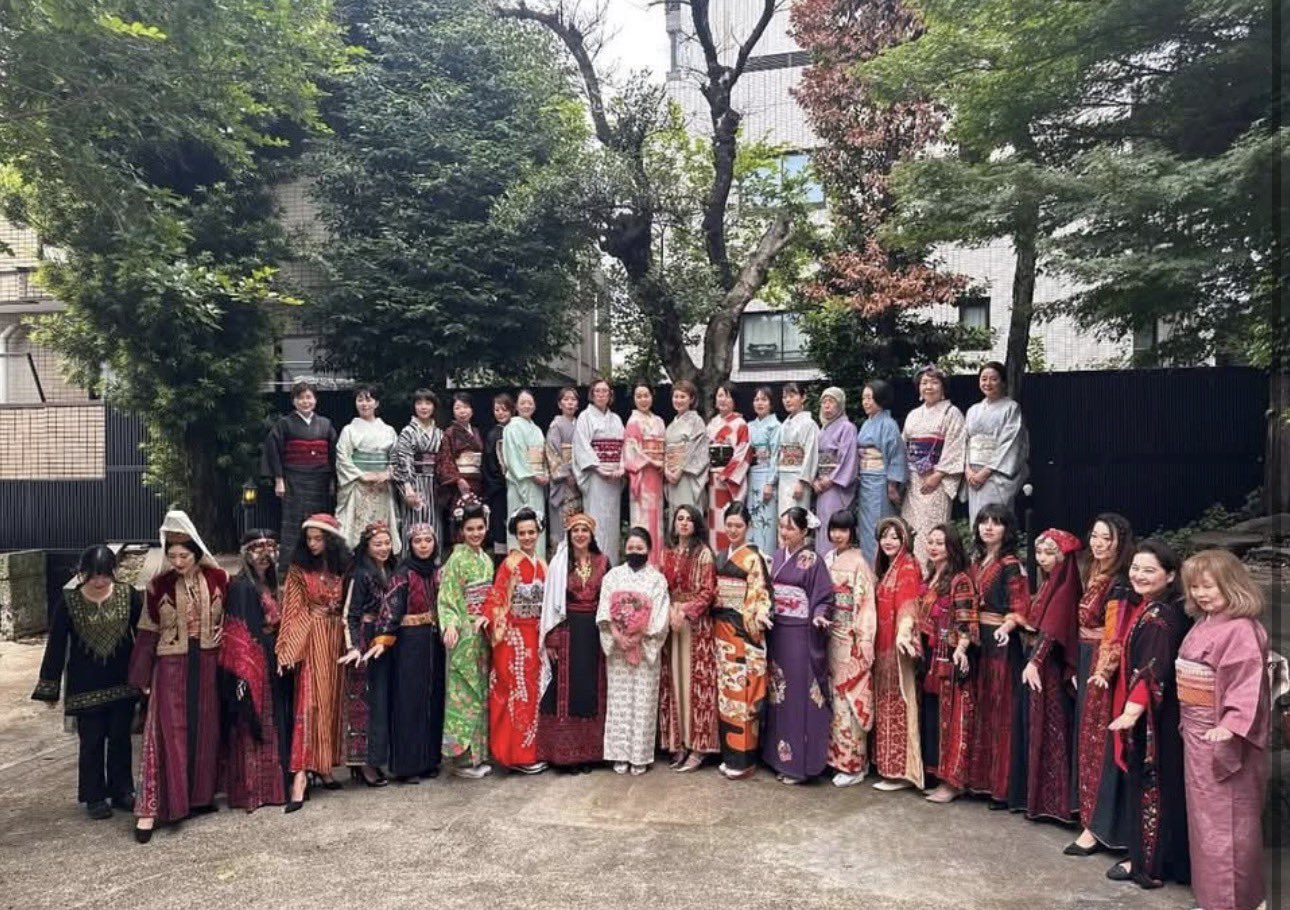

Des broderies palestiniennes réalisées par des femmes réfugiées sur des obi,ceintures traditionnelles des kimonos japonais
Un travail de dignité et de préservation d’un patrimoine vivant
🇵🇸🇯🇵
📩 [email protected]
パレスチナ刺繍帯プロジェクト
Palestinian Embroidery OBI Project


Halima Delimi retweeted

Ou l’opposé : un homme ou une femme qui veut appliquer à la lettre la constitution, laisser le parlement orienter la politique du gouvernement qui dirige effectivement, et un président arbitre qui n’intervient qu’en cas de crise

Ça va c’est bon c’est Salch on se détend c’est lundi les trollounets 🤡 #arbeit


🖤 “Avant de m’endormir, je lis un peu. Je viens de finir un ouvrage sur les Indiens Kogis, menacés de disparition en Colombie. Je relis aussi les livres de François. S’il me manque ? Non, car, pour moi, il est toujours là.”

8 novembre 2026
#DanielleMitterrand
Souvenir
Une journée avec Danielle Mitterrand
26 novembre 2007
elle.fr/People/La-vie-des-pe…

Halima Delimi retweeted

En signe de solidarité avec nos amis polonais suite à la tragique fusillade de #Cracovie, le drapeau de notre Consulat général est en berne. 🇵🇱🇫🇷


À force de fabriquer des petits champions de l’ultraperformance, on fabrique des enfants épuisés, frustrés,stressés, parfois arrogants, qui ne savent plus quoi faire de leur liberté
Laissons-leur le temps de grandir, de s’ennuyer, de choisir, surtout le droit d’être des enfants

Père de famille et journaliste, Nicolas Santolaria a pris conscience qu'il élevait, comme la majorité des parents qu'il côtoie, des enfants passant davantage de temps dans le cocon de leur chambre qu'au dehors, à vivre des expériences sensorielles et humaines. Il en tire un constat alarmant sur la parentalité à notre époque.


Halima Delimi retweeted

Astuce : Édouard Philippe ne passe pas par l’entrée principale de Saint-Raphael pour ne pas croiser Sarah Knafo qui finit ses dédicaces à l’entrée qu’il devait emprunter. – at Saint-Raphaël, France
TOCTOC on frappe à ma porteuh

Arrivée d’Édouard Philippe
@EPhilippe_LH aux @Rencontres_AV à @VilleStRaphael
Passer par l’arrière du Palais des Congrès « pour des raisons de sécurité » permet à l’ex-Premier ministre d’éviter de croiser Sarah @knafo_sarah qui dédicace son livre non-stop depuis près de 3h.

Nouvelle France, France métissée, racisée quelle blague les gars on dirait du PS des années 90 Malek Boutih 2.0 tu m’en mettra un (pas une) ou deux vite fait. Pour finir les élus de la FI sont-ils à l’image du “peuple” français?? #babtouland #backtothefutur #perlimpimpin

JLM en envolée lyrique au Bourget, pour 200 t’as 400, retraite à 60 ans, la photo de tout c’que tu vas manger.


Halima Delimi retweeted

🎙️ "Il devrait se préoccuper du pays" : François Hollande appelle Emmanuel Macron à se tenir à l'écart de "l'élection présidentielle"
Invité du "Journal inattendu", ce samedi 7 novembre, l'ancien président de la République @fhollande était au micro de @SophieAurenche sur #RTL
Et oui

🔴 EN DIRECT
François Hollande estime qu'Emmanuel Macron devrait "se préoccuper du pays et pas de l'élection présidentielle"
l.bfmtv.com/J2Xk

