The latest in healthcare AI. Insights, breaking news, journal findings & real-world applications for clinicians and healthcare leaders. #HealthcareAI

Joined October 2026
UnitedHealthcare is expanding access to its AI assistant, Avery, to 21 million members. The assistant helps people navigate their health insurance, answering questions about benefits, deductibles, provider networks, claims and healthcare costs. I think this is a really good example of where AI can be genuinely useful. So many administrative queries are repetitive, with people asking variations of the same questions. AI can help identify those common queries and provide relevant responses without someone having to answer each one individually. UnitedHealthcare says around 90% of interactions are resolved without needing a human representative. That's a pretty impressive figure, and being able to get help 24/7 without waiting on hold is a huge benefit. But I'd be interested to see how they're measuring those successful interactions. Did the AI provide accurate information? Was the customer actually satisfied with the answer? Or did some people get frustrated and simply leave the conversation? I've personally had both really positive and frustrating experiences with AI assistants, although overall I'd say they've been more positive. And hopefully, by handling simpler queries, these systems free up staff to spend more time resolving complex issues, potentially reducing wait times for everyone. There are so many applications for this type of AI across healthcare, both for staff and consumers. I'd love to see more evaluation of whether these tools are genuinely improving the experience for users while making better use of staff time. Source: UnitedHealthcare / Fierce Healthcare, October 2026.
8
Hot off the press! Who should be responsible when an AI-assisted clinical decision goes wrong? A new study in BMC Medical Ethics explored how hospital staff perceive the ethical challenges of using AI in healthcare. Through interviews and qualitative analysis, researchers identified concerns around accountability, informed consent, clinician autonomy and oversight. The authors propose incorporating ethical safeguards throughout the AI lifecycle, alongside a risk-based review process involving multiple stakeholders. It's not a trial of a governance framework, and the proposed approach hasn't yet been tested in practice. But I think it gets at something healthcare organizations are increasingly having to deal with. We have plenty of high-level principles about responsible AI. Translating them into practical decisions is much harder. Who is accountable when a clinician follows an incorrect AI recommendation? When should patients be told AI influenced their care? And who is responsible for monitoring a model after deployment? These aren't just questions for developers or regulators. Hospitals need clear answers before these tools become embedded in everyday clinical practice. Source: BMC Medical Ethics, October 2026. #HealthcareAI #AIethics
8
The US government has removed certain AI transparency requirements from its health IT certification program. Under the new HTI-5 rule, certified EHR developers will no longer be required to provide standardized model-card information for certain predictive clinical decision-support tools. That information was intended to help healthcare organizations understand how AI models were developed, evaluated and monitored, including potential risks and limitations. HHS says the changes will reduce regulatory burden and encourage innovation. But I wonder whether this will make an already difficult task even harder for hospitals. Healthcare organizations are being asked to evaluate an overwhelming number of AI tools, often with limited independent evidence of clinical benefit. Having access to reliable information about model performance, limitations and potential bias seems pretty fundamental to making informed decisions. Removing a certification requirement doesn't remove the need for transparency. It potentially shifts more responsibility onto hospitals to obtain that information directly from vendors. Will healthcare organizations have the resources and expertise to do this effectively, particularly smaller hospitals without dedicated AI governance teams? Source: HHS, HTI-5 Final Rule, October 2026. #HealthcareAI #AINews
2
1
2
57
Healthcare AI is starting to get something it badly needs: independent referees. New AI models are being developed and deployed at an incredible pace, yet randomized trials demonstrating improvements in patient outcomes remain relatively scarce. Meanwhile, health systems are spending significant amounts to implement these tools. Utah is introducing independent evaluators into its clinical AI sandbox, while ARPA-H is backing research into AI systems that supervise other clinical AI tools. It's an encouraging shift. But evaluation shouldn't stop at accuracy or technical performance. Are these tools actually improving patient care? Saving clinicians time? Delivering value for money? Or are hospitals investing in yet another layer of technology that adds little measurable benefit? Deployment shouldn't be the finish line. We need ongoing, independent evaluation of whether healthcare AI is delivering what it promises, particularly where it matters most: patient outcomes.
2
1
31
What happens when you give nearly 3,000 clinicians access to the same AI scribe? A new study from Johns Hopkins examined how 2,901 ambulatory clinicians adopted ambient AI documentation technology over six months. The differences were striking. 69% of community general pediatricians and 67% of community internists tried the technology, compared with just 16% of academic general surgeons and 19% of psychiatrists. Some groups went on to use it in around 80–90% of eligible visits, while others barely adopted it or stopped using it after initially trying it. The study doesn't establish whether the technology improved patient outcomes or reduced clinician workload. But it offers an interesting look at what happens when AI moves beyond the pilot stage. Having worked in healthcare change management, I've seen how adoption can vary enormously between teams and change over time. I think healthcare organizations need to pay much more attention to this. It's not enough to measure whether clinicians initially adopt a tool. We need to understand who continues using it, who stops, why, and whether the benefits are sustained. A successful AI rollout isn't just about giving everyone access to the technology. It's about making sure it actually works for the people expected to use it. Source: npj Digital Medicine, October 2026.
1
1
2
31
Johns Hopkins is notifying 3,182 patients after an employee uploaded a spreadsheet containing patient information to an unapproved public AI tool. The incident occurred September 21 at Johns Hopkins Bayview Medical Center during an internal review. The file may have included names, medical record numbers, treatment dates and medications. The hospital says the worker deleted the prompt, thread and file from the tool's history and that it requested deletion from the provider. It has not identified the tool or confirmed that the provider deleted the data. This is a very real example of 'shadow AI' in healthcare. Staff don't need malicious intent to create a privacy risk. Training matters, but so do practical alternatives to public tools and safeguards that prevent patient data being uploaded in the first place.
14
Cleveland Clinic is treating AI deployment as the start of evaluation, not the end. Its Cancer Institute has established an Office of Technology and Digital Strategy to assess AI vendors, prioritize useful applications and coordinate adoption across clinical care and operations. The institute already reports using AI to personalize radiation doses for lung cancer, support documentation and process referrals. But the more interesting part is its approach to oversight: checking models for bias, data security issues and performance changes over time, not just before launch. An AI system that performed well during procurement may behave differently months later as workflows, patients or the technology change. Healthcare AI governance can't just be an approval checklist. Hospitals also need clear ownership of ongoing monitoring, and a plan for what happens when performance slips. Source: Cleveland Clinic Consult QD, October 26, 2026. consultqd.clevelandclinic.or…
1
9
Could AI extract breast cancer recurrence risk from a routine pathology slide, without running a 70-gene test? At ESMO 2026, Agendia presented an investigational model trained on 70,000 digitized tissue slides to predict MammaPrint risk categories. In a validation set of 372 early-stage breast cancer patients, its predicted scores correlated strongly with MammaPrint (r=0.954). At 10 years, breast cancer-specific survival was 98.1% in the AI-classified low-risk group versus 86.7% in the high-risk group. It's promising because pathology slides are already part of routine care, while genomic testing isn't equally accessible everywhere. But these are company-reported conference findings, not evidence that AI can yet replace genomic testing or safely guide treatment decisions. That will need further independent clinical validation. Source: Agendia, ESMO 2026, October 26. #healthcareAI #AIforhealthcare
1
2
27
Healthcare AI Navigator retweeted
Use of an AI chatbot ahead of GP appointments required no safety interventions in first real-world small study. However, authors caution that this study doesn't suggest AI chatbots are able to diagnose or triage patients without a doctor's oversight. 🔗 spkl.io/60117kysV
10
22
2
77
11,829
Who should be responsible for monitoring a generative AI medical device once it's in use? The AHA, AMA and American Telemedicine Association have weighed in on an FDA discussion paper, arguing that developers should carry primary responsibility for ongoing device performance and safety. Hospitals can monitor how AI works in their own settings, but often can't see inside proprietary models to identify problems. The AMA also cautions that having a doctor "in the loop" isn't a guarantee of safety. Clinicians can still miss errors or become overly reliant on AI recommendations. There's an important distinction between monitoring how a tool works locally and being able to investigate and fix the underlying model. No regulations have changed here. These are recommendations submitted as the FDA considers future oversight. If an AI device's performance deteriorates after deployment, who should be responsible for detecting it, reporting it and fixing it? Sources: AHA, AMA and ATA submissions to FDA, October 2026.
1
2
36
4 new healthcare AI studies worth talking about this week. 1. AI-guided lung biopsies | Randomized trial A multicenter trial found fewer needle punctures (2.0 vs 2.5) and fewer pneumothoraces (12.7% vs 23.9%) with AI-assisted navigation. Promising procedural benefits, although improved diagnostic accuracy hasn't been established. 2. Pulmonary embolism detection | Real-world evaluation Across 17 facilities, an FDA-cleared AI system achieved 86.8% sensitivity for PE on dedicated scans and 73.5% for incidental PE, below clearance-study benchmarks. Post-market monitoring matters. 3. Automation bias | Clinician reader study Trainees accepted 52% of incorrect AI suggestions when interpreting neonatal radiographs. Having a human in the loop doesn't automatically make a system safe. 4. Depression relapse | Prognostic study Adding brain imaging, genetics and other biomarkers didn't outperform a model using just a few clinical risk factors. Best balanced accuracy was only 64.4%. Four very different studies, but a recurring lesson: evaluate what AI actually adds to clinical care, not just how sophisticated it looks.
1
1
4
90
Healthcare AI adoption doesn't end when a pilot goes live. In some ways, that's when the hard part starts. Researchers from Southern California Permanente Medical Group have published C-TACT, a clinical AI governance framework built around 3 pillars (people, process, technology) and 4 stages: vendor evaluation, pilot, scale and maintenance. Its weighted scorecards encourage health systems to look beyond model performance to workflow fit, implementation readiness, operational value and ongoing monitoring. I particularly like the emphasis on what happens after rollout. Adoption isn't static. Some tools get an initial burst of enthusiasm then fall out of use; others take months to become useful. Measuring once can miss both. An important caveat: the authors applied the scorecards retrospectively to illustrative cases. The framework hasn't yet been prospectively validated to predict implementation success. Are health systems doing enough to monitor adoption and impact at multiple time points, rather than just reporting pilot results? Source: Nguyen et al., npj Digital Medicine, Oct 23, 2026.
1
1
3
44
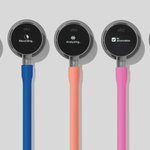
AI stethoscopes can detect murmurs clinicians miss. But does that translate into better care? Eko has launched the $199 CORE 300, which switches between traditional and amplified digital listening, with noise cancellation and app-based, FDA-cleared AI for structural murmur detection. In a prospective study of 357 at-risk adults, Eko's AI-assisted technology detected audible moderate-to-severe valve disease with 92.3% sensitivity, versus 46.2% with traditional auscultation. The trade-off was lower specificity (86.9% vs 95.6%). But a separate randomized trial across 205 UK practices found no overall improvement in heart-failure detection after 12 months, despite higher detection rates among patients who actually received an AI stethoscope exam. Important: these studies tested earlier devices and different algorithms, not the CORE 300 itself. The technology is promising, but real-world adoption and what clinicians do with the findings may matter as much as accuracy. Sources: Eko Health, Oct 2026; European Heart Journal - Digital Health and The Lancet, 2026.
1
26
The week in healthcare AI: 4 developments worth knowing. 1. AI vs doctors: Microsoft's diagnostic AI achieved 83% accuracy on complex NEJM cases, compared with 36% for physicians using reference materials. Impressive, but still a controlled benchmark, not real-world clinical care. 2. AI scribes under scrutiny: Australia's TGA reviewed 12 digital scribes and found that eight had functions likely to qualify as medical devices. Documentation tools are increasingly crossing into clinical decision support. 3. Epic's AI gets more connected: New Connectors will allow Epic's AI tools to access information and perform tasks across external applications. Developer access is beginning, with a marketplace planned for March 2027. 4. NVIDIA expands into cancer care: New collaborations include an open AI protein-design model with UW Medicine and exploration of AI-assisted radiotherapy with Siemens Healthineers. A common theme? AI is moving beyond providing information toward influencing decisions and taking actions. That makes validation, oversight and accountability increasingly important.
1
2
33
Exciting to see Google moving towards AI that can bring together different types of personal health data, rather than just answering individual health questions. The potential for more personalized, proactive support is huge. But as these agents become more capable, how do we ensure their recommendations are clinically reliable, especially when drawing on incomplete or potentially inaccurate health data?
Today in @Nature, we’re sharing the breakthrough research behind the Personal Health Agent (PHA)—the foundational science that was fundamental to how we built the Google Health Coach in the Google Health App.
8
Microsoft's diagnostic AI correctly diagnosed 83% of complex medical cases, compared with 36% for physicians using reference materials. The results, published in Science, come from 304 challenging NEJM cases. Microsoft's MAI-DxO uses multiple AI agents to work through diagnoses step by step, asking questions, selecting tests and revising hypotheses. It also achieved 80% accuracy on historical emergency department cases, compared with 47% for physicians. Impressive results, but some important context: these were simulated evaluations using historical cases, not real patient encounters. The physician comparisons involved individual generalists, not specialist teams who would typically manage complex cases. I'd be particularly interested to see how clinicians perform WITH the AI, rather than simply comparing the two. And whether any improvements translate into fewer diagnostic errors, unnecessary investigations and better patient outcomes. Source: Science, October 2026.
1
2
28
Next time someone shares a study claiming AI outperforms doctors, here are 5 questions worth asking before getting too excited. What exactly was tested? Diagnosing disease, interpreting images, answering exam questions or something else? Was it externally validated? Did it perform well on independent patient data from other settings? What were the errors? How many cases did it miss, and how many false alarms did it generate? Did it work for everyone? Was performance consistent across different patient groups? Did it improve actual care? Or did it simply perform well in a controlled test? Impressive AI performance is worth paying attention to. But a high test score doesn't automatically translate into better patient care.
8
Nebraska Medicine shelved an AI project after it achieved just over 80% accuracy. The team needed at least 95%. The goal was to automate data extraction for its cancer registry, where staff spend around 2.5 hours on each of roughly 6,000 new cases a year. After two months, the tool hadn’t met the accuracy threshold. They tried a smaller task instead: having AI summarize the relevant chart information for nurses to review. But staff still went back to the original records to verify the details. Time savings were minimal, and some cases took longer. I think this is a useful reminder that accuracy on its own doesn't tell us whether AI improves a workflow. If clinicians have to repeat most of the original work to feel confident in the output, what's actually been gained? Credit to the team for measuring the impact and knowing when to shelve a pilot. The idea isn't off the table forever. Source: Becker’s Hospital Review, October 2026.
1
11