










Hydra retweeted

2 Solana coins. both crossed $300K.
Cyber Dacity: still ~$159K, 7+ hrs above $70K.
AudaCity: $46K now. down 85%.
ATH alone tells you nothing about the run.
that's why i've been looking into @Trendrift_ 🧵

My Telegram is 3 years old. Older than 50% of all accounts.
My Age pays $AGE and $GRAM for old accounts. Check yours: myageapp.xyz/r/6071968953-_H…

29
ChatGPT just learned to make GIFs natively.
Images 2.6 is live for all ChatGPT and Codex users (web, desktop, mobile).
What you get:
→ Turn a text prompt or uploaded photo into an animated GIF in one step
→ Adjust playback speed and edit individual frames directly in chat
→ Reusable reference images (save a character, pet, or person once, reuse forever)
→ Image generation up to 50% faster
→ Users already generating 4B+ images per week (up from 3B in September)
API side: GPT-Image-2.6 Flare (as little as ~6 seconds on low quality) and Sunburst (higher quality + better consistency across edits, plus markup and SVG export).
GIFs are still the native language of social. Now every ChatGPT user can speak it from a single prompt without external tools.

1
214
OpenAI just pointed an autonomous agent pipeline at the Linux kernel.
It came back with 948 working local privilege-escalation exploits.
In one run the agents:
→ Identified 2,308 potential security flaws
→ Successfully reproduced 1,724 of them
→ Developed working exploits for 948 distinct vulns that let limited access escalate to full root
→ Generated candidate patches for human review
Total cost: ~$1.21 million in API credits (~$1,279 per distinct exploited vulnerability).
For scale: their earlier July system (powered by GPT-5.6 Sol) found and exploited 166. This one did 948.
Linux maintainers had already patched 61 upstream by the time the research wrapped; more were in preparation or under discussion.
This is the shift from “AI helps write code” to “AI agents systematically hunt, reproduce, and propose fixes for security holes in the world’s most critical software at industrial scale.” Finding flaws is getting cheaper and faster. Triaging and fixing them at that volume is now the bottleneck.
Controlled research environment. Existing foothold required. Expert review still needed before any patches ship.
But the volume signal is unmistakable.

49
Hydra retweeted

Your users can’t see your replies if you never made one
They read the replies under the accounts they already follow
So that’s where your brand needs to show up, every single day, from your brand account
That’s what R3PLY executes at a professional level for Web3 brands
Taking 5 more projects for November
Reply with “REPLIES” and i’ll send you a reply strategy for your brand for free
Anthropic just put it in an SEC filing: they may “imminently” hit their own Responsible Scaling Policy threshold for “dramatically accelerated progress attributable to AI.”
That’s their definition for the recursive self-improvement (RSI) regime, where AI meaningfully speeds up AI development itself.
Key points from the amended S-1/A:
⤷They already use Claude heavily in R&D (research, training data, evals, safety audits, coding).
⤷More than 90% of contributions to their codebase in September were written by Claude.
⤷They warn they have previously failed to detect significant acceleration until after it happened.
⤷They explicitly say they do not anticipate safely letting Claude fully autonomously design and build successive frontier models without meaningful human supervision.
This is the first time a frontier lab has put a named RSI tripwire into a public regulatory document. Investors are already pricing the disclosure. The gap between “AI helps us build AI” and “AI is driving the pace faster than our safety systems can track in real time” just got a formal public marker.

1
74
Hydra retweeted

Everybody’s first crypto lesson is still the same: “Write your seed phrase down and keep it PRIVATE”.
Back in ’24 when I was just getting into web3, my mentors drilled it into me — write on paper, not digital, and never share it. Same rule for private keys. If someone gets it, your wallet is done.
We also learned the other basics:
– Turn on 2FA on your CEX
– Always verify a dApp before you connect
But AI has made the line between real and fake a lot blurrier. Scams now look and sound more legit than ever.
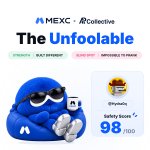
That’s why @MEXC partnered with AP Collective on this AI Safety Score quiz. MEXC has always been serious about protecting users’ funds and accounts, and this is another way they’re helping the community stay ahead of AI-powered scams.
I just took the 6-question quiz and got my score card. It shows how well you can tell an AI trap from a legitimate interaction and which of the AI safety personalities you land in.
Take it, drop your score, and let’s see who actually knows what they’re doing.
Take Quiz Here: ai-safety-score.apcollective…
🤝 Paid partnership


AI scams are getting harder to spot than the real thing
We built the AI Safety Score with @MEXC to test how safe you really are
Try it now: ai-safety-score.apcollective…

Hydra retweeted

🤖THE JIROBOTS PUBLIC PLAYTEST IS LIVE!
You have 8 DAYS to jump in, explore multiple worlds, compete, and get your share of the $50,000 PRIZE POOL! 💰
This is your chance to get involved, test the game, and earn rewards for your contributions.
👾Here’s how to get started:
🌐 Visit JiroBots.world
📲 Install the app.
🤖 Register and deploy into the game.
🌍 Explore multiple worlds, loot and craft valuable resources.
⚔️ Play, compete, and put your skills to the test.
📝 Submit your reviews and feedback to qualify for a share of the $50,000 prize pool.
Got feedback or suggestions?
Let the team know: forms.gle/1WgcAexzAoscunCQ7
🎁 WANT EXTRA REWARDS?
Like ❤️, RT 🔁, and drop your GAME ID in the comments for a chance to win random rewards!
I just minted my @KorProtocol ID. One identity across the entire KOR ecosystem. id.korprotocol.io/p/hydra

1
36
Hydra retweeted
Here’s how to enable and check your MEXC M-Score and Tier.
First, update your MEXC app if it’s been a while.
Then tap your profile avatar and go to “VVIP” on the list.
If it’s your first time, click Enable. It’ll go under review — usually a few hours, sometimes up to around 24 hours.
Once the review is done, you’ll be able to see your Tier, M-Score, and open Score Insights. Score Insights breaks your M-Score into five dimensions so you can see which areas are stronger and which ones are weaker.
Every account starts at 350 points in the Standard tier. Higher M-Score unlocks higher tiers, and higher tiers come with more benefits.
Go check yours and drop a screenshot if you want.


Do you know that your M-Score is more than just a number?
@MEXC VVIP “Score Insights” breaks it into five dimensions so you can actually see what’s behind it — which parts are stronger and which ones are weaker.
I checked mine and one of them was carrying more than the others. Made more sense than just staring at the total.
If you’re on MEXC, go check your Score Insights. You start at Standard with an M-Score of 350 even if you haven’t done much yet.
Drop your tier or the dimension that scores you highest in the comments…and don't forget to watch the video to learn more.
Access MEXC VVIP Here: mexc.com/user/m-score
Anthropic just opened the research preview of Claude Duet, a standalone proactive agent app that doesn’t wait for you to prompt it.
Powered by Opus 5.5, it sends a short morning brief from your connected apps, keeps tabs throughout the day, and only pings when something actually needs attention. It can chase unpaid invoices (QuickBooks/Stripe), draft follow-ups (HubSpot), assemble agreements (Docusign), build dashboards or financial forecasts, prototype web apps, and continue working on its own cloud computer/browser after you close your laptop. It asks for explicit approval before sending messages, making payments, signing docs, or deleting anything. Credential isolation + sensitive-info classifiers + prompt-injection defenses are built in.
Availability: Waitlist for US Pro ($20/mo) and Max subscribers only (iOS, Android, and claude.ai). No extra charge, it shares your existing usage limits. 6,000+ marketplace connectors. Team/Enterprise later. Direct competitor to Meta Muse (already ~10M+ users) and OpenAI Dots.
This is the next step in the agent shift: from reactive chat to agents with judgment about what deserves your time. Early preview, so reliability on urgency and multi-app handoffs will be the real test. The personal/professional agent race just got sharper.
🤖 Made with AI

1
32
Your M-Score tells a bigger story than just a number. The Score Insights breakdown makes it easier to see your strengths and where you can improve. Worth checking out if you're on MEXC!
Do you know that your M-Score is more than just a number?
@MEXC VVIP “Score Insights” breaks it into five dimensions so you can actually see what’s behind it — which parts are stronger and which ones are weaker.
I checked mine and one of them was carrying more than the others. Made more sense than just staring at the total.
If you’re on MEXC, go check your Score Insights. You start at Standard with an M-Score of 350 even if you haven’t done much yet.
Drop your tier or the dimension that scores you highest in the comments…and don't forget to watch the video to learn more.
Access MEXC VVIP Here: mexc.com/user/m-score
1
2
42
Hydra retweeted
Do you know that your M-Score is more than just a number?
@MEXC VVIP “Score Insights” breaks it into five dimensions so you can actually see what’s behind it — which parts are stronger and which ones are weaker.
I checked mine and one of them was carrying more than the others. Made more sense than just staring at the total.
If you’re on MEXC, go check your Score Insights. You start at Standard with an M-Score of 350 even if you haven’t done much yet.
Drop your tier or the dimension that scores you highest in the comments…and don't forget to watch the video to learn more.
Access MEXC VVIP Here: mexc.com/user/m-score
🤝 Paid partnership
Four Gemini 4 Argon agents just beat Minecraft from scratch with no human help.
They dropped into a randomly generated survival world on Easy, no assigned roles, no game-specific tools, only the standard Mineflayer library. Single goal: kill the Ender Dragon.
In 27 hours and 14 minutes they:
⤷Wrote 2,783 of their own programs
Died 605 times
⤷Exchanged 229 chat messages to coordinate
Organically split work (tools, supplies, portal, boss)
⤷Figured out the healing crystals by stacking dirt instead of digging
Token cost roughly $520 at introductory pricing (~$1,040 standard). DeepMind says this is, to their knowledge, the first fully autonomous end-to-end Minecraft completion under these constraints.
Long-horizon multi-agent coding + coordination is the actual story. Keeping a coherent plan across thousands of dependent steps for more than a day in a noisy environment is the same capability class as complex software engineering and enterprise workflows. The deaths and restarts are a feature, not a bug, they kept learning.

1
35
Meta’s Muse just became one of only 12 apps ever to hit 10 million U.S. downloads in its first 40 days.
Sensor Tower numbers:
⤷10.2M U.S. / 10.9M total downloads
⤷Last app to do this was Threads (July 2023). Most of the others were games (Fortnite, Pokémon GO, etc.)
For comparison in the same window:
⤷ChatGPT: 3.7M U.S.
⤷Grok: 500k
⤷Claude: 200k
Retention is the more interesting signal. Muse is holding ~30% of users after 7 days and 23% after 14 days, vs ~19%/16% average for the other AI apps. Daily active users crossed 2.5M for the first time on Oct 16 (+15% WoW).
Meta is putting real weight behind it, 39% of their total ad spend this month is going to Muse (up from 23% last month). The agent books travel, handles email, manages tasks, and runs in a dedicated Secure VM.
This is the clearest early signal yet of a personal agent people are actually keeping open instead of just trying once. The cute mascot (Jolly) is doing marketing work, but the retention gap suggests the utility is sticking.

2
46
Inception just shipped Mercury 3, the most capable diffusion LLM released so far.
It outperforms GPT-6 Luna and Claude Haiku 5.5 on quality across a range of benchmarks while running at 1,068 tokens per second on NVIDIA GPUs, 4–8× faster than typical speed-optimized autoregressive models. 1M context (up from 260K on Mercury 2.5). More than 40× larger than Mercury 1, with ~3× the intelligence on standard benchmarks, yet still just as fast.
Pricing: $0.20 / $0.70 per 1M input/output (launch promo 50% off on some platforms: $0.10 / $0.35). OpenAI API compatible. Available today on Inception API, OpenRouter, Baseten, and Vercel. Enterprise options for dedicated capacity, etc.
Early partners are already using it for browser/web agents, real-time tutoring, search agents, and support. One production note: it completed 50% of live Mind2Web navigation tasks (better than GPT-6.1-Sol) at the same token volume and steps but far lower per-token cost. Speed keeps agents from compounding latency across steps.

2
30
MiniMax just dropped M3.1 Flash and it might be the new efficiency king for agents.
$0.15 / $0.60 per 1M tokens (cache reads $0.015). That’s roughly 1/3 the cost of their previous M3 and ~3× faster inference.
On their numbers:
⤷Automation-Bench: 62.2 (beats Opus 5’s 50.3 and GPT-5.6 Sol’s 45.8)
⤷DeepSWE v1.1: ~73.7–74%
⤷BankerToolBench: 76.2 (ties Opus 5)
⤷OSWorld V2: 61.7 | Agents’ Last Exam: 29.6 (top Chinese model on both)
1M context, multimodal (text/image/video), always-on reasoning with 5 effort levels. Weights land Oct 23. Available now via API, M Plan, and MiniMax Code.
Why it matters: the gap between “frontier agent quality” and “you can actually afford to run it at scale” just got a lot smaller. High-volume coding, cowork, and computer-use workflows that used to be expensive experiments are now practical. Space Bunny already proved the architecture under load, this is the production version.

22
On October 18, the Claude maker announced it is committing 5% of its shares (subject to stockholder approval) to a new Anthropic Public Benefit Fund, structured as a wholly-owned LLC. The stake is designed to grow: the board can add another 2% for every 50% increase in company value above a set baseline. Combined with the co-founders’ existing pledge to donate 80% of their equity and an employee donation-matching program (in which roughly half of staff already participate), about 20% of Anthropic’s shares are now earmarked for the public good, plus any further upside from growth milestones.
The fund prioritizes flexibility: large donations to traditional nonprofits, direct distributions to specific populations, and bolder approaches to AI’s labor-market impacts (building on Anthropic’s prior $200 million commitment to study the issue). Equity held by the fund will not be used for lobbying or political giving. This lands as Anthropic prepares for a potential IPO that could value the company in the trillion-dollar range, after reporting $16.8 billion in Q3 revenue (up 45% quarter-over-quarter), and amid broader industry conversations about trust, safety, and economic disruption
For developers and agent builders, this is more than PR. It ties Anthropic’s commercial success more tightly to mitigating the very workforce and societal shifts that capable agents accelerate. The industry implication is sharper still: a leading public-benefit corporation is explicitly directing escalating equity toward the public rather than pure executive upside, setting a visible reference point for how frontier labs can (or should) share the upside of the agent era. Whether competitors follow, or regulators take note, the structure forces a concrete link between model progress and public outcomes.
It matters because AI agents are already reshaping codebases, workflows, and hiring mixes inside the labs themselves. Aligning a growing slice of ownership with addressing the downsides makes the incentives less abstract and harder to ignore.

13
DeepSeek just quietly shipped V4.1-Flash-1017 under MIT.
Same API price ($0.15/$0.60 per million), same 1M context, but every listed benchmark went up. DeepSWE jumped to 77.0 (from 74.2) — ahead of Claude Opus 5 (74.0) and GPT-5.6 Sol (73.0). Terminal-Bench 4.0 rocketed from 31.2 → 42.3. ProgramBench 20.3 → 29.1.
They also cut task runtime and output length, so agents finish cheaper. New Search + Fetch APIs at $0.75 per 1,000 calls (free for a limited window via certain harnesses).
Open weights on Hugging Face. The cheap agent model just got meaningfully stronger.

27
CERN and Mistral are partnering to build Flare, a Large Physics Model.
First foundation model for collider physics, trained on billions of simulated LHC particle collisions. Same core idea as LLMs but on collision data instead of text. Long-term strategic partnership; no timeline/budget disclosed yet. Mistral gets access to one of the world’s biggest scientific datasets.
Science-specific foundation models are coming. What other domains do you want next?

15