

IIIDEM, established 2011 by ECI, is a Global Centre for democracy and election management advancing electoral integrity.
New Delhi, India
Joined May 2025
- Tweets751
- Following14
- Followers456
- Likes10




📢 IIIDEM is hiring!
Position: Training Associate – Democratic Governance & Election Management
IIIDEM invites applications from professionals to contribute and support training, curriculum development and capacity-building initiatives in democracy and election management. The role includes developing training and capacity-development programmes and materials, training of trainers and certification, developing training pedagogy, and delivering training programmes.
• Location: IIIDEM Campus, Dwarka, New Delhi
• Remuneration: ₹60,000–₹80,000 per month
• Engagement: Contractual through NISG | 3 years initially
• Eligibility: Relevant Master’s degree + UGC-NET + 2 years’ experience, or MIEMP + 2 years’ experience.
For eligibility, application details and the full advertisement visit official IIIDEM/NISG website.
#IIIDEM #Hiring #JobVacancy
🤖 Made with AI

Before planning training, should not we first understand what our electoral workforce needs to learn, what support already exists and where the gaps lie?
That was our main driving force while conducting the “International Workshop for Institutional Mapping of Electoral Management Bodies for Professional Development of Workforce”, at IIIDEM Campus, held from 28 September to 1 October 2026. Organised by IIIDEM, in collaboration with International IDEA, under India’s 2026 Chairship of the Council of Member States of International IDEA, the workshop brought together 33 participants from 12 Electoral Management Bodies to examine their existing professional development systems.
The four-day exercise concluded with country-specific work plans outlining the next steps towards professional development roadmaps, including further evidence collection, responsibilities and timelines. IIIDEM and International IDEA will support this work beyond the workshop, advancing the Chairship’s priority of “Independent and Professional EMBs for Sustainable Democracy” by helping electoral institutions establish structured, sustainable systems for staff development.
Here’s a glimpse of the conversations, collaborative exercises and ideas that shaped the four days at IIIDEM.
@international_idea
#ElectoralProfessionalDevelopment #StrengtheningDemocracy #ProfessionalEMBs #internationalidea
IIIDEM concludes the phased rounds of its Certification Programme for State Level Master Trainers, conducted between 18 September and 30 October 2026, with 88 trainers certified against a target of 97 across five thematic groups. Each certification is valid for five years.
The programme covered five core areas of election administration: Nomination Process; Election Planning and Operations; Monitoring and Enforcement; Electoral Rolls; and Voting and Counting. Participants were assessed not only on their subject knowledge, but also on their ability to train adult learners, explain electoral procedures and deliver structured learning to other election officials.
The central aim is to build a network of certified trainers across States and Union Territories who can carry this learning forward. As State Subject Matter Experts, SLMTs will train and mentor District Level Master Trainers and support Chief Electoral Officers in meeting state-level training needs. Aligned with IIIDEM’s strategic pillar of Strengthening National Programmes, the initiative advances a consistent, competency-based approach to election training. By investing in the people who train election officials, IIIDEM is helping build lasting institutional capacity and strengthen the professional standards that underpin free, fair and credible elections.
@ECISVEEP
#IIIDEM #ECI #SLMT #MasterTrainers #CapacityBuilding #ElectionManagement


"Responsible governance of AI in elections requires continuing attention, institutional ownership and cooperation." With this message, DG, IIIDEM, Shri Rakesh Verma, concluded the five-day workshop "AI and Electoral Integrity Workshop for the African Region", urging 35 electoral practitioners from 10 African countries to translate their learning into action. He emphasised that the work must continue beyond the workshop, with clear responsibilities, follow-up after three months and a more structured progress assessment after six months.
The value of this exchange was evident in the experiences shared by participants. Sharing their experience with AI-supported electoral information monitoring, delegations highlighted the scale at which AI can support this work compared with human monitoring alone. The exchange helped delegations recognise that AI was already part of their institutional landscape and explore how to govern its use step by step. Participants also expressed interest in IIIDEM's support to understand the financial and cost implications of advanced AI integration.
From mapping AI use and assessing institutional readiness to risk analysis, crisis simulations and action planning, participants worked towards practical measures suited to their EMBs. IIIDEM's continued support aims to strengthen this work through shared learning and institutional cooperation. The initiative also advances India's 2026 Chairship of the Council of Member States of International IDEA, under which AI and Election is a key thematic priority.
@ECISVEEP
#IIIDEM #ElectoralIntegrity #AIGovernance


A technology vendor promises to make electoral roll management faster and more efficient. Do you adopt the tool, reject it or ask for changes? And what safeguards must be in place before it is allowed anywhere near an electoral process?
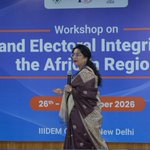
On the final day of the “Workshop on AI and Electoral Integrity for the African Region”, held at IIIDEM Campus, from 26–30 October 2026, 35 electoral practitioners from 10 African countries worked through questions like these, moving from understanding AI governance to planning how to put it into practice. In a simulated vendor pitch, participants scrutinised an AI-powered electoral roll-clean-up tool, tested the claims being made and identified risks that could compromise electoral integrity. They examined when a proposal might need to be rejected, redesigned or considered for a limited pilot, and what contractual safeguards would keep audit, explanation and suspension rights with the election management body. Using action-planning worksheets, they then broke down priorities across the Strategy’s seven pillars into practical steps, with proposed timelines, responsible teams and measurable indicators.
The day concluded with participants presenting their plans, sharing institutional priorities and learning from one another’s approaches. The focus was on leaving with more than recommendations on paper: a clearer sense of what each EMB can do next, who needs to be responsible and how progress can be measured. As the workshop closed, this work became part of a wider effort to help election management bodies govern AI at a pace their institutions can responsibly support. It also contributes to India’s 2026 Chairship of the Council of Member States of International IDEA, under which AI and Election is a key thematic priority.
@ECISVEEP
#AIandElections #ElectoralIntegrity #ResponsibleAI


Suppose an AI-related crisis stricken just days before an election. How fast your Election Management Body respond with clarity and accountability? As AI becomes more capable and integrated, these are not some mere probability but actual challenges waiting around the corner to hit whether you are ready or not.
On Day 3 of AI and Electoral Integrity Workshop for the African Region at IIIDEM Campus, participants assessed their EMBs against the Global Model Strategy’s seven strategic pillars, using documented evidence to identify gaps, determine priority areas and consider which AI applications their institutions were ready to govern. They then classified proposed AI uses against risk criteria, examining potential harm to rights, data security and public trust, and the safeguards needed before such applications could proceed. Discussions also explored how election laws, platform conduct and transparency shape public trust, including situations where an EMB’s legal powers may be limited.
The day culminated in a 72-hour election crisis simulation, in which participants took on roles within a fictional National Electoral Commission and responded to scenarios involving a false polling-postponement video, a compromised social media account, a cloned-voice instruction to move ballot boxes, discrepancies in an AI-assisted count check and fabricated intimate images used for online harassment. Teams had to determine who should make decisions, what actions to take first, how to communicate with the public and which partners to engage.
The exercise helped participants identify preparedness gaps and translate them into practical priorities for their own institutions—advancing IIIDEM’s wider effort to strengthen responsible AI governance and safeguard electoral integrity, in line with the priorities of India’s 2026 Chairship of the Council of Member States of International IDEA.
@ECISVEEP
#IIIDEM #ElectoralIntegrity #AIGovernance


What if your election management body is already using AI without fully realising it? And before introducing a new AI tool, how do you decide what it should and what should never be allowed to do? These are the questions our participants from 10 African countries explored across 4 sessions on Day 2 of AI and Electoral Integrity Workshop for the African Region at IIIDEM Campus.
They applied the Global Model Strategy’s guiding principles and electoral AI red lines to distinguish prohibited uses from those that may proceed with safeguards. These 35 electoral practitioners also mapped AI already present in their institutions, looking beyond purpose-built systems to AI features embedded in existing software, whether centrally approved or used independently across departments. This exercise helped them identify less visible applications and consider where stronger oversight may be needed.
IIIDEM also put special emphasis on governance arrangements in place. Participants began drafting terms of reference for AI Governance Committees suited to their EMBs’ laws and structures, considering leadership approvals, the choice of chair and regional representation. The work helped translate broad principles into practical institutional measures—understanding existing AI use, identifying gaps and building oversight mechanisms suited to each institution. It is part of IIIDEM’s wider effort to help EMBs govern AI responsibly and safeguard electoral integrity, furthering pushing India’s 2026 Chairship of the Council of Member States of International IDEA and its thematic priorities.
@ECISVEEP
#AIandElections #ElectoralIntegrity #ResponsibleAI


“No election management body should have to face AI-related challenges alone.” With this message, the DG, IIIDEM, Shri Rakesh Verma, welcomed 35 electoral practitioners from 10 African countries to the “Workshop on AI and Electoral Integrity for the African Region”, being held at IIIDEM’s New Delhi campus from 26–30 October 2026. He also underscored that such risks do not begin only when an election authority starts using the technology; they also arise when institutions are unprepared to respond to them.
Building on IIIDEM’s Global Model Strategy for Election Management Bodies: Safeguarding Electoral Integrity in the Age of AI, Dean at IIIDEM, Dr. Chanchal Sharma highlighted the need to bridge the gap between AI use and AI governance, while Dr. Kritika Mathur, Assistant Professor at IIIDEM, outlined the workshop’s progression from understanding AI and assessing institutional readiness to developing practical responses.
The consultation draft, “Safeguarding Electoral Integrity in the Age of AI: A Global Model Strategy for Election Management Bodies”, released on 12 October 2026 by IIIDEM’s Global Centre for AI and Elections, provides the basis for these discussions. Feedback from participating EMBs will help shape the final Strategy, ensuring it reflects their varied legal, institutional and resource realities. The initiative also advances India’s 2026 Chairship of the Council of Member States of International IDEA, under which AI and Election is a key priority.
@ecisveep
#AIandElections #ElectoralIntegrity #ElectionManagement


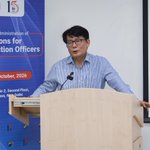
With the conclusion of its latest batch, IIIDEM’s Training Programme for District Election Officers has now completed four rounds of structured training since July 2026, strengthening district-level preparedness for effective election management.
The fourth batch was held on 22–23 October at the IIIDEM Campus. The programme covered key responsibilities of DEOs, including election planning, electoral rolls, vulnerability mapping, electronic voting machines and paper slips for vote verification, the Model Code of Conduct, election expenditure monitoring, counting and declaration of results, media monitoring, and law-and-order preparedness.
Across the first three batches held in July, August and September, 93 DEOs from 12 States and Union Territories participated, and all were certified. Of these, 54 officers were from the five poll-going states of Uttar Pradesh, Punjab, Manipur, Uttarakhand and Goa, reflecting the programme’s relevance to free, fair and orderly elections.
Aligned with IIIDEM’s strategic pillar of Strengthening National Programmes, the training builds the professional capacity of district-level election leadership through structured learning and practical preparation. It supports consistent, transparent and effective election administration in line with the Election Commission of India’s instructions.
@ECISVEEP
#ElectionManagement #IIIDEM #ECI #DistrictElectionOfficer


IIIDEM is set to host *35 election officials* from 10 African countries for a regional consultation and capacity-building workshop from 26 to 30 October 2026 to examine “Safeguarding Electoral Integrity in the Age of AI: A Global Model Strategy for Election Management Bodies”. The consultation draft was released on 12 October 2026 by IIIDEM’s Global Centre for AI and Elections.
The practical, non-binding Strategy offers EMBs an adaptable framework for AI governance, built around a guiding principle: AI adoption must not outpace an EMB’s capacity to govern it. The draft outlines 9 Guiding Principles, 8 red lines, 7 Strategic Pillars, 4 levels of governance maturity, 39 actions and 15 annexures of practical tools—including a risk-classification matrix and model procurement clauses. The initiative also advances India’s 2026 Chairship of International IDEA, under which AI and Elections is a key thematic priority.
🌍 Participating countries: Angola, Burundi, Eswatini, Guinea, Kenya, Malawi, Mauritania, Mozambique, Namibia and Zimbabwe. Their feedback will help shape the final Strategy, ensuring it reflects the varied legal, institutional and resource realities of EMBs. The objective is to engage, question and contribute so that AI governance in elections remains grounded in democratic principles, institutional accountability and electoral integrity.
@ECISVEEP
#AIAndElections #ElectoralIntegrity #AIGovernance

DG, IIIDEM, Shri Rakesh Verma on 15 October presented India’s experience in addressing the manipulated information environment at the 7th General Assembly of the Association of World Election Bodies in Manila, Philippines.
He is leading the Election Commission of India delegation to A-WEB GA meeting and International Conference.
His presentation traced the ECI’s response to emerging challenges, from social media misinformation to AI-generated content and deepfakes. During the 2026 Assembly elections in five States, State IT Nodal Officers acted on more than 11,000 social media posts and URLs in five weeks.
At the conference, DG Verma also presented IIIDEM’s draft “Safeguarding Electoral Integrity in the Age of AI: A Global Model Strategy for Election Management Bodies”, inviting A-WEB members to review the framework and contribute their experience.
The engagement advances IIIDEM’s mission to strengthen the professional capacity of Election Management Bodies through research, knowledge development and international learning, helping electoral institutions address emerging challenges while safeguarding electoral integrity and public trust.
@ECISVEEP
#IIIDEM #ECI #AWEB #ElectoralIntegrity #AIandElections #ElectionManagement


The Five-Day Training Programme for Returning Officers (ROs) concluded today at the IIIDEM Campus, bringing together 111 Returning Officers from Uttar Pradesh, Uttarakhand and Manipur across three batches. The final day covered postal ballots, counting and declaration of results, election planning, vulnerability mapping, the Model Code of Conduct, election expenditure monitoring, voter awareness and digital systems used in election administration.
A post-assessment reviewed participants’ learning over the five days, followed by the valedictory session and an interactive discussion led by the Head of IIIDEM’s CNT Division.
Aligned with IIIDEM’s strategic pillar of Strengthening National Programmes and the National Training Policy for Election Management, the programme is part of the Institute’s continuing effort to build professional competence among election officials and develop consistent national standards for training. The aim is to carry structured, practical learning into the field, where it supports the conduct of free, fair and orderly elections.
@ECISVEEP
#IIIDEM #ECI #ReturningOfficers #ElectionTraining #CapacityBuilding


At the 7th General Assembly of the Association of World Election Bodies, being held in Manila, Philippines from 13 to 17 October 2026, DG, IIIDEM, Shri Rakesh Verma, led the Election Commission of India delegation and presented the India A-WEB Centre’s activities between 2024 and 2026, along with its future plans.
The presentation outlined proposed initiatives across three areas: training and capacity development, knowledge development and international connections. Plans include specialised courses, documentation of electoral systems and good practices, new knowledge products, international seminars and opportunities for election officials and experts to exchange experience.
Through the India A-WEB Centre, IIIDEM continues to support professional learning and cooperation among election authorities, drawing on shared experience to strengthen free, fair, inclusive and credible elections. Since January 2024, the Centre, has conducted 19 training and capacity-building programmes, engaging 432 participants from 48 A-WEB member countries. These efforts include election training programmes, international conferences and symposia, with growing attention to emerging challenges such as artificial intelligence, electoral risk management and institutional strengthening.
@ECISVEEP
#IIIDEM #ECI #AWEB #ElectionManagement #CapacityBuilding #InternationalCooperation


Every stage of an election, from the scrutiny of nominations to arrangements on polling day, calls for careful planning and a sound understanding of electoral procedures. To strengthen these capabilities, the Five-Day Training Programme for Returning Officers commenced on 12 October at the IIIDEM Campus, in line with the Institute’s strategic pillar of Strengthening National Programmes, supporting the development of consistent training standards, methods and materials for election officials.
The programme brings together 111 ROs from Uttar Pradesh, Uttarakhand and Manipur across three batches. The first day began with a pre-assessment of participants. Sessions covered candidate qualifications and disqualifications, the nomination process, polling stations, electoral rolls and polling-day arrangements. Participants also received administrative and hands-on training on Electronic Voting Machines and Voter Verifiable Paper Audit Trail machines. Other topics included monitoring paid news and media coverage, tackling fake news and hate speech on social media, voter awareness under SVEEP and digital systems used to manage elections and transmit postal ballots electronically.
The programme follows IIIDEM’s structured training approach and the National Training Policy for Election Management. It aims to strengthen the legal, operational and technology-related competencies Returning Officers need to conduct free, fair and orderly elections.
@ECISVEEP
#ReturningOfficers #ElectionTraining #IIIDEM


How can Electoral Management Bodies use AI responsibly while protecting electoral integrity, voter rights and public trust? This question remained a key focus at the Second Global Roundtable on Governing AI for Elections, held at the IIIDEM Campus on 9 October 2026. Experts and practitioners examined IIIDEM’s Draft Strategy on AI Governance and Electoral Management, focusing on the principles, institutional safeguards and practical steps needed to govern AI across electoral processes.
The discussions covered human oversight, information integrity, cybersecurity, data privacy, transparency, accountability and regional cooperation. Participants agreed that AI may support electoral work, but statutory decisions, including those concerning electoral rolls and results, must remain with legally accountable human officials. Experts examined a four-level AI Governance Maturity Model as well, advocating readiness-based adoption rather than fixed timelines, controlled pilots before wider deployment, risk assessments for individual use cases, and tested fallback mechanisms should AI systems fail.
The roundtable advances “Artificial Intelligence and Elections”, a thematic priority of India’s 2026 Chairship of the Council of Member States of International IDEA. Feedback from the discussions will inform the next revision of the Strategy, with the aim of making it a practical, evolving resource for EMBs across different legal, technological and resource contexts.
@ecisveep
#AIandElections #ElectoralIntegrity #aigovernance


“AI is not going to disappear; its use will only expand,” said DG, IIIDEM, Shri Rakesh Verma today during his inaugural address at the Global Roundtable on Governing Artificial Intelligence for Elections, outlining the Institute’s ongoing work around AI and elections. He stressed the need for a comprehensive, evolving strategy that accounts for differences in institutional readiness and resources across Electoral Management Bodies (EMBs).
The roundtable is in line with the wider agenda of “AI and Elections”, a key thematic priority of India’s 2026 Chairship of the Council of Member States of International IDEA. It will review and refine a ‘Draft Strategy for AI Governance and Electoral Management’. Opening the deliberations, Assistant Professor, IIIDEM, Shri Ajay Kumar emphasised the need to move beyond reviewing a report and collectively shape a practical, locally relevant strategy that protects electoral integrity and public trust.
The updated draft brings together 9 Guiding Principles, 7 Strategic Pillars, a 4-level AI Governance Maturity Model and a 12-step Plan of Action. It aims to translate responsible AI governance into practical institutional measures, taking account of operational feasibility, statutory boundaries and the resource realities of the Global South. The roundtable will also review 68 stakeholder feedback points assessed against the 4 October draft.
Follow IIIDEM’s official channels for further updates and highlights.
@ECISVEEP
#AIandElections #ResponsibleAI #ElectoralIntegrity #AIGovernance


AI is already shaping how elections are managed. Hence, the long-term task in hand is to ensure that Electoral Management Bodies are ready to govern that change responsibly, ethically and in ways that protect electoral integrity and public trust.
Building on IIIDEM’s capacity building initiatives in the field of AI and Elections, the Institute is set to host the “Global Roundtable on Governing Artificial Intelligence for Elections” on 9 October 2026. The roundtable will bring electoral leaders, technical experts and policymakers together to review and refine a ‘Draft Strategy for AI Governance and Electoral Management’, with a focus on practical governance, institutional readiness and the realities of the Global South.
Under India’s 2026 Chairship of the Council of Member States of International IDEA, “AI and Elections” is a key thematic priority. IIIDEM is supporting this agenda through capacity-building, policy work and international exchanges, bringing together electoral practitioners and experts to build practical approaches for responsible AI governance.
Follow IIIDEM for updates from the roundtable.
@ecisveep
#AIElections #ElectoralIntegrity #AIGovernance

As part of IIIDEM’s strategic pillar of Strengthening National Programmes, the three-day Certification Programme for State Level Master Trainers concluded today at the IIIDEM Campus with the final stage of the programme: competency assessment. The assessment looked beyond subject knowledge to test participants’ ability to train adult learners effectively.
Participants from Group I, Nomination Process, and Group II, Election Planning and Operations, delivered individual 10-minute presentations on their assigned themes, followed by a five-minute question-and-answer round with the IIIDEM Evaluation Committee. They were encouraged to use case studies, FAQs, practical election experiences, interactive exercises and quizzes in their presentations.
The 100-mark assessment covered Domain Knowledge, Training Methodology and Pedagogy, Presentation and Communication Skills, and Overall Trainer Competency. Participants scoring 75 or above will be certified as State Level Master Trainers, with certification valid for five years. The newly certified SLMTs will serve as State Subject Matter Experts, train and mentor District Level Master Trainers, support Chief Electoral Officers in meeting State training needs and help standardise election training across the country.
@ECISVEEP
#IIIDEM #ElectionTraining #mastertrainers


As part of IIIDEM’s strategic pillar of Strengthening National Programmes, Day 1 of the Certification Programme for State Level Master Trainers concluded today at the IIIDEM Campus. Conducted under the National Programme to Develop Trainers and Master Trainers, the three-day programme aims to create a pool of certified SLMTs through a uniform, competency-based national certification system for consistent and sustainable election training across States and UTs.
The first day focused on Domain Orientation for two thematic groups. Sh. Y. P. Singh, Core Expert, Madhya Pradesh, led Group I on the Nomination Process, covering qualification and disqualification, nomination, scrutiny, withdrawal of candidature and allotment of symbols. Sh. Anil Salgotra, Core Expert, J&K, led Group II on Election Planning and Operations, covering the District Election Management Plan, vulnerability mapping, polling party and poll-day arrangements, polling stations and law and order.
Participants also took part in a hands-on pedagogy session on using lesson plans, presentations, handouts, case studies and question banks, followed by scenario-based group discussions and mock training practice. While participants strengthened their understanding of election laws and ECI instructions, pre- and post-assessments were conducted on the same day to assess learning gains.
@ecisveep
#IIIDEM #ECI #SLMT #MasterTrainers #CapacityBuilding #ElectionManagement


