

Leading Publisher of Empirical, Theoretical, and Applied Research on International and Comparative Crime and Justice
Michigan State University
Joined October 2023
- Tweets103
- Following185
- Followers95
- Likes2





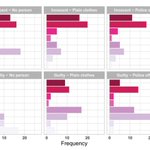


As artificial intelligence enters the courtroom, understanding its ability to emulate judicial decision-making has become an urgent empirical and ethical challenge. Oren Gazal-Ayal with Shai Farber and Zohar Elyoseph, compared AI sentencing outputs against judicial sentences. Find out more!
Open access in IJCACJ
doi.org/10.1080/01924036.202…
@UofHaifa

24
Criminal intent in eldercide cases may be downplayed in Japan, shifting individual culpability to collective responsibility. Masahiro Suzuki, Sho Sagara & Akinori Otani analyzed articles published in a leading Japanese newspaper between 2000 and 2024 to assess the public framing of eldercide.
Find out more!
Open access in IJCACJ
doi.org/10.1080/01924036.202…
@LboroCSSP @lborouniversity
37
Housing First aimed to stop homeless people being assaulted. Kelly Barker, Michael Weinrath & Jane Lothian (University of Winnipeg) examined threats, assaults and robberies against a homeless cohort with mental illness. The severity of a person's mental illness predicted violence at every wave. New in IJCACJ
doi.org/10.1080/01924036.202…
@uwinnipeg

1
34
Of every 100 intimate partner violence cases reported to police, as few as three end in a conviction. Julien Chopin, Marcelo F. Aebi, and Clara Rigoni’s scoping review found that attrition ran from 63% to 97.2% across all reported cases, with most losses happening before a prosecutor ever files a case. Open access in IJCACJ
doi.org/10.1080/01924036.202…
@unil

18
Romance scammers in Ghana do not invent their fake identities. They have been taught.
@AbubakariYusha1 (Dept of Sociology, Ostrava) & @DrSLazarus (Mannheim Centre for Criminology, LSE) interviewed active and former offenders and found that recruits get a mentor and are ‘graded’. Find out more:
doi.org/10.1080/01924036.202…
@mannheimcrim @Ostravska_uni
29
A tactical unit rehearses in abandoned buildings, around asbestos and standing sewage, for lack of a training site. Zachary Towns & @R_Ricciardelli (Dept of Maritime Studies) compared the operations, training and patrol support functions of two large-scale police services in Canada. Find out more:
doi.org/10.1080/01924036.202…
@marineinstitute @MemorialU
1
44
In many Philippine jails, more than three people are packed into a space built for one. Many haven't even been convicted.
Dwayne Antojado (Ateneo de Manila & Adelaide University) traces how colonial-era punishment never left, with the poor held for years before trial simply because they can't afford bail. @dwayne_antojado
@ateneodemanilau @UniofAdelaide
New in IJCACJ doi.org/10.1080/01924036.202…
27
Decades of police research have focused on the fair treatment of citizens. Few measured the fairness of outcomes.
Liqun Cao (@OT_FSSH) & Xiaohan Mei (@CalStateLA) examined substantive justice in policing and found that it outweighed perceptions in shaping public satisfaction.
New in IJCACJ doi.org/10.1080/01924036.202…
13
Can a model of policing designed for the Global North be used for the Global South?
Felipe Salazar-Tobar (Kennesaw State University) examined community policing in Chile, Colombia, Uruguay, and Honduras and found that it rarely works as designed, with lessons learned.
Check out the article on IJCACJ doi.org/10.1080/01924036.202…
@kennesawstate
You can't police your way out of gang violence. So what closes the gap?
Anneli Larsson & Mikaela Starke (Univ. of Gothenburg) found that in Sweden's Group Violence Intervention rollout, one factor proved pivotal beyond enforcement. Community trust and legitimacy.
New in IJCACJ 👇 doi.org/10.1080/01924036.202…
22
Governments are finally giving trafficking survivors a seat at the policymaking table. But does anyone actually listen?
Yuliya Zabyelina (Univ. of Alabama) interviewed survivor leaders inside official advisory councils. Their verdict was blunt. As one put it, "the structure's there, sure. But real power? Not so much."
A seat at the table ≠ a say in the outcome. New in IJCACJ 👇 doi.org/10.1080/01924036.202… @YuliyaZabyelina
15
Independent police oversight is hailed as the "gold standard" of democratic policing. But does it actually reduce police violence?
Jihyun Kwon & Alok Mukherjee (Univ. of Toronto) compared South Korea, Ontario, and South Africa. The country with NO independent civilian oversight used the least force (<0.05% of encounters in 2020), while in Canada, home to some of the world's most elaborate oversight, police-related deaths climbed 66.5%.
Read in IJCACJ 👇@_kwonjh @AlokMukherjee45
tandfonline.com/doi/full/10.…

Are Batterer Intervention Programs effective in addressing intimate partner violence? Find out in Dr. Olga Sánchez de Ribera’s article for IJCACJ, co-authored by Dr. Nicolás Trajtenberg and Dr. Amanda L. Robinson.
www-tandfonline-com.proxy1.c…
42
What are the similarities and differences between two Canadian police tactical teams’ operations, training, patrol support, and police militarization? Click below to find out in Zachary Towns article for IJCACJ, co-authored by Dr. Rosemary Ricciardelli.
www-tandfonline-com.proxy1.c…
33
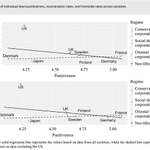
Dr. Tomoya Mukai’s et al. compared individual level punitiveness across political regimes of eight societies. Click the link in our biography to learn more.

22
How does perceived discrimination shape fear of crime among immigrants in South Korea? Discover the answer in Dr. Don Soo Chon’s article for IJCACJ, co-authored by Dr. Ali Shodunke and @Courtney_A_Waid.
tandfonline.com/doi/full/10.…
26
Read more about victims’ decisions to report crime to the police in Russia in the first analysis of its kind written by Dr. Aryna Dzmitryieva and co-authored by Dr. Kirill Titaev for IJCACJ.
tandfonline.com/doi/full/10.…
15
What is the role of procedural justice in the willingness of at-risk, marginalized youth in Israel to cooperate with the police? Learn more in Dr. Ameen Azmy’s article for IJCACJ co-authored by Dr. Tomer Einat and Dr. Avital Manovich.
tandfonline.com/i/full/10.10…
15
