








Pinned Tweet
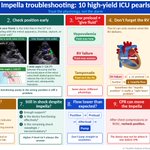
#Thiamine in the ICU: 10 high-yield pearls
1. Unexplained lactate? Think thiamine.
Thiamine is required for pyruvate dehydrogenase. Deficiency blocks conversion of pyruvate to acetyl-CoA, shunting pyruvate toward lactate and impairing mitochondrial aerobic metabolism. Thus, thiamine deficiency belongs in the differential diagnosis for otherwise unexplained lactic acidosis.
2. Thiamine deficiency in the ICU is not rare.
~30-70% of critically ill patients are thiamine-deficient. Many arrive deficient; others develop deficiency during critical illness because of increased metabolic demand, inadequate intake, or losses.
3. The bedside phenotype is more important than waiting for a thiamine level.
High-risk situations include malnutrition, alcohol-related liver disease, bariatric surgery, renal replacement therapy, polyuria/DKA, chronic diuretic therapy, unexplained encephalopathy, unexplained lactate elevation, and sepsis.
4. Starting nutrition can unmask the deficiency.
Glucose administration increases carbohydrate metabolism and thiamine utilization. A malnourished patient may therefore develop rising lactate after initiation of enteral/parenteral nutrition. Refeeding syndrome is not simply a phosphorus/potassium problem; thiamine deficiency can be central to its pathophysiology.
5. Dialysis and polyuria are major clues.
Thiamine can be lost during continuous RRT, hemodialysis, and peritoneal dialysis. Renal losses also rise with polyuria, including the diuretic phase of AKI, post-transplant polyuria, DKA, and chronic diuretic therapy in heart failure.
6. Do not wait for the classic Wernicke's triad.
Altered mental status, ocular abnormalities, and gait ataxia are rarely all present together. I think I have seen it only a few times. In an at-risk ICU patient with otherwise unexplained encephalopathy, absence of the complete triad should not reassure you.
7. A plasma thiamine concentration is not a great “rule-out” test.
Testing is often unavailable and expensive, and blood concentration does not necessarily reflect tissue thiamine status. I don't even remember when I last ordered the test (if ever...). Erythrocyte transketolase activity is physiologically more informative, but its cutoffs are poorly defined. Just recognize the risk population and consider a therapeutic trial rather than wait for laboratory confirmation.
8. The sepsis data are more nuanced than “thiamine works” or “thiamine doesn't work.”
Thiamine is not expected to improve hard outcomes in the overall septic-shock population. Some subgroup analyses and meta-analyses suggest signals for improved lactate clearance and organ function, particularly renal outcomes. I don't consider it a magic drug...
9. Thiamine alone ≠ HAT (hydrocortisone + ascorbic acid +thiamine) therapy.
Do not interpret negative trials of HAT as proof that correcting thiamine deficiency is useless. Large HAT RCTs failed to demonstrate the dramatic clinical benefit initially claimed, and a VICTAS secondary analysis raised concerns about longer-term outcomes. That is a different question from replacing thiamine in a patient likely to be deficient.
10. The kidney may be an important target organ.
Renal tubular cells are highly energy dependent. Across secondary analyses, observational data, and meta-analytic evidence, thiamine supplementation -particularly in deficient patients- shows a signal toward less AKI progression, better renal recovery, and less need for RRT, although individual RCTs have not consistently demonstrated significant benefit in unselected populations.
Rule of thumb:
“⬆️ lactate + risk factor + no good explanation" → think B1 deficiency”
Especially think about it when you see malnutrition/refeeding, alcoholism/cirrhosis, dialysis, polyuria/DKA, chronic diuretics, unexplained encephalopathy, sepsis, or otherwise unexplained persistent hyperlactatemia.
I usually include it in the admission orders for most of my ICU patients along with DVT and GI prophylaxis...!
Thiamine deficiency behaves less like an obscure vitamin deficiency and more like a potentially reversible form of mitochondrial energy failure. Or that's how I like to think about it.
#foamed #foamcc #meded
#ICU Evidence #006:
21.7%. That is how often a severe respiratory virus was found only in the lower respiratory tract, leaving the upper tract completely clear. 🫁
A multi-center study in CHEST highlighted the massive clinical challenges of diagnosing Severe Respiratory Viral Infections (SARI).
Researchers analyzed paired upper (URT) and lower respiratory tract (LRT) samples across 346 patients.
Here is what the data revealed:
•The Blind Spot: Relying solely on standard nasal or throat swabs completely missed the virus in over 1 in 5 cases.
•Higher Viral Loads: Median viral loads were significantly higher in the lower respiratory tract than in the upper tract.
•Common Pathogens: The most prevalent viruses detected were Influenza Type A, Rhinovirus/Enterovirus, and RSV.
Takeaway:
Testing only the upper respiratory tract can create a false sense of security. Sampling the lower respiratory tract significantly improves diagnostic sensitivity, especially in later stages of illness, and is critical for accurate clinical decision-making.
📖 Source: CHEST 2026; 170(1):41-53
#MedEd #FOAMed #foamcc

IMCrit retweeted
Learn CPR
Learn how to use an AED
One day, the life you save may belong to someone you love

IMCrit retweeted
I’ve always thought emergency medicine is the most difficult specialty. Not just to train for, but to practice. No appointment, no history, no time, and every gap in the healthcare system eventually walks through your door at 2:00 am.
Dr @grahamwalker just announced he’s leaving the bedside after 20 years. His essay, “Always Open. Already Full,” explains why. The ER is the only part of healthcare that can’t say no, so it absorbs everything upstream, and the people working there absorb the rest.
Worth reading if you work with, or depend on, an ED.
IMCrit retweeted
Ukraine says it just pulled off the world’s first drone evacuation of a wounded soldier from a mined battlefield.
Now think civilian. A wildfire where a helicopter can’t land. A flood where a boat can’t get through. A patient we can’t reach without putting the rescuers at risk. Could a drone bring them out?
I’d love to see that happen.
The catch: this soldier was awake and able to hold on. An unconscious or unstable patient who may need treatment on the way out is a very different problem.
War has repeatedly accelerated medical innovation: tourniquets, transfusion, helicopter evacuation, trauma systems.
Heraclitus said it 2,500 years ago: “War is the father of all.”
Medicine keeps proving it. I wish it didn’t.

IMCrit retweeted
This is not airway management. This is airway vandalism.
The most dangerous person in an airway emergency isn't the person who doesn't know what they're doing. It's the person who doesn't know what they're doing and doesn't know it.
When basic airway principles are repeatedly ignored, confidence stops being reassuring. It becomes the complication.
Please forget what you just saw…

Ukraine says it just pulled off the world’s first drone evacuation of a wounded soldier from a mined battlefield.
Now think civilian. A wildfire where a helicopter can’t land. A flood where a boat can’t get through. A patient we can’t reach without putting the rescuers at risk. Could a drone bring them out?
I’d love to see that happen.
The catch: this soldier was awake and able to hold on. An unconscious or unstable patient who may need treatment on the way out is a very different problem.
War has repeatedly accelerated medical innovation: tourniquets, transfusion, helicopter evacuation, trauma systems.
Heraclitus said it 2,500 years ago: “War is the father of all.”
Medicine keeps proving it. I wish it didn’t.
This is not airway management. This is airway vandalism.
The most dangerous person in an airway emergency isn't the person who doesn't know what they're doing. It's the person who doesn't know what they're doing and doesn't know it.
When basic airway principles are repeatedly ignored, confidence stops being reassuring. It becomes the complication.
Please forget what you just saw…
IMCrit retweeted
#ICU Evidence #001-002:
Two septic shock trials. Two different drugs. One missing piece
#Dobutamine improved kidney outcomes
Earlier #vasopressin changed practice, but not mortality
But who actually needed the drug?
Maybe the next trial should start somewhere else:
Tissue perfusion → hemodynamic phenotype → intervention → reassessment
#foamed #foamcc

IMCrit retweeted
#ICU Evidence #002:
Earlier vasopressin in septic shock (VASSPR trial): are we treating the patient or the norepinephrine dose?
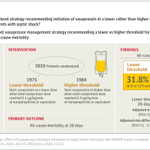
Add vasopressin at a norepinephrine-equivalent dose of 0.1 or 0.4 µg/kg/min? VASSPR tested these strategies across 13 US hospitals and nearly 4,000 patients. It changed practice, but not outcomes. I think it also raises a more interesting question:
Should vasopressor dose alone tell us when to add another hemodynamic intervention?
This was a pragmatic cluster-crossover trial. Hospitals alternated monthly between recommending fixed-dose vasopressin at a norepinephrine-equivalent dose ≥0.1 µg/kg/min (0.1 arm) or ≥0.4 (0.4 arm). Clinicians retained discretion, so this was not vasopressin vs placebo or a protocol that overrode clinical judgment.
Among patients reaching the relevant vasopressor range, vasopressin was used in 68.0% in the 0.1 arm vs 42.7% in the 0.4 arm. But 28-day mortality was 31.8% vs 33.0%, 90-day mortality 37.9% vs 38.4%, and clinically significant arrhythmias 18.4% vs 18.1%. None of the other secondary clinical outcomes materially differed either.
Here is what bothers me. Two patients on exactly the same norepinephrine dose may have profoundly different circulations: vasoplegia with preserved cardiac output, septic cardiomyopathy with impaired forward flow, RV dysfunction, persistent tissue hypoperfusion despite acceptable macrohemodynamics, or some combination.
A norepinephrine dose tells us how much drug we are giving, not WHY the patient remains in shock.
So I struggle with using a drug-dose threshold to trigger another major hemodynamic intervention. Starting vasopressin changes vascular tone and therefore the loading conditions under which the heart and circulation operate. Before treating the blood pressure, I want to understand the circulation.
POCUS is an excellent bedside tool here: LV and RV function, chamber size, important valvular or pericardial pathology, and clues about filling and forward flow, integrated with examination, perfusion, lactate trajectory, and other hemodynamic data.
This also brings to mind the four-hemodynamic-interface model proposed by @ThinkingCC and colleagues. Increasing vascular tone may be exactly what a profoundly vasoplegic patient needs. In another phenotype, excessive vasoconstriction could adversely affect ventricular-arterial coupling (Interface I, the heart pumping into the arterial system) and potentially arterial-to-microcirculatory coupling (Interface II, translating arterial pressure and flow into tissue perfusion). A higher MAP is not necessarily better hemodynamics.
And we should look again after starting vasopressin. Did MAP rise? Fine. But what happened to cardiac function, forward flow and tissue perfusion? Is the RV tolerating the new loading conditions? Can catecholamines actually be reduced? Otherwise, hemodynamic management risks becoming “set it and forget it”: reach a norepinephrine threshold → add vasopressin → celebrate the MAP → move on.
One safety finding caught my attention. Clinically diagnosed cardiogenic shock occurred in 7.4% in the 0.1 arm vs 6.3% in the 0.4 arm (adjusted OR 1.19, 95% CI 0.93–1.54). This was an exploratory endpoint and the difference was not statistically significant, so I would not interpret it as evidence that earlier vasopressin causes cardiogenic shock.
I do question the endpoint itself. Cardiogenic shock was captured as a clinical diagnosis rather than defined by a pre-specified objective hemodynamic phenotype. I appreciate that systematically phenotyping cardiac function in a pragmatic 4,000-patient trial is not trivial. I’d still want something more objective than a clinical diagnosis, especially with echo this accessible.
There’s some irony here: we study when to alter vascular tone, see a hint of a cardiac signal, and still know little about what the heart and circulation were actually doing.
My criticism is of the paradigm, not the investigators. Running a cluster-crossover trial across 13 hospitals and actually changing bedside vasopressin use is an impressive accomplishment. VASSPR answers the pragmatic policy question it was designed to answer.
What it cannot tell us is whether earlier vasopressin might benefit one hemodynamic phenotype while being unhelpful, or potentially disadvantageous, in another.
Perhaps our next trials should ask less “What norepinephrine dose have we reached?” and more:
“Why does this patient still need norepinephrine, and what happened after we intervened?”
“Pragmatic” explains the design. It does not replace physiology.
#JAMA #FOAMcc #FOAMed

IMCrit retweeted
#ICU Evidence #001:
Dobutamine during (mostly) abdominal surgery for septic shock: who actually needs it?
A new multicenter RCT from China randomized 584 patients with septic shock undergoing surgical source control, predominantly abdominal, to intraoperative dobutamine + norepinephrine vs norepinephrine alone.
The headline is impressive: AKI within 7 days fell from 34.7% to 22.8%.
But it is worth looking under the hood:
→ Creatinine-only AKI: 15.5% vs 18.7%
→ Urine-output-only AKI: 0.7% vs 6.8%
→ Both criteria: 6.6% vs 9.2%
A substantial part of the AKI separation came from urine-output-defined AKI. That doesn't invalidate the finding, but it is particularly interesting when the intervention is a hemodynamically active drug that may influence renal perfusion and urine output.
The physiology is interesting too. With dobutamine, lactate was lower at 1 h (2.3 vs 2.8 mmol/L) and at the end of surgery (2.2 vs 2.6), ScvO₂ was higher at the end of surgery (80.4% vs 77.6%), and capillary refill time was shorter. Norepinephrine requirements were also lower: mean 0.11 vs 0.15 μg/kg/min and maximum 0.17 vs 0.23 μg/kg/min.
So dobutamine clearly did something physiologically. But here is my problem: only 82/584 patients (14%) underwent advanced hemodynamic monitoring. Among those with paired measurements, cardiac index changed +0.5 vs −0.2 L/min/m² from baseline to the end of surgery (between-group difference +0.72 L/min/m²).
Who actually needed an inotrope? Low cardiac output? Septic cardiomyopathy? Vasoplegia with preserved/high CO? Persistent hypoperfusion despite adequate flow?
The trial randomized the drug—not the physiology.
And here is a thought experiment: what if, instead of routinely adding dobutamine, we added a fixed dose of vasopressin? Could we also produce a favorable renal signal through an entirely different hemodynamic mechanism? Possibly. VANISH previously suggested a renal signal with vasopressin, including less kidney replacement therapy, despite a neutral primary outcome.
My point is not that vasopressin would necessarily have been better. It is that improving a renal endpoint with a vasoactive drug does not necessarily tell us which hemodynamic abnormality we corrected or whether that abnormality was present in the first place.
Another interesting observation concerns arrhythmias. Despite more tachycardia with dobutamine (41.0% vs 29.9%), atrial fibrillation was similar (2.8% vs 2.4%), as was ventricular tachycardia (0.7% in both groups). Even mean heart rate at the end of surgery was nearly identical: 97.4 vs 96.2 beats/min.
Perhaps we sometimes overestimate dobutamine's arrhythmogenic contribution in septic shock? Or perhaps the underlying illness, concurrent norepinephrine exposure, and lower NE requirements with dobutamine matter more than we appreciate. With so few arrhythmic events and such short exposure, we cannot answer that question, but I find the observation intriguing.
Then there are the outcomes patients care about most. ICU mortality was 13.1% vs 15.6%, in-hospital mortality 17.6% vs 20.7%, and kidney replacement therapy within 7 days 9.0% vs 10.9%. None of these differences was statistically significant.
A personal note:
I don't think it is realistic to expect every critical care trial to demonstrate a mortality benefit. Mortality has too many determinants, and adequately powering every ICU trial for mortality would often be impractical.
And there is an additional consideration here: dobutamine was administered only intraoperatively, for a median of 155 minutes. Is it realistic to expect a few hours of improved hemodynamics to translate into a measurable mortality benefit weeks later? Perhaps not. Conversely, preventing kidney injury during a particularly vulnerable period could still have meaningful clinical consequences.
So I would not dismiss this trial because mortality was unchanged. But when an intervention substantially improves an intermediate endpoint, I still want to see some indication that the benefit extends toward hard, patient-centered outcomes (dialysis, duration of organ support, ICU stay, functional recovery, or survival).
My take:
Interesting physiology, a striking AKI signal, and potentially reassuring short-term arrhythmia data. But this does not yet convince me to routinely add dobutamine without knowing the hemodynamic phenotype I'm treating.
And credit to the investigators: this is a good, clinically provocative randomized trial addressing a difficult question. Medical Twitter will always find something to criticize -including me 😄- but good studies should make us think. This one does.
One final thought:
I wish we had more direct participation from Chinese clinicians and researchers on Medical Twitter. China produces important clinical research, and discussions like this would be even better if the investigators themselves could join us. We are missing valuable perspectives.
#JAMA #FOAMed #FOAMcc
jamanetwork.com/journals/jam…

I’ve always thought emergency medicine is the most difficult specialty. Not just to train for, but to practice. No appointment, no history, no time, and every gap in the healthcare system eventually walks through your door at 2:00 am.
Dr @grahamwalker just announced he’s leaving the bedside after 20 years. His essay, “Always Open. Already Full,” explains why. The ER is the only part of healthcare that can’t say no, so it absorbs everything upstream, and the people working there absorb the rest.
Worth reading if you work with, or depend on, an ED.
Full essay by Dr. Graham Walker:
linkedin.com/pulse/always-op…

Learn CPR
Learn how to use an AED
One day, the life you save may belong to someone you love
#ICU Evidence #001-002:
Two septic shock trials. Two different drugs. One missing piece
#Dobutamine improved kidney outcomes
Earlier #vasopressin changed practice, but not mortality
But who actually needed the drug?
Maybe the next trial should start somewhere else:
Tissue perfusion → hemodynamic phenotype → intervention → reassessment
#foamed #foamcc
#ICU Evidence #002:
Earlier vasopressin in septic shock (VASSPR trial): are we treating the patient or the norepinephrine dose?
Add vasopressin at a norepinephrine-equivalent dose of 0.1 or 0.4 µg/kg/min? VASSPR tested these strategies across 13 US hospitals and nearly 4,000 patients. It changed practice, but not outcomes. I think it also raises a more interesting question:
Should vasopressor dose alone tell us when to add another hemodynamic intervention?
This was a pragmatic cluster-crossover trial. Hospitals alternated monthly between recommending fixed-dose vasopressin at a norepinephrine-equivalent dose ≥0.1 µg/kg/min (0.1 arm) or ≥0.4 (0.4 arm). Clinicians retained discretion, so this was not vasopressin vs placebo or a protocol that overrode clinical judgment.
Among patients reaching the relevant vasopressor range, vasopressin was used in 68.0% in the 0.1 arm vs 42.7% in the 0.4 arm. But 28-day mortality was 31.8% vs 33.0%, 90-day mortality 37.9% vs 38.4%, and clinically significant arrhythmias 18.4% vs 18.1%. None of the other secondary clinical outcomes materially differed either.
Here is what bothers me. Two patients on exactly the same norepinephrine dose may have profoundly different circulations: vasoplegia with preserved cardiac output, septic cardiomyopathy with impaired forward flow, RV dysfunction, persistent tissue hypoperfusion despite acceptable macrohemodynamics, or some combination.
A norepinephrine dose tells us how much drug we are giving, not WHY the patient remains in shock.
So I struggle with using a drug-dose threshold to trigger another major hemodynamic intervention. Starting vasopressin changes vascular tone and therefore the loading conditions under which the heart and circulation operate. Before treating the blood pressure, I want to understand the circulation.
POCUS is an excellent bedside tool here: LV and RV function, chamber size, important valvular or pericardial pathology, and clues about filling and forward flow, integrated with examination, perfusion, lactate trajectory, and other hemodynamic data.
This also brings to mind the four-hemodynamic-interface model proposed by @ThinkingCC and colleagues. Increasing vascular tone may be exactly what a profoundly vasoplegic patient needs. In another phenotype, excessive vasoconstriction could adversely affect ventricular-arterial coupling (Interface I, the heart pumping into the arterial system) and potentially arterial-to-microcirculatory coupling (Interface II, translating arterial pressure and flow into tissue perfusion). A higher MAP is not necessarily better hemodynamics.
And we should look again after starting vasopressin. Did MAP rise? Fine. But what happened to cardiac function, forward flow and tissue perfusion? Is the RV tolerating the new loading conditions? Can catecholamines actually be reduced? Otherwise, hemodynamic management risks becoming “set it and forget it”: reach a norepinephrine threshold → add vasopressin → celebrate the MAP → move on.
One safety finding caught my attention. Clinically diagnosed cardiogenic shock occurred in 7.4% in the 0.1 arm vs 6.3% in the 0.4 arm (adjusted OR 1.19, 95% CI 0.93–1.54). This was an exploratory endpoint and the difference was not statistically significant, so I would not interpret it as evidence that earlier vasopressin causes cardiogenic shock.
I do question the endpoint itself. Cardiogenic shock was captured as a clinical diagnosis rather than defined by a pre-specified objective hemodynamic phenotype. I appreciate that systematically phenotyping cardiac function in a pragmatic 4,000-patient trial is not trivial. I’d still want something more objective than a clinical diagnosis, especially with echo this accessible.
There’s some irony here: we study when to alter vascular tone, see a hint of a cardiac signal, and still know little about what the heart and circulation were actually doing.
My criticism is of the paradigm, not the investigators. Running a cluster-crossover trial across 13 hospitals and actually changing bedside vasopressin use is an impressive accomplishment. VASSPR answers the pragmatic policy question it was designed to answer.
What it cannot tell us is whether earlier vasopressin might benefit one hemodynamic phenotype while being unhelpful, or potentially disadvantageous, in another.
Perhaps our next trials should ask less “What norepinephrine dose have we reached?” and more:
“Why does this patient still need norepinephrine, and what happened after we intervened?”
“Pragmatic” explains the design. It does not replace physiology.
#JAMA #FOAMcc #FOAMed
VASSPR trial 👇
jamanetwork.com/journals/jam…

#ICU Evidence #001:
Dobutamine during (mostly) abdominal surgery for septic shock: who actually needs it?
A new multicenter RCT from China randomized 584 patients with septic shock undergoing surgical source control, predominantly abdominal, to intraoperative dobutamine + norepinephrine vs norepinephrine alone.
The headline is impressive: AKI within 7 days fell from 34.7% to 22.8%.
But it is worth looking under the hood:
→ Creatinine-only AKI: 15.5% vs 18.7%
→ Urine-output-only AKI: 0.7% vs 6.8%
→ Both criteria: 6.6% vs 9.2%
A substantial part of the AKI separation came from urine-output-defined AKI. That doesn't invalidate the finding, but it is particularly interesting when the intervention is a hemodynamically active drug that may influence renal perfusion and urine output.
The physiology is interesting too. With dobutamine, lactate was lower at 1 h (2.3 vs 2.8 mmol/L) and at the end of surgery (2.2 vs 2.6), ScvO₂ was higher at the end of surgery (80.4% vs 77.6%), and capillary refill time was shorter. Norepinephrine requirements were also lower: mean 0.11 vs 0.15 μg/kg/min and maximum 0.17 vs 0.23 μg/kg/min.
So dobutamine clearly did something physiologically. But here is my problem: only 82/584 patients (14%) underwent advanced hemodynamic monitoring. Among those with paired measurements, cardiac index changed +0.5 vs −0.2 L/min/m² from baseline to the end of surgery (between-group difference +0.72 L/min/m²).
Who actually needed an inotrope? Low cardiac output? Septic cardiomyopathy? Vasoplegia with preserved/high CO? Persistent hypoperfusion despite adequate flow?
The trial randomized the drug—not the physiology.
And here is a thought experiment: what if, instead of routinely adding dobutamine, we added a fixed dose of vasopressin? Could we also produce a favorable renal signal through an entirely different hemodynamic mechanism? Possibly. VANISH previously suggested a renal signal with vasopressin, including less kidney replacement therapy, despite a neutral primary outcome.
My point is not that vasopressin would necessarily have been better. It is that improving a renal endpoint with a vasoactive drug does not necessarily tell us which hemodynamic abnormality we corrected or whether that abnormality was present in the first place.
Another interesting observation concerns arrhythmias. Despite more tachycardia with dobutamine (41.0% vs 29.9%), atrial fibrillation was similar (2.8% vs 2.4%), as was ventricular tachycardia (0.7% in both groups). Even mean heart rate at the end of surgery was nearly identical: 97.4 vs 96.2 beats/min.
Perhaps we sometimes overestimate dobutamine's arrhythmogenic contribution in septic shock? Or perhaps the underlying illness, concurrent norepinephrine exposure, and lower NE requirements with dobutamine matter more than we appreciate. With so few arrhythmic events and such short exposure, we cannot answer that question, but I find the observation intriguing.
Then there are the outcomes patients care about most. ICU mortality was 13.1% vs 15.6%, in-hospital mortality 17.6% vs 20.7%, and kidney replacement therapy within 7 days 9.0% vs 10.9%. None of these differences was statistically significant.
A personal note:
I don't think it is realistic to expect every critical care trial to demonstrate a mortality benefit. Mortality has too many determinants, and adequately powering every ICU trial for mortality would often be impractical.
And there is an additional consideration here: dobutamine was administered only intraoperatively, for a median of 155 minutes. Is it realistic to expect a few hours of improved hemodynamics to translate into a measurable mortality benefit weeks later? Perhaps not. Conversely, preventing kidney injury during a particularly vulnerable period could still have meaningful clinical consequences.
So I would not dismiss this trial because mortality was unchanged. But when an intervention substantially improves an intermediate endpoint, I still want to see some indication that the benefit extends toward hard, patient-centered outcomes (dialysis, duration of organ support, ICU stay, functional recovery, or survival).
My take:
Interesting physiology, a striking AKI signal, and potentially reassuring short-term arrhythmia data. But this does not yet convince me to routinely add dobutamine without knowing the hemodynamic phenotype I'm treating.
And credit to the investigators: this is a good, clinically provocative randomized trial addressing a difficult question. Medical Twitter will always find something to criticize -including me 😄- but good studies should make us think. This one does.
One final thought:
I wish we had more direct participation from Chinese clinicians and researchers on Medical Twitter. China produces important clinical research, and discussions like this would be even better if the investigators themselves could join us. We are missing valuable perspectives.
#JAMA #FOAMed #FOAMcc
jamanetwork.com/journals/jam…