

Building MnemeBrain Belief memory for AI agents Contradictions • Evidence • Revision Think TCP/IP for agent memory https://nitter.gq/t.co/v00LidyBpu
Netherlands
Joined November 2017
- Tweets367
- Following336
- Followers301
- Likes358





Coming soon: GenoMark.
Autoresearch at home.
ZK verification for every result.
Train locally, submit confidently, prove it cryptographically.
🧬⚡
@karpathy @ensue_ai @MinaFoundation @MinaDevelopers @MinaProtocol @minacryptocom


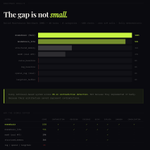
Every AI memory system I tested fails at contradiction detection.
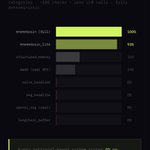
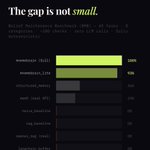
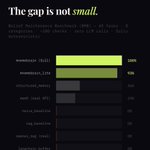
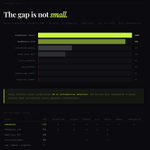
- Structured_memory 36%
- Mem0: 29%
- OpenAI RAG: 0%
We built a benchmark to understand why.
The problem isn't implementation.
𝐓𝐡𝐞 𝐀𝐈 𝐬𝐭𝐚𝐜𝐤 𝐢𝐬 𝐦𝐢𝐬𝐬𝐢𝐧𝐠 𝐚 𝐥𝐚𝐲𝐞𝐫. 🧵

Claude Code just added structured auto-memory.
That’s a big step forward for agent memory.
But it also highlights something important:
most AI systems still treat memory as stored notes.
The harder problem is belief maintenance. 🧵
1/10
If you're experimenting with Claude Code’s new memory system:
you can layer belief maintenance on top.
I wrote a guide showing how to integrate MnemeBrain with Claude Code:
mnemebrain.ai/blog/mnemebrai…

This is the layer we’re exploring with MnemeBrain.
Evidence
→ Belief node
→ Truth state
→ Confidence + decay
Belief maintenance instead of retrieval.
9/10
If you're building AI agents that remember things over months:
the missing layer isn't retrieval.
it's belief state.
mnemebrain.ai/
BMB is open.
The MemorySystem interface is public. Any system can implement an adapter.
We'd love to see adapters from: @mem0ai @LangChainAI @zep_ai @llama_index
If you beat 100% — great. If you don't — now we know exactly why
`pip install mnemebrain
python run_bmb_benchmark.py`
The belief layer for AI agents.
Not a better memory library.
The TCP/IP moment for agent memory.
github.com/mnemebrain/mnemeb…
