

Creator | Writer | Alpha Curator | I'm a Fire 🔥
Joined April 2023
- Tweets2.4K
- Following719
- Followers259
- Likes5.7K






Pinned Tweet
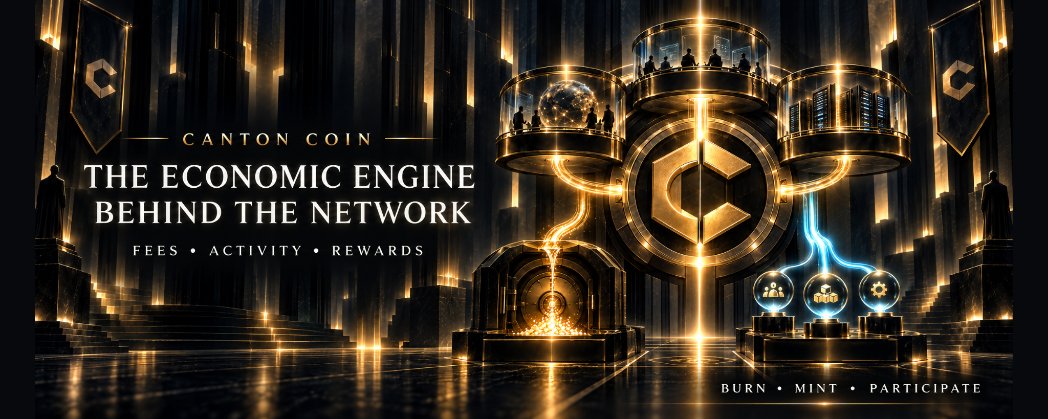
What gives Canton Coin utility beyond speculation? This article explains the network’s burn-and-mint model, contributor rewards and the role of real application activity in Canton’s economic engine.
@CantonNetwork @CantonFdn #Canton #CantonResearchNov26
ID Virtual retweeted

🚨 THE HUB JUST LEVELLED UP! 🚀
💰 $3,000 Hub League Ongoing
🎬 Reels are LIVE — watch, create, like & comment
🎟️ Create your own Creator Ticket
📈 Build your community & promote your ticket
💎 Minimum claim: 25 CC
Explore thehubcc.io/world
#web3 #GIVEAWAY #explorepage
A solid way to discover The Hub and get involved with the Canton community.
10 winners. 100 $CC each.
Follow the steps, join The Hub, and drop your username. Let’s see the community show up.
@PiaKING @Thehub_io
#Canton #SocialFi

1,000 $CC GIVEAWAY 🎁
10 winners × 100 $CC
1-Follow @piaKing & @thehub_io
2-Like + RT
3-Sign up at thehubcc.io
4-Comment your The Hub username 👇
Ends in 48h.

ID Virtual retweeted

1,000 $CC GIVEAWAY 🎁
10 winners × 100 $CC
1-Follow @piaKing & @thehub_io
2-Like + RT
3-Sign up at thehubcc.io
4-Comment your The Hub username 👇
Ends in 48h.
ID Virtual retweeted

Fairmint plans a venue to trade real tokenized shares on @CantonNetwork 👀
Plus this week:
• Talos, Marex & Broadridge team up
• Covalidation goes live
• Broadridge DLR passes $120T in repo
• Canton to Solidity and back
• Solana lands on Canton
Week 47 🧵

ID Virtual retweeted

The future of social platforms should not be measured only by how much attention they capture. It should also be measured by how much meaningful participation they create.
That is why The Hub is interesting to me.
The Hub is building a SocialFi experience around creator discovery, real-time interaction, ticket-based communities, activity, and private on-chain identity powered by Canton. The points attached to ticket activity are one visible part of the experience, but the larger idea goes deeper than points.
The real question is whether social participation can become more transparent, more useful, and more connected to the people and communities creating the activity.
Most social platforms treat users as attention, data, or engagement metrics. Algorithms decide what is seen, which voices are amplified, and what communities remain visible. The Hub is exploring a different direction: connect people through creator-led spaces, give communities a clearer participation layer, and bring identity into a privacy-aware Canton environment.
That does not mean every problem disappears. SocialFi still has to prove that incentives can remain fair, that ticket markets can avoid unhealthy speculation, and that users understand the rules before they participate. But those challenges make transparency more important, not less.
The Hub’s official materials emphasize creator discovery, real-time interaction, private identity, fairness, and community participation. Its terms also describe rules-based ticket markets, visible pricing and fees, account limits, and measures intended to reduce abusive activity.
This is the part of Web3 I think it also deserves more attention. Not every product has to be another exchange. Not every user should be reduced to liquidity. Not every community should exist only to generate clicks for an algorithm.
A stronger social layer should help people discover, connect, contribute, and retain more control over their identity.
Points may encourage activity, but the lasting value will come from the people, creators, and communities that keep showing up because the network gives them a reason to participate.
SocialFi becomes meaningful when the social layer creates durable ecosystem activity.
@Thehub_io @CantonNetwork @CantonFdn
#CantonResearchNov26 #Canton #SocialFi #Web3 #CreatorEconomy
GM fam ☀️
Every ticket you buy or sell on The Hub = points 🟡
Trade today. Stack points. Climb up.
👉 thehubcc.io
#CantonNetwork #SocialFi
ID Virtual retweeted
GM fam ☀️
Every ticket you buy or sell on The Hub = points 🟡
Trade today. Stack points. Climb up.
👉 thehubcc.io
#CantonNetwork #SocialFi

GM fam ☀️
Every ticket you buy or sell on The Hub = points 🟡
Trade today. Stack points. Climb up.
👉 thehubcc.io
#CantonNetwork #SocialFi

ID Virtual retweeted
Tokenization is only the beginning.
An asset becomes truly useful when it can trade, settle, and move through reliable market infrastructure.
That is why Temple deserves to be viewed beyond the idea of another trading platform. Temple Digital Group is building an execution layer for capital markets on Canton, with a focus on private execution, non-custodial access, deterministic matching, and infrastructure designed for continuous market activity.
The distinction matters because Web3 often celebrates issuance while paying less attention to what happens afterward. Creating a token is not the same as creating a functioning market. A real market needs reliable execution, liquidity, settlement, counterparties, compliance processes, data, and clear rules around how orders are matched.
Temple’s public materials describe a broader direction that includes digital assets, fixed income, repo markets, RFQ and block trading, tokenization infrastructure, institutional vaults, APIs, and connectivity into Canton. Its public Lightspeed 2.0 update also described improvements to matching speed, throughput, and settlement capacity.
Temple has additionally highlighted work connected to tokenized securities infrastructure and institutional market activity. These developments are important because they show the ecosystem moving from “assets can exist on-chain” toward “assets can function inside connected markets.”
The future of tokenized finance will not be determined only by how many assets are issued. It will be determined by whether those assets can be discovered, priced, traded, settled, and moved with the level of privacy and reliability that serious participants require.
This is where market structure becomes more important than market noise.
Canton does not only need a new place for assets to live. It needs rails that allow assets to interact with one another and with the institutions, businesses, and users that depend on them.
Less noise. More structure. Better rails for serious capital markets.
@temple_ny @CantonNetwork @CantonFdn
#CantonResearchNov26 #CantonNetwork #Tokenization #CapitalMarkets #DigitalAssets

ID Virtual retweeted

𝐎𝐍𝐄 𝐣𝐮𝐬𝐭 𝐠𝐨𝐭 𝐚 𝐧𝐞𝐰 𝐡𝐨𝐦𝐞 𝐨𝐧 𝐂𝐚𝐧𝐭𝐨𝐧.
And I think this is an interesting development for the network's growing DeFi ecosystem.
If you've been following @AlpendHQ, you probably know ONE.
It started as part of Alpend-1, designed to help users access dollar liquidity against their Canton Coin ($CC) without having to sell their holdings.
Now, that idea is growing into something bigger.
𝐌𝐞𝐞𝐭 @AdulaHQ.
A privacy-native collateralized debt position (CDP) protocol built by @PalladiumLabs on @CantonNetwork.
But why give ONE its own protocol?
Here's how I understand it. 👇
𝟏. 𝐅𝐫𝐨𝐦 𝐀𝐥𝐩𝐞𝐧𝐝 𝐭𝐨 𝐀𝐝𝐮𝐥𝐚
Alpend continues to focus on confidential lending and borrowing.
Adula, on the other hand, is focused on collateral-backed debt issuance.
The underlying mechanics of ONE remain the same, but it now has a separate identity and its own development path.
This distinction matters as Canton's financial ecosystem expands.
𝟐. 𝐇𝐨𝐰 𝐝𝐨𝐞𝐬 𝐎𝐍𝐄 𝐰𝐨𝐫𝐤?
Imagine holding $CC and needing access to dollars without selling your coins.
That's the problem ONE is designed to address.
The process is straightforward:
→ Lock supported assets as collateral.
→ Mint ONE against their value, within borrowing limits.
→ Use ONE across supported Canton applications.
→ Repay your debt to unlock your collateral.
ONE is designed to maintain a target value of $1 and is backed by collateral worth more than the debt issued.
CC is the first planned collateral asset, with more expected to follow.
Of course, borrowing against crypto still carries liquidation risk if collateral values fall too far.
𝟑. 𝐓𝐡𝐞 𝐒𝐭𝐚𝐛𝐢𝐥𝐢𝐭𝐲 𝐕𝐚𝐮𝐥𝐭
Another interesting part of Adula's design is its Stability Vault.
ONE holders will be able to deposit their tokens and receive yONE, which represents their share of the vault.
The vault is designed to help settle liquidated debt positions and receive collateral in return.
The idea is that liquidation proceeds can contribute to returns for vault participants.
It's an interesting mechanism, although actual returns will depend on how the protocol performs.
𝟒. 𝐖𝐡𝐲 𝐂𝐚𝐧𝐭𝐨𝐧 𝐦𝐚𝐭𝐭𝐞𝐫𝐬 𝐡𝐞𝐫𝐞
This is probably the part I find most interesting.
In traditional DeFi, borrowing positions can expose information about someone's collateral, debt, and financial activity.
But not every financial agreement needs to be visible to everyone.
Canton's selective disclosure architecture is designed to keep sensitive information available to the relevant parties while still enforcing transaction rules.
For a protocol handling collateral and debt, that distinction is important.
It creates room for financial applications that need both privacy and accountability.
𝐓𝐡𝐞 𝐛𝐢𝐠𝐠𝐞𝐫 𝐩𝐢𝐜𝐭𝐮𝐫𝐞
I don't think the most interesting part of this announcement is simply that ONE has moved into a separate protocol.
It's what that separation could make possible.
As more assets become tokenized on Canton, people will want to do more than just hold or transfer them.
They'll want to borrow against them, unlock liquidity, and use that value across different applications.
That's the opportunity Adula is building toward.
It's still early, and public collateral minting has been described as coming soon. Actual adoption and integrations will be the real tests.
But I like the direction.
𝐓𝐨𝐤𝐞𝐧𝐢𝐳𝐚𝐭𝐢𝐨𝐧 𝐛𝐫𝐢𝐧𝐠𝐬 𝐚𝐬𝐬𝐞𝐭𝐬 𝐨𝐧𝐜𝐡𝐚𝐢𝐧. 𝐂𝐨𝐥𝐥𝐚𝐭𝐞𝐫𝐚𝐥𝐢𝐳𝐚𝐭𝐢𝐨𝐧 𝐡𝐞𝐥𝐩𝐬 𝐩𝐮𝐭 𝐭𝐡𝐨𝐬𝐞 𝐚𝐬𝐬𝐞𝐭𝐬 𝐭𝐨 𝐰𝐨𝐫𝐤.
ONE started within Alpend.
Now Adula is taking that vision forward.
𝐀 𝐧𝐞𝐰 𝐡𝐨𝐦𝐞. 𝐀 𝐛𝐫𝐨𝐚𝐝𝐞𝐫 𝐯𝐢𝐬𝐢𝐨𝐧.
What do you think about ONE's potential as Canton's DeFi ecosystem grows?
@CantonFdn #CantonResearchNov26 #CantonEcosystem

Don't fade on this folks 🔥🔥🔥

Yo folks!! 💪🏽
Won't be active here today, got a lot of stuff on my plate.
Huge congrats to everyone who caught the $YESSAH airdrop.
Don’t fumble your bag early; more campaigns and rewards are lined up for diamond-hand holders.
Buy + Hold = $1M MarketCap 🚀
Follow official accounts:
@YessahBlesah_cc
@YessahBlessahCC
Have a productive day guys 💪🏽
2
25
ID Virtual retweeted

Yo folks!! 💪🏽
Won't be active here today, got a lot of stuff on my plate.
Huge congrats to everyone who caught the $YESSAH airdrop.
Don’t fumble your bag early; more campaigns and rewards are lined up for diamond-hand holders.
Buy + Hold = $1M MarketCap 🚀
Follow official accounts:
@YessahBlesah_cc
@YessahBlessahCC
Have a productive day guys 💪🏽
ID Virtual retweeted
What a Tragedy...Investors thought my Liquidity was all "Dried Up" lol 😂🤣😅
Nothing could be further from the truth time to send $BLESSAH on @onepumpcc to da Moon!!!!
Yessah!!!!!
oneswap.cc/launchpad/token/8…
Do you see how much canton-network:native I make per day for Buy Backs strictly from my LP fees?!?!?!!?!
Over 250 cc per day...slow and steady wins the race 😉

ID Virtual retweeted

Temple Digital Group has burned over 1 Billion $CC for the @CantonNetwork. Our contribution to network burn since January now exceeds $100 Million.

ID Virtual retweeted
Learn More: templedigitalgroup.com/news/…

ID Virtual retweeted
Introducing Virtual Orderbooks
A solution to build and deploy custom trading venues on the Canton Network.

ID Virtual retweeted
Temple has partnered with @OnRailsFinance to support cSOL, a tokenized @solana product for @CantonNetwork.
cSOL is now live and available to trade for all Temple Digital Group clients.

ID Virtual retweeted

Here's something I find particularly interesting about Temple's latest development.
SOL is entering a trading environment on Canton that has already processed more than $2 BILLION in trading volume.
Temple's markets already span Bitcoin, gold and stablecoins. Now cSOL is joining that mix.
@temple_ny has partnered with @OnRailsFinance to support cSOL, and it's now live and available to trade for all Temple users.
But I don't think the interesting part stops at the listing.
There's a bigger story behind how this asset got here and what Temple's integration adds.
Let's get into it.
➜ FIRST, UNDERSTANDING cSOL
cSOL is a tokenized representation of Solana's native asset, SOL, issued on Canton by onRails.
The mechanism behind it is worth understanding:
SOL is deposited and locked in a vault on Solana.
A corresponding amount of cSOL is issued on Canton.
When a holder redeems, cSOL is burned and the underlying SOL is released.
The intended backing is 1:1.
In other words, SOL doesn't have to become a native Canton asset to find a place in Canton's financial ecosystem.
cSOL gives it a representation that can be held, transferred and traded through supported Canton applications.
That's the first important piece: bringing an asset from one ecosystem into another.
➜ SECOND, WHAT TEMPLE BRINGS TO THE TABLE
This is where the announcement becomes more than an issuance story.
onRails provides the infrastructure behind cSOL.
Temple gives it access to another trading venue.
And there's a meaningful difference between having an asset on a network and having somewhere to trade it.
An asset can be issued, backed and technically available, but its reach depends partly on the applications and markets that support it.
With this integration, Temple users now have another way to access and trade cSOL.
That's a new point of access for the asset, and another addition to Temple's expanding market.
➜ THIRD, LOOK AT WHAT TEMPLE HAS BEEN BUILDING
Temple's development goes beyond adding new assets.
Its Lightspeed engine is designed for high performance order matching and Canton-native settlement.
Its Virtual Orderbooks take things further, allowing institutions to build and operate their own configurable trading venues on Canton.
Put those developments together and a clearer picture emerges.
Temple isn't just trying to offer more things to trade. It's building infrastructure that can support different assets, market structures and institutional trading requirements.
Now cSOL becomes another asset that can enter that environment.
And there's some useful context here.
TEMPLE HAS REPORTED OVER $2 BILLION IN CUMULATIVE ORDERBOOK TRADING VOLUME.
That is the platform's overall reported volume, not cSOL trading volume.
Still, it tells us that this latest addition is entering a platform with an established record of trading activity.
The next thing worth watching is whether cSOL develops meaningful participation, trading volume and orderbook depth of its own.
Because being listed is the beginning of market access, not proof of liquidity.
➜ FOURTH, THE PROGRESSION BEHIND THIS INTEGRATION
There's a timeline here that I think deserves attention.
cSOL went live on Canton in September. It subsequently gained support across the ecosystem, including Cantex.
Now Temple is adding another trading venue.
Look at what each participant contributes:
• onRails: brings the SOL representation to Canton and provides the backing and redemption infrastructure.
• Temple: gives cSOL another route into a trading market.
• Canton: provides the environment in which these assets and financial applications can connect.
This is how an asset's ecosystem presence can grow beyond its initial launch.
One integration establishes availability.
Further integrations create more opportunities for access, distribution and market participation.
And that's a much more interesting way to look at ecosystem growth than simply counting new token announcements.
NOW, HERE'S THE BIGGER PICTURE.
Think about what tokenization is supposed to achieve.
Creating a digital representation of an asset is important, but that alone doesn't make the asset useful.
What happens after it arrives?
• Can people access it?
• Can they trade it?
• Can applications support it?
• Can it connect to other financial products and markets?
These are the questions that matter when we talk about bringing traditional and digital assets into connected financial environments.
The real progress happens when an asset moves from simply existing on a network to becoming part of the financial activity taking place around it.
That's why I find this @temple_ny and @OnRailsFinance development worth following.
Temple gets another asset into its trading environment.
onRails extends the reach of cSOL.
And Canton gains another connection to an asset ecosystem that originated outside its own network.
For me, that's the bigger story here.
The future of tokenized markets won't be defined by issuance alone.
It will be shaped by how effectively assets connect to infrastructure, trading venues and real financial activity.
cSOL joining Temple is another step in that direction.
And I'm interested to see what this connection develops into.
gTemple.
@CantonFdn #CantonResearchNov26
Tokenization is only the beginning.
An asset becomes truly useful when it can trade, settle, and move through reliable market infrastructure.
That is why Temple deserves to be viewed beyond the idea of another trading platform. Temple Digital Group is building an execution layer for capital markets on Canton, with a focus on private execution, non-custodial access, deterministic matching, and infrastructure designed for continuous market activity.
The distinction matters because Web3 often celebrates issuance while paying less attention to what happens afterward. Creating a token is not the same as creating a functioning market. A real market needs reliable execution, liquidity, settlement, counterparties, compliance processes, data, and clear rules around how orders are matched.
Temple’s public materials describe a broader direction that includes digital assets, fixed income, repo markets, RFQ and block trading, tokenization infrastructure, institutional vaults, APIs, and connectivity into Canton. Its public Lightspeed 2.0 update also described improvements to matching speed, throughput, and settlement capacity.
Temple has additionally highlighted work connected to tokenized securities infrastructure and institutional market activity. These developments are important because they show the ecosystem moving from “assets can exist on-chain” toward “assets can function inside connected markets.”
The future of tokenized finance will not be determined only by how many assets are issued. It will be determined by whether those assets can be discovered, priced, traded, settled, and moved with the level of privacy and reliability that serious participants require.
This is where market structure becomes more important than market noise.
Canton does not only need a new place for assets to live. It needs rails that allow assets to interact with one another and with the institutions, businesses, and users that depend on them.
Less noise. More structure. Better rails for serious capital markets.
@temple_ny @CantonNetwork @CantonFdn
#CantonResearchNov26 #CantonNetwork #Tokenization #CapitalMarkets #DigitalAssets
Most Canton conversations start with tokens.
Temple starts with market structure.
That distinction matters.
Temple Digital Group is building the execution layer for capital markets on Canton: a native trading venue designed around private execution, non-custodial access, deterministic order-book matching and 24/7 market infrastructure.
The official platform already presents a wider
vision than a simple spot exchange:
• Cash and digital assets
• Fixed income and repo markets
• RFQ and block trading
• Tokenization infrastructure
• Institutional vaults
• Data and API access
• Temple Bridge for moving assets into Canton
Temple’s launch announcement began with private trading for Canton Coin and USDCx. Its current market materials show the platform expanding across Canton-native digital assets, tokenized commodities and cross-asset markets.
Temple has also publicly highlighted collaborations involving DTCC’s tokenization work, tZERO’s ATS and technology infrastructure, and pricing support for commodity markets. Its own profile says the trading engine has processed more than $1B in Canton volume.
The bigger idea is easy to miss:
Canton is not only building a new place for assets to exist. It is building a more private, connected and institution-ready way for those assets to trade, settle and move.
Temple is one of the clearest examples of that transition.
Less noise.
More market structure.
Better rails for serious capital markets.
Explore the platform: templedigitalgroup.com/
@temple_ny
@CantonNetwork
@CantonFdn
#CantonResearchNov26 #CantonNetwork #DigitalAssets #Tokenization #CapitalMarkets

ID Virtual retweeted

@temple_ny just opened the door for Solana on Canton.
@temple_ny has partnered with @OnRailsFinance, and cSOL is now live and available to trade for all Temple users.
But how does SOL actually get into Canton?
Think of it this way:
Imagine you park your car (SOL) in a secure garage on Solana.
OnRails provides the bridge that makes this possible.
First, you deposit your SOL through the OnRails bridge and specify the Canton account where you want to receive your cSOL.
The deposited SOL gets locked in a secure vault on Solana.
An off-chain service called a relayer monitors the deposit and communicates the transaction to Canton.
Once verified and processed, an equivalent amount of cSOL is minted on Canton, representing the SOL locked on Solana.
That's how SOL gets a representation inside the Canton ecosystem without the original asset physically moving between blockchains.
Now, that cSOL can be held, transferred and traded across supported Canton applications.
Where does @temple_ny come in?
Think of Canton as a private financial district.
Temple is one of its trading floors, providing the marketplace where institutions and other eligible users can buy and sell cSOL through its trading infrastructure.
And when you want your original SOL back, you burn your cSOL on Canton. The bridge then processes the release of the corresponding SOL from the Solana vault.
Why does this matter?
• @OnRailsFinance provides the bridge and issues cSOL against locked SOL.
• @temple_ny brings cSOL into its institutional trading marketplace.
• Canton gains another major blockchain asset that can participate in its growing financial ecosystem.
Institutions can now access Solana exposure while operating within the Canton ecosystem.
This is what blockchain interoperability looks like: different networks, connected assets, and expanding financial opportunities.
@CantonNetwork
@CantonFdn
#CantonResearchNov26

ID Virtual retweeted

More of Canton’s activity is set to burn $CC.
@YuvalRooz says mainnet extensions will join the burn model, with rollout targeted for late 2026 or early 2027.