

Creative Technologist
Mumbai, Maharashtra
Joined August 2012
- Tweets1K
- Following1.8K
- Followers394
- Likes6.4K




Indranil Chandra retweeted

Another big breakthrough after Jev!
Jev answers a fixed question over a fixed input, so a live chat requires re-reading the full transcript on every update.
Devs just built Sage2, which pairs an extraction model and a decision model on the same live stream.
Usually, in a live conversation, the details and the decisions keep changing.
New details show up gradually, and several questions stay open the whole time.
- The extraction stage turns each new message into structured fields in 150 ms, each tied to the exact source span it came from. Those fields then become decision options.
- The decision model scores them as text streams in, and returns typed answers with probabilities, so the full loop from raw text to action runs in about 200 ms.
This gives a fully reactive automation over a live chat, with no re-reading of the transcript.
Sage2 is built by @levantolabs, the team that shipped the first decision model, before Jev.
The video below depicts the model live in action on a broadband support chat, and I worked with the team to put this together.
More details below.

Software can now understand human language and act on it, in real time.
Introducing Sage2
- Extract: natural language in, structured data out. 166x cheaper than Opus 5.5, beats @Cloudflare's Clairic
- Decide: the first decision model with streaming. 3x faster, because it reads the context as it grows.
Sage2 is a new primitive for developers. Get 20M tokens free 👇
Also available on @near_ai and, for agents, via @mpp with @Stripe cards and @Tempo stables.


Indranil Chandra retweeted

We asked GPT-6 Astra to edit Qwen3.5-0.8B weights to improve math.
It directly changed only 0.016% of weights, fixing 0.8B's reasoning loops & improving math up to 6x and even instruction following 3x, without gradients or training.
We call this Weight-Space Programming: frontier LLMs can now natively read/write neural network weights! 🧵
Blog: rikiyat.github.io/blog/weigh…

Readers added context they thought people might want to know
LLM was given weights explicitly as text in prompt and used code/forward passes (per authors' logs) to ablate Qwen looping direction, a known thinking-mode issue per model card. Primarily fixed repetition in that mode, not general 'natively' improving weights/math.
rikiyat.github.io/blog/weight-sp…
github.com/RikiyaT/lm_und…
huggingface.co/Qwen/Qwen3.5-0…
huggingface.co/RikiyaT/Qwen3.…
Indranil Chandra retweeted

Weekend hack: HackerTube. I was annoyed with YouTube's recommendations so I had Claude filter down 43M comments over 20 years of HN to 6,454 videos that keep being recommended. *Significantly* better viewing experience, ~2 hours with Opus 5.5:
hackertube.org/
- Excellent recs without any logins (state is kept in local browser session)
- Thumbnail is a representative frame from middle of the video instead of the super duper A/B test hyper-optimized user uploads
- Underlying data from the comment analysis as one zip file, point your Claude at it and ask for your own version
- HackerTube Longs ✊
A bit more on the process:
I use Claude Code (desktop app for Mac), Opus 5.5 on Medium effort as my default. I only talk to Claude and have it do everything, the only "manual work" I helped with in tandem was in the browser (reminiscent of MenuGen): 1) I had to create some kind of API key from Google Cloud UI to query YouTube for video metadata, 2) I booted up a VPS box for serving and 3) I bought the domain name. Once the box was up I gave Claude the IP and told it update, secure, harden, deploy and optimize the code, and it did the whole thing.
Many awesome projects that would have normally taken weeks/months even can now be few-shotted for breakfast. What else are we not thinking of.

Indranil Chandra retweeted

It’s almost incomprehensible how wide the distance is between someone who’s working at the frontier with AI and basically everyone else right now.
The crazy thing is these lines are not converging, but only growing farther apart. If the curve of AI progress had leveled off, it would certainly have given most people and companies time to catch up or implement their workflows in a standardized way. The technology would have neutralized competitive advantage because everyone would be using it the same way.
But what’s happened is the opposite. The curve of AI progress is basically going vertical right now, which means if you had codified your processes 3-6 months ago you’re likely already behind again. Now imagine most companies that kicked into gear a year ago and thought that they were done. Even further behind now.
I’ve never seen a technology in my life and career that improves at this rate, which consequently means you need to upgrade your expectations at a similar rate. Our brains weren’t wired for this, and our organizational change management processes certainly weren’t either.
With any form of recursive self improvement, things just get wilder. It’s a time when you will need to be constantly reevaluating the things that didn’t work just a couple months ago to see if they now can be solved. AI native companies certainly have a strong advantage due to this right now, so now it comes down to can the bigger companies keep up. Wild times.
Indranil Chandra retweeted

feels like there needs to be a new way to distribute opensource software such that people can modify via agents but also get upstream automatically merged in
coding agents can do this but they won’t do it automatically

In case you missed it, DevFest Mumbai CFP closes tomorrow. Apply here - sessionize.com/devfest-mumba…

I couldn’t be more excited for this one, come for an evening full of MADness! 😊

Let’s find out how much of your job is you, and how much is just you asking an LLM to fix your code.
Join us for Tech Trivia Night - a no-phones, no-AI battle of tech knowledge. Come prepared (or maybe read what tech was likebefore 2022).
Sign up 👉 luma.com/sdvi6bs6

A cause that is very close to my heart, do attend if you’re around 🙌🏼
We spend the vast majority of our time staring at screens, arguing about tech , and trying to optimize things that don't need optimizing.
This Children's Day, we are stepping out of that bubble and spending an afternoon at a children’s home.
Sign up 👉 luma.com/4pk9zc7z

Indranil Chandra retweeted

Google open-sourced Harness². It lets an AI agent improve its own setup on every new task, without retraining the model.
The setup around a model, its "harness", is normally designed once by a person: the system prompt, guardrails, memory, tool guidance, subagents, skills, scripts and plugins. Harness² edits all 8 while it works.
How it works:
→ proposes changes to the harness for the task in front of it
→ tests those changes on that same task
→ keeps what actually worked better, with no answer key needed
→ carries the lessons into future tasks
In Google's tests, one round improved GLM-5 and Gemini 3.5 Flash by up to 11.5 points on WorkBuddy-Bench and 11.8 points on LAB, a legal benchmark.
Works with OpenCode or Codex. The demo runs on Linux with no API keys:
git clone github.com/google-research/h… && cd harness2
uv venv --python 3.12 .venv && source .venv/bin/activate
uv pip install -e '.[render]'
harness2-demo --output runs/demo --k 2
Apache-2.0, 11.3K stars.

Indranil Chandra retweeted

RadixAttention, clearly explained.
(how SGLang makes prefix caching highly efficient)
Prefix caching sounds simple until requests start branching.
Consider an AI coding assistant serving these three conversations:
Request 1 Context:
System prompt → Python repo → authentication code → “Fix this bug”
Request 2 Context:
System prompt → Python repo → authentication code → “Add OAuth”
Request 3 Context:
System prompt → Python repo → database code → “Optimize this query”
Now there are three ways a serving engine can handle them.
1. With no prefix caching, every request starts from zero.
The system prompt and repo context are processed again for every request, even though thousands of tokens may be identical.
All that repeated prefill produces essentially the same KV state again and again.
2. Simple prefix caching improves this.
The engine can cache a known shared prefix, such as the system prompt, and reuse its KV cache when another request starts with exactly the same tokens.
That already saves work.
But real workloads are not just one shared prefix followed by completely unrelated requests.
They branch.
Two requests may share the system prompt, repo context, and authentication code. Another may share only the system prompt and repo before diverging into database code.
This is where RadixAttention becomes useful.
3. SGLang stores cached token sequences in a radix tree.
The common system prompt becomes the trunk.
The shared Python repo context extends that trunk.
Authentication and database context become separate branches.
Then individual user queries branch again.
When a new request arrives, SGLang walks this tree and finds the longest prefix whose KV cache already exists.
If 2,000 tokens match, it reuses 2,000 tokens.
If 8,000 match, it reuses 8,000.
Only the suffix after the point of divergence needs fresh prefill.
That is the key difference.
Simple prefix caching lets you reuse a prefix.
RadixAttention turns all the overlapping prefixes across your workload into a reusable hierarchy.
This is particularly valuable for multi-turn conversations, agent trajectories, shared system prompts, few-shot examples, and workloads where requests repeatedly branch from common histories.
SGLang keeps these KV blocks in the radix tree and evicts them using an LRU policy when memory is needed.
→ PagedAttention makes KV cache allocation efficient.
→ RadixAttention makes overlapping KV caches reusable.
We wrote the full breakdown of every attention mechanism, from Multi-Head Attention through FlashAttention and Sparse Attention, up to PagedAttention and RadixAttention.
The article is quoted below.


Indranil Chandra retweeted

We just open-sourced another pair of state-of-the-art Decision Models:
pplx-decider-flash-v1.2: 4B params, 1 cent per million tokens (top 4B model on HF Decision Index)
pplx-decider-v1.2: 27B params, 2 cents per million tokens (#2 on HF Decision Index overall - for now, will improve rapidly)
Both are available on the Perplexity Decisions API as well as in the form of open weights on @huggingface
Enjoy!


Indranil Chandra retweeted

Very happy to see this from Nick!

interpretability might be the most important scientific problem in the world right now, as I don't think we can solve alignment if we don't know what we're building. I think I have good news about it. I co-authored early work in mechanistic interpretability at OpenAI and came away pessimistic, because neural networks appeared to fold into arbitrary tangled knots. years later, I started openai's first large-scale automated interpretability project, finding about 2% of neurons legible with the primitive tools we had
with modern agentic tools and a much closer look, the picture looks totally different. the vast majority in models up to trillions of parameters are legible, and their circuits beautiful. many famous examples of tangled neurons turned out to be misunderstood. The roadblocks I expected mostly aren't there. I now think ambitious interpretability will be solved by the time we need it most, and possibly quite soon, as automated scientists keep improving. it may be a bitter lesson for interpretability: the simple thing, at absurd scale, works
already-clean.goodfire.com/

Indranil Chandra retweeted

Recursive Self-Improvement

A retired NASA engineer who had worked on the Space Shuttle program for 25 years was hired by SpaceX at age 62. He described the first week as the most disorienting experience of his professional life.
At NASA, a design change required 3 meetings, 2 committees, a review board, and 6 to 18 months of documentation. At SpaceX, his new supervisor said "if it works, build it. If it doesn't, change it by Friday."
He sat at his desk after the first day and called his wife. He told her he felt like a man who had been swimming with ankle weights for 25 years and someone just cut them off. He could move. He could decide. He could build something in the morning and test it in the afternoon. The constraint that he had accepted as the nature of aerospace engineering turned out to be the nature of bureaucracy.
Within 6 months he had contributed to more design iterations than he had completed in his last 5 years at NASA. Not because he was working harder. Because the time between having an idea and testing the idea collapsed from months to hours. The same brain. The same knowledge. A different operating system.
He described a specific moment where he proposed a modification to a Raptor engine component. At NASA, the proposal would have entered a queue. At SpaceX, the modification was machined by the end of the day and tested by the following morning. He watched his idea become a physical object in 18 hours. At NASA, 18 hours would not have been enough to schedule the first meeting to discuss whether to schedule a meeting.
He told an interviewer: "I didn't get smarter when I went to SpaceX. I got faster. The intelligence was always there. The system was in the way."
The difference between SpaceX and NASA is not talent. NASA has extraordinary talent. The difference is the time between a thought and a test. SpaceX compresses it. NASA elongates it. The same engineer produces 10x more at SpaceX than at NASA because the bottleneck was never the engineer. It was the meetings about the meetings about the work.
Indranil Chandra retweeted

A retired NASA engineer who had worked on the Space Shuttle program for 25 years was hired by SpaceX at age 62. He described the first week as the most disorienting experience of his professional life.
At NASA, a design change required 3 meetings, 2 committees, a review board, and 6 to 18 months of documentation. At SpaceX, his new supervisor said "if it works, build it. If it doesn't, change it by Friday."
He sat at his desk after the first day and called his wife. He told her he felt like a man who had been swimming with ankle weights for 25 years and someone just cut them off. He could move. He could decide. He could build something in the morning and test it in the afternoon. The constraint that he had accepted as the nature of aerospace engineering turned out to be the nature of bureaucracy.
Within 6 months he had contributed to more design iterations than he had completed in his last 5 years at NASA. Not because he was working harder. Because the time between having an idea and testing the idea collapsed from months to hours. The same brain. The same knowledge. A different operating system.
He described a specific moment where he proposed a modification to a Raptor engine component. At NASA, the proposal would have entered a queue. At SpaceX, the modification was machined by the end of the day and tested by the following morning. He watched his idea become a physical object in 18 hours. At NASA, 18 hours would not have been enough to schedule the first meeting to discuss whether to schedule a meeting.
He told an interviewer: "I didn't get smarter when I went to SpaceX. I got faster. The intelligence was always there. The system was in the way."
The difference between SpaceX and NASA is not talent. NASA has extraordinary talent. The difference is the time between a thought and a test. SpaceX compresses it. NASA elongates it. The same engineer produces 10x more at SpaceX than at NASA because the bottleneck was never the engineer. It was the meetings about the meetings about the work.
Indranil Chandra retweeted

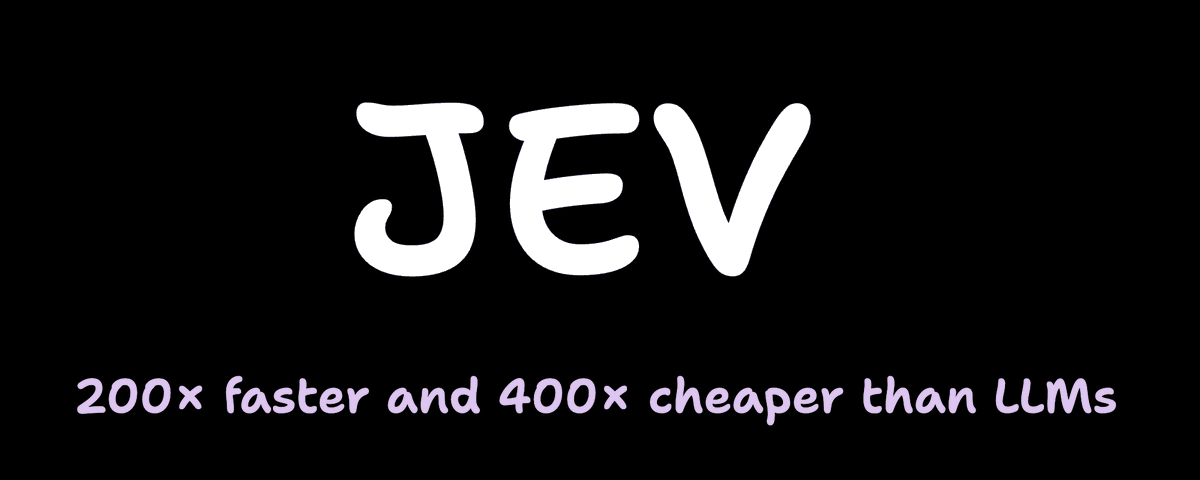
I just trained my own Jev-style Decision model locally!
With Qwen3.5 0.8B as the base, accuracy jumped from 37% to 65% in just 60 steps (10 minutes of training).
All on just 4GB of VRAM.
This video shows how you can do the same.
Chapters:
0:00 - Intro
0:50 - Set up Unsloth Studio
3:47 - Pick a model and dataset
5:19 - Train with LoRA
7:51 - Test it in the app
10:03 - Same workflow in code
12:38 - Train and evaluate (37% → 65%)
14:46 - Save and run inference
15:24 - Outro
If you’re new to JEV and want to understand how decision models work, I’ve written a detailed article about it. It’s quoted below.


Indranil Chandra retweeted
Hollywood is terrified, your GPU is crying, and we are here to teach you how to make cinematic masterpieces without ever leaving your ergonomic chair. Join GDG MAD for a practical dive into AI video generation, and prompt-driven directing
Register 👉luma.com/6jue6pu6
