

Angel Investor. Romantic. Part-Time Cave Yogi Artist. Mind scientist. Buddhist Shaivite Shaman. Waking from a dream but admiring the scenery. DMs Open
Frisco, Texas
Joined January 2024
- Tweets2.4K
- Following406
- Followers627
- Likes19.6K



TheMysticMan retweeted

If your self-esteem is based on the outcome of what you do, and not the wins/solves you get routinely along the way.....you will crush yourself.
You will avoid tackling things with uncertain outcomes...and all of great success is built on initial uncertainty.
TheMysticMan retweeted

I've been upping a lot how much metta meditation I'm doing and I do have to say I feel much more like low level MDMA constantly than ever before. Something about the stability of affect, the steadiness of attention, the willingness to look at inner gunk without flinching, the default openness of the being (though I have to be careful here), and above all the sense of "wow, love really is enough, if that's all we got, that's enough". Don't want to claim any permanent effects or trait changes, but I do want to bear witness to the power of the practice 🙏 worth a try. More dakka on metta! – at Colma, CA
TheMysticMan retweeted
People ask: "Ok, if DMT does help with cluster headaches like you say, why isn't this more well known? Why has no big philanthropist funded this yet?"
Have you ever noticed how hard it is to talk about suffering with someone who is happy and looking to have fun?
How difficult is it to bring up psychedelics in a conversation without people making silly jokes about them?
How hard is it for most people to understand that pain in large amounts leads to suffering?
Now stack all three obstacles at once.
Hence why my huge gratitude to anyone who does listen, does want to help, does support. It's rare, it's precious, it's a blessing. Diamonds in the rough. Thank you!
TheMysticMan retweeted
Seven years of meditation and studying ancient texts led to this moment. As the 5-MeO-DMT hit, I rocketed through impossible geometries toward the ultimate revelation. Spiritual masters tested me with paradoxes that tasted like colors. Angels sang backwards hymns. The sacred chest containing the Tetragrammaton (God's true name, the key to everything) finally opened with the sound of reality itself unlocking. Inside, glowing with divine light, protected by a thousand seals, was the answer to existence itself.
It was cake.

TheMysticMan retweeted

The strongest indicators that you're about to make a terrible decision:
1. Endless overthinking of pros and cons
2. Chasing certainty
3. Chasing even more data instead of feeling your emotions
4. Trying to manage outcomes vs being who you are
Let me explain:
1. Endless overthinking
A choice happens automatically. A decision is where you think about it. If you're overthinking, it means there’s an emotion you're trying to avoid by managing the outcome.
For example
- Endlessly debating whether to quit your job might mean avoiding fear and uncertainty
- Wrestling with whether to end a relationship usually means avoiding you or your partner's pain
No matter how intelligent you are, you can't make a good decision if your unconscious motive is to avoid an emotion. This is when you get trapped in an endless cycle of looping thoughts.
2. Chasing certainty
Every time you chase certainty, you create paralysis.
Because certainty can't be found in the future.
If you are chasing certainty, ask: Will I regret not taking this risk? Will I regret not being true to myself? Usually, the answer becomes obvious.
Then, imagine making the "wrong" decision. Feel all the feelings you think would come with that failure. Welcome them. This clarifies the decision making process quickly.
3. Chasing more data
When you keep researching, polling others, or analyzing one more angle, it’s rarely about needing clarity. It’s about avoiding the fear, guilt, or uncertainty that would arise if you acted.
The most dangerous decisions aren't the risky ones. They're the ones we make to avoid feeling something: fear of failure, rejection, or guilt.
Society tells us better decisions come from more data or sharper reasoning, but research shows decisions are fundamentally emotional.
Emotions are the underlying "context-setters" upon which your rational brain acts and reasons. (Look up the somatic marker hypothesis by Antoni Damasio)
4. Trying to manage outcomes
A great decision isn’t one where you get what you want. It’s one where you stay who you want to be, no matter the result.
I find it best to make the decision by asking myself if I'll be happy in ten years, no matter the outcome. Because that is a strong indicator of whether I'm being true to myself.
A litmus test I use: Am I deciding to be myself and follow what I want, or am I deciding to try to manage the future?
If it’s the latter, I don’t take the action.

TheMysticMan retweeted

Definitions of "subconscious" versus "conscious" are very confusing. Some people use subconscious to mean autonomic processes, whereas others use it to mean a kind of intuition or pre-verbal thought. I think a lot of the things we call "subconscious" are conscious processes happening at lower levels of abstraction - smaller conscious agents under the control of a higher one. We don't have access to their inner experience, but we have the ability to influence them. Sorting out all these imprecise definitions is key to moving forward in consciousness research.

TheMysticMan retweeted

as I spend more time away from the internet– being with my family, being in nature, reflecting on my childhood– it’s become clearer to me that lots of my frenetic online poasting over the years was a coping mechanism, a response to feeling fragmented, disconnected, unlovable
TheMysticMan retweeted

I can’t tell you what to do to awaken. We are, each of us, unique. But if you are asking the question, you will find your way.
I would bless you if I could. But you are your own salvation. Keep asking the question.
TheMysticMan retweeted
Pleasure = the boom in energy when a prior contraction (an energy sink) is released. When that energy settles it results in a more peaceful state.
Pleasure must also not be investigated with single pointed attention in order to be perceived.
Like a rainbow, don't try looking for the beginning/end of it, or what it's made of - for then it ceases to exist. Just gently gleam it with broader, general awareness.


TheMysticMan retweeted

Agency on its own is not enough to live a good life.
imo increased agency needs to be allied with clarity on values, commitment and freedom.
Here’s what I mean by each term and how they relate:
- Clarity on Values: A stable worldview and set of values that are conducive to a happy life.
- Commitment: The ability to commit to those values.
- Freedom: The ability to choose what it is we desire
- Agency: the ability to effectively act on our desires
Until we’re established a clear and stable worldview and values, increasing the other three factors will just accelerate our journey towards the wrong direction.
Until we can commit to our values, being clear on them isn’t much use.
Until we develop the freedom to cultivate desires that align with our values and let go of ones that don’t, we can’t effectively follow through with our commitments.
Then until we have agency, we can’t actually effectively act on our values-aligned desires.
So really we need all four of these factors in place in order to be optimally building a values-aligned life.
Each one is interdependent on the other and missing one can set the whole project off course.
But I think the most foundational element is clarity on our worldview and values.
Spending some time getting clear on this before anything anything else will ensure that when we turbocharge our path with commitment, freedom and agency, we are heading in the right direction.

Relatedly, this is why Buddhist meditation practices (Jhana, Vipassana etc) can be dangerous if we haven’t yet developed some form of Right Intention.
Jhana gives us more agency.
Vipassana gives us more freedom.
If we pursue misaligned goals with more agency and freedom, we cause more harm, more quickly to ourselves and others.
This applies, I believe to non-Buddhist paths too.
Clarifying our views and our values should always precede practicing our practices.
Before focusing on accelerating our paths, it’s best to ensure we’re pointing in the right direction.
TheMysticMan retweeted

My head is spinning: my friend – I'll call her Anna – described her metaphysics today. In her world, Stories are ontologically prior to biological minds
It took me many rounds of inquiry to get the following theory out of her, because – like most great theories – it wasn't yet formatted in words. This theory is implicit in the way that she lives. Here's my rendition of it:
I. STORIES CAME BEFORE US
–––––––––––––––––––––––––––
Stories are sentient beings
They've existed even before trees and bugs. They play perceptual games with the stuff of the universe, narrating away, relating things to one another, making meaning in languages as primal as those rules which govern interactions between atoms. And just as atoms self-organized into molecules, which evolved into complex life, lineages of Stories evolve and become more complex
The word Story is being used here in a way that is more broad than just "a sequence of events." It could also be an account of relations—between entities, forces, and meanings—that construes not only what happens, but what can happen, what exists, and why
Hansel & Gretel is a Story. But so are general relativity, Christianity, and your personal identity. Stories are different ways of framing the same underlying raw data/phenomena. One Story of the drawing below is that it's a duck with a beak. Another is that its a rabbit with two ears
II. WE CO-EVOLVED WITH STORIES
––––––––––––––––––––––––––––––––
With the dawn of more complex minds, there came beings capable of "tuning in" to the natural Stories that were already present in their environment. Upon contact, they would dramatically alter our perception of events
What does an example natural Story look like? Many of them might exist describing a single event in different ways, like this:
• Story 1: A tree falls into the forest floor, and then is swarmed over with ants
• Story 2: The landscape folds itself in the way that attracts its little black movements
These two stories narrate the same "physical happening" by invoking different relations, and even different ontologies. There would be trillions other Stories occurring simultaneously, including many that don't invoke linear time. We will only ever have the conceptual tools to perceive a minuscule subset of the Stories that are out there
As we perceived Stories, and they shaped our perceptions, we began to co-evolve. It was similar to the way we've co-evolved with bacteria: The evolutionary trajectory of Story-entangled beings was shaped by both symbioses and parasitisms (analogous to the gut microbiome vs plagues)
Humans, bacteria, and many Stories all now exist mutualistically as part of what biologists call a "holobiont" – an aggregate organism. (Other examples of holobionts include coral reefs and lichens)
However, Stories still exist external to our brains; they are part of the natural world, even as they pass through us. For this reason, my friend Anna finds a sense of grounding in natural Stories. They relieve her, in the way that contact with the world outside your own buzzing brain can be soothing
(Aside: Anna's view reminds me of a Stephen King quote, which contends that Stories are pre-extant: "Stories are found things, like fossils in the ground. The writer’s job is to use the tools in his or her toolbox to get as much of each one out of the ground intact as possible.”)
III. THE RISE OF ARTIFICIAL STORIES
––––––––––––––––––––––––––––––––––
Something dramatic happened a few million years ago in this story of Stories. Gradually, species evolved that were capable of cultural transmission – humans, for example. Humans (and possibly other species too) developed a new type of thing: *artificial* Stories
Artificial Stories are invented by biological minds rather than pre-extant in nature
Comparing natural & artificial Stories, we see distinctions common to other "natural" vs artificial things:
• Nature (eg rivers, horses, natural Stories) is generally characterized by emergent complexity whereas artifice (eg canals, cars, ideologies) is characterized by imposed simplicity – which helps artificial Stories become viral
• Nature generally creates systems in balance (ie dynamic equilibrium) whereas artifice is prone to imbalance (eg runaway feedback)
• Natural systems are generally resilient to (non-human-driven) change; artificial systems are brittle when conditions change
Both types of Stories influence our behavior, but artificial Stories tend to do more harm. Even so, artificial Stories, like other artificial things, aren't going away. So we might as well learn from nature in order to create harmonious artifice, just as we're doing with permaculture and biophilic design
IV. PUTTING IT INTO PRACTICE
–––––––––––––––––––––––––––––
"Cool theory," you might say. "But how can I find this in my experience?"
You can do this experiential exercise to make contact with natural Stories and experience their influence. The basic technique is to exorcise conceptual mediation of your relationships with the things around you, and see what new relationships arise
1. Choose an object
Place a human-made object on a table in front of you. It could be a fork, a pen, a notebook, whatever
2. Drop the artificial Story
Eg "This is a metal spoon. You use it to scoop food. You hold it like this, by the handle." Recognize that this is a human-made Story imposed upon this object you are calling a spoon. If you were a baby without this Story, you might relate to this object very differently. Try adopting the mind of a baby to drop the artificial Story. Now there is no "handle," only a continuous, smooth line. There is no "scoop," there is only a rounded surface. There is no "spoon." There is only a shiny thing
3. A natural Story arises
Abide in the mind of a baby. No concepts, no thoughts. Now how do you relate to this experience? You might pick the object up by the rounded bit and bang the other part against the wall to make a fun sound. This reveals another possible Story: it's not a spoon, it's a drumstick. Or maybe you don't perceptually separate the "spoon" from the "table" at all. Maybe they're a composite entity, like two wireless earbuds forming one "device." Or maybe it's a spirit taking the form of a metallic object. Importantly, don't let your mind decide the Story here. Let one arise. If you need help, try this prompt: Let the scene in front of you tell *you* how to relate to it
Sadly, most people have never interacted with a natural Story in their entire adult life. But when you do, the experience is often joyous, even revelatory

TheMysticMan retweeted

If you would like to read a post on navigating the guilt of existing, as You, without needing success or status, and learn more about negative thoughtforms that limit your life unconsciously, AND discover how to journey through and out of it: click the link below!

TheMysticMan retweeted

service is the reward

TheMysticMan retweeted

The reason to avoid lying is that the brain is not type safe. Lying to others and lying to yourself are the same motion.
TheMysticMan retweeted
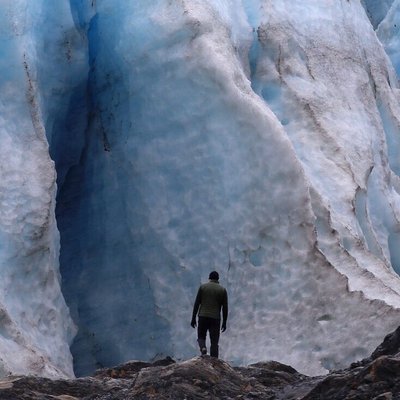
Each day, spend some time on two things:
1. working toward something that will pay off years from now
2. appreciating something that is happening right now
TheMysticMan retweeted
The ultimate form of preparation is not planning for a specific scenario, but a mindset that can handle uncertainty.