

Organic gardener, writer and researcher at Coventry University @CoventryCAWR. Peat-free, seed saving, plants and (wild) bees.
UK Midlands
Joined October 2013
- Tweets13.2K
- Following1.3K
- Followers2.7K
- Likes9.9K





Judith Conroy retweeted

Day one at @Groundswellaguk ✅
We even managed to fit in a project meeting as part of our collaborative project that aims to find an alternative to peat in our growing systems 🧐🌱🥬
Find out more here ➡️ youtu.be/38pocM2PdO0?si=NqPQ…
#peat @Riverford @CoventryCAWR @cambridgeeco

Judith Conroy retweeted

Friday's City Nature Challenge recording at Ryton Organic Gardens went really well! We are holding another nature recording session 1-2pm on Monday 29th April at Ryton Organic Gardens CV8 3LG. All welcome! Free parking 🌿🌳🐝🕷️🕸️🕊️🪶☀️ – at Leamington Spa, England

Judith Conroy retweeted

CAWR researchers are working with Garden Organic & the public to investigate the issue of plastic contamination of soil, particularly where food is grown. We are conducting six regional workshops and a survey, which we would be grateful if you could share: bit.ly/48DH40n

Judith Conroy retweeted

Live in Cumbria & like to help us learn more about the impact of #plasticpollution on #soil? We're working with @CoventryCAWR to find ways to reduce further contamination. Join us on 2 Mar, 10am-4pm, at Penrith Quaker Meeting House. Email [email protected]

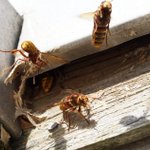
Have been lucky enough to find a hornet's nest this summer. Fascinating to watch their comings and goings.

ALT Hole in a wooden structure with 2 hornets in flight going in/out of the hole and one waiting to take off.
I think I've spotted a melanic male Ruderal Bumblebee (B. ruderatus) at Ryton Organic Gardens. Brilliantly velvety fur speckled with cardoon pollen.


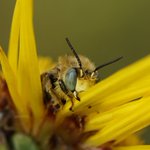
Green-eyed flower bees (Anthophora bimaculata) enjoying the inula blooms. Spotted the male resting/roosting with his mandibles clamped on when the sun went in.


1
99
Judith Conroy retweeted

A technical report on an important Bombus muscorum (Moss Carder) population in Lincolnshire is now available here: researchgate.net/publication…. Six-weekly sea bank mowing is vital for the clovers the bee needs. Sea bank mowing has benefits esp if it is less frequent along berm & toe.


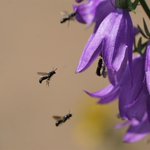
Suffolk scissor bees enjoying campanula a couple of weeks ago, in the garden of Bridge Cottage at Flatford Mill. I think they are Chelostoma campanularum, mostly due to their small size but happy to be corrected.

ALT Several very tiny, dark bees hovering around purple bell-shaped flowers.

4
86
I don't tweet much at the moment but I must share this... Red-tailed bumblebees spotted mating yesterday lunch time. Not something I see very often, despite all my bee-bothering.
Judith Conroy retweeted

Join us in #GWInvasivesWatch this BBC Gardeners' World season. We are watching out for #invasiveornamentals. Information about invasiveness is often missing, as in last weeks show highlighting Carpobrotus edulis, highly invasive globally including Britain's coastal habitats


Crab spider, Misumena vatia with (impressively sized) prey, seen earlier this week in the ecologically managed graveyard of Holy Trinity Church, Buckfastleigh.

1
The ivy bees are out. Fresh female on Bovey Heath, @DevonWildlife earlier this week. Emerged in time for the last of the heather.

ALT Side view of fresh-looking pale orange and black bee feeding on a pink heather flower.
Judith Conroy retweeted

Showing the amazing benefits of relaxed cutting rotations!
Just look at those gorgeous hedges. 3 year rotation wins in my books.


Judith Conroy retweeted

Stopped by @BandQ today and every single plant I saw was growing in peat free compost! Never thought I’d see the day!👏🏼 ❤️


The 'British bee population' includes over 270 species, many of which are in calamitous decline. The honeybee is essentially livestock, thousands of people keep them, they are not in trouble. Is this really part of @yeovalley's policies or a PR mistake? @OliverPrysJones

Judith Conroy retweeted

I support @yeovalley organic production but putting more honeybee hives on farms doesn't help British bumblebees or other native pollinators..

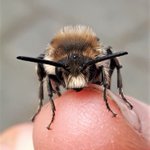
Perfectly trimmed moustache ✂️🐝 I have yet to see a hairy-footed flower-bee this year but I almost tripped over this mourning bee (Melecta albifrons) hugging a sunny pavement for warmth today. #spring
