

Professor of economics at the Norwegian Business School.
Oslo, Norway
Joined January 2012
- Tweets2.8K
- Following641
- Followers1.7K
- Likes1.9K




Pinned Tweet
I’ve made a ChatGPT tutor for my intro econometrics class at BI 📊
It’s built around my (norwegian) course material, but might be useful for others learning econometrics too?
Give it a try — feedback very welcome!
chatgpt.com/g/g-6a718e9cfffc…
Jon Fiva retweeted

Open sourcing my regression lectures 🍻
AI is changing how we teach. Here’s one way I’m adapting: I’ve open-sourced my regression course, POLI 450A, built on Jens Hainmueller’s original class.
The course is suitable for first-year political science PhDs, as well as advanced undergraduate students in economics, political science, and other social sciences.
The materials include slides, R code, data, worksheets, and a short video for every lecture.
github.com/xuyiqing/regressi…

Jon Fiva retweeted

Why AI is not all bad news for most mathematicians
On October 6, 2026, OpenAI released hundreds of mathematical preprints. And while these results are still being evaluated, the news caused shockwaves. Some celebrated it while others warned of a mathspocalypse. But these early reactions may be a bit exaggerated. This is not to deny that AI is disrupting math research, but to question whether that disruption extends to the much larger community of people trained in mathematics. My point here is that much of what we associate with mathematics is here to stay, because the vast majority of people trained in mathematics do not operate at the frontier, and that this is a good thing.
To make my point, I’ll start with a Formula One (F1) racing analogy. F1 is the frontier. It pushes the boundaries of what is possible with exceptional drivers and technology. And because of this, it gets well-deserved attention. But F1 is not transportation.
Most professional drivers are not in F1. They drive buses, taxis, and trucks. Their job is not to show us the limit of what cars can do, but to transport children safely to school, deliver products without breaking them, and help billions of people get to work every morning. F1 is exciting, but the world keeps moving because of the millions of drivers that do not operate at the frontier.
Imagine the arrival of an alien civilization with better F1 vehicles and drivers. The aliens are so advanced that no human ever wins a Formula One race again. This would certainly change Formula One. But would it mean that the majority of professional drivers would have lost their purpose?
I don’t think so.
The morning after the race children would still need to get to school, and goods would still need to get delivered. Because the value of those activities was not derived from performance at the frontier.
Now, you might say that trucks and taxis are also bound to disappear, because AI will drive them too. But here is where the analogy breaks. Research mathematicians, mathematics educators, and professionals trained in mathematics are not the same thing. Yet they are all part of a larger mathematical ecosystem whose value comes not only from discovering new mathematics, but also from teaching, understanding, and applying what we already know.
Consider a math teacher at a K-12 school or at a local university. What I appreciate from the math teachers at my daughter's school, or from those who taught me during my education, is not that they are trying to solve the Riemann hypothesis, but their ability to help us understand math, from adding fractions to solving partial differential equations.
A good math teacher is not a machine of correct answers. They are responsible for creating a social environment in which mathematical understanding can develop, even for a thirteen-year-old that would prefer to be doing anything other than learning math. And this is an activity of enormous value. How valuable? Imagine having to choose between a world where no new frontier math is developed for the next ten years and a world where children between the ages of 6 and 16 no longer receive math education. The first one would be lamentable. The second would be catastrophic. There is nobility in recognizing the value that happens outside the frontier.
And this is true also for universities and professional practices. While frontier mathematicians compete to prove new theorems, others teach math to physicists, economists, engineers, and countless other students pursuing careers that require quantitative reasoning. In a professional practice, you want an engineer responsible for a bridge to have a good understanding of how stress is calculated on a structure, even when the calculations are performed by software or AI.
The point is that the social value of mathematics is not derived exclusively from advancing the frontier. Much of that value rests on the shoulders of millions of people who teach, practice, and apply mathematics. This is why the idea of a mathematical apocalypse is misleading: it confuses visibility with value. It reduces an entire discipline to the highly visible activity of solving difficult new problems. And of course, we want to keep that going, just like we would not like to eliminate Formula One. But my intuition is that many frontier mathematicians will be supercharged by AI. They will be human drivers on alien cars. But for the millions of people who are not pursuing the frontier, the core of their value doesn’t change. We should not confuse what’s spectacular with what is valuable.
Academic prestige tends to accumulate around frontier achievements. But the mathematician who introduced thousands of students to calculus over a career may have a larger overall impact on society. These are not consolation prizes, but achievements that keep the world working. AI is already solving difficult mathematical problems that have challenged some of the world's most talented mathematicians. But our world still needs millions of mathematicians, and billions of people with a good understanding of math. Because math is not just a race to solve the hardest problems, but a way of thinking that we pass from generation to generation.
cesarhidalgo.com/blog/2026/1…

Jon Fiva retweeted

With math essentially being delegated to OpenAI, here's what I predict for economics and the social sciences more generally:
✅The top tier of research will just become better and it will be normal human-led research where AI is used for scale (e.g. conducting qualitative interviews with relevant populations, running behavioral interventions in the field, analyzing massive text data, etc.)
✅ Field experiments will rise in value and generally making "connections" with firms and being able to run stuff (potentially testing AI pipelines) will be in high demand
✅ Research with administrative data will become even more valuable, but the benefits might be concentrated among some prolific authors who are allowed by the government agencies to use local models to analyze the data at scale. PhD students can probably forget about it
✅Economic history will have a very exciting boom and there will be an enormous race and big rewards for digitizing archives as a source to both identify new research strategies and document new descriptive facts.
✅Review and verification systems will become massively improved with AI assistance and it will become standard practice to do a 360 review of the paper + code + data at the *submission* stage.
⚠️Research that in principle can already be almost completely outsourced to the AI (download and analyze public data, run simple survey experiments, write theory models) is in for a big shock. This would be very bad from the perspective of researchers who depend on this "bread and butter" research, but I think this type of work will just be outsourced to public agencies who can answer their own questions without the need for "peer-reviewed" research.
Jon Fiva retweeted

This is a great thread. The political economy literature coming from economists (including myself) definitely understudy the role of parties and political party leaders and party elites

Excellent opportunity ⬇️ @Ingar30 =🔥

Jon Fiva retweeted

Paul Goldsmith-Pinkham had an interesting new post documenting what we already knew -- AI writing has grown substantially in economics. paulgp.substack.com/p/how-do… A 🧵👇
Jon Fiva retweeted

Many studies find that men are more willing to compete than women, in the lab and in the field.
I wrote a survey of this literature: papers.tinbergen.nl/26063.pd… (forthcoming in the Handbook of Experimental Gender Economics).
I reach four main conclusions:
Jon Fiva retweeted
As we're waiting for Astra, I've optimized and updated my Paper Reviewer with the latest Sol flagship model: github.com/Ingar30/reviewer It's really good! Run it in Codex on your own papers before you submit to a journal, and let me know if you have ideas for how to improve it.

Working on a project using GPT to classify news snippets about candidates. This 2025-paper by @KyuwonLee7 et al. on extracting info from text w/GPT is very nice. This field moves fast though - would love to hear about anything new you've come across. cambridge.org/core/journals/…
Here's an innovative related paper I really like, by @MortenStostad, @LobeckMax & @CdMeul. They use GPT-4o mini to classify pro- and anti-redistribution arguments in the US Congress and Norwegian parliament: wid.world/www-site/uploads/2…
Some crazy stats from this new JEL paper:
- IV est. average 3–10x OLS (meta analysis)
- Sign. results 30x more likely to be published in experimental econ (Andrews & Kasy)
- <2% of empirical polisci report null-only findings in abstracts (Briggs et al.)
aeaweb.org/articles?id=10.12…

An estimator that is unbiased in theory can be badly biased in practice, because researchers decide what gets estimated, reported, and published. Great review paper by @MeganTStevenson & Joshua Fischman.
Jon Fiva retweeted

From our FirstView: Vetting for Virtue: Democracy’s Challenge in Excluding Criminals from Office by @siggi_econ, @JFiva and @RuneJSorensen. doi.org/10.1017/S00030554261…

Jon Fiva retweeted

🚨 The 6th *Nordic Political Behavior Workshop* takes place in Copenhagen on September 24-25, 2026.
Come for high-quality feedback and great networking opportunities.
Abstract deadline: May 29.
Read more and apply here:
politicalscience.ku.dk/event…
Please distribute widely!
Jon Fiva retweeted
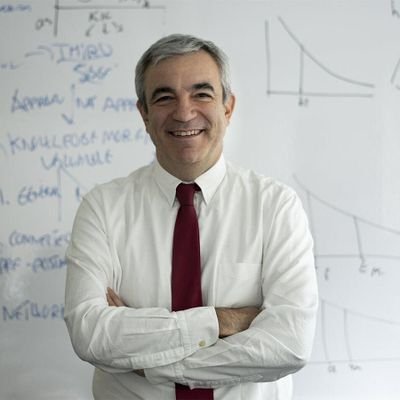
In an excellent essay, @alexolegimas argued for the demand for humanness (the "relational sector") as what would protect jobs from AI. Today in Silicon Continent I answer with the supply side argument I develop in my forthcoming book "Messy Jobs".
siliconcontinent.com/p/why-d…

Jon Fiva retweeted

This 2-hour Stanford lecture breaks down how models like ChatGPT and Claude are actually built, clearer than what many people in top AI roles ever get exposed to.
Save this and set aside two hours today. It might end up being the most valuable thing you learn all week.
Jon Fiva retweeted

How to speak: When I was at MIT, everyone knew that this talk by my colleague, AI pioneer Patrick Winston, was one of the Institute's treasures.
unavailable
Jon Fiva retweeted
From our FirstView article: Hidden Majoritarianism and Women’s Career Progression in Proportional Representation Systems DANIEL M. SMITH, ALEXANDRA CIRONE, @dawn_teele , GARY W. COX and @JFiva. doi.org/10.1017/S00030554251…

Jon Fiva retweeted

Norway is one of the most gender-equal countries, yet women's rise to power has been slower than it looks. Smith, Cirone, @dawn_teele, Cox, and @JFiva explain why for @apsrjournal. Summary by @ximecalos for PS Now buff.ly/ATSUAP6
