

31, Physicist, Engineer, amateur economist. Constantly in a superposition of disappointment and pride with the world.
Hampshire, UK
Joined October 2011
- Tweets5.4K
- Following2.1K
- Followers319
- Likes27K





Pinned Tweet
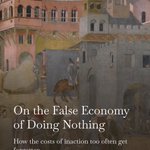
Too much of our politics today dimminishes the costs of inaction and perpetuates fictions about not being able to afford action.
I've written this to explore this false economy and why we really need to break away from such thinking.
jgs952.substack.com/p/on-the…

Burnham has been convinced by a broken Tsy model that water nationalisation is unaffordable within their fiscal rules (forgetting ideological commitment to privatisation).
The Green Party is the only party that recognises that, actually, water nationalisation is intrinsically..

An overall "affordability" assessment would look at these actual behavioural responses and real world functional effects of nationalisation. It wouldn't care whether a narrow balance sheet rule is breached.
Jamie Smith retweeted

Higher interest rates won’t reopen the Strait of Hormuz or bring down energy prices.
Instead, today’s rise to 4% risks squeezing households already facing higher heating, fuel and mortgage costs.
With energy bills forecast to rise by at least £400 a year in January, the government must go further and introduce a temporary £2,000 cap on typical household energy bills to tackle inflation at source.
Read our body of research 👇️
Jamie Smith retweeted

The Bank of England has just raised interest rates to 4%. But higher rates won’t make oil any cheaper, and households are paying the price for a shock we can’t control. My piece for @LBC 🧵1/9
lbc.co.uk/article/higher-int…

The democratic deficit in how our institutions determine policy of such consequence has never been so stark.
The BoE is *not* a neutral, non-ideological actor accurately tinkering with a deterministic and perfectly understood machine.
Raising rates will make things worse. 🧵

We need a whole of government approach to stabilisation that addresses the up stream causes of price pressures while mitigating the distributional effects of a constrained real income. This requires substantial buffer stocks and strategic reserves, increased investment in clean..
Jamie Smith retweeted

The Bank of England has raised interest rates to 4%, supposedly to tackle inflation.
There is just one problem with this decision. The Bank knows that much of the inflation we are suffering is being driven by rising oil and energy prices, largely resulting from conflict in the Middle East.
It also knows that raising interest rates cannot reduce those prices.
So why is it doing this?
The answer is that the Bank believes it must suppress demand elsewhere in the economy to compensate for rising energy costs.
In other words, it is deliberately making mortgages more expensive, increasing business borrowing costs, discouraging investment and reducing household spending power.
And all this when people are already struggling with higher energy bills. That is problem number one.
There is, however, another problem. Higher interest rates increase costs for businesses, which can then feed through into higher prices. They can, in that case, add to inflation rather than reduce it.
The Bank is imposing economic pain to address a problem its chosen policy cannot directly solve.
That is not sound economic management. It is the consequence of an economic dogma that refuses to recognise the difference between inflation caused by excessive demand and inflation caused by supply shocks.
When will we learn?