

Editor of the Migration Information Source @MigrationPolicy. SHELTER FROM THE STORM: HOW CLIMATE CHANGE IS CREATING A NEW ERA OF MIGRATION out now
- Tweets1.6K
- Following2.6K
- Followers3.1K
- Likes7.9K



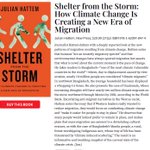




ALT Shelter from the Storm: How Climate Change Is Creating a New Era of Migration Julian Hattem. New Press, $29.99 (272p) ISBN 978-1-62097-847-4 Journalist Hattem debuts with a deeply reported look at the new patterns of migration resulting from climate change. Hattem notes that humans “are an innately migratory species” and that environmental changes have always spurred migration but asserts that what is novel about the current moment is the pace of change. He takes readers to Bangladesh—“one of the most climate vulnerable countries in the world”—where, due to displacement caused by river erosion, nearly 10 million people are considered “climate migrants.” In northwest Bangladesh, the average household has been displaced a whopping 4.6 times. He also presents the case of Guatemala, where increasing droughts will have nearly two million climate migrants on the move northward through Mexico by 2050, according to the World Bank. Excoriating anti-migrant narratives in the West as racist, Hatt


ALT In large part because of these remittances, migration has long been one of the most effective strategies for lifting people out of poverty — not just migrants themselves, but also their families and communities in their homeland. As the world reckons with climate change that will particularly hurt poor, rural communities in places like Guatemala, migration is not simply a way to escape impending climate disaster but also a strategy to defend against it. Making it easier for people to leave their home can not only help them flee the most dire disasters but also help them earn money to invest in adaptation and resilience strategies. In fact, some economists say governments should actively spend money to encourage people to migrate, at least to urban areas within their own countries, to boost growth. Subsidizing transportation to cities and helping people find jobs or enroll in new training would mitigate the negative impacts of climate change in rural areas, the thinking goes, and help


ALT Julian Hattem’s Shelter from the Storm is an insightful, sobering overview of the past, present, and future of human movement in the age of climate change. The book’s thesis that “We Have Always Been Climate Migrants” frames migration as a fundamental part of the world’s present and of humanity’s future response to the stressors of climate change.

ALT From the Little Ice Age to the Dust Bowl, the book covers the history, theory, and dynamics of climatological migration as a phenomenon. In doing so, it provides a distinct frame and context for the stories of human suffering, resilience, and hope within. The text moves seamlessly from historical anecdotes to modern interviews and on-the-ground economic and scientific theory with competence and familiarity. The more narrative aspects of the text, which tell the stories of many people impacted by the changing climate, clash a bit with its more systems-oriented discussions of policy, history, and economics. However, the two support each other well thematically, and the examples of individuals affected by climate change are compelling, as are discussions of decision-making that illuminate the book’s more abstract theories. It is remarkable how the text manages to discuss the hard realities of immigration, life as a refugee, oppression, genocide, and ecological collapse while still retai


ALT Tuvalu climate migrants have started arriving in Australia Tuvalu prime minister urged those leaving to keep cultural ties Church has sent pastor to support climate refugees Tuvalu's first climate migrants have arrived in Australia, marking the beginning of a historic relocation as rising seas threaten to swallow their island home. More than a third of the nation's 11,000 citizens applied for the new climate visa - a deal forged between the two countries to preserve Tuvaluan culture as the atolls disappear. The intake is capped at 280 visas annually to prevent a brain drain from the tiny island nation.

ALT Among the Pacific people selected in the initial intake of climate migrants is Tuvalu's first female forklift driver, a dentist, and a pastor focused on preserving their spiritual life thousands of kilometres from home, Australian government officials said. Manipua Puafolau, from Tuvalu's main island of Funafuti, arrived in Australia a fortnight ago. A trainee pastor with the most prominent church in Tuvalu, he plans to live in the small town of Naracoorte in the state of South Australia, where several hundred Pacific Islanders work in seasonal agriculture and meat processing jobs. "For the people moving to Australia, it is not only for their physical and economic wellbeing, but also calls for spiritual guidance," he said in a video released by Australia's foreign affairs department.


